Who are the Myrmidons in Greek Mythology?
The Myrmidons are a legendary people in Greek mythology, renowned for their unwavering loyalty and martial prowess. They are most famously associated with the hero Achilles, whom they followed into battle during the Trojan War as recounted in Homer‘s Iliad.
The story of the Myrmidons encompasses themes of transformation, loyalty, divine intervention, and the interplay between humans and gods. Their origins are traced back to various myths, each contributing to the rich tapestry of Greek mythology and reflecting the values and beliefs of ancient Greek society.
Origins and Etymology
The name “Myrmidons” is derived from the Greek word “myrmex,” meaning “ant.” This etymology is central to one of the primary myths concerning their origins, which involves a transformation from ants into humans.
The name of the Myrmidons derives from the Greek word for “ant-people” (myrmedon), reflecting a myth about their origins.
The association with ants symbolizes qualities such as industriousness, unity, and resilience—traits that the Myrmidons embody in their actions and character.
The Myth of Aeacus and the Transformation

Hera, Zeus’s wife and the queen of the gods, targeted the island named after Aegina out of jealousy and sought to punish both Aegina and her son, Aeacus. Image: Location of the Island of Aegina in modern day Greece.
One of the most prominent myths about the creation of the Myrmidons involves King Aeacus of the island of Aegina.
According to the myth, Aegina was named after Aeacus’s mother, a nymph who was one of Zeus’s many lovers. Hera, Zeus’s wife and the queen of the gods, was notorious for her jealousy and vengeance against her husband’s consorts and their offspring. In her wrath, Hera sent a devastating plague to Aegina, decimating the population and leaving Aeacus’s kingdom desolate.

Aegina was a nymph who became one of Zeus’s lovers. Image: Jupiter and Aegina by Jan Goeree
Desperate to save his realm, Aeacus prayed to his father Zeus for help. Observing a colony of ants on an oak tree, Aeacus pleaded with Zeus to replenish his people by transforming the ants into humans.
Moved by his son’s earnest supplication, Zeus granted the request. The ants were transformed into a new race of people—the Myrmidons—who were hardworking, loyal, and disciplined, mirroring the characteristics of the ants from which they originated.
READ MORE: Women in Greek Mythology Zeus had Affairs with
Traits and Characteristics of the Myrmidons
The Myrmidons were renowned for their steadfast loyalty and military discipline. Their ant origins symbolize their collective unity and ability to work together seamlessly.
In battle, they were formidable warriors, known for their courage and effectiveness. Their reputation was such that they became synonymous with unwavering obedience and dedication to their leader.
They are often depicted wearing brown armor, reflecting the earthy tones of their ant lineage. This symbolism emphasizes their humble beginnings and their connection to the natural world.
Association with Achilles

Greek demigod and hero Achilles. Image: Ancient Greek polychromatic pottery painting (dating to c. 300 BC) of Achilles during the Trojan War
The most significant figure associated with the Myrmidons is Achilles, the legendary Greek hero of the Trojan War.
Achilles was the son of Peleus, a king of Phthia in Thessaly, and the sea nymph Thetis. According to the myths, when Peleus was exiled from Aegina for the murder of his half-brother Phocus, he settled in Phthia, accompanied by the Myrmidons who remained loyal to him despite his exile.
During the Trojan War, Achilles led the Myrmidons to Troy, where they played a crucial role in the Greek siege of the city. In Homer’s Iliad, the Myrmidons are depicted as elite warriors, fiercely loyal to Achilles.
They are instrumental in several key battles, and their actions often reflect the will and mood of their leader. When Achilles withdraws from battle due to a dispute with Agamemnon, the Myrmidons also abstain, highlighting their unwavering allegiance.
Patroclus and the Myrmidons

Achilles tending the wounded Patroclus
A pivotal moment in the Iliad involves Patroclus, Achilles’ close companion. With the Greeks suffering losses without Achilles’ participation, Patroclus dons Achilles’ armor and leads the Myrmidons into battle to repel the Trojans.

Patroclus and the Myrmidons
The Myrmidons, inspired by what they believe is Achilles’ return, fight fiercely. However, Patroclus is killed by Hector, leading to Achilles’ profound grief and eventual return to battle to avenge his friend’s death. The Myrmidons’ role in this episode underscores their importance in the Greek war effort and their deep connection to their leader.

Patroclus on an antique fresco from the House of the Tragic Poet in Pompeii, 1st century AD (Naples National Archaeological Museum, Italy)
Alternative Origins
Aside from the myth involving Aeacus and the transformation from ants, there is another tradition regarding the origins of the Myrmidons. In this account, the Myrmidons are descendants of a Thessalian king named Myrmidon, who was said to be the son of Zeus and Eurymedusa.
The eponymous ancestor of the Myrmidons was King Myrmidon of Phthiotis, son of Zeus and Eurymedousa, whom Zeus seduced in the form of an ant.
In this version, Zeus seduced Eurymedusa by transforming into an ant, which connects back to the etymological meaning of “myrmex.” Myrmidon married Peisidice, daughter of Aeolus, and their descendants became the Myrmidons. This lineage provides a noble ancestry for the Myrmidons, linking them to established human genealogies rather than a miraculous transformation.
Cultural Significance
The Myrmidons symbolize the ideal qualities of soldiers in ancient Greek culture: loyalty, discipline, and bravery. Their unwavering obedience to their leader exemplifies the hierarchical nature of ancient Greek society and the emphasis placed on collective action for the greater good. The myth of their ant origins reinforces the value of industriousness and cooperation.
Their story also reflects the Greek understanding of the interconnectedness between humans and the divine. The direct intervention of Zeus in their creation signifies the favor and involvement of gods in human affairs, a common theme in Greek mythology.
Legacy and Interpretations
Over time, the term “myrmidon” has taken on broader meanings beyond its mythological origins. In literature and common usage, it often refers to a subordinate who follows orders without question, sometimes with a negative connotation implying blind obedience or participation in unethical actions at the behest of a leader.
In medieval literature, the Myrmidons were occasionally referenced in relation to contemporary groups or nations, sometimes as a means of drawing parallels between ancient myths and current events. This reflects the enduring impact of Greek mythology on later cultures and the ways in which these stories were adapted to suit new contexts.
Modern References
The legacy of the Myrmidons continues into modern times through various cultural references:
- Literature: The term is used to denote loyal followers or henchmen. For example, in Henry Fielding’s novel Tom Jones, “myrmidon” describes hired thugs.
- Military: Some military units and ships have been named after the Myrmidons, highlighting their association with martial excellence.
- Popular Culture: The Myrmidons appear in contemporary adaptations of Greek myths, including films like Troy (2004), where they are portrayed as Achilles’ elite warriors.
Symbolism of Transformation
The myth of the Myrmidons’ creation from ants serves as a powerful symbol of transformation and renewal. It illustrates how a community can recover from devastation through unity, hard work, and the support of higher powers—in this case, the intervention of Zeus. The story underscores themes of resilience and the potential for new beginnings after catastrophic events.
Divine Intervention and Human Affairs
The involvement of gods like Zeus and Hera in the myth reflects the ancient Greek belief in the gods’ direct influence on human lives. Hera’s jealousy leads to destruction, while Zeus’s compassion results in restoration. This dynamic highlights the precarious nature of human existence in Greek mythology, where mortals are subject to the whims of the divine.
Moral and Ethical Considerations
The tale raises questions about justice and morality:
- Innocent Suffering: The people of Aegina suffer due to Hera’s vendetta against Zeus’s infidelity, illustrating the collateral damage of divine conflicts.
- Redemption and Hope: Aeacus’s plea and the subsequent creation of the Myrmidons suggest that perseverance and faith can lead to redemption and healing, even in the face of overwhelming adversity.

The Myrmidons in the Trojan War
Connection to the Natural World
The transformation of ants into humans symbolizes a deep connection between humans and nature. It suggests that human qualities can be found in the natural world and vice versa. This connection emphasizes the importance of harmony with nature and the recognition of virtues displayed by even the smallest creatures.
Influence on Military Ideals
The Myrmidons have had a lasting impact on the conceptualization of military units and leadership:
- Cohesion and Discipline: Their representation as a cohesive and loyal force sets a precedent for the ideal soldier.
- Leader-Follower Relationship: The bond between Achilles and the Myrmidons highlights mutual respect and shared purpose, emphasizing the importance of strong leadership.
Conclusion
The Myrmidons occupy a significant place in Greek mythology, embodying themes of loyalty, transformation, and the complex interactions between mortals and gods. Their stories offer insights into ancient Greek values and the cultural importance of myth as a means of understanding human nature and the world. Through their legendary deeds and the enduring tales of their origins, the Myrmidons continue to capture the imagination and serve as symbols of unity and resilience.
Frequently Asked Questions

What method did Hera use to punish Aegina and Aeacus?
Hera sent a devastating plague to the island of Aegina, which decimated the human population and left the island desolate.
How did King Aeacus react to the plague that struck his island?
In despair over the loss of his people and the future of his kingdom, King Aeacus prayed to his father Zeus for assistance in restoring his realm.
While praying, Aeacus noticed a colony of ants busily working on an old oak tree. Struck by their numbers and diligence, he asked Zeus to grant him as many new subjects as there were ants on the tree.
Moved by his son’s earnest request, Zeus transformed the ants into humans to repopulate the island.
They were called the Myrmidons, deriving their name from the Greek word “myrmex,” which means ant.
What traits did the Myrmidons inherit from their ant origins?
The Myrmidons were hardworking, resilient, fiercely loyal, disciplined, and united in their actions, reflecting the qualities of ants.
Why are the Myrmidons often depicted wearing brown armor?
Their brown armor symbolizes the earthy color of ants, paying homage to their humble beginnings.
They murdered their half-brother Phocus, and as a consequence of this grievous act, they were exiled from Aegina.
Where did Peleus go after his exile, and who accompanied him?
Peleus traveled to Phthia in Thessaly, accompanied by a contingent of Myrmidons who remained loyal to him.
Who is Peleus’s famous son, and what role did he and the Myrmidons play in Greek mythology?
Peleus’s son is Achilles, one of the most renowned heroes of Greek mythology. Achilles led the Myrmidons in the Trojan War, where they were instrumental in the Greek efforts against the city of Troy.

The transformation of ants into humans symbolize resilience and renewal. It represents the ability to rebuild and revitalize a community after devastation, emphasizing renewal and the enduring human spirit. Image: Achilles and the Myrmidons
What alternative origin story exists for the Myrmidons?
In another tradition, the Myrmidons are descendants of a Thessalian nobleman named Myrmidon, who married Peisidice, the daughter of King Aeolus of Thessaly, establishing a noble lineage without the ant transformation.
How has the term “myrmidon” evolved in medieval and modern contexts?
It has come to refer to individuals who are unquestioningly loyal to a leader, sometimes with a negative connotation of blind obedience without moral consideration.
In literature, how is the term “myrmidon” often used?
It is used to describe hired ruffians or enforcers who carry out the will of those in power without question.
What themes are explored in the myth of the Myrmidons?
Themes include divine retribution, transformation, loyalty, the consequences of jealousy, and the resilience of the human (and non-human) spirit.
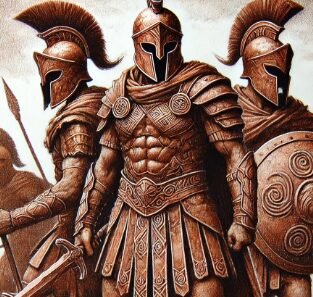
By transforming creatures of nature (ants) into humans, the myth blurs the lines between species, suggesting that qualities like diligence and cooperation are universal.
What impact did the Myrmidons have on subsequent legends and cultural references?
They became emblematic of loyal warriors in mythology and influenced cultural concepts of obedience and service, extending into literature and language.
What is the overarching message of Ovid‘s myth of the repopulation of Aegina?
The story conveys themes of hope and restoration following tragedy, the power of divine intervention, and the emergence of strength and unity from unlikely beginnings.

According to this etiological myth, first mentioned by Ovid in the Metamorphoses, the Myrmidons were originally ants transformed into people on the island of Aegina. Image: Ovid by German painter Anton von Werner





