German Afrika Korps in WWII
The Afrika Korps (Deutsches Afrikakorps, or DAK) was a German expeditionary force deployed to North Africa during World War II. It played a pivotal role in the North African Campaign, showcasing both the tactical brilliance of its commanders and the broader strategic challenges faced by the Axis powers in the region.
In the article below, World History Edu provides an in-depth exploration of its formation, key events, leadership, and its impact on the war.
Formation and Early Days
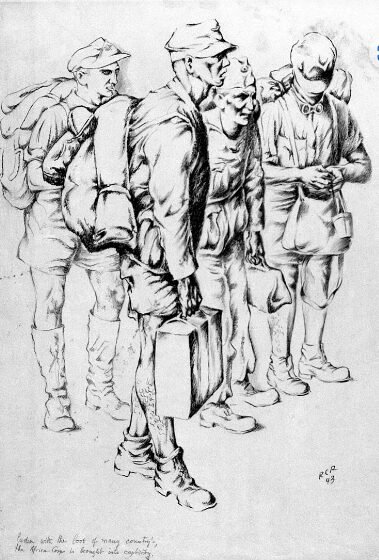
The German Africa Corps (Deutsches Afrikakorps, or DAK) was the German expeditionary force deployed to North Africa during World War II’s North African campaign. Image: 1943 drawing by U.S. Army artist Rudolph von Ripper shows Afrika Korps POWs captioned “Laden with loot, captured.”
The Afrika Korps was officially formed on 11 January 1941 to aid Italy after its disastrous defeat in Operation Compass (December 1940 – February 1941), where the British Commonwealth’s Western Desert Force decimated the Italian 10th Army. The Axis needed to bolster their position in Libya, and Adolf Hitler chose Erwin Rommel, one of his favored generals, to command the newly created force. Rommel’s appointment on 11 February 1941 marked the beginning of his rise to fame as the “Desert Fox.”
Initial Composition
The Afrika Korps initially consisted of:
- Panzer Regiment 5, assembled from elements of the 3rd Panzer Division.
- The 5th Light Division, formed upon the regiment’s arrival in North Africa (February–March 1941).
By late April and May 1941, additional units, including the 15th Panzer Division, joined the Afrika Korps, further strengthening its capacity. Despite being under Italian command, Rommel quickly emerged as the dominant leader, commanding respect from Axis and Allied forces alike.
Expansion and Structure
The Afrika Korps grew and adapted over time, reflecting the dynamic nature of the North African Campaign. It was integrated into larger formations, starting with the creation of Panzer Group Africa in August 1941, and later evolving into Panzer Army Africa in January 1942. Rommel retained overall command of these expanded forces, which included Italian divisions alongside German units.
Key Divisions and Components

General Rommel inspecting the 21st Panzer Division in May, 1944
The corps underwent several restructures during the campaign:
- Initial Units: Panzer Regiment 5, 5th Light Division, and 15th Panzer Division.
- Mid-Campaign Expansion (1942):
- 21st Panzer Division (formerly the 5th Light Division).
- Additional units such as the 90th Light Infantry Division and Italian divisions (Ariete and Trieste).
- Final Structure (1943): The renamed German-Italian Panzer Army, incorporating both German and Italian forces, including the 1st Italian Army under Giovanni Messe.
Campaign Highlights
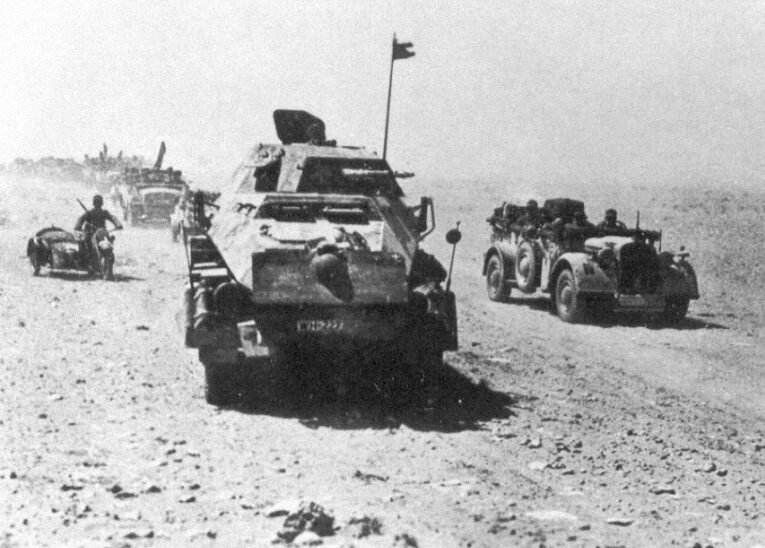
Operating in coordination with Italian forces, the Afrika Korps engaged in several pivotal battles, including the sieges of Tobruk and the battles at El Alamein. Image: Afrika Korps tank hunters with an Sd.Kfz. 232 armored car in front.
Early Successes (1941–1942)
Upon arrival in North Africa, Rommel launched Operation Sonnenblume, a counteroffensive that pushed British forces back into Egypt. The Siege of Tobruk, lasting from April to December 1941, highlighted Rommel’s tactical ingenuity but also revealed the logistical challenges faced by the Axis in desert warfare. British forces ultimately broke the siege during Operation Crusader, forcing Rommel to retreat to El Agheila.
Turning the Tide (1942)
In 1942, Rommel regained the initiative:
- Battle of Gazala (May–June 1942): A significant Axis victory, marked by the capture of Tobruk, which provided a short-term morale and logistical boost.
- First Battle of El Alamein (July 1942): Axis forces advanced into Egypt but were halted by British defenses, setting the stage for a strategic stalemate.
The Decisive Defeat (Late 1942–1943)
The campaign’s turning point came during the Second Battle of El Alamein (October–November 1942), where British General Bernard Montgomery led the Eighth Army to a decisive victory. The Axis retreated westward, eventually being trapped by Allied forces following Operation Torch, the Allied invasion of French North Africa (November 1942).

In May 1943, after months of retreat and fighting in Tunisia, the Afrika Korps and all remaining Axis forces in North Africa surrendered, marking the end of the campaign.
Commanders of the Afrika Korps

Initially sent in March 1941 to support Italy’s faltering defense of its African colonies, the Afrika Korps quickly became a formidable force under its most renowned commander, Field Marshal Erwin Rommel, earning the nickname “Desert Fox” for his tactical brilliance. Image: German Military Officer Erwin Rommel
- Erwin Rommel (February–August 1941):
The most notable commander, Rommel’s aggressive tactics and use of mobile warfare earned him the moniker “Desert Fox.” - Ludwig Crüwell (August 1941–May 1942):
Took command when Rommel led Panzer Group Africa. Crüwell was captured in May 1942 after mistakenly landing near British troops. - Walther Nehring (May–September 1942):
Led during the Battle of Alam el Halfa but was wounded during an air attack. - Wilhelm Ritter von Thoma (September–November 1942):
Commanded during the Second Battle of El Alamein and was captured by the Allies. - Subsequent commanders included Fritz Bayerlein, Gustav Fehn, Kurt Freiherr von Liebenstein, and Hans Cramer, who oversaw the corps’ surrender in May 1943.

Despite initial successes, the Afrika Korps faced critical supply issues and increasing Allied strength. Its operations ended with the surrender of Axis forces in May 1943 in Tunisia. Image: Mug shot of Crüwell while in American captivity
The Afrika Korps’ Reputation
The Afrika Korps gained a reputation among Allied forces for adhering to the laws of war and treating prisoners of war (POWs) humanely. This perception, coupled with Rommel’s leadership, contributed to the notion of a “war without hate” in North Africa. However, this image has been contested by historians, particularly regarding the treatment of local populations and Jewish communities in Libya.
Impact on Civilians and the Holocaust
The Italian colonial government, supported by German forces, implemented anti-Semitic policies, including deporting Jews to concentration camps such as Giado. Some Jewish communities suffered forced labor and property confiscation. While Rommel himself is not directly implicated in these atrocities, other Axis units, including SS elements, committed abuses as they retreated toward Tunisia.
Logistical Challenges
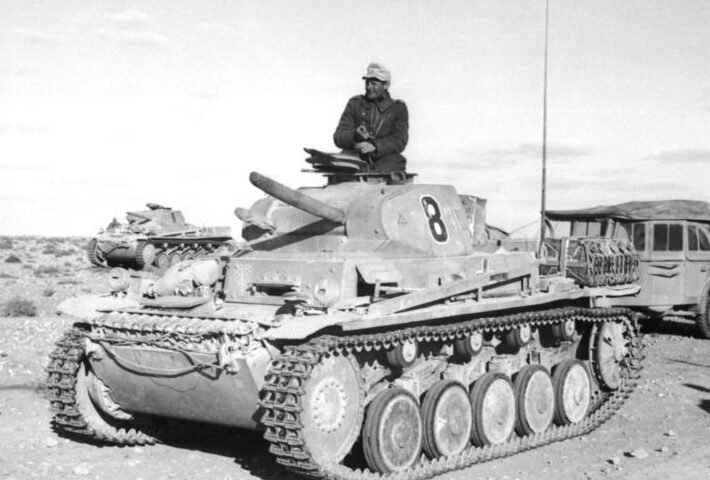
The DAK demonstrated the challenges of mechanized desert warfare and highlighted the strategic importance of North Africa. Its surrender marked the end of the Axis presence in the region. Image: A Panzer II of the Afrika Korps in WWII
The Axis forces faced severe logistical constraints throughout the campaign:
- Supply Lines: Relied on shipping supplies from Europe across the Mediterranean, which Allied naval and air forces frequently disrupted.
- Desert Warfare: The harsh environment made sustaining large, mechanized forces difficult, especially in terms of fuel and water.
Post-Campaign Legacy
Surrender and Aftermath
When the Afrika Korps surrendered in May 1943, most POWs were transported to camps in the United States, including Camp Shelby in Mississippi and Camp Hearne in Texas. These soldiers remained detained until the war’s end.
Unit Reformation
Some units of the Afrika Korps were re-formed in Europe:
- The 15th Panzer Division became the 15th Panzergrenadier Division.
- The 21st Panzer Division was rebuilt in France.
- The Hermann Göring Division and 90th Light Division continued fighting in Italy.
Conclusion
The Afrika Korps was a key component of the North African Campaign, demonstrating tactical brilliance under Rommel’s leadership but ultimately succumbing to logistical challenges and Allied superiority. Its legacy is a mix of military innovation, leadership, and controversy, reflecting the complexities of World War II in the desert theater.
Frequently Asked Questions about the German Africa Corps (Deutsches Afrika Korps) in WWII
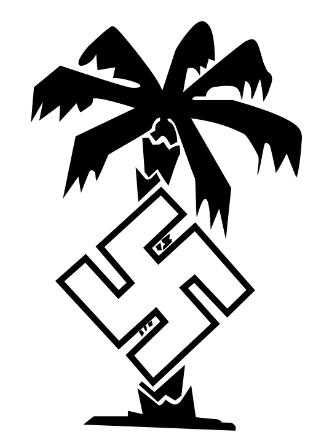
The DAK was an expeditionary force of Nazi Germany’s Army, active from 21 February 1941 to 13 May 1943, specializing in desert warfare during the North African Campaign of World War II. Image: Seal of the Afrika Korps
Why was the DAK sent to North Africa?
It was deployed to support struggling Italian forces in Libya, which were faltering after defeats by British Commonwealth forces.
Where was the DAK headquartered?
The DAK’s headquarters was based in Tripoli, Italian Libya.
Who were some of the notable commanders of the DAK?
Key commanders included:
- Field Marshal Erwin Rommel (the “Desert Fox”)
- Ludwig Crüwell
- Wilhelm Ritter von Thoma
- Walther Nehring
What made Erwin Rommel a prominent figure in the DAK?
Rommel’s tactical brilliance and aggressive strategies in desert warfare earned him the nickname “Desert Fox”, making him one of the most famous Axis commanders.
What were the main divisions within the DAK?
The DAK included:
- 15th Panzer Division
- 21st Panzer Division
- 90th Light Infantry Division
- Italian divisions like the Ariete and Littorio Armoured Divisions.
What larger commands was the DAK part of?
- The DAK was integrated into:
- Panzergruppe Afrika
- Panzerarmee Afrika
- The German-Italian Panzer Army.
How large was the DAK at its peak?
The DAK’s size peaked at 33,500 men in June 1941.
What were some critical operations and battles involving the DAK?

General Erwin Rommel, directing operations to the west of Tobruk, 16 June 1942
- Operation Sonnenblume
- Siege of Tobruk
- Battle of Gazala
What was the significance of the Second Battle of El Alamein?
It marked the turning point of the North African Campaign, where the British Eighth Army defeated the Axis forces, beginning their retreat.
What challenges did the DAK face during its campaign?
The DAK struggled with severe supply issues, including shortages of fuel, equipment, and reinforcements, which hindered its operations.
What led to the DAK’s defeat?
Despite tactical successes, the DAK’s logistical challenges, combined with Allied strength and the opening of a second front in North Africa during Operation Torch, culminated in its surrender in Tunisia in May 1943.





