Who was John Knox, and how did he become involved in the Reformaton?
John Knox (c. 1514 – 24 November 1572) was a pivotal figure in the Scottish Reformation, an influential minister, theologian, and writer who played a significant role in founding the Presbyterian Church of Scotland. His life was marked by a series of dramatic events and transformative experiences that shaped the religious landscape of Scotland and left a lasting legacy.
Early Life and Education
John Knox was born around 1514 in Giffordgate, a street in Haddington, East Lothian. His father, William Knox, was a merchant, and although little is known about his mother beyond her maiden name, Sinclair, it is believed she died when Knox was young. Knox likely received his early education at the grammar school in Haddington. During this time, the priesthood was one of the few viable paths for individuals with academic inclinations.
Knox’s higher education took place at either the University of St Andrews or the University of Glasgow, where he studied under John Major, a leading scholar of the era. He was ordained as a Catholic priest in 1536 by William Chisholm, Bishop of Dunblane. By 1540, Knox appeared in public records as a priest and notary, roles he continued to fulfill until at least 1543. However, rather than taking up parish duties, he became a tutor to the sons of two prominent lairds, Hugh Douglas of Longniddry and John Cockburn of Ormiston, both of whom were sympathetic to the burgeoning Reformation ideas.
Involvement in the Reformation
Knox’s journey towards becoming a leading figure in the Reformation began under the influence of George Wishart, an early church reformer. The movement for church reform was gaining momentum, and Knox soon became deeply involved. The murder of Cardinal David Beaton in 1546 and the subsequent intervention by Mary of Guise, the regent of Scotland, were pivotal events during this period. Knox’s participation in these events led to his capture by French forces and subsequent imprisonment.
In 1549, upon his release, Knox was exiled to England, where he found a new platform for his reformist ideas. He was licensed to work in the Church of England and rose through the ranks to become a royal chaplain to King Edward VI. Knox influenced the development of the Book of Common Prayer, demonstrating his significant role in shaping English liturgical practices. During his time in England, Knox also married his first wife, Margery Bowes.

John Knox married Margery Bowes during his time in England. His family life details are relatively less documented compared to his public and religious activities. Image: A 1572 portrait of Knox.
Exile and Return
The ascent of Mary I to the English throne in 1553, with her subsequent efforts to restore Catholicism, forced Knox to flee once again. This time, he sought refuge in Geneva, where he met John Calvin, one of the leading figures of the Reformation. Knox’s time in Geneva was crucial as he gained extensive knowledge of Reformed theology and Presbyterian polity, which later influenced his work in Scotland.
Knox’s sojourn in Frankfurt as the head of the English refugee church was short-lived due to conflicts over liturgical practices. His experiences during this period, however, contributed to his development of a new order of service, which would later be adopted by the Reformed Church in Scotland.
Leadership in the Scottish Reformation
Knox returned to Scotland in 1559, at a time when the country was ripe for religious reform. He quickly emerged as a leader of the Protestant Reformation in Scotland, working alongside the Protestant nobility. This movement was instrumental in overthrowing Mary of Guise, who was ruling on behalf of her daughter, Mary, Queen of Scots.
Knox was instrumental in drafting the new confession of faith and establishing the ecclesiastical order for the newly formed Reformed Church, known as the Kirk. His contributions to the Reformation in Scotland were not limited to organizational efforts; he also authored a significant work, “The History of the Reformation in Scotland,” a five-volume series written between 1559 and 1566, documenting the events and his perspectives on the Reformation.
Did you know…?
The University of Edinburgh Heritage Collection holds a copy of Knox’s Liturgy, translated into Scots Gaelic by John Carswell. This translation is significant as it was the first book printed in any Gaelic language.
Conflicts with Mary, Queen of Scots
Throughout the reign of Mary, Queen of Scots, Knox remained a staunch advocate for Protestantism. His confrontations with the Queen were legendary, as he openly criticized her support for Catholic practices. These interviews highlighted Knox’s uncompromising stance on religious matters and his influential role in shaping public opinion.
The political and religious turmoil of the period culminated in the imprisonment of Mary, Queen of Scots, following accusations of her involvement in the murder of her husband, Lord Darnley. Knox did not shy away from calling for her execution, underscoring his deep commitment to the Protestant cause.
Legacy
John Knox continued to preach until his death on 24 November 1572. His legacy is profound, as he laid the foundations for the Presbyterian Church of Scotland, which became a significant force in shaping Scottish society and culture. Knox’s influence extended beyond his lifetime through his writings and the institutional structures he helped establish.
The University of Edinburgh Heritage Collection holds a notable artifact related to Knox’s legacy: a copy of his Liturgy translated into Scots Gaelic by John Carswell. This translation is significant as it was the first book printed in any Gaelic language, demonstrating Knox’s broader impact on Scottish linguistic and cultural history.

John Knox is commemorated in various ways, including through statues, historical markers, and commemorative events in Scotland. His contributions to the Reformation and the establishment of Presbyterianism continue to be recognized in Scottish religious and cultural history. Image: Statue of Knox in New College, Edinburgh, by John Hutchison
FAQs
Where was John Knox born?
John Knox was born in Giffordgate, a street in Haddington, East Lothian, Scotland.
What was John Knox’s early education like?
Knox likely received his early education at the grammar school in Haddington. He later studied at either the University of St Andrews or the University of Glasgow, where he was influenced by John Major, one of the leading scholars of the time.
How did John Knox become involved in the Reformation?
Knox was influenced by early church reformers such as George Wishart. His involvement in the movement to reform the Scottish Church grew, particularly after the murder of Cardinal David Beaton in 1546 and the intervention of Mary of Guise, which led to his imprisonment by French forces and subsequent exile to England.
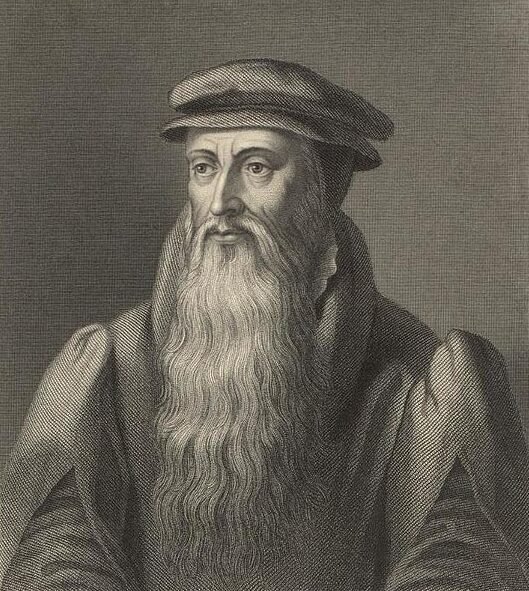
John Knox (c. 1514 – 24 November 1572) was a Scottish minister, Reformed theologian, and writer. He is best known as a leader of the Scottish Reformation and the founder of the Presbyterian Church of Scotland.
What role did John Knox play in the Church of England?
During his exile in England, Knox was licensed to work in the Church of England and served as a royal chaplain to King Edward VI. He had a reforming influence on the Book of Common Prayer.
Why did John Knox leave England?
Knox left England due to the ascension of Mary I, who sought to restore Catholicism. He fled to Geneva and Frankfurt, where he further developed his ideas on Reformed theology and Presbyterian polity.
What was John Knox’s relationship with John Calvin?
In Geneva, Knox met John Calvin, who was a significant influence on him. Knox gained experience and knowledge of Reformed theology and Presbyterian polity from Calvin, which he later applied in Scotland.
How did John Knox contribute to the Scottish Reformation upon his return?
Upon his return to Scotland in 1559, Knox became a leader of the Protestant Reformation, working with the Scottish Protestant nobility to oust Mary of Guise. He helped draft the new confession of faith and the ecclesiastical order for the Reformed Church, the Kirk.
What is John Knox’s “The History of the Reformation in Scotland”?
“The History of the Reformation in Scotland” is a five-volume series written by Knox between 1559 and 1566. It documents the events and his perspectives on the Reformation in Scotland.
What were Knox’s interactions with Mary, Queen of Scots?
Knox had several confrontational interviews with Mary, Queen of Scots, where he admonished her for supporting Catholic practices. He remained a vocal critic of her throughout her reign.
Knox openly called for the execution of Mary, Queen of Scots, after she was imprisoned for her alleged involvement in the murder of her husband, Lord Darnley.
How did John Knox influence the Presbyterian Church?
Knox’s work in establishing the Kirk, the Reformed Church of Scotland, laid the foundation for Presbyterianism. His ideas on church governance and liturgy shaped the development of the Presbyterian Church.
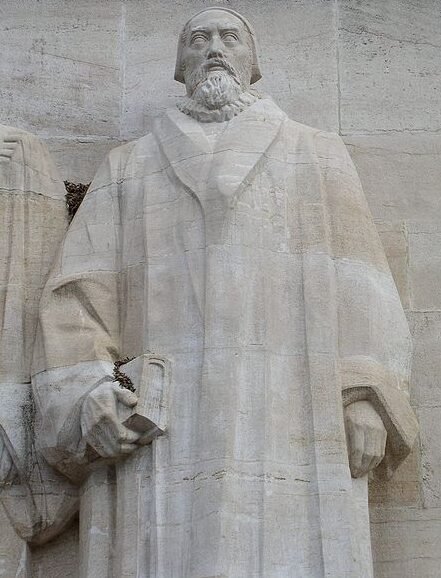
John Knox is remembered as a pivotal figure in the Scottish Reformation and the founder of the Presbyterian Church of Scotland. His writings, particularly “The History of the Reformation in Scotland,” and his role in establishing Presbyterian polity have left a lasting impact on Scottish religious and cultural history. Image: John Knox’s statue on the Reformation Wall.
When did John Knox die?
John Knox died on 24 November 1572.
How did Knox’s early career as a notary-priest influence his later work?
Knox’s early career as a notary-priest provided him with a background in ecclesiastical and legal matters, which helped him navigate the complex religious and political landscape of his time. His academic background and skills as a writer and preacher were instrumental in his later reform efforts.
What were some key writings of John Knox?
Apart from “The History of the Reformation in Scotland,” Knox wrote several other important works, including “The First Blast of the Trumpet Against the Monstrous Regiment of Women,” which criticized female rulers, reflecting his strong views on governance and gender roles in leadership.





