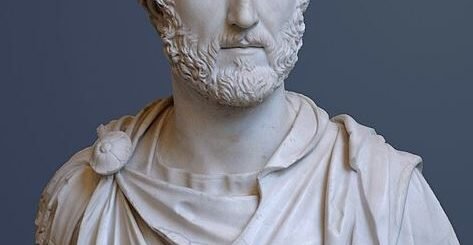
Who was Philip the Arab?
Philip I, known as Philip the Arab (c. 204–249), ruled the Roman Empire from 244 to 249.
Initially Praetorian prefect, he ascended after Gordian III’s death, negotiating peace with the Sasanian Empire and securing Senate approval. His reign, though brief, brought relative stability to a chaotic era.
While outwardly adhering to Roman religion, some later sources claimed Philip the Arab was Rome’s first Christian emperor, sparking scholarly debate.
His legacy appears in works like Chronicon by Jerome of Stridon and HistoriaEcclesiastica by Eusebius.
Early Life and Background
Philip the Arab, born around 204 CE in Shahba, Syria (then part of the Roman province Arabia Petraea), hailed from an area with strong Arab cultural ties. His family was likely of some prominence, with his father, Julius Marinus, being a local citizen.
Philip had a brother, Gaius Julius Priscus, who served in the Praetorian Guard under Emperor Gordian III. Despite later Roman sources alleging humble or even criminal origins, modern historians largely dismiss these claims. Married to Marcia Otacilia Severa, Philip had a son, Philip II, born around 237–238 CE.

Image: Statue of Philip the Arab.
Rise to Power
Philip’s political ascent was closely tied to his brother Priscus, an influential official under Gordian III. In 243 CE, during Gordian’s Persian campaign, the Praetorian prefect Timesitheus died under mysterious circumstances. Philip succeeded him as prefect, consolidating power alongside his brother.
In 244 CE, Gordian III died—whether in battle or through conspiracy remains unclear—and Philip seized the opportunity to claim the throne. His priority was to stabilize the empire and legitimize his rule through Senate confirmation.
Peace with Persia
As emperor, Philip swiftly negotiated peace with Shapur I of Persia. Although the terms included a significant indemnity of 500,000 denarii and recognition of Armenia under Persian influence, Philip retained key Roman territories in Mesopotamia. Coins commemorating the peace were issued, portraying Philip as a stabilizing force for the empire.

Image: Shapur I.
Administration and Governance
Philip sought to maintain good relations with the Senate, a strategic move to ensure stability. He deified his predecessor Gordian III and elevated his own family: his son became caesar and later augustus, and his wife was named augusta. Philip also deified his father, Julius Marinus, and initiated significant building projects, including the transformation of Shahba into Philippopolis, enhancing its civic and cultural status.
Financial Struggles
Philip’s reign faced severe financial challenges. The heavy indemnity to Persia, combined with lavish spending on public projects and celebrations, drained the imperial treasury. To compensate, Philip raised taxes and ceased paying subsidies to northern tribes. These measures, while necessary, provoked unrest among the provinces and along the frontiers.
Military Campaigns and Challenges
In 245 CE, Philip left Rome to address instability in the provinces. The Carpi invaded Dacia and Moesia, prompting Philip to lead a campaign that pushed them back across the Danube, earning him the title Carpicus Maximus. However, unrest persisted, with the Goths and other tribes launching raids. In the East, dissatisfaction with Philip’s policies led to revolts, including an uprising led by Marcus Jotapianus.
Rome’s Millennium Celebrations
One of the most notable events of Philip’s reign was the grand celebration of Rome’s millennium in 248 CE, marking 1,000 years since the city’s founding. These ludi saeculares featured games, theatrical performances, and spectacular displays in the Colosseum. Commemorative coins were issued, and literary works celebrated the occasion. The celebrations highlighted Philip’s emphasis on Roman tradition and unity.
Downfall and Death
Despite his efforts, Philip’s reign unraveled under mounting pressures. In 248 CE, the legions in Pannonia and Moesia rebelled, proclaiming Tiberius Claudius Pacatianus as emperor. Simultaneously, Germanic tribes raided the frontiers, and the Carpi renewed their assaults.
Financial strain worsened as Philip debased the currency, fueling discontent in Rome and the provinces. Decius, a trusted general, was dispatched to suppress the revolts but was proclaimed emperor by his troops in 249 CE. Marching against Philip, Decius defeated him near Verona, leading to Philip’s death. His son, Philip II, was also killed, marking the end of the dynasty.

A rock-carved relief at Naqsh-e Rostam depicts Shapur I on horseback, with Roman Emperor Philip standing and Emperor Valerian kneeling in submission before Shapur I.
Alleged Christianity
Some later sources, including Eusebius, claimed that Philip was the first Christian Roman emperor, citing his alleged participation in Christian rites.
However, contemporary evidence, such as coinage and official acts, suggests Philip adhered to traditional Roman religion. His tolerance toward Christians, rather than conversion, likely inspired these claims. Historians remain divided on the matter.
Legacy
Philip the Arab’s reign, though brief, stands out for its relative stability during a turbulent period in Roman history. His efforts to maintain tradition, celebrate Rome’s legacy, and manage external threats were overshadowed by financial challenges and political instability. Despite his controversial end, Philip’s rule is remembered for its cultural achievements and the historic celebration of Rome’s millennium.
Frequently Asked Questions about Philip the Arab

How did Philip the Arab rise to power?
Philip rose to prominence through his brother, Priscus, who was an official under Emperor Gordian III. After the death of the Praetorian prefect Timesitheus in 243, Philip assumed the role, and following Gordian III’s demise during a campaign against Persia in 244, Philip claimed the throne.
What were Philip’s notable achievements as emperor?
Philip negotiated peace with the Persian king Shapur I, commemorated Rome’s millennium with grand celebrations, and emphasized Roman traditions. He also undertook significant building projects in his hometown of Shahba, renaming it Philippopolis.

Image: Aureus of Philip.
What challenges did Philip face during his reign?
He struggled with economic strain caused by military demands, high taxation, and ceasing subsidies to frontier tribes. These issues sparked revolts, invasions, and instability, contributing to his eventual downfall.
What is the significance of Philip’s alleged Christianity?
Eusebius claimed that Philip was the first Christian emperor, but this is debated among historians. While he showed tolerance toward Christians, there is little contemporary evidence to confirm his adherence to the faith.
How did Philip’s rule come to an end?
Philip was defeated and killed in 249 by Decius, who was proclaimed emperor by the legions. This marked the end of Philip’s reign and underscored the instability of the Roman Empire during that period.