Why are there two Virginias?
The existence of Virginia and West Virginia as two distinct entities is the result of a complex interplay of historical, economic, and political factors. This division, officially culminating in 1863, was driven by deep-rooted differences in culture, economy, and attitudes towards slavery.
In order to understand the reasons for the division of Virginia into two separate states, historians at World History Edu delve into the colonial history, antebellum societal structures, and the tumultuous period of the American Civil War.

The division of Virginia into Virginia and West Virginia was driven by long-standing regional differences in economy, culture, and political power. Image: The state seal of Virginia.
Colonial Roots and Early Differences
The seeds of division were planted long before the American Civil War, dating back to the colonial era. In the early 17th century, the Virginia Colony was established, encompassing a vast territory that included present-day West Virginia.
The eastern part of the colony, known as Tidewater Virginia, developed a plantation-based economy reliant on tobacco farming and, subsequently, slavery.
In contrast, the western regions, including what would become West Virginia, were characterized by small-scale farming, rugged terrain, and a more diverse economy.
These geographical and economic differences led to distinct cultural and social developments. Eastern Virginia’s reliance on slavery created a hierarchical society with a powerful planter elite, while the western regions developed a more egalitarian society with less dependence on slave labor. This divergence set the stage for future conflicts as the nation moved towards greater sectionalism in the 19th century.
Growing Tensions between the Westerners and Easterners
As the United States expanded and the issue of slavery became more contentious, the differences between eastern and western Virginia became more pronounced. The eastern planters, who dominated the state legislature, implemented policies favoring their economic interests, often at the expense of the western counties. This included the distribution of tax burdens and the allocation of state funds for infrastructure projects, which disproportionately benefited the east.
Moreover, the political representation was skewed in favor of the eastern counties due to the state’s apportionment system, which was based on the number of slaves. This disenfranchised the western counties, where slavery was less prevalent. The frustration of the western Virginians grew, leading to increased calls for more equitable representation and fairer economic policies.
The Civil War and the Birth of West Virginia
The election of Abraham Lincolnin 1860 and the subsequent secession of southern states from the Union were the catalysts for the final division of Virginia. Eastern Virginia, with its deep ties to the Confederacy and commitment to slavery, voted to secede from the Union in April 1861. However, many western Virginians were opposed to secession and remained loyal to the Union.
In response to Virginia’s secession, delegates from the western counties convened in Wheeling in June 1861, forming the Restored Government of Virginia, which was loyal to the Union. This government sought recognition from the federal government and worked towards the creation of a new state. After a series of Wheeling Conventions and a popular referendum, the new state of West Virginia was officially admitted to the Union on June 20, 1863.
Post-Civil War and the Solidification of Statehood
The establishment of West Virginia was not without controversy. The new state faced legal challenges regarding its constitutionality, as the creation of a new state from an existing one required the consent of the original state’s legislature. However, the federal government, eager to weaken the Confederacy and bolster Union support, endorsed the formation of West Virginia.
Following the Civil War, West Virginia developed its own identity, separate from Virginia. The new state focused on industrialization, particularly in coal mining and timber, which became the backbone of its economy. In contrast, Virginia underwent a period of reconstruction and eventually shifted from its agrarian base towards a more diversified economy.
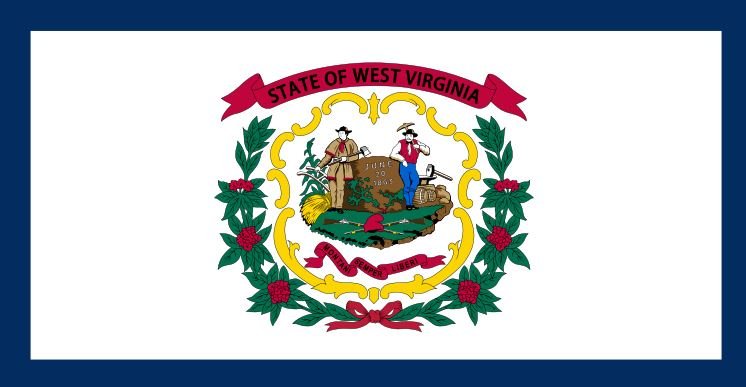
The secession of Virginia from the Union during the Civil War provided the western counties with the opportunity to break away and form their own state, leading to the official creation of West Virginia on June 20, 1863. Image: The flag of the state of West Virginia.
Socio-Economic Divergence
Over time, the economic trajectories of Virginia and West Virginia diverged significantly. Virginia, particularly its eastern and central regions, experienced substantial economic growth, driven by factors such as the expansion of government institutions in Washington D.C., the development of technology sectors in Northern Virginia, and the growth of education and research institutions like the University of Virginia.
West Virginia, on the other hand, continued to rely heavily on extractive industries like coal mining. While this brought economic benefits, it also led to challenges such as environmental degradation, economic dependency on a single industry, and labor disputes. The decline of coal in the late 20th and early 21st centuries further exacerbated economic difficulties in West Virginia, leading to population decline and economic stagnation.

Cultural and Political Identity of the Two Virginias
The cultural identities of Virginia and West Virginia also evolved differently. Virginia, with its historical ties to the early United States and its role as the birthplace of several founding fathers, maintained a strong sense of Southern heritage while increasingly integrating into the national economy and culture. West Virginia developed a distinct Appalachian identity, characterized by a strong sense of community, resilience, and pride in its rugged landscape and cultural heritage.
Politically, Virginia became more diverse, with regions like Northern Virginia becoming increasingly urbanized and liberal, influencing the state’s overall political orientation. West Virginia, traditionally a Democratic stronghold due to its labor-oriented politics, shifted towards the Republican Party in the late 20th century, reflecting broader national trends and economic frustrations.

Today, Virginia and West Virginia stand as separate entities, each with its own unique history and challenges, yet both rooted in the shared legacy of their colonial origins and the transformative events of the 19th century. Image: State flag for Virginia.
Frequently asked questions about the two Virginias
When was the colony of Virginia established?
The colony of Virginia was established in 1607.
What were the main economic differences between the eastern and western parts of Virginia?
The eastern part of Virginia focused heavily on investing in slaves to support their plantation economy, while the western part invested more in land and small-scale farming.
Where was the political power in Virginia concentrated, and why?
The political power in Virginia was concentrated in the east, primarily due to the location of the state capital, Richmond, and the economic interests of the powerful planter class.

Image: A 2017 picture of the Virginia State Capitol in Richmond.
What policies favored the eastern part of Virginia over the western part?
Policies that favored the east included high taxes on land and low taxes on slaves.
Why were the westerners in Virginia unable to secede from the state?
Westerners were constitutionally unable to secede from Virginia without the consent of the state capital, Richmond.
What significant event occurred on May 23, 1861, and how did it affect Virginia?
On May 23, 1861, Virginia seceded from the Union at the onset of the Civil War, pulling the western part of the state into the Confederacy despite many westerners’ loyalty to the Union.
How did Virginia’s secession from the Union change the constitutional barriers for the western counties?
Virginia’s secession removed the constitutional barriers that had prevented the western counties from forming their own state, as they were no longer bound by Union rules requiring the original state’s consent for the creation of a new state.
When was West Virginia officially declared a state, and what did this decision highlight?
West Virginia was officially declared a state on June 20, 1863. This decision highlighted the deep economic, social, and political differences that had existed for decades between the eastern and western parts of Virginia.
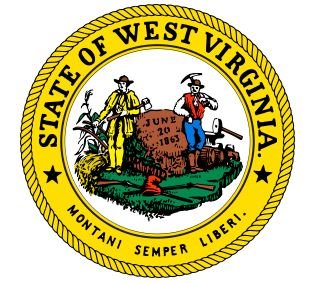
The creation of West Virginia reflected significant internal conflicts within Virginia, particularly the economic and political oppression felt by the western counties due to the dominance of eastern Virginia’s planter aristocracy and their pro-slavery stance. Image: The seal of the state of West Virginia.
What key legal and constitutional issue was bypassed in the creation of West Virginia, and how?
The key legal and constitutional issue was the clause stating that “no new state can be formed from the territory of an existing state without the latter’s consent.” This was bypassed by the federal government recognizing the pro-Union government set up by western Virginians as the legitimate government of the entire state of Virginia.





