Who were the Greensboro Four?
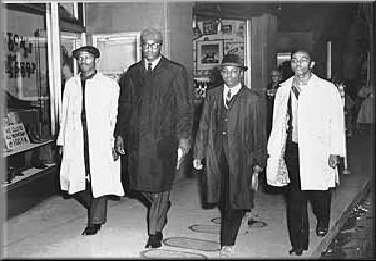
In the annals of the American Civil Rights Movement, certain events stand out as pivotal moments that galvanized the nation and accelerated the push for equality. The actions of the Greensboro Four in 1960 were one such moment, when a simple act of civil disobedience in a Woolworth’s store in Greensboro, North Carolina, led to a wave of sit-ins and protests across the South.
10 significant developments in the Black Freedom Struggle between 1905 and 1970
Background
To understand the impact of the Greensboro Four’s actions, it’s essential to appreciate the backdrop against which they occurred. The late 1950s and early 1960s were a turbulent time in the United States, particularly in the South. Segregation was the law of the land, upheld by the “separate but equal” doctrine. This resulted in separate facilities for blacks and whites, including schools, restrooms, water fountains, and eateries.
The Greensboro Four
Four young African American students from North Carolina Agricultural and Technical State University took a bold step on February 1, 1960. They were:
- Ezell Blair Jr. (later known as Jibreel Khazan)
- David Richmond
- Franklin McCain
- Joseph McNeil
These young men, motivated by stories of the Civil Rights Movement and tired of the pervasive racial segregation and injustice, decided to challenge the status quo directly.

The Sit-In
On that fateful day, the Greensboro Four entered the Woolworth store in Greensboro. After purchasing a few small items, they proceeded to the “whites-only” lunch counter and asked to be served. As expected, they were denied service due to their race. Rather than leaving, they chose to remain seated in peaceful protest, drawing inspiration from the nonviolent resistance teachings of Mahatma Gandhi and Dr. Martin Luther King Jr.
Their sit-in was a carefully planned act. Ralph Johns had already alerted local media, ensuring that their protest would be seen by a broader audience. As they remained seated, enduring harassment and threats, they became symbols of resistance against racial injustice.
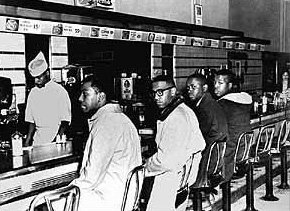
The Greensboro Four calmly sat at Woolworth’s counter, requesting service which was denied. When police were called, they couldn’t act as the students were peaceful customers. Media coverage escalated the protest, spurred by a local newspaper photo. Image: Sitting from left: Joseph McNeil, Billy Smith and Clarence Henderson on second day of sit-ins, Woolworth, Greensboro, February 2, 1960
Immediate Aftermath and Expansion of the Movement
Word of their protest spread quickly. The very next day, more students joined the sit-in, and within days, hundreds were participating. The Woolworth’s lunch counter became the epicenter of a growing movement.
The protest was not without opposition. The Greensboro Four and those who joined them faced intimidation, physical threats, and even violence. However, their commitment to nonviolence made their oppressors appear even more unjust in the public eye.
As news of the Greensboro sit-in spread, it inspired similar protests throughout the South. Students, both black and white, began sitting in at segregated lunch counters in cities across the region. The sit-in movement had begun.

The impact of the Greensboro sit-ins was monumental and immediate. Within just three months, the movement had spread to more than 55 cities across 13 states, demonstrating the potent influence of nonviolent resistance and the interconnectedness of communities fighting for civil rights.
Significance of the Sit-Ins
The sit-ins were significant for several reasons:
- Youth-Led Movement: The protests demonstrated the power of young people to effect change. College students played a pivotal role, bringing fresh energy and determination to the Civil Rights Movement.
- Nonviolent Protest: The commitment to nonviolence strengthened the moral authority of the movement. Despite provocations, protesters refused to retaliate, highlighting the stark contrast between their peaceful demands for rights and the violent attempts to suppress them.
- Economic Impact: The sit-ins weren’t just symbolic; they had tangible economic consequences. Businesses lost revenue due to the protests, forcing them to confront the financial implications of segregation.
- Foundation for Organized Groups: The sit-in movement led to the formation of the Student Nonviolent Coordinating Committee (SNCC) in April 1960. SNCC became one of the leading organizations in the civil rights struggle.
Outcome
The perseverance of the Greensboro Four and those they inspired yielded results. After months of sit-ins and negotiations, the Woolworth store in Greensboro began serving black customers at its lunch counter on July 25, 1960. This victory was a testament to the effectiveness of nonviolent protest and direct action.
Across the South, the sit-in movement resulted in the desegregation of many public places. While many challenges remained, the movement had won a significant battle against institutional racism.

The tangible outcomes of the Greensboro sit-ins were significant. The sustained protests and economic pressure from the African American community led to the desegregation of lunch counters at Greensboro businesses. This victory marked a crucial point in the civil rights movement, proving that strategic, peaceful protests could result in concrete changes.
Did you know…?
- The Greensboro Four were inspired by Mohandas Gandhi’s nonviolent methods and the 1947 Congress for Racial Equality (CORE) Freedom Rides, which challenged racial segregation in interstate bus travel across the South following a Supreme Court ruling.
- In part, the Greensboro Four were motivated by the gruesome murder of Emmett Till in 1955. Emmett was a young Black boy killed in Mississippi for allegedly whistling at a white woman, propelling them into civil rights activism.
- The old Woolworth’s in Greensboro is now the International Civil Rights Center and Museum, showcasing a restored lunch counter from the Greensboro Four sit-in, with parts also displayed at the Smithsonian in Washington, D.C.
- By summer 1960, following the sit-in movement’s success, Southern dining spots integrated. In late July, Greensboro Woolworth’s discreetly desegregated its counter, serving four Black employees first: Geneva Tisdale, Susie Morrison, Anetha Jones, and Charles Best.
Legacy of the Greensboro Four
The legacy of the Greensboro Four extends far beyond the immediate aftermath of their protest:
- Inspiration: Their actions inspired countless others to join the Civil Rights Movement, leading to monumental changes in American society.
- Education and Remembrance: The Woolworth store in Greensboro is now the International Civil Rights Center & Museum, ensuring that the story of the Greensboro Four and the broader Civil Rights Movement is preserved for future generations.
- Continued Activism: Members of the Greensboro Four remained active in civil rights issues throughout their lives, ensuring that their impact was felt long after the initial sit-in.
Frequently Asked Questions about the Greensboro Sit-Ins

The questions below can help guide a deeper understanding of the significance and outcomes of the Greensboro sit-ins in the context of the civil rights movement.
What event marked the beginning of the Greensboro sit-ins?
The Greensboro sit-ins began on February 1, 1960, when four African American students sat down at a “whites only” lunch counter at the F.W. Woolworth store in Greensboro, North Carolina.
Who were the four students involved in the initial Greensboro sit-in?
The four students were Ezell Blair Jr., David Richmond, Franklin McCain, and Joseph McNeil, all from North Carolina Agricultural and Technical State University.
What inspired the Greensboro Four to initiate the sit-in?
They were inspired by the nonviolent protest techniques practiced by Mahatma Gandhi and the teachings of Dr. Martin Luther King Jr., aiming to challenge racial segregation and demand equal service for all races.
How did the students conduct themselves during the sit-ins?
The students conducted themselves with composed dignity, reading books and doing homework while enduring verbal and physical harassment, maintaining a peaceful demeanor throughout the protest.
What was the immediate effect of the Greensboro sit-ins on Woolworth’s management?
Initially, Woolworth’s management resisted making changes, but the continued sit-ins and economic impact from boycotting African American consumers eventually compelled them to desegregate the lunch counter on July 25, 1960.
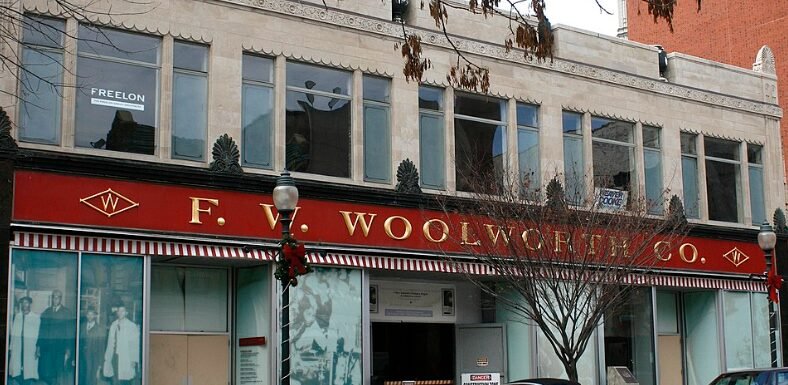
The Greensboro sit-ins served as a catalyst, inspiring a wave of similar protests throughout the South. These actions not only challenged local discriminatory policies but also fostered a broader national discourse on racial inequality. Image: Woolworth store in Greensboro
What was the broader impact of the Greensboro sit-ins on the civil rights movement?
The sit-ins served as a catalyst for the subsequent sit-in movement that spread across the country, leading to the desegregation of numerous public and private facilities and the weakening of segregation laws in the United States.
How did the Greensboro sit-ins contribute to the formation of the Student Nonviolent Coordinating Committee (SNCC)?
The success and publicity of the Greensboro sit-ins played a critical role in the formation of SNCC in April 1960, which became a fundamental organization in the civil rights movement.
What happened to the SNCC after the Greensboro sit-ins?
Over the next few years following its formation, the Student Nonviolent Coordinating Committee (SNCC) emerged as a pivotal force in the civil rights movement. SNCC notably organized the Freedom Rides in 1961, challenging racial segregation in interstate bus terminals across the South, and played a significant role in the historic 1963 March on Washington, where Martin Luther King Jr. delivered his iconic “I Have a Dream” speech.
Working in partnership with organizations like the National Association for the Advancement of Colored People (NAACP), SNCC was instrumental in lobbying for the passage of the Civil Rights Act of 1964, which was a major legislative achievement in the movement. The group also took a stand on international issues, mounting an organized opposition to the Vietnam War, reflecting its broader commitment to social justice.
However, as the 1960s progressed, SNCC members increasingly faced violent reprisals for their activism, contributing to a shift in the organization’s tone and tactics. Under the leadership of Stokely Carmichael (chairman from 1966 to 1967) and his successor, H. Rap Brown, the committee adopted a more militant stance, promoting the “Black Power” philosophy. This philosophy emphasized racial pride, economic empowerment, and the creation of political and cultural institutions for black people in the United States.
By the late 1960s, this shift toward militancy led to a decrease in mainstream support for SNCC, and by the early 1970s, the organization had largely disbanded. Despite its relatively brief lifespan, SNCC’s impact on the civil rights movement and its role in shaping the discourse around racial equality were profound.
Why did many American colleges fiercely oppose the Vietnam War?
What does the original Woolworth store in Greensboro serve as today?
Today, the original Woolworth store is the International Civil Rights Center and Museum, which educates and inspires future generations about the civil rights movement and the ongoing struggle for social justice.
What Happened to the Greensboro Four?
After the Greensboro sit-ins, the lives of the Greensboro Four—Ezell Blair Jr., David Richmond, Franklin McCain, and Joseph McNeil—took different paths, but all continued to be involved in civil rights and professional endeavors:
- Ezell Blair Jr. (Jibreel Khazan): After the sit-ins, Blair changed his name to Jibreel Khazan following his conversion to Islam. He continued his involvement in civil rights and worked in various community service roles. Khazan remains an active speaker and advocate for social justice.
- David Richmond: Richmond faced challenges finding employment due to his activism but eventually worked as a counselor-coordinator for the CETA program in Greensboro. Despite some professional setbacks, he remained committed to civil rights throughout his life. Richmond passed away in 1990, at age 49. The cause of death was lung cancer.
- Franklin McCain: McCain graduated with a degree in chemistry and biology, and had a successful career in chemistry and sales, working for companies such as Celanese Corporation and Scott Paper Company. He also served on the board of trustees for North Carolina A&T State University and remained a passionate advocate for civil rights until his death in 2014.
- Joseph McNeil: McNeil had a career in the U.S. Air Force, retiring as a Major General. He also worked at the Federal Aviation Administration. McNeil continued to speak about civil rights and was involved in various community and service activities.
All four men are remembered not only for their courage during the sit-ins but also for their lifelong commitments to equality and justice. Their actions at Woolworth’s lunch counter have left a lasting impact on civil rights history.