How Did Wu Zetian Come to Power?
by World History Edu · July 26, 2024

Wu Zetian’s story remains a fascinating and significant chapter in the history of China. Image taken from An 18th century album of portraits of 86 emperors of China, with Chinese historical notes. Originally published/produced in China, 18th century. (British Library, shelfmark Or. 2231)
Wu Zetian‘s rise to power is a remarkable and unprecedented story in Chinese history, characterized by political acumen, strategic alliances, and ruthless tactics. Her ascent from a concubine to the only female emperor of China was a complex process involving maneuvering within the imperial court, leveraging relationships, and overcoming significant opposition.
This detailed exploration by World History Edu outlines the various stages and strategies Wu Zetian employed to ascend to the pinnacle of Chinese political power.
Early Life and Entrance into the Imperial Court
Wu Zetian was born in 624 AD to a relatively wealthy and noble family. Her father, Wu Shihuo, was a timber merchant who later became a general in the Tang Dynasty. Wu Zetian received an education that included literature, music, and history, which was somewhat unusual for women at the time and indicative of her family’s status and progressive outlook on female education.
At the age of 14, Wu Zetian entered the imperial court of Emperor Taizong as a concubine, taking the title of cairen (才人), a fifth-rank concubine. During her time as Taizong’s concubine, Wu Zetian served in various capacities, including attending to the emperor’s personal needs. Though she did not initially have significant influence, she observed and learned the intricacies of court politics.
Relationship with Emperor Gaozong

Emperor Gaozong of Tang (Reign: 649 – 683)
Upon Emperor Taizong’s death in 649 AD, Wu Zetian, following the custom, was sent to a Buddhist convent to become a nun. However, her fate changed when Li Zhi, Taizong’s son and the new Emperor Gaozong, brought her back to the palace. Gaozong had been enamored with Wu Zetian during his father’s reign, and their relationship rekindled upon her return.
Wu Zetian’s position in the palace rapidly ascended as she became one of Gaozong’s favorite concubines. Her intelligence, political savvy, and ambition distinguished her from other concubines. She bore Gaozong several children, which further solidified her position.

Emperor Taizong of Tang Dynasty (Reign: 626 – 649)
Rise to Empress
One of the key turning points in Wu Zetian’s ascent was her rivalry with Empress Wang and Consort Xiao, Gaozong’s primary wife and another favored concubine. Wu Zetian used her cunning to turn Gaozong against Empress Wang and Consort Xiao. Historical accounts, though often colored by later Confucian historians who were critical of Wu Zetian, suggest that she orchestrated a series of plots to eliminate her rivals. This culminated in accusations that Empress Wang and Consort Xiao had used witchcraft against Wu Zetian, leading to their downfall. They were demoted, imprisoned, and eventually executed.
In 655 AD, Wu Zetian was declared Empress, replacing Wang. As empress, Wu Zetian exercised considerable influence over Gaozong, who was often ill and relied on her for administrative decisions. Her influence grew as she became more involved in state affairs, effectively co-ruling with her husband.
Consolidation of Power
Wu Zetian’s role as empress provided her a platform to expand her influence. She began to place her loyalists in key government positions and formed alliances with influential court officials. She was also known for her patronage of Buddhism, which she used to legitimize her authority. By promoting herself as a devout Buddhist, she garnered support from the Buddhist clergy and the common people, who were largely Buddhist.
When Gaozong suffered a debilitating stroke in 660 AD, Wu Zetian assumed more direct control of the government. She issued edicts, held court sessions, and managed state affairs, effectively acting as the de facto ruler. Her administrative capabilities and decision-making skills were evident during this period, as she implemented policies aimed at strengthening the central government and curbing corruption.
Declaring Herself Emperor
After Gaozong’s death in 683 AD, Wu Zetian’s son, Li Xian, ascended the throne as Emperor Zhongzong. However, Zhongzong’s reign was short-lived, as Wu Zetian quickly deposed him for displaying independence and attempting to assert his authority. She replaced him with her younger and more pliant son, Li Dan, who became Emperor Ruizong.
As regent, Wu Zetian continued to consolidate power, marginalizing potential rivals and strengthening her control over the military and bureaucracy. Her rule was marked by a series of political purges aimed at eliminating opposition. She established a secret police force to monitor and suppress dissent, and many officials were executed or exiled during this period.
In 690 AD, Wu Zetian took the unprecedented step of declaring herself emperor, establishing the Zhou Dynasty and ruling in her own right. This was a bold move, as it defied the traditional Confucian norms that strictly relegated women to subordinate roles. To legitimize her rule, Wu Zetian emphasized her support for Buddhism, commissioned grandiose projects, and promoted the idea that she was a reincarnation of the Maitreya Buddha.
Strategies and Policies
Wu Zetian’s reign was characterized by several key strategies and policies that helped her maintain power:
- Meritocracy: She expanded the civil service examination system, allowing talented individuals from lower social classes to enter the bureaucracy. This reduced the influence of aristocratic families and ensured that loyal and competent officials were appointed.
- Agrarian Reforms: Wu Zetian implemented policies to improve agricultural productivity and the lives of peasants, which helped stabilize the economy and garnered popular support.
- Military Strengthening: She reorganized the military and placed loyal generals in command, ensuring the stability and security of her regime.
- Cultural Patronage: Wu Zetian was a patron of the arts and literature, promoting cultural projects that enhanced her prestige and legitimized her rule. She also commissioned historical works that portrayed her reign favorably.
- Suppression of Opposition: Wu Zetian did not hesitate to use ruthless measures to suppress opposition. Political purges, executions, and exiles were common, as she sought to eliminate any threats to her authority.
Challenges and Opposition
Despite her effective rule, Wu Zetian faced significant opposition throughout her reign. Confucian scholars and traditionalists viewed her ascent as unnatural and against the established social order. They criticized her methods and depicted her negatively in historical records.
Rebellions and conspiracies against her rule were also common, though Wu Zetian managed to suppress them through a combination of military force and political maneuvering. Her ability to maintain control despite these challenges speaks to her political acumen and determination.
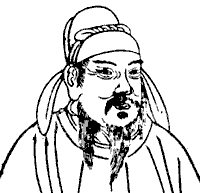
Emperor Zhongzong of Tang (Reign: 1st: 23 January – 26 February 684; 2nd: 23 February 705 – 3 July 710)
Abdication and Legacy
In her later years, Wu Zetian faced increasing opposition from court officials and members of the Tang imperial family. In 705 AD, a coup forced her to abdicate in favor of her son, Emperor Zhongzong. She was exiled and died later that year.
Wu Zetian’s legacy is complex and multifaceted. On one hand, she is remembered for breaking gender barriers and ruling effectively in a male-dominated society. Her administrative reforms, patronage of Buddhism, and cultural contributions had long-lasting impacts on Chinese history. On the other hand, her ruthless tactics and the political purges during her reign have left a controversial legacy.
Frequently Asked Questions about Wu Zetian
Wu Zetian (624-705 AD) was the only female emperor in Chinese history who ruled during the Tang Dynasty. She initially served as a concubine to Emperor Taizong and later became the empress consort of his son, Emperor Gaozong. After his death, she declared herself the emperor of China and established the short-lived Zhou Dynasty (690-705 AD).
Wu Zetian’s rise to power was a testament to her intelligence, ambition, and political skill. She navigated the complexities of the imperial court, leveraged relationships, and employed both strategic reforms and ruthless tactics to become the only female emperor in Chinese history.
What were some of Wu Zetian’s significant achievements?
Wu Zetian implemented several reforms that had long-lasting impacts on Chinese society, including:
- Merit-based Bureaucracy: She expanded the civil service examination system to recruit talented individuals based on merit rather than aristocratic connections.
- Agricultural Development: She promoted agricultural production and implemented measures to improve the lives of peasants.
- Buddhism Promotion: Wu Zetian was a patron of Buddhism, using it to legitimize her rule. She commissioned numerous Buddhist projects, including the construction of temples and the spread of Buddhist texts.
Why is Wu Zetian often seen as a controversial figure?
Wu Zetian’s rise to power and reign were marked by ruthless tactics, including political purges, executions, and accusations of manipulating historical records. Traditional Confucian historians often depicted her negatively due to her unprecedented role as a female ruler and her methods of consolidating power. However, modern historians view her more objectively, recognizing both her achievements and the challenges she faced as a female ruler.
How did Wu Zetian’s rule end?
Wu Zetian rose to power through a combination of political acumen, strategic alliances, and ruthless tactics. After Emperor Taizong’s death, she joined a Buddhist convent but was brought back to the palace by Emperor Gaozong. She became his favorite concubine and eventually his empress. Upon Gaozong’s death, Wu Zetian became the regent for her sons and eventually seized the throne herself, declaring the Zhou Dynasty.
In her later years, Wu Zetian faced increasing opposition from court officials and members of the Tang imperial family. In 705, a coup forced her to abdicate in favor of her son, Emperor Zhongzong. She was exiled and died later that year. After her death, the Tang Dynasty was restored, and her reign was officially erased from many historical records.
What is Wu Zetian’s legacy?
Wu Zetian remains a highly debated figure in Chinese history. She broke gender barriers by becoming the only female emperor of China and left a mixed legacy of significant reforms and ruthless politics. Her reign demonstrated the complexities and challenges of female leadership in a patriarchal society and continues to be a subject of interest and study in both historical and feminist contexts.
History of the Tang dynasty and why it is considered the Golden Age in Chinese history