Zhou Enlai: History & Major Facts
Zhou Enlai, born on March 5, 1898, in Huai’an, Jiangsu province, is widely regarded as one of the most influential and pragmatic leaders in modern Chinese history. His life and political career spanned from the final years of the Qing Dynasty to the early stages of the People’s Republic of China (PRC), and his impact on the country extended well into the 20th century.
Zhou’s steady hand in governance, diplomacy, and statecraft helped navigate China through significant periods of social upheaval, internal struggles, and foreign relations challenges. His ability to work alongside Mao Zedong and other revolutionary leaders while maintaining his position during some of the most tumultuous times in Chinese history marks him as a unique figure in the Chinese Communist Party (CCP).
Early Life and Education
Zhou Enlai was born into a declining gentry family in Huai’an, Jiangsu province. Despite the family’s declining fortunes, Zhou had access to a good education and exhibited remarkable academic abilities from a young age. He moved to the city of Shenyang after his father secured a job there, and later attended Nankai Middle School in Tianjin, which had a reputation for fostering reformist thinking. This exposure to new political ideas, along with the influence of his uncle, Zhou Yigeng, instilled in Zhou a strong sense of national pride and a desire to contribute to China’s modernization.
In 1917, Zhou left China for Japan to continue his studies. His time in Japan exposed him to various political philosophies, including socialism and Marxism, which were gaining popularity among young Chinese intellectuals who were disillusioned with the political status quo. Zhou returned to China in 1919, deeply influenced by these ideas and determined to play a role in transforming the country.
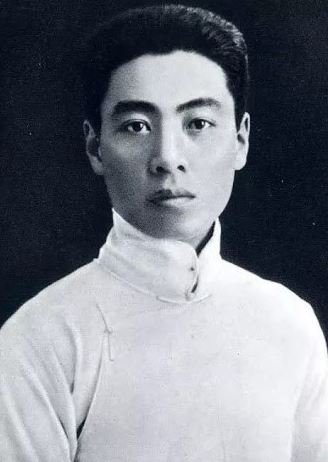
Image: Zhou Enlai during his student years at Nankai Middle School.
Early Revolutionary Activities
Upon his return to China, Zhou Enlai became involved in the May Fourth Movement, a national protest against the Treaty of Versailles, which had transferred control of Chinese territories to Japan. This movement marked a turning point for many young intellectuals, including Zhou, who became increasingly interested in Marxist thought and Communist ideology as solutions to China’s social and political crises.
In the early 1920s, Zhou left China again, this time to study in Europe. He traveled to France, where he became part of a circle of Chinese students, many of whom, like Zhou, were politically active. This group included future CCP leaders such as Deng Xiaoping. In France, Zhou was further radicalized and became a founding member of the Chinese Communist Youth League in Europe, advocating for the spread of Communist ideas among Chinese expatriates.
Returning to China in 1924, Zhou joined the CCP and quickly rose through its ranks. He played a key role in organizing labor strikes and other revolutionary activities, and by 1927, he had become the leader of the CCP’s underground activities in Shanghai. However, the Kuomintang (KMT), under Chiang Kai-shek, launched a violent suppression of Communists during the Shanghai Massacre of 1927. Zhou narrowly escaped death and retreated to the rural areas of China, where he joined the remnants of the Communist forces.
The Long March and Rise to Prominence
The failure of the Communist insurrection in the cities forced the CCP to rethink its strategies. In 1934, Zhou, along with Mao Zedong and other Communist leaders, embarked on the Long March, a year-long retreat from the KMT forces. The Long March was a turning point in the history of the CCP, as it not only ensured the survival of the Communist movement but also solidified Mao Zedong’s leadership. Zhou Enlai played a key role in maintaining unity within the Party during this grueling journey and emerged as one of Mao’s most trusted allies.
Zhou’s role during the Long March and the subsequent relocation of the CCP to Yan’an earned him a prominent place in the Party’s leadership. He became a member of the CCP’s Central Committee and was put in charge of military and political affairs. During the Second Sino-Japanese War (1937-1945), Zhou served as the CCP’s chief negotiator with the KMT in Chongqing, where the Nationalist government was temporarily based. His diplomatic skills were instrumental in maintaining a fragile alliance with the KMT against the Japanese invasion, even as tensions between the two parties continued to simmer.
Role in the Chinese Civil War
After Japan’s defeat in 1945, the uneasy alliance between the CCP and the KMT collapsed, and China descended into civil war. During this period, Zhou Enlai served as one of the chief strategists for the CCP, working closely with Mao Zedong to guide the Communist forces to victory. His political and military acumen, as well as his ability to maintain relationships with various factions, helped ensure the success of the CCP’s efforts.
Zhou also played a crucial role in international diplomacy during the Civil War. He was instrumental in securing Soviet support for the CCP, while also managing to avoid direct conflict with the United States, which was supporting the KMT. Zhou’s ability to navigate these complex international relationships allowed the CCP to gain the upper hand in the conflict, and by 1949, the Communists had emerged victorious, establishing the People’s Republic of China.
Premier of the People’s Republic of China
In 1949, with the establishment of the People’s Republic of China, Zhou Enlai was appointed as the first Premier, a position he would hold until his death in 1976. As Premier, Zhou was responsible for overseeing the day-to-day operations of the government, as well as for shaping China’s foreign and domestic policies. In addition to being Premier, Zhou also served as the foreign minister from 1949 to 1958, making him the face of China’s diplomacy during its formative years.

Image: Zhou Enlai during the 1950s
Early Domestic Policies and Economic Development
In the early years of the People’s Republic, Zhou Enlai focused on stabilizing the country after decades of war and internal strife. He was deeply involved in efforts to rebuild the economy, which had been devastated by the Civil War and years of Japanese occupation. Zhou’s economic policies were pragmatic and aimed at restoring basic infrastructure, boosting agricultural production, and initiating industrial development. Under his leadership, the government launched the first Five-Year Plan in 1953, which aimed to lay the foundation for China’s industrialization by developing heavy industries and collectivizing agriculture.
Although the policies of the early 1950s had mixed results, Zhou’s pragmatic approach ensured that China remained relatively stable during this period. He was able to balance the demands of radical ideologues within the Party with the practical needs of the population, ensuring that the country did not descend into further chaos.
Foreign Policy and Diplomatic Achievements
Zhou Enlai’s tenure as foreign minister was marked by several key diplomatic achievements. He played a pivotal role in shaping China’s foreign policy, particularly in relation to the West and neighboring countries in Asia. Zhou was an advocate for peaceful coexistence with Western powers, particularly after the Korean War, which ended in 1953. His diplomatic skills were on full display during the Geneva Conference of 1954, where he negotiated an agreement to end the First Indochina War, and the Bandung Conference of 1955, where he helped establish the principles of non-alignment and peaceful coexistence among newly independent nations in Asia and Africa.
Perhaps Zhou’s most famous diplomatic achievement came in 1972, when he played a key role in orchestrating U.S. President Richard Nixon’s historic visit to China. This visit marked the beginning of the normalization of relations between the United States and China, which had been estranged since the Communist revolution in 1949. Zhou’s ability to navigate the complex diplomatic waters between the U.S. and the Soviet Union during the Cold War helped to establish China as a key player on the global stage.
Role During the Cultural Revolution
The Cultural Revolution, which began in 1966, was one of the most chaotic and violent periods in modern Chinese history. Mao Zedong launched the movement to reassert his control over the CCP and the country, leading to widespread persecution of intellectuals, officials, and ordinary citizens. Zhou Enlai, who had always been a pragmatic leader, was caught in the middle of this political upheaval. Although he supported Mao publicly, Zhou worked quietly behind the scenes to limit the damage caused by the Red Guards and to protect many of his colleagues from persecution.
Zhou’s role during the Cultural Revolution was complex. He had to balance his loyalty to Mao with his responsibility to maintain order in the country. While many high-ranking officials were purged during this period, Zhou managed to maintain his position, in part because Mao valued his administrative abilities and his diplomatic skills. Zhou’s popularity grew during the later stages of the Cultural Revolution, as many in China saw him as a stabilizing force amid the chaos.
Zhou Enlai’s Final Years and Legacy
By the early 1970s, Zhou Enlai’s health began to deteriorate due to cancer. Despite his illness, Zhou continued to play a key role in China’s government. After the fall of Lin Biao in 1971, Zhou was promoted to First Vice Chairman of the Communist Party, effectively making him Mao’s designated successor. However, Zhou faced significant opposition from the Gang of Four, a radical faction within the Party led by Mao’s wife, Jiang Qing.
Zhou’s last major public appearance came in January 1975, when he delivered the government’s work report at the first meeting of the 4th National People’s Congress. Shortly afterward, Zhou retreated from public life to receive treatment for his illness. He passed away on January 8, 1976, marking the end of an era in Chinese politics.
Zhou’s death prompted an outpouring of public grief across China, particularly in Beijing, where hundreds of thousands of people gathered to mourn. The public mourning eventually turned into a protest against the Gang of Four, culminating in the Tiananmen Incident later that year.
Although Zhou was succeeded by Hua Guofeng as First Vice Chairman, his ally Deng Xiaoping was able to outmaneuver both the Gang of Four and Hua, eventually becoming China’s paramount leader by 1978. Deng’s rise to power marked the beginning of a new era of reform in China, many aspects of which were aligned with the pragmatic governance style that Zhou had long advocated.
Zhou Enlai’s Enduring Legacy
Zhou Enlai’s legacy is multifaceted. As Premier, he was known for his pragmatism, his ability to manage the day-to-day operations of the government, and his steady leadership during some of China’s most difficult periods. His diplomatic achievements, particularly his role in normalizing relations with the United States, helped to position China as a significant global power.
Zhou’s role during the Cultural Revolution, while controversial, demonstrated his commitment to maintaining stability and protecting the country from the worst excesses of the movement. His efforts to protect many of his colleagues from persecution, as well as his attempts to limit the damage caused by the Red Guards, earned him widespread respect.
Zhou Enlai is remembered as a stabilizing force in the Chinese government, a leader who was able to balance revolutionary ideals with practical governance. His contributions to China’s development, both domestically and internationally, have left a lasting impact on the country. Even today, Zhou is regarded as one of modern China’s most respected and enduring figures, admired for his pragmatism, his diplomacy, and his dedication to the Chinese people.
Frequently Asked Questions about Zhou Enlai
What role did Zhou Enlai play in the rise of the Chinese Communist Party (CCP)?
Zhou Enlai was instrumental in helping Mao Zedong and the Chinese Communist Party (CCP) rise to power. As a key leader within the Communist movement, Zhou played a central role in consolidating the CCP’s authority after the Chinese Revolution and helped shape China’s early political, foreign, and economic policies.
When did Zhou Enlai serve as China’s foreign minister, and what was his main diplomatic focus during that time?
Zhou Enlai served as China’s foreign minister from 1949 to 1958. His main diplomatic focus during that time was advocating for peaceful coexistence with Western powers, especially after the Korean War. He played a pivotal role in key international conferences such as the 1954 Geneva Conference and the 1955 Bandung Conference, positioning China as a significant player on the global stage.
What was Zhou Enlai’s role in Sino-American relations, and what historic event is he associated with?
Zhou Enlai was crucial in orchestrating the thawing of Sino-American relations. His most notable diplomatic achievement in this regard was arranging U.S. President Richard Nixon’s historic visit to China in 1972. This visit marked a turning point in relations between the two countries and initiated a period of détente.
How did Zhou Enlai handle international disputes during his political career?
Zhou Enlai was tasked with navigating several sensitive international disputes involving countries such as the United States, Taiwan, the Soviet Union, India, Korea, and Vietnam. Despite the political challenges of his time, he was known for his steady and pragmatic approach to international diplomacy.
What role did Zhou Enlai play during the Cultural Revolution?
During the Cultural Revolution (1966-1976), Zhou Enlai managed to maintain his position and became a crucial stabilizing force. While many high-ranking officials were purged, Zhou remained deeply involved in managing the state’s affairs. He worked to mitigate the damage caused by the Red Guards and protected many officials and citizens from persecution. His efforts during this chaotic period earned him widespread admiration.
How did Zhou Enlai’s role evolve in the early 1970s as Mao Zedong’s health declined?
As Mao Zedong’s health began to decline in the early 1970s, Zhou Enlai’s leadership became even more critical. After Lin Biao’s fall in 1971, Zhou was promoted to First Vice Chairman of the Communist Party in 1973, effectively becoming Mao’s designated successor. However, Zhou faced significant political opposition from the radical Gang of Four, who challenged his leadership.
What internal political struggles did Zhou face in his later years?
In his later years, Zhou Enlai faced internal political struggles with the Gang of Four, a faction of radical leftists led by Mao’s wife, Jiang Qing. Despite being named Mao’s successor in 1973, Zhou struggled against this group for control over China’s leadership. This conflict marked one of the final political battles of his life.
What was Zhou Enlai’s final public appearance, and what were the circumstances of his death?
Zhou Enlai’s last significant public appearance was in January 1975 at the first meeting of the 4th National People’s Congress, where he delivered the government work report outlining China’s policies. Soon after, Zhou’s health worsened due to cancer, and he gradually withdrew from public life. He passed away on January 8, 1976, which prompted massive public mourning across China.
What was the impact of Zhou Enlai’s death on the political landscape in China?
Zhou Enlai’s death in 1976 led to widespread grief, particularly in Beijing, where public mourning transformed into discontent against the Gang of Four. This led to the Tiananmen Incident later that year. Although Zhou was succeeded by Hua Guofeng as First Vice Chairman, his close ally, Deng Xiaoping, eventually outmaneuvered the Gang of Four and Hua Guofeng to become China’s paramount leader by 1978, ushering in significant reforms.
How did Zhou Enlai’s ally Deng Xiaoping come to power after Zhou’s death?
Deng Xiaoping, who was a close ally of Zhou Enlai, managed to outmaneuver both the Gang of Four and Hua Guofeng in the power struggles that followed Zhou’s death. By 1978, Deng had become China’s paramount leader, and under his leadership, the country embarked on significant reforms, many of which aligned with the pragmatic governance style that Zhou had supported.
What is Zhou Enlai’s enduring legacy in modern Chinese history?
Zhou Enlai’s legacy is marked by his role as a statesman, diplomat, and stabilizing force during some of China’s most turbulent periods. His pragmatic approach to politics, dedication to China’s development, and efforts to protect citizens during the Cultural Revolution made him one of the most respected figures in modern Chinese history.





