9 Major Conflicts in the Middle East in the 20th Century
World War I and the Collapse of the Ottoman Empire (1914–1918)
World War I reshaped the Middle East, leading to the collapse of the Ottoman Empire. The Middle Eastern theater saw battles across Anatolia, Mesopotamia, the Levant, and Arabia. The war’s conclusion resulted in the Sykes-Picot Agreement, dividing Ottoman territories into British and French mandates. The subsequent redrawing of borders and imposition of foreign control planted seeds of nationalism and resentment.

World War I collapsed the Ottoman Empire, reshaping the Middle East.
The Turkish War of Independence (1919–1923)
After World War I, Turkey resisted the Treaty of Sèvres, which sought to partition the Ottoman heartland. Led by Mustafa Kemal Atatürk, Turkish forces fought against occupying Greek, Armenian, and Allied forces. The eventual Treaty of Lausanne established modern Turkey’s borders and ended foreign occupations, setting the foundation for a secular Turkish state.

Turkey resisted partition, led by Atatürk, defeating occupying forces.
Arab–Israeli Conflict (1948–Present)
The establishment of Israel in 1948 following the United Nations partition plan triggered the first Arab-Israeli War. Neighboring Arab states opposed the creation of a Jewish state, leading to multiple wars, including the Suez Crisis (1956), Six-Day War (1967), and Yom Kippur War (1973). The conflict expanded with Palestinian struggles for statehood, including the First and Second Intifadas and ongoing tensions in Gaza and the West Bank.

Image: Israel’s flag.
The Iranian Coup d’État (1953)
In 1953, British and American intelligence orchestrated a coup to overthrow Iran’s Prime Minister Mohammad Mossadegh after he nationalized the oil industry. The reinstatement of the Shah led to decades of authoritarian rule, U.S.-Iran tensions, and the eventual Iranian Revolution. This event highlighted the role of external powers in shaping Middle Eastern politics.

Image: Supporters of the coup celebrate their victory in Tehran.
The Lebanese Civil War (1975–1990)
Lebanon’s civil war erupted due to tensions between Christian, Muslim, and Palestinian factions, exacerbated by foreign interventions from Syria, Israel, and other powers. The war resulted in over 150,000 deaths, mass displacements, and the occupation of southern Lebanon by Israeli forces. It ended with the Taif Agreement, but Lebanon’s sectarian divides remain unresolved.

The Iranian Revolution (1979)
The revolution transformed Iran, overthrowing the pro-Western Shah and establishing an Islamic Republic under Ayatollah Khomeini. This shift in power challenged U.S. influence in the region and intensified Sunni-Shia tensions. The revolution also inspired Islamist movements across the Middle East, altering regional alliances and power dynamics.

Image: Mass protests on December 11, 1978, at College Bridge in Tehran.
The Iran–Iraq War (1980–1988)
Iraq invaded Iran, fearing the spread of revolutionary fervor. The war escalated into one of the 20th century’s deadliest conflicts, with chemical weapons, trench warfare, and significant civilian casualties. Over one million people died, and neither side achieved clear victory. The war drained resources and left both nations deeply scarred.

Image: Iranian artillery firing a 152 mm D-20 howitzer during the Iran-Iraq War.
The Gulf War (1990–1991)
Iraq’s invasion of Kuwait under Saddam Hussein prompted a U.S.-led coalition to launch Operation Desert Storm. The war resulted in Iraq’s military defeat but left the region destabilized. Sanctions on Iraq and the continued U.S. military presence fueled resentment, setting the stage for future conflicts in the region.

Saddam Hussein
The Israeli-Palestinian Conflict Escalations (1948–Present)
This ongoing conflict has seen repeated escalations, including wars in Gaza (2008, 2012, 2014) and uprisings like the First and Second Intifadas. Issues over borders, settlements, and refugees persist. International efforts for peace, such as the Oslo Accords, have failed to resolve the conflict, leaving it a central point of tension in the region.

Image: From left to right, Yitzhak Rabin, Bill Clinton, and Yasser Arafat at the Oslo Accords signing on September 13, 1993.
Frequently Asked Questions
What defines the geographic region known as the Middle East?
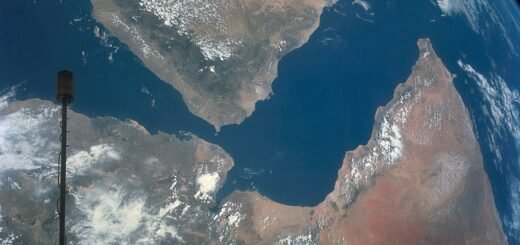
It generally encompasses the Fertile Crescent, Levant, Egypt, the Arabian Peninsula, Anatolia, and the Iranian Plateau, stretching from Egypt, Turkey, and Cyprus in the west to Iran and the Persian Gulf in the east, and from Turkey and Iran in the north to Yemen and Oman in the south.
What historical period marks a significant turning point in Middle Eastern conflicts?
The onset of the First World War in 1914 marked a key turning point, as it led to the collapse of old empires and the creation of new states under colonial mandates.
Why did borders and political frameworks shift after World War I?
The dissolution of the Ottoman Empire and the influence of British and French mandates redrew regional boundaries, establishing new states and political orders.
How did these post-World War I changes affect local populations?
They created unresolved grievances, ethnic divisions, and long-term territorial disputes, resulting in a range of conflicts from short revolts to protracted wars.
What role did foreign powers play in shaping the region?
External interventions, both direct and indirect, influenced mandates, supported certain factions, and imposed political structures that often intensified internal tensions.
How have ideological movements influenced Middle Eastern conflicts?
Ideologies such as Arab nationalism, political Islam, and various forms of sectarianism have fueled insurgencies, revolutions, and wars, as seen in Egypt, Turkey, Iran, and across the Arab world.
What is an example of a prolonged internal conflict in the region?
The Lebanese Civil War demonstrated how sectarian divisions, foreign interference, and militias combined to produce extensive civilian suffering and long-lasting fragmentation.
How did the Iranian Revolution of 1979 reshape regional dynamics?
It replaced a pro-Western monarchy with an Islamic Republic, altering alliances, igniting new proxy conflicts, and setting the stage for the Iran–Iraq War.
What effect did the 2003 U.S.-led invasion of Iraq have on the region?
It toppled Saddam Hussein but also unleashed sectarian violence, insurgencies, and the spread of extremist groups like the so-called Islamic State.
How did the Arab Spring uprisings affect Middle Eastern stability?
They led to the fall of some autocrats and ignited civil wars, notably in Syria, drawing in foreign powers, militias, and extremist factions, and causing mass displacement and humanitarian crises.
Why are Middle Eastern conflicts often interconnected?
They overlap through shared religious, ethnic, and political divisions, as well as through proxy warfare supported by regional and global powers, making isolated resolution difficult.
What challenges persist in achieving peace?
Deep historical grievances, mistrust between communities, sectarian manipulation, economic stagnation, and weak governance structures all impede lasting settlements and stable nation-building efforts.