How was the Ottoman Empire partitioned after WWI?
The partition of the Ottoman Empire at the close of World War I represented a watershed moment, altering political boundaries and reshaping the Middle East and nearby regions. By the war’s end, the empire’s defeat and the Allied occupation of Constantinople in November 1918 cleared the path for new governance models. Although the architects of partition pursued order and strategic stability, their arrangements encouraged lingering friction. Over time, the new lines drawn on the map fostered the emergence of modern Arab states, the Republic of Turkey, and would eventually pave the way for decolonization after World War II.
Wartime Negotiations and Secret Agreements
From the outset of the Great War, Britain, France, and eventually Italy anticipated that Ottoman domains would be redistributed if the Allies triumphed. They secretly outlined their visions in arrangements that predated the conflict’s end. Among the most pivotal was the 1916 Sykes-Picot Agreement between Britain and France. This accord proposed zones of influence in the Levant, envisioning areas under direct or indirect European control once the Ottomans were gone.
These backroom deals reflected long-standing imperial ambitions, as well as religious and strategic considerations. Russia, initially involved, pulled out after its 1917 revolution removed it from postwar planning. Italy secured separate promises for territory in southwestern Anatolia. Meanwhile, Britain made multiple, sometimes conflicting, commitments. It encouraged Sharif Hussein with the promise of Arab independence, recognized Zionist aspirations in Palestine through the Balfour Declaration, and protected its routes to India. Before the Ottoman collapse, these secret bargains had already charted a contentious future.
Allied Occupations and Immediate Consequences
When the Ottoman government surrendered in October 1918, Allied forces swiftly occupied key areas, including Constantinople. Britain seized Iraq and Palestine, France advanced into Syria and Lebanon, and Italy looked to coastal Anatolia. Justified as measures to restore order, these occupations made it clear that European powers intended to shape political realities to their advantage.
Local reactions varied. Some communities, relieved to escape Ottoman rule, saw a chance for autonomy. Others viewed the newcomers as oppressors. Arab leaders who had allied with Britain felt let down when they encountered mandates instead of the promised independence. The first months of occupation exposed the gulf between wartime pledges and peacetime settlements, planting the seeds of discontent. These grievances would later feed nationalist sentiments and resistance movements.
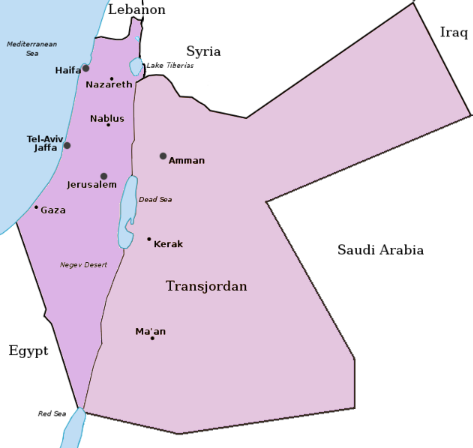
Mandatory Palestine and the Emirate of Transjordan
The Mandate System and the Creation of New States
With the League of Nations established to oversee postwar arrangements, the mandatory system emerged as a key instrument for managing former Ottoman territories. Britain’s mandates included Iraq and Palestine (subsequently divided into Palestine and Transjordan), while France controlled Syria and Lebanon. Ostensibly, these mandates were temporary trusteeships, guiding populations toward self-governance. In practice, they extended European hegemony and allowed administrators to craft new states from old provinces.
The resulting entities did not always mirror local identities. Iraq combined three Ottoman provinces—Mosul, Baghdad, and Basra—into a single unit, posing administrative and sectarian difficulties. In Palestine, British authorities struggled to reconcile Arab interests with increasing Jewish immigration. Transjordan took shape as a Hashemite monarchy under British supervision. France subdivided Syria, seeking to limit Arab nationalism and reinforce minority communities, while fashioning Lebanon as a separate polity. Although infrastructure and institutions took root, the mandate approach often aggravated existing tensions and delayed genuine independence.

Map of Mandate for Syria and the Lebanon
Influence of the Sèvres and Lausanne Treaties
In 1920, the Treaty of Sèvres attempted to formalize a drastic reduction of Ottoman domains. France, Britain, Greece, and Italy would claim extensive swaths of Anatolia and Thrace. Plans emerged for Armenian and Kurdish homelands in the east. Yet these far-reaching changes never fully materialized. Turkish nationalists, led by Mustafa Kemal Atatürk, waged a successful resistance. By 1923, the Treaty of Lausanne replaced Sèvres, restoring significant portions of Anatolia and Eastern Thrace to Turkey and erasing prospects for autonomous Armenian or Kurdish regions.
The fate of Mosul, contested between the new Republic of Turkey and the British mandate in Iraq, remained unresolved until 1926. After international arbitration under the League of Nations, Mosul stayed with Iraq. Thus, the Lausanne Treaty established Turkey as a sovereign nation-state and proved that local resistance could reshape even the most ambitious Allied plans.
Arab Lands and the Emergence of the Modern Middle East
In former Ottoman Arab provinces, the partition helped create the outlines of what would become the modern Middle East. Under French stewardship, Syria and Lebanon evolved into distinct units. Britain managed Iraq, Transjordan, and Palestine. Meanwhile, on the Arabian Peninsula, the Kingdom of Hejaz briefly flourished before being incorporated into Saudi Arabia; Yemen gained independence, and various Gulf sheikhdoms fell under British protection until achieving sovereignty later on.
Yet the presence of foreign administrators meant that true autonomy remained elusive. British and French authorities often supported local elites aligned with their interests, occasionally exacerbating communal rivalries. These arrangements shaped political and social realities for decades. Long after World War II, the borders drawn and policies enacted under the mandate system continued to spark internal disagreements and friction among neighbors.
The Zionist Factor and Palestine’s Transformation
Palestine’s post-Ottoman destiny was complicated by Britain’s wartime promises and its endorsement of the Zionist project. The Balfour Declaration encouraged Jewish settlement in Palestine, fueling hopes for a Jewish national home. Arab inhabitants regarded this policy as a betrayal of earlier assurances regarding their own independence. As Jewish immigration increased, so did tensions. British attempts to balance opposing claims were inadequate, leading to periodic unrest.
This conflict over Palestine outlived the mandate itself. In 1947, Britain relinquished the question of Palestine to the United Nations. The subsequent UN partition plan, the 1948 creation of Israel, and the first Arab-Israeli war reflected the enduring complexity planted during the Allied division of Ottoman lands. The entwined destinies of Arabs and Jews in this territory would become a central issue in regional politics for generations.
Resistance, Nationalism, and the Road to Independence
Turkey’s rapid success in overturning Sèvres offered a powerful example of local resilience. Elsewhere, resistance grew more slowly. Initially, some elites cooperated with mandate powers, hoping to obtain favors or partial autonomy. Over time, however, nationalist movements gained ground. In Syria, revolts challenged French rule. In Iraq, dissatisfaction with British mandates led to political mobilization.
Ideas of Arab unity, fueled by cultural commonalities and shared grievances, spread across the region. By the late 1930s and 1940s, Europe’s hold on its mandates weakened due to the devastation of World War II. Under increasing pressure, Britain and France gradually retreated. Iraq’s independence in 1932 was a landmark, followed by Syria and Lebanon in the 1940s, and Jordan and Israel’s establishment later. European colonial influence receded, but not without leaving a legacy of contested borders and unresolved tensions.
Consequences for Anatolia and Minorities
In Anatolia, the partition plans threatened to dismember the Ottoman heartland. Turkish resistance annulled these schemes, reinforcing a unified Turkish republic. Yet minorities like Armenians and Kurds, who had hoped to secure their own homelands, found their aspirations thwarted. Armenians, reeling from wartime atrocities, failed to establish their promised territory. Kurds, divided among multiple states, were also denied autonomy.
Population exchanges and forced migrations diminished cultural diversity. Armenians, Greeks, and others faced displacement. This homogeneity came at a cost to pluralism. Minority communities often found themselves marginalized in the new nation-states, shaping domestic politics and identity debates for decades.
Impact on International Relations and Later Developments
The Ottoman partition influenced global diplomacy. Britain and France learned that mandates were costly and prone to unrest. The League of Nations lacked enforcement power, allowing tensions to fester. Over time, these mandated territories pushed toward independence. After World War II, decolonization spread, and former mandates became sovereign states or merged into neighboring countries.
Yet the imprint of partition remained. Borders drawn by colonial powers still underpinned many regional disputes. Conflicts from the Arab-Israeli struggle to Kurdish autonomy movements echoed the decisions made in the early 20th century. European colonial frameworks left behind a complex legacy, where past decisions continue to shape present-day alliances and hostilities.
The Republic of Turkey and the Legacy of Lausanne
Turkey’s triumph over Sèvres and its success at Lausanne demonstrated that determined local leadership could alter imposed settlements. By consolidating a secular, centralized state, Turkey charted a distinct course. While this strength often came at the expense of minority rights, it also proved that external powers could be challenged and that maps were not forever fixed.
Turkey’s example inspired other anti-colonial endeavors. Although not all successor states replicated its story, Turkey showed that postwar arrangements were negotiable. The precedent underscored that local agency mattered, and alliances and treaties could be reconfigured under the right conditions.
Long-Term Significance
The partition of the Ottoman Empire was not a mere historical footnote but a pivotal event shaping the future. It redrew frontiers, set political agendas, and influenced national narratives. Some territories gained structured governance and a path to independence, while others struggled with arbitrary divisions and contested borders.
As mandates ended and colonial forces withdrew, newly formed states faced challenges of nation-building, integration of minorities, and foreign pressures. The inherited frameworks often hindered stability, fueling ideological struggles and resource rivalries. A century later, the repercussions persist. The Ottoman partition’s legacy is evident in ongoing conflicts, alliances, and debates over identity, sovereignty, and belonging.
Conclusion
Between 1918 and the early 1920s, the Allied division of Ottoman lands established a new order in the Middle East and beyond. Mandates, treaties, and secret deals shaped a reality distinct from what the region’s inhabitants had expected. Although many successor states ultimately achieved independence, the tensions rooted in this era lingered.
The partition was not a clean break. It was the beginning of a complex narrative of state formation, resistance, and adaptation. Its repercussions still ripple through contemporary political landscapes. While empires fade, their legacies endure, informing the struggles and aspirations of peoples who continue to navigate the boundaries set long ago.
Frequently Asked Questions

January 1919 British memorandum outlined wartime agreements among Britain, France, Italy, and Russia over Ottoman lands.
What triggered the partition of the Ottoman Empire?
It occurred as a result of Allied wartime agreements and their victory in World War I, culminating in the empire’s defeat and subsequent division.
Why were secret agreements like the Sykes-Picot Agreement important?
They pre-emptively determined spheres of influence and control, shaping the political boundaries of the Middle East before the war had even ended.
How did the entry of Allied troops into Constantinople influence events?
Their occupation enforced Allied decisions, allowing Britain, France, and Italy to implement their plans for dividing Ottoman territories.
What was the purpose of the League of Nations mandate system?
It offered a formal framework for European powers to administer former Ottoman lands, supposedly guiding them toward independence while actually extending foreign control.
Why did the Treaty of Sèvres never take full effect?
Turkish nationalists under Mustafa Kemal Atatürk rejected its terms, fought back, and forced a renegotiation leading to the more favorable Treaty of Lausanne.
How did the partition shape the modern Arab states?
European mandates organized Ottoman provinces into new states like Iraq, Syria, Lebanon, and Transjordan, laying foundations for current national borders.
What role did the Balfour Declaration play in Palestine?
It encouraged Jewish immigration and aspirations for a national home, intensifying tensions with the Arab population and setting the stage for long-term conflict.
Why did nationalist movements emerge under mandates?
Local populations, initially hopeful for independence, grew resentful of prolonged foreign control, inspiring organized resistance and demands for self-rule.
How were minorities like Armenians and Kurds affected?
Despite wartime promises, their aspirations for autonomous homelands were thwarted, leaving them dispersed or divided among multiple new states.
What legacy did the partition leave behind?
It created a complex tapestry of states with contested borders, ethnic tensions, and unresolved grievances that still influence Middle Eastern politics today.