The Ships that were Sunk at Pearl Harbor
The attack on Pearl Harbor onDecember 7, 1941, was a devastating event in American history, leading to significant losses for the United States Navy. This surprise military strike by the Imperial Japanese Navy Air Service resulted in the sinking and damage of numerous vessels, most notably the battleships stationed at the harbor.
In the article below, WWII historians at World History Edu delve into the specific ships that were sunk during the attack, their histories, the events of the attack, and their fates post-attack.
Battleships Sunk at Pearl Harbor
USS Arizona (BB-39)
The USS Arizona is perhaps the most famous of the ships sunk at Pearl Harbor, due to the catastrophic explosion that destroyed it and the large loss of life. The Arizona was commissioned in 1916 and named after the 48th state. It was a Pennsylvania-class battleship, heavily armored and armed with 12 14-inch guns.
On the morning of December 7, 1941, the USS Arizona was moored in Battleship Row. During the attack, it was hit by several bombs, one of which penetrated its forward ammunition magazine. The subsequent explosion resulted in a massive fireball and a shockwave that split the ship in two. The destruction was so complete that the Arizona sank quickly, with over 1,177 crew members perishing. The remains of the USS Arizona still rest at the bottom of Pearl Harbor, now a solemn memorial to those who lost their lives.
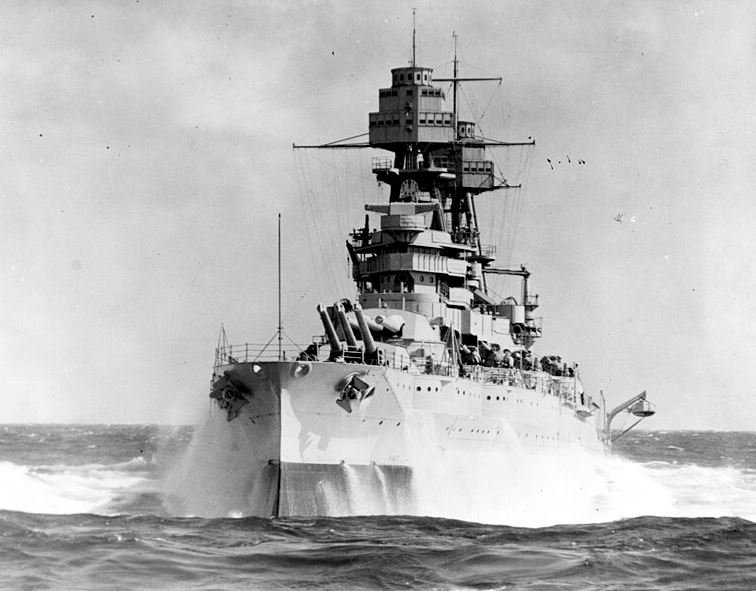
Image: The Arizona during the 1930s.
USS Oklahoma (BB-37)
The USS Oklahoma, a Nevada-class battleship, was commissioned in 1916. It featured anti-torpedo bulges and an extensive array of 14-inch guns. During the attack on Pearl Harbor, the Oklahoma was moored outboard of the USS Maryland, making it more vulnerable to torpedo attacks.
The Oklahoma was hit by multiple torpedoes shortly after the attack began, causing it to list and eventually capsize. The rapid flooding and capsizing trapped many crew members inside. Despite efforts to rescue them, 429 sailors and Marines died. The capsized hull of the Oklahoma remained partially submerged until it was righted and partially salvaged. The ship was deemed too damaged to be returned to service and was eventually sold for scrap.
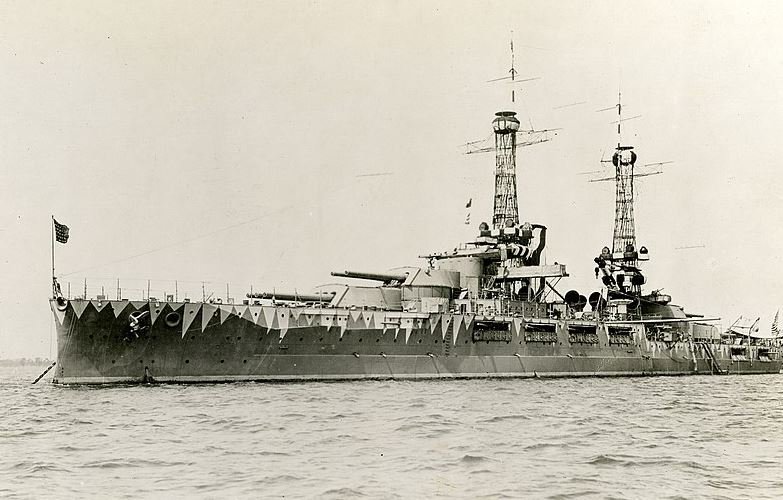
Image: USS Oklahoma
USS West Virginia (BB-48)
Commissioned in 1923, the USS West Virginia was a Colorado-class battleship with heavy armor and eight 16-inch guns. On December 7, it was moored outboard of the USS Tennessee.
The West Virginia sustained multiple torpedo hits and bomb strikes, causing severe damage and flooding. Despite the significant damage, the ship did not capsize, thanks to quick actions by her crew to counter-flood and stabilize her. The attack killed 106 crew members, but the ship was later salvaged, repaired, and returned to service in July 1944, participating in several Pacific campaigns during the war.
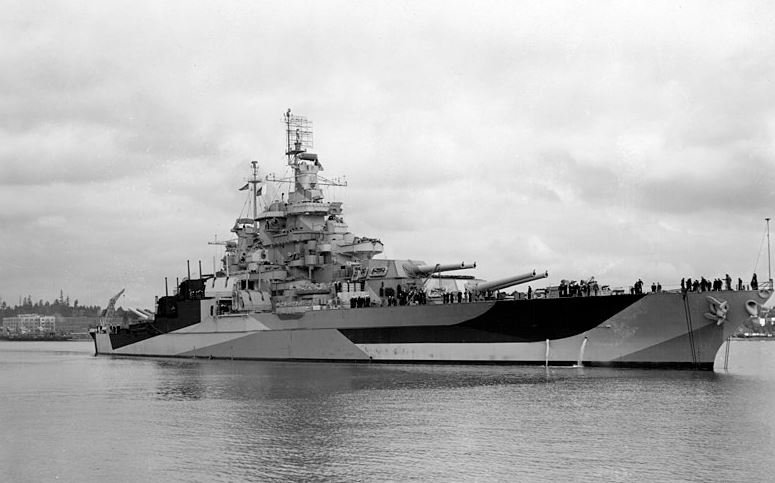
Image: A picture of the USS West Virginia in 1944 after being reconstructed.
USS California (BB-44)
The USS California, a Tennessee-class battleship, was commissioned in 1921 and served as the flagship of the Pacific Fleet. Known for its advanced design and powerful armament, it was moored at the southernmost end of Battleship Row during the attack.
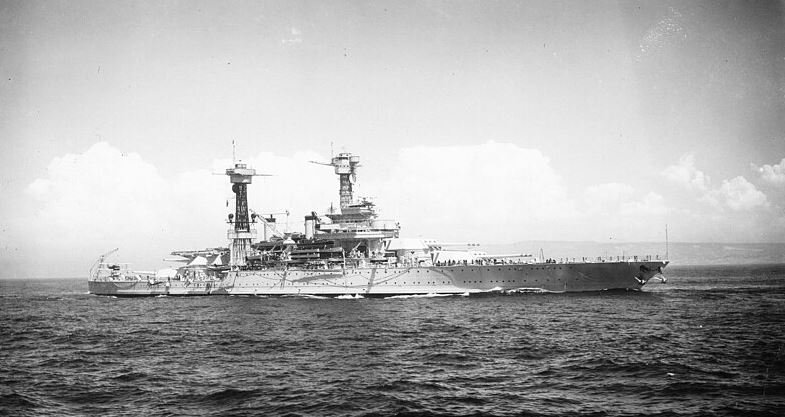
Image: A picture of California during the mid-1930s.
California was hit by two torpedoes and several bombs, causing severe flooding and fires. Despite the crew’s efforts to save her, the ship gradually settled to the bottom of the harbor. The attack resulted in the deaths of 100 crew members. The California was later refloated, extensively repaired, and modernized, returning to service in January 1944. It went on to support numerous amphibious assaults in the Pacific Theater.
USS Nevada (BB-36)
The USS Nevada, commissioned in 1916, was a Nevada-class battleship renowned for its innovative design, including oil-fired boilers and geared turbines. It was moored near the Arizona during the attack.
Unlike the other battleships, the Nevada attempted to escape the harbor during the attack. It managed to get underway despite being hit by a torpedo and several bombs. However, as it tried to exit, it became a prime target for Japanese planes, which inflicted further damage. To avoid sinking in the channel and blocking the harbor entrance, the Nevada was beached. It was later salvaged, repaired, and returned to service in late 1942, participating in the Aleutian and Normandy campaigns.
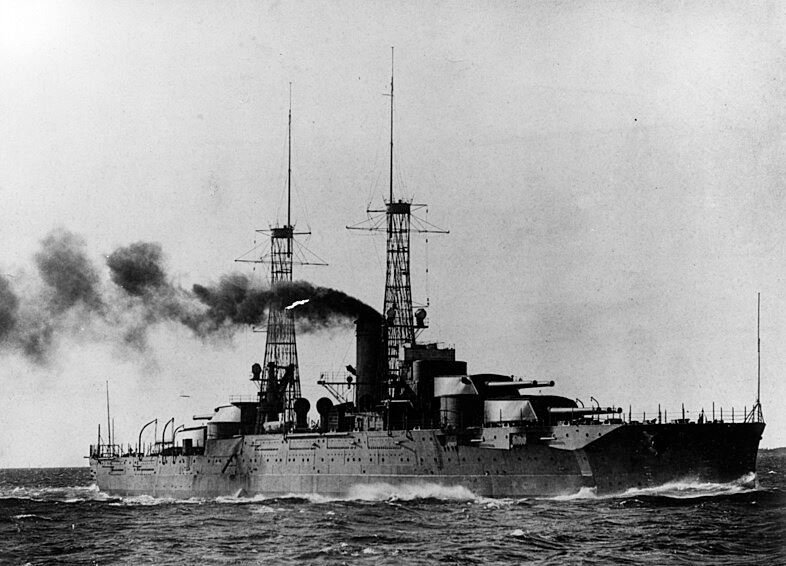
Image: USS Nevada on trials during 1916.
USS Tennessee (BB-43)
The USS Tennessee, a Tennessee-class battleship, was commissioned in 1920. During the attack, it was moored inboard of the West Virginia, providing it some protection from torpedoes.
Despite this, the Tennessee was hit by two bombs, causing fires and moderate damage. The ship was able to remain afloat, and repairs began almost immediately after the attack. The Tennessee was modernized and returned to service in early 1942, playing a significant role in Pacific operations, including the battles of Midway, Leyte Gulf, and Okinawa.
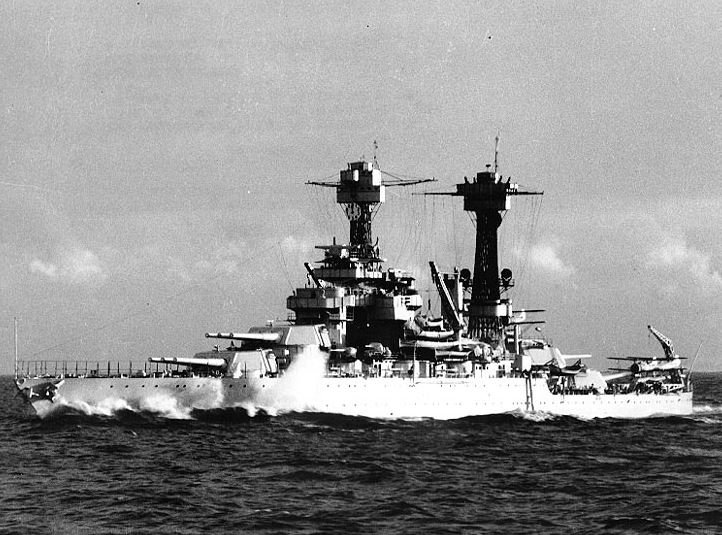
Image: A picture of the USS Tennessee at sea during the 1930s.
USS Maryland (BB-46)
The USS Maryland was moored inboard of the USS Oklahoma and also received relatively minor damage. It was hit by two armor-piercing bombs but did not suffer torpedo damage. The ship remained operational and returned to service shortly after the attack.

Image: The USS Maryland in 1935.
Other Ships
USS Utah (AG-16)
The USS Utah, a former battleship converted into a target ship, was hit by two torpedoes and capsized. The ship was not a primary target, but the Japanese mistook it for an aircraft carrier. Fifty-eight men were killed in the attack. The ship remains on the bottom of the harbor and serves as a war grave.
Additional Damaged Ships
Many other ships were damaged but not sunk during the attack:
- USS Pennsylvania (BB-38): The flagship of the Pacific Fleet was in dry dock and received minor damage from a bomb and strafing.
- USS Helena (CL-50): A light cruiser that was hit by a torpedo, causing flooding, but was later repaired.
- USS Raleigh (CL-7): Another light cruiser hit by a torpedo, which caused severe flooding, but the ship was kept afloat and later repaired.
- USS Honolulu (CL-48): Sustained minor damage from a near-miss bomb.
- USS Vestal (AR-4): A repair ship moored alongside the Arizona, it was hit by two bombs but managed to beach itself to avoid sinking.
- USS Oglala (CM-4): A minelayer that capsized due to damage from a near-miss bomb and a torpedo.
- USS Curtiss (AV-4): A seaplane tender that was hit by a bomb and a crashing Japanese plane.
Salvage and Repairs
The aftermath of the attack saw a massive salvage and repair operation. The United States Navy was determined to return as many ships as possible to service:
- USS West Virginia and USS California were both refloated, extensively repaired, and modernized. They rejoined the fleet and participated in various battles in the Pacific Theater.
- USS Nevada was repaired and participated in the D-Day invasion in Normandy as well as battles in the Pacific.
- USS Tennessee and USS Maryland underwent repairs and continued to serve throughout the war.
- The USS Oklahoma was righted and floated but was too damaged to return to service. It was decommissioned and sold for scrap, although it sank while being towed to the mainland.
- The USS Arizona and USS Utah were left as war graves, and the Arizona’s sunken remains became the site of the USS Arizona Memorial, dedicated to all the Americans who died during the attack.
Legacy
The ships that sank at Pearl Harbor and those that were damaged represent both a significant loss and a remarkable story of resilience. The attack demonstrated the vulnerability of even the most powerful naval fleets and underscored the importance of aircraft carriers, which were not present at Pearl Harbor during the attack and thus escaped damage.
The loss of life and the dramatic images of the burning and sinking ships galvanized the American public and led to a united effort to win the war. The salvage and repair operations exemplified American industrial capability and determination.
Pearl Harbor remains a poignant reminder of the costs of war and the sacrifices made by those who serve. The USS Arizona Memorial, which straddles the sunken battleship, serves as a solemn place of reflection and a reminder of the events of December 7, 1941.

Frequently asked questions about the attack on Pearl Harbor
The Pearl Harbor attack was a surprise military strike by the Imperial Japanese Navy Air Service on the United States naval base at Pearl Harbor, Hawaii, on the morning of December 7, 1941. The attack aimed to prevent the U.S. Pacific Fleet from interfering with Japan’s planned military actions in Southeast Asia.
The ships that were sunk at Pearl Harbor were primarily battleships, with the USS Arizona and USS Oklahoma suffering the greatest losses.
Below are some frequently asked questions about the attack on Pearl Harbor in 1941:
Why did Japan attack Pearl Harbor?
Japan attacked Pearl Harbor to neutralize the U.S. Pacific Fleet, ensuring it could not hinder Japan’s expansionist plans in Asia. Japan sought to secure access to natural resources such as oil and rubber by invading territories in Southeast Asia.
How long did the attack last?
The attack on Pearl Harbor lasted approximately one hour and 15 minutes, from 7:55 AM to 9:10 AM local time.
How many waves of attacks were there?
There were two waves of attacks. The first wave targeted battleships and airfields, while the second wave aimed at other ships and facilities.
How many Japanese aircraft were involved in the attack?
A total of 353 Japanese aircraft were involved in the attack, including fighters, level bombers, dive bombers, and torpedo bombers.
How many ships were damaged or sunk during the attack?
A total of 21 ships were damaged or sunk during the attack. This included eight battleships, three cruisers, four destroyers, and several other vessels.
The battleships that were sunk included: USS Arizona (BB-39); USS Oklahoma (BB-37); USS West Virginia (BB-48); USS California (BB-44); and USS Nevada (BB-36) (beached to prevent sinking). USS Tennessee (BB-43) and USS Maryland (BB-46) were damaged but not sunk.
How many Americans were killed or wounded in the attack?
A total of 2,403 Americans were killed, and 1,178 were wounded in the attack.
What was the impact of the attack on the U.S. Pacific Fleet?
The attack severely damaged the U.S. Pacific Fleet, particularly its battleships. However, the fleet’s aircraft carriers were not present at Pearl Harbor during the attack and thus were not damaged. This allowed the U.S. to maintain a crucial offensive capability in the Pacific.
How did the United States respond to the attack?
The United States declared war on Japan on December 8, 1941, leading to its formal entry into World War II. Shortly after, Germany and Italy declared war on the United States, bringing America fully into the global conflict.
What were the long-term effects of the Pearl Harbor attack?
The attack on Pearl Harbor united the American public in support of the war effort and led to a rapid expansion of the U.S. military. It also marked the beginning of significant military campaigns in the Pacific, ultimately leading to Japan’s defeat in 1945.
Are there any memorials at Pearl Harbor?
The most notable memorial is the USS Arizona Memorial, which straddles the sunken battleship USS Arizona. Other memorials include the USS Oklahoma Memorial and the Pacific Fleet Submarine Museum.
How did the Japanese forces plan and execute the attack?
The attack was meticulously planned over several months, led by Admiral Isoroku Yamamoto. The Japanese fleet sailed under strict radio silence across the Pacific, and the attack was launched from six aircraft carriers. The element of surprise was crucial to the success of the mission.
What were the key targets during the attack?
The key targets included the U.S. Pacific Fleet battleships, airfields, and other military installations at Pearl Harbor. The goal was to cripple the fleet and destroy as many aircraft as possible to prevent a counterattack.
How did the attack affect civilian life in Hawaii?
The attack caused widespread panic and fear among civilians in Hawaii. Martial law was declared, and the civilian population faced shortages of goods and strict security measures for the remainder of the war.
Were any Japanese submarines involved in the attack?
Yes, five midget submarines were part of the attack. Their mission was to penetrate the harbor and attack ships, but they had limited success. Only one midget submarine managed to fire torpedoes, but it did not inflict significant damage.
How were American military personnel caught off guard by the attack?
Despite some intelligence warnings, the attack caught American forces off guard due to several factors, including a general underestimation of Japanese capabilities and intentions, as well as the belief that an attack on Pearl Harbor was unlikely.
Did any American forces manage to defend against the attack?
American anti-aircraft guns responded as the attack began, and a few American aircraft were able to take off and engage the Japanese attackers. However, the defense was largely ineffective due to the surprise and overwhelming nature of the attack.
What lessons were learned from the attack on Pearl Harbor?
The attack highlighted the importance of readiness, intelligence, and the strategic value of aircraft carriers over battleships. It also emphasized the need for improved communication and coordination within the military.
How has the story of Pearl Harbor been preserved and remembered?
The story of Pearl Harbor has been preserved through various memorials, museums, films, books, and educational programs. The site remains a powerful symbol of the sacrifices made during World War II and a reminder of the importance of vigilance and preparedness.
What were the immediate military actions taken by the U.S. after the attack?
Following the attack, the U.S. Pacific Fleet began salvage operations, and aircraft carriers launched raids on Japanese positions in the Pacific. The Doolittle Raid in April 1942 was a direct response, demonstrating that Japan was within the reach of American bombers.
How did the attack on Pearl Harbor influence international relations?
The attack significantly altered global alliances and power dynamics. It solidified the Axis powers of Japan, Germany, and Italy against the Allied powers, including the United States, the United Kingdom, and the Soviet Union, leading to a more coordinated Allied effort in World War II.
What were some of the myths or misconceptions about the Pearl Harbor attack?
Some myths include the idea that the U.S. government had prior knowledge of the attack and allowed it to happen to justify entering the war. These conspiracy theories have been widely debunked by historians.
How has Pearl Harbor been portrayed in popular culture?
Pearl Harbor has been depicted in numerous films, documentaries, books, and other media. Notable films include “Tora! Tora! Tora!” (1970) and “Pearl Harbor” (2001), which dramatize the events of the attack and its aftermath.
What is the significance of December 7th today?
December 7th is recognized as National Pearl Harbor Remembrance Day in the United States. It is a day to honor and remember the lives lost during the attack and to reflect on the lessons learned from this pivotal moment in history.
How did the atomic bombings of Hiroshima and Nagasaki lead to Japan’s unconditional surrender?