What was the Land of Punt, and why was it important to ancient Egypt?
by World History Edu · October 30, 2024
The Land of Punt, known to the ancient Egyptians as pwnt (or Pwene(t) in some transliterations), was a significant trade partner of ancient Egypt, celebrated for its rich resources and valuable exports. Punt’s influence and its goods, such as gold, incense, ebony, ivory, and exotic animals, played an essential role in shaping Egyptian culture and religious practices. Despite its importance, the exact location of Punt remains a subject of scholarly debate, with evidence suggesting various locations in the Horn of Africa, the Arabian Peninsula, or both.

The Land of Punt (Egyptian: pwnt) was an ancient kingdom mentioned in Egyptian trade records. Image: Egyptian soldiers from Hatshepsut’s expedition to the Land of Punt as depicted from Hatshepsut’s temple at Deir el-Bahri
The Importance of Punt to Ancient Egypt
The Land of Punt held a prominent place in Egyptian trade networks, with its goods used for religious, cultural, and everyday purposes. Punt’s reputation was built on its ability to supply valuable commodities like gold, myrrh, frankincense, ebony, and wild animals, all of which were critical to the Egyptian economy and religious ceremonies. Punt’s products were particularly important for the production of incense, which was burned in Egyptian temples to honor the gods.
Egyptians referred to Punt as Ta netjer, meaning “Land of the God,” which may reflect its sacred status as a source of products for temple rituals, particularly incense, which was indispensable for worship.
Some Egyptologists even speculated that Punt could have been considered the ancestral homeland of the Egyptians. The notion of Punt as a sacred place further solidified its role in Egyptian culture, and it is often depicted in Egyptian art and texts as a land of abundance.
READ MORE: Most Famous Ancient Egyptian Goddesses
Early Trade Expeditions to Punt
The earliest recorded Egyptian expedition to Punt occurred during the reign of Pharaoh Sahure of the Fifth Dynasty (circa 25th century BC). This journey, mentioned in Sahure’s mortuary temple at Abusir, returned to Egypt with large quantities of exotic goods, including precious myrrh and animals, which greatly enhanced Egypt’s wealth and resources. Sahure’s expedition helped establish Punt as a vital trading partner early in Egyptian history.
Although Sahure’s expedition is the earliest known record, gold from Punt is believed to have been present in Egypt even earlier, during the reign of Pharaoh Khufu of the Fourth Dynasty. Punt’s gold was renowned in the ancient world and was crucial to Egypt’s wealth. These early expeditions paved the way for later interactions between Egypt and Punt, with subsequent dynasties continuing the tradition of trade.
Punt and the Egyptian Middle Kingdom
Egypt’s Middle Kingdom, particularly during the reigns of the Twelfth Dynasty pharaohs, saw a resurgence of interest in trade with Punt. Mentuhotep III of the Eleventh Dynasty (circa 2000 BC) sent an official named Hannu on one or more expeditions to Punt, as recorded in inscriptions from the time. These expeditions were part of an effort to secure Punt’s valuable goods, including gold, incense, and other resources essential for the Egyptian economy.
Mentuhotep III’s successors, including Senusret I, Amenemhat II, and Amenemhat IV, also maintained relations with Punt. Egyptian texts from the Middle Kingdom celebrated trade with Punt, as reflected in popular literature like The Tale of the Shipwrecked Sailor, a story that highlights the wonders and wealth of Punt. These expeditions emphasized Punt’s enduring role as an economic and cultural partner for Egypt.
Hatshepsut’s Famous Expedition to Punt

Trade with other countries was re-established; here trees transported by ship from Punt are shown being moved ashore for planting in Egypt—relief from Hatshepsut mortuary temple
The most famous expedition to Punt occurred during the reign of Queen Hatshepsut, one of Egypt’s most prominent pharaohs. Around the 15th century BC, during the Eighteenth Dynasty, Hatshepsut sent a fleet of ships to Punt, led by Chancellor Nehsi. This expedition is depicted in great detail on the walls of Hatshepsut’s mortuary temple at Deir el-Bahri. The reliefs vividly illustrate the wealth and beauty of Punt, as well as its people and leaders.
According to the reliefs, the Egyptians were greeted warmly by Punt’s rulers, King Parahu and Queen Ati. Punt is described as a land of lush vegetation, abundant in incense trees, and home to various exotic animals. The Egyptians returned with valuable goods, including myrrh, frankincense, gold, ivory, and live animals such as baboons. These products were not only used for trade but also for religious ceremonies, particularly in the temples of Karnak.

Queen Hatshepsut was the fifth pharaoh of the Eighteenth Dynasty of Egypt. A principal wife of Thutmose II, Hatshepsut is considered by many as one of ancient Egypt’s greatest rulers. She accomplished many feats, including sanctioning a massive expedition to the Kingdom of Punt. Image: Statue of Hatshepsut on display at the Metropolitan Museum of Art, New York City
Hatshepsut’s expedition is often portrayed as a diplomatic mission, though it was likely a standard trade journey. The imagery from her temple emphasizes the divine favor she claimed to have received for the expedition, with the god Amun supposedly blessing her mission to Punt.
Queen Hatshepsut’s successful trade with Punt solidified her reign and left a lasting legacy in Egyptian history. The extensive records of this expedition in her temple have become a significant source of information about Punt.

A relief depicting incense and myrrh trees obtained by Queen Hatshepsut’s expedition to Punt
Punt’s Decline in Egyptian Trade
After Hatshepsut’s reign, Egyptian trade with Punt continued, though it began to wane during the New Kingdom. Thutmose III, Hatshepsut’s successor, and Amenhotep III, another prominent Eighteenth Dynasty pharaoh, both maintained relations with Punt. However, by the early Twentieth Dynasty, Punt had started to decline in importance to Egypt, likely due to changing trade routes and political shifts.
Despite the decline, Punt remained a subject of fascination for the Egyptians. The Papyrus Harris I, a document from the reign of Ramesses III (circa 1186–1155 BC), details an Egyptian expedition to Punt during the Twentieth Dynasty. The document describes the safe return of the expedition and the goods brought back to Egypt, reflecting the continued, though reduced, importance of Punt in Egyptian trade. Punt’s mythic status grew in later periods, transforming into a legendary and almost unreal land in Egyptian literature and lore.
Theories on Punt’s Geographic Location
The exact location of Punt has been a subject of debate for centuries, with scholars offering various theories based on historical, archaeological, and biological evidence. Many scholars argue that Punt was located in the Horn of Africa, particularly in modern-day Somalia, Eritrea, and Sudan, or possibly across the Red Sea in the Arabian Peninsula. The goods brought back from Punt, including myrrh, frankincense, ebony, and animals like giraffes and baboons, are most commonly associated with the Horn of Africa, suggesting that Punt was located in that region.
Recent evidence suggests Punt may have been located in northwestern Eritrea, and some scholars have linked it to the biblical lands of Put or Havilah.
Richard Pankhurst, a historian of Ethiopian history, argued that Punt likely encompassed both African and Arabian territories, as suggested by the diversity of products traded. Punt’s wealth of natural resources, particularly incense and aromatic resins, was linked to regions in modern-day Somalia and Eritrea, but some goods may have also originated in southern Arabia. This theory supports the idea that Punt was a broad, multi-regional trade network rather than a single, defined territory.
Modern Research on Punt’s Location
In recent years, scientific advancements have provided new insights into Punt’s location. In 2010, researchers from the University of California, Santa Cruz, conducted oxygen isotope analysis on the hair of mummified baboons brought to Egypt from Punt. These baboons, whose remains had been preserved in Egyptian tombs, were compared with modern-day baboons in various regions. The analysis showed that the baboons most closely matched those found in Eritrea and eastern Ethiopia, lending strong support to the theory that Punt was located in the Horn of Africa.
In December 2020, another study conducted by primatologists from Dartmouth College further confirmed this hypothesis. They analyzed tissue samples from mummified baboons and concluded that these animals originated from the Horn of Africa, particularly in the region spanning Eritrea, Ethiopia, and northern Somalia. This research has added considerable weight to the argument that Punt was situated in the Horn of Africa rather than in the Arabian Peninsula.
Archaeological Evidence and Trade Connections
Archaeological excavations in Sudan and Eritrea have also provided evidence of close trade relations between Egypt and Punt. Sites like the Gash and Jebel Mokram groups, which flourished from about 3000 to 1800 BC, contain artifacts such as Egyptian pottery and faience beads, indicating active trade between Egypt and these regions. The discovery of Red Sea shells at these sites further supports the idea that Punt was closely linked to Egypt via Red Sea trade routes.
These archaeological finds suggest that Punt was a well-established trading partner of Egypt from the earliest periods of Egyptian history. The evidence of long-distance trade, particularly through the Red Sea, reinforces the idea that Punt was both geographically close and culturally significant to Egypt.
The Arabian Peninsula Theory
Some scholars, however, continue to argue for the Arabian Peninsula as Punt’s location. Dimitri Meeks, an Egyptologist, has suggested that Punt may have been located along the western coast of the Arabian Peninsula, stretching from the Gulf of Aqaba to Yemen. Meeks points to ancient inscriptions that describe Punt as being both north and southeast of Egypt, which could align with the geography of the Arabian Peninsula.
The theory that Punt was in the Arabian Peninsula is supported by the fact that myrrh and frankincense, two of Punt’s most important exports, are native to both the Horn of Africa and southern Arabia. Meeks’ argument suggests that Punt could have been a vast trade network that spanned both African and Arabian territories, reflecting its status as a key economic and cultural hub.
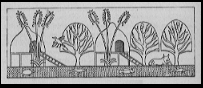
Often referred to as Ta netjer or the “Land of the God,” Punt’s region is believed to be southeast of Egypt, potentially encompassing parts of present-day Sudan, Eritrea, Ethiopia, Djibouti, Somalia, and even southern Arabia. Image: A depiction of Punt shows stilt houses, fruiting date palms, myrrh trees, a bird, cow, fish, and turtle in salt or tidal water, from Hatshepsut’s mortuary temple at Deir el-Bahri.
Punt in Egyptian Literature and Myth
Over time, Punt took on a legendary status in Egyptian literature and myth. In the later periods of Egyptian history, particularly after the end of the New Kingdom, Punt became less of a real trading partner and more of a mythical land associated with the gods and the ancestors of the Egyptians. Egyptian love songs and other literary works from this period reference Punt in symbolic terms, describing it as a place of abundance and beauty.
In some texts, Punt is even referred to as the birthplace of the Egyptian gods, further emphasizing its sacred status in the Egyptian worldview. This mythologizing of Punt reflects the profound cultural and religious significance it held for the Egyptians, even after direct trade with the region had ceased.
Conclusion
The Land of Punt was a crucial trading partner for ancient Egypt, supplying valuable goods like gold, incense, ebony, and exotic animals that played an integral role in Egyptian religious and cultural practices. While its exact geographic location remains debated, recent research strongly supports the theory that Punt was located in the Horn of Africa, particularly in modern-day Eritrea and eastern Ethiopia. Punt’s importance to Egypt is reflected in the many expeditions launched by Egyptian pharaohs over the centuries, with the most famous being Queen Hatshepsut’s expedition during the Eighteenth Dynasty.
Punt’s role in Egyptian trade diminished over time, but it remained a symbol of wealth and divinity in Egyptian literature and myth. Whether viewed as a real place or a land of legend, Punt left an indelible mark on the history and culture of ancient Egypt
Frequently Asked Questions about the Land of Punt
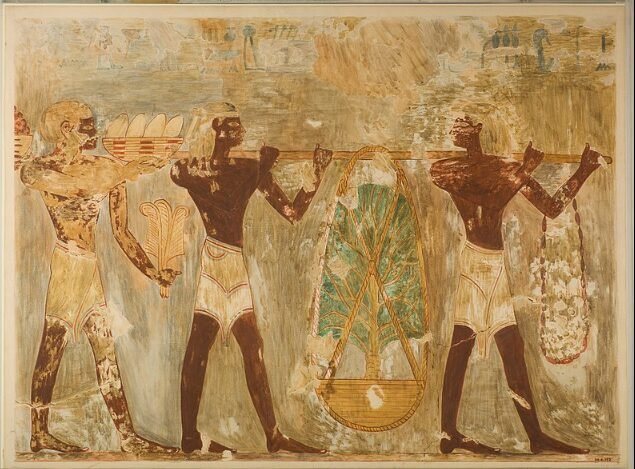
The Land of Punt was an ancient region known from Egyptian trade records. It was celebrated for its valuable exports of gold, incense, ebony, ivory, and wild animals, which were highly valued in Egyptian culture and religious practices. Image: Men from Punt carrying Gifts, Tomb of Rekhmire
When did the earliest recorded expedition to Punt take place?
The earliest recorded Egyptian expedition to Punt occurred during the reign of Pharaoh Sahure of the Fifth Dynasty, around the 25th century BC. However, gold from Punt had been in Egypt since the time of Pharaoh Khufu of the Fourth Dynasty.
Which Egyptian dynasties engaged in trade expeditions to Punt?
Trade expeditions to Punt were organized during the Sixth, Eleventh, Twelfth, and Eighteenth Dynasties of Egypt.
Who led an expedition to Punt during the reign of Pharaoh Mentuhotep III?
An officer named Hannu led one or more expeditions to Punt during the reign of Pharaoh Mentuhotep III, around 2000 BC.
What was the most famous Egyptian expedition to Punt?
The most famous expedition to Punt was launched by Queen Hatshepsut during the Eighteenth Dynasty, around the 15th century BC. This expedition was depicted extensively in her mortuary temple at Deir el-Bahri.
How is the expedition to Punt during Hatshepsut’s reign depicted in Egyptian art?
Reliefs in Hatshepsut’s temple portray the Puntites, their land, vegetation, and animals, providing rich descriptions of the region. The expedition is shown bringing back gold, ivory, aromatic resins, and live animals, contributing to Egyptian religious practices.
What products were brought back from Punt during the reign of Hatshepsut?
The expedition to Punt brought back gold, incense, myrrh, ebony, ivory, aromatic resins, and live animals. These products were highly valued for Egyptian religious and cultural purposes.

Who were the leaders of Punt during Hatshepsut’s expedition?
Punt was ruled by King Parahu and Queen Ati during Hatshepsut’s expedition. The reliefs in her temple vividly depict the royal couple and their retinue.
Did trade with Punt continue after Hatshepsut’s reign?
Trade with Punt continued during the reigns of Thutmose III and Amenhotep III. However, by the early 20th Dynasty, Punt became less central to Egyptian commerce.

Image: Queen Ati and King Perahu of Punt with their attendants, depicted on Pharaoh Hatshepsut’s temple at Deir el-Bahri.
What document from the reign of Ramesses III references Punt?
Papyrus Harris I, a document from the 20th Dynasty, details an Egyptian expedition’s return from Punt, emphasizing the continued importance of Punt as a trading partner during the New Kingdom.
What does the term Ta netjer (Land of the God) refer to?
Ta netjer was a term used to describe Punt, emphasizing its religious and cultural importance to Egypt. The term refers to Punt’s association with the Sun God and the valuable products it supplied for temple rituals.
Where do scholars believe the Land of Punt was located?
Many scholars place Punt in the Horn of Africa, possibly in modern-day Somalia, Eritrea, or Sudan, based on the products imported from Punt, such as gold, aromatic resins, and wild animals.
The modern Somali state of Puntland is named in honor of this ancient kingdom.
What scientific evidence supports the Horn of Africa location for Punt?
In 2010, researchers from the University of California, Santa Cruz, analyzed oxygen isotopes from mummified baboons, which suggested that they originated from eastern Ethiopia and Eritrea, supporting the theory that Punt was located in the Horn of Africa.
What alternate theory exists about Punt’s location?
Some scholars, such as Dimitri Meeks, suggest that Punt might have been located along the western coast of the Arabian Peninsula, from the Gulf of Aqaba to Yemen, based on geographic descriptions in Egyptian texts.
What controversial theory exists about Punt’s location in the Indian subcontinent?
There is a hypothesis that Punt might have been located in Sri Lanka or southern India due to the identification of certain artifacts, such as wood used in Egyptian constructions. However, this theory remains speculative due to limited evidence.
What recent discoveries have supported the Horn of Africa theory for Punt’s location?
In December 2020, primatologists from Dartmouth College concluded that mummified baboons thought to have come from Punt were native to the Horn of Africa. A separate 2023 study involving mitochondrial DNA analysis of a mummified baboon further supported the idea that Punt was located in Eritrea.





