Pharaoh Senusret I: History, Major Accomplishment & Facts

As the son of Amenemhat I, Senusret followed his father’s expansionist policies, notably extending Egypt’s influence into Nubia through military campaigns in his 10th and 18th years. Image: Statue of Senusret I in the Cairo Museum, Egypt
Senusret I, also known as Sesostris I, was the second pharaoh of Egypt’s Twelfth Dynasty, which is considered part of the Middle Kingdom period (c. 1971 BC – 1926 BC).
His reign, which lasted for approximately 45 years, was marked by a mixture of military success, political stability, and significant cultural and architectural achievements.
As a key figure in ancient Egyptian history, Senusret I expanded Egypt’s influence both militarily and diplomatically, all while fortifying the political structure his father, Amenemhat I, had built.
His contributions left a lasting impact on Egypt’s prosperity and laid the groundwork for future rulers of the Middle Kingdom.
READ MORE: Most Famous Pharaohs of Ancient Egypt
Early Life and Family Background
Senusret I was born into a royal family, the son of Pharaoh Amenemhat I and Queen Neferitatenen. His father, Amenemhat I, was the founder of the Twelfth Dynasty, a period that saw the restoration of centralized power in Egypt after the turbulence of the First Intermediate Period. Senusret’s upbringing in this royal environment undoubtedly shaped him as a future ruler, preparing him for his eventual ascension to the throne.

Relief of Pharaoh Amenemhat I from his pyramid complex at El-Lisht, south of Cairo, Egypt
Senusret’s family played a crucial role in his reign. His principal wife, Neferu III, was also his sister, which was not uncommon in royal Egyptian families as a way to preserve the royal bloodline. Together, they had several children, including their son and Senusret’s eventual successor, Amenemhat II. They also had two known daughters: Itakayt and Sebat. Sebat is mentioned in inscriptions alongside her mother, indicating her status within the royal family.
Co-regency with Amenemhat I
One of the key features of Senusret I’s rise to power was his co-regency with his father. In ancient Egypt, co-regency was a practice in which a pharaoh would appoint his successor as a co-ruler, allowing the future king to gain experience while ensuring a smooth transition of power.
Senusret I became co-regent with his father in the 20th year of Amenemhat I’s reign. This arrangement allowed him to take on significant responsibilities early in his career, including overseeing military campaigns and managing the administrative functions of the kingdom.
Senusret I is featured in the Story of Sinuhe, which recounts how he swiftly returned to Memphis from a military campaign after learning of his father’s assassination.
The co-regency with Amenemhat I continued until his assassination, an event that profoundly affected Senusret I. It is believed that Senusret was away on a military campaign in Libya when he received news of his father’s assassination. This event is recounted in the famous ancient Egyptian tale The Story of Sinuhe, in which Senusret I hastily returns to the royal palace in Memphis to secure his position as the new pharaoh. His father’s death not only marked the end of Amenemhat I’s reign but also solidified Senusret’s ascension to the throne as the sole ruler.
Military Campaigns and Expansion
Senusret I’s reign was characterized by several military campaigns aimed at expanding Egypt’s influence and securing its borders.
Senusret I fortified Egypt’s southern border near the second cataract and placed a garrison there.
One of his most notable campaigns was against Lower Nubia, a region to the south of Egypt that had long been a source of both resources and conflict. In his 18th year as pharaoh, Senusret launched a successful military expedition that pushed Egyptian control down to the Second Cataract of the Nile. This marked the formal establishment of Egypt’s southern border at this strategic point, where a garrison and a victory stela were erected to commemorate the campaign.
These military ventures were important not only for expanding Egypt’s territorial control but also for securing valuable resources such as gold and other minerals from Nubia. The success of these campaigns helped to stabilize Egypt’s southern border, ensuring that the region remained under Egyptian control for centuries to come.
In addition to his campaigns in Nubia, Senusret I dispatched expeditions to the Sinai Peninsula and Wadi Hammamat. These regions were significant for their mineral wealth, including copper and amethyst, both of which were important to Egypt’s economy. His quarrying expeditions contributed to the wealth and prosperity of Egypt, enabling him to fund his extensive building projects and other initiatives.
Diplomacy and Internal Administration
Beyond his military endeavors, Senusret I was an adept diplomat and administrator. He maintained diplomatic relations with rulers in towns in Syria and Canaan, ensuring that Egypt remained a key player in the region’s politics. This diplomacy was part of a broader effort to project Egyptian power beyond its immediate borders and to secure trade routes that would benefit the Egyptian economy.
Senusret I also engaged in diplomatic relations with rulers in Syria and Canaan.
Within Egypt, Senusret sought to strengthen the political structure by consolidating power around the monarchy. He worked to centralize the government by appointing officials who were loyal to him, including provincial governors known as nomarchs. These nomarchs played a crucial role in managing Egypt’s various regions, but during periods of political instability, they had often become powerful figures in their own right. Senusret I, like his father before him, aimed to curb the power of the nomarchs and bring them under tighter control, ensuring their loyalty to the central government.
Domestically, Senusret sought to centralize power by supporting loyal nomarchs.
Several high-ranking officials from Senusret’s reign are known from inscriptions and tombs. For example, the vizier Intefiqer served for a long period during Senusret’s reign and is mentioned in multiple inscriptions, including in his tomb located next to the pyramid of Amenemhat I. Intefiqer’s position as vizier made him one of the most powerful individuals in Egypt, responsible for overseeing much of the administration and ensuring the smooth operation of the state.
Building Projects and Religious Contributions
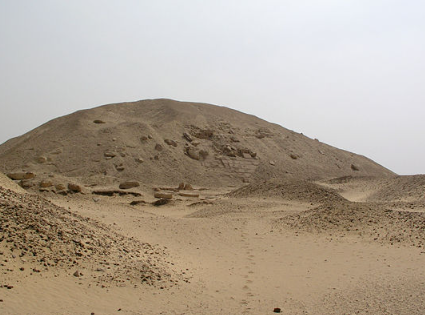
Senusret I’s pyramid, constructed during Egypt’s Twelfth Dynasty at el-Lisht, served as his burial site. Located near his father Amenemhat I’s pyramid, it was called “Senusret beholds the two lands” (Senusret Petei Tawi).
Senusret I’s reign is often remembered for the extensive building projects he undertook throughout Egypt and Nubia. His architectural legacy includes temples, shrines, and other monuments that reinforced both his power and the religious institutions of Egypt. These projects were not only a testament to his wealth and resources but also a way to solidify his connection with the gods, particularly the sun god Ra.
One of Senusret I’s most significant contributions was the rebuilding of the temple of Re-Atum in Heliopolis, an important religious center dedicated to the sun cult. To mark his 30th year as pharaoh and celebrate his Heb Sed Jubilee, a traditional ceremony that reaffirmed the pharaoh’s power and vitality, Senusret erected two red granite obelisks at the temple.
One of these obelisks still stands today in the Al-Masalla district of Cairo, making it the oldest standing obelisk in Egypt. The obelisk, which stands 67 feet tall and weighs around 120 tons, is a remarkable testament to the engineering and artistic achievements of ancient Egypt under Senusret’s rule.

Obelisk of Senusret I in Heliopolis, a suburb outside Cairo, Egypt
Senusret I also contributed to the construction and restoration of temples across Egypt, including the temple of Min at Koptos, the temple of Satet on Elephantine Island, and several temples dedicated to the god Montu at Armant and El-Tod. These temples were important religious and cultural centers, and by supporting their construction, Senusret I strengthened the connection between the monarchy and the religious elite.
One of his most famous architectural accomplishments was the construction of the White Chapel, or Jubilee Chapel, at Karnak. This small but intricately decorated structure was built to commemorate his Heb Sed Jubilee. The White Chapel is renowned for its high-quality reliefs, which depict the king in various religious and ceremonial scenes. Although the chapel was later dismantled, many of its stone blocks were rediscovered and reassembled in the 20th century, allowing visitors to Karnak to admire this masterpiece of Middle Kingdom architecture.

Image: The White Chapel of Senusret I at Karnak.
Religious and Cultural Impact
Senusret I’s reign marked a time of religious and cultural flourishing in Egypt. As a ruler, he was deeply connected to the religious institutions of the time, particularly the cult of Amun, which was growing in prominence during the Middle Kingdom.
By investing in the construction and renovation of temples dedicated to Amun, Ra, and other deities, Senusret ensured that his reign was seen as divinely sanctioned. This close relationship between the pharaoh and the gods was essential for maintaining the legitimacy of the king’s rule in the eyes of the people.
The king’s religious policies extended to his efforts to maintain the tradition of the Heb Sed Festival. This ancient ceremony, celebrated in the 30th year of a pharaoh’s reign, was intended to renew the king’s strength and reaffirm his divine right to rule. Senusret I’s Jubilee celebrations, marked by the erection of obelisks and the construction of the White Chapel, were major events that not only solidified his position as pharaoh but also reinforced the connection between the monarchy and the divine.
Culturally, the Middle Kingdom under Senusret I was a period of artistic achievement. The art and literature of the time reflected the stability and prosperity of Egypt, with many monuments and inscriptions emphasizing the grandeur of the pharaoh and the accomplishments of the kingdom.
The Story of Sinuhe, one of the most famous works of ancient Egyptian literature, was composed during this period. This tale, which describes the adventures of an Egyptian official who flees Egypt after the assassination of Amenemhat I, provides insights into the political and social concerns of the time and underscores Senusret’s role as a stabilizing figure.
Late Reign and Co-regency with Amenemhat II
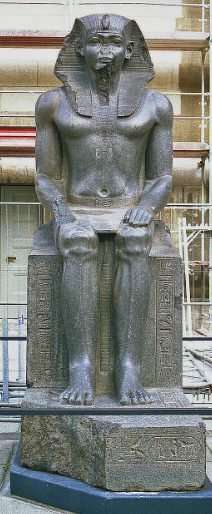
Seated statue of Amenemhat II, later usurped by 19th Dynasty pharaohs, Berlin, Pergamon Museum, Berlin, Germany
Toward the end of his life, Senusret I followed in his father’s footsteps by appointing his son, Amenemhat II, as his co-regent. This co-regency, which began in the 43rd year of Senusret’s reign, ensured a smooth transition of power and allowed Amenemhat II to gain experience in governance before assuming full control of the throne. The co-regency model was an important feature of the Twelfth Dynasty, as it helped to avoid potential power struggles and ensured that the central authority of the pharaoh remained intact.
Inscriptions from this period, including a stela from the Wepwawet Temple, confirm that Amenemhat II was serving as co-regent by the 44th year of Senusret’s reign. Senusret I is believed to have died in his 46th year as pharaoh, after a long and prosperous reign. The Turin Canon, an ancient Egyptian king list, attributes him a reign of 45 years, further corroborating the length of his rule.
Legacy and Historical Significance

Image: Stone weight with Pharaoh Senusret I’s cartouche
Senusret I is remembered as one of the most powerful and effective rulers of the Middle Kingdom. His reign marked a period of stability, military expansion, and cultural achievements that would influence subsequent generations of Egyptian rulers. By securing Egypt’s borders, particularly through his campaigns in Nubia, and establishing a strong central government, Senusret I helped to ensure the prosperity of Egypt for many years after his death.
His architectural projects, particularly his contributions to temple building and the construction of the White Chapel, left a lasting legacy on the religious and cultural landscape of Egypt. These monuments not only served as expressions of his power but also reinforced the religious and cultural continuity that was so vital to the Middle Kingdom’s identity.
Senusret’s efforts to centralize power and strengthen the authority of the monarchy had long-lasting effects on the political structure of Egypt. His ability to manage both internal and external challenges, while maintaining the loyalty of key officials and the support of the religious elite, made him a model for later pharaohs.
Frequently Asked Questions Senusret I

Senusret I was the son of Pharaoh Amenemhat I and Queen Neferitatenen. Image: Upper portion of Senusret I’s statue from Egypt’s Middle Kingdom, 12th Dynasty, circa 1950 BC. Neues Museum, Germany.
Who was Senusret I’s principal wife, and who succeeded him as pharaoh?
Senusret I’s principal wife was Neferu III, who was also his sister. Their son, Amenemhat II, succeeded Senusret I as pharaoh.
What military campaign did Senusret I launch in his 18th year, and what was its outcome?
In his 18th year, Senusret I launched a military campaign against Lower Nubia, extending Egyptian control down to the Second Cataract. This victory is documented on a stela from Buhen.
What major challenge did Senusret I face during his 25th year of reign?
In his 25th year, Egypt was struck by a famine due to a low Nile flood, which posed significant challenges to Senusret I’s rule.
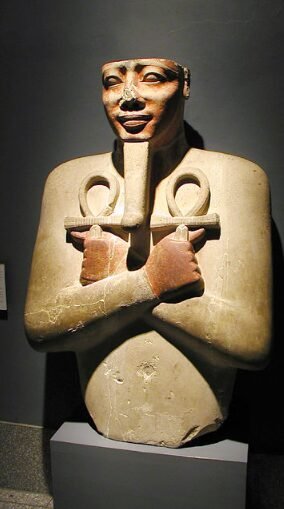
Osiride statue of Pharaoh Senusret I of Egypt
What notable building projects did Senusret I undertake during his reign?
Senusret I undertook extensive building projects, including the reconstruction of the Re-Atum temple in Heliopolis, where he erected two red granite obelisks. He also contributed to temples dedicated to Min, Satet, Montu, and constructed the White Chapel at Karnak to mark his Year 30 jubilee.
Who were some of the key officials in Senusret I’s court?
Key officials in Senusret I’s court included the vizier Intefiqer, two treasurers (Sobekhotep and Mentuhotep), and several high stewards such as Hor and Nakhr.
When was Senusret I crowned coregent, and who did he appoint as his own coregent?
Senusret I was crowned coregent with his father, Amenemhat I, during his father’s 20th regnal year. Toward the end of his own reign, Senusret appointed his son, Amenemhat II, as coregent in his 43rd year.
How long did Senusret I rule, and when did he die?
Senusret I ruled for about 45 years and died in his 46th year, as noted in the Turin Canon.





