Pharaoh Menkauhor Kaiu
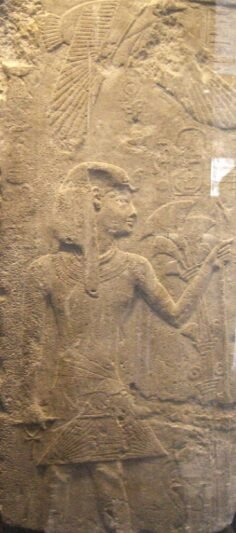
Menkauhor Kaiu, also called Ikauhor and Mencherês in Greek, was a pharaoh of Egypt’s Fifth Dynasty, ruling around 2399–2390 BC. Image: Menkauhor represented on a stele from the tomb of Ameneminet, Louvre
Menkauhor Kaiu, also known as Mencherês in Greek, was a pharaoh of Egypt’s Fifth Dynasty, ruling around 2399–2390 BC. He is attested in three significant New Kingdom sources: the Abydos King List, the Saqqara Tablet, and the Turin Canon. These inscriptions place him as the seventh king of the Fifth Dynasty, succeeding Nyuserre Ini and preceding Djedkare Isesi.
Historical records credit him with an eight-year reign, which aligns with the details provided by later classical accounts, such as Manetho’s Aegyptiaca, which refers to a pharaoh named “Mencherês” with a similar reign duration.
Though few artifacts survive from Menkauhor’s time, he remains a notable figure due to his contributions to Egyptian architecture and trade. His rule marked the continuation of the Fifth Dynasty’s tradition of sun worship, while also showcasing his administrative and religious initiatives.
READ MORE: Major Events in the History of Ancient Egypt
Family of Menkauhor Kaiu
Menkauhor’s familial lineage remains uncertain due to limited historical records. He may have been a son of Nyuserre Ini, a prominent Fifth Dynasty pharaoh. Evidence suggests a possible connection to Khentykauhor, another figure of the dynasty whose name resembles Menkauhor’s. Egyptologists speculate that Khentykauhor could have taken the throne name Menkauhor upon ascending to power.
In 2015, archaeologists discovered the tomb of Khentkaus III, a “King’s Wife” and “King’s Mother,” near the pyramid of Neferefre in Abusir. This finding suggests she may have been Menkauhor’s mother, potentially linking him to Neferefre as his father. However, this connection is debated, as no definitive proof has emerged.
Menkauhor’s familial connections remain uncertain, with Khentkaus III possibly being his mother, as suggested by her tomb’s inscriptions.
The identity of Menkauhor’s consorts is also unclear. Queen Khuit I has been proposed as a possible wife based on the dating and location of her tomb, but there is no conclusive evidence.
Additionally, Queen Meresankh IV, whose tomb lies in Saqqara, might have been connected to Menkauhor, though she could also have been the consort of his successor, Djedkare Isesi. Menkauhor’s descendants, if any, are not documented.

Menkauhor Kaiu’s reign, lasting about eight or nine years, followed Nyuserre Ini and preceded Djedkare Isesi. Image: Double statue portraying Nyuserre as both a young man and an old man, Museum of Egyptian Art in Munich, Germany
Reign of Menkauhor Kaiu
Menkauhor ruled Egypt during a period of relative stability and prosperity in the Old Kingdom. His eight-year reign is corroborated by the Turin Canon, while classical sources suggest it may have lasted nine years. The limited number of surviving artifacts from his reign suggests it was relatively short compared to other Fifth Dynasty rulers.
Despite the brevity of his rule, Menkauhor continued the tradition of major building projects initiated by his predecessors. He presided over a centralized state with strong religious and administrative systems, ensuring the continuity of the Old Kingdom’s legacy.
Accomplishments of Menkauhor Kaiu
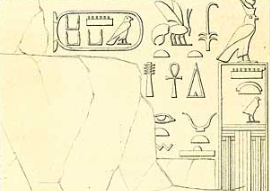
Menkauhor Kaiu’s achievements include an expedition to Sinai’s mines and plans for a sun temple, “Akhet-Ra,” whose location remains unknown. Image: Relief of Menkauhor Kaiu from the Wadi Maghareh
The Sun Temple “Akhet-Ra”
Menkauhor commissioned the construction of a sun temple dedicated to the god Ra, named “Akhet-Ra,” meaning “The Horizon of Ra.” He was the last pharaoh of the Fifth Dynasty to build a sun temple, a practice that had started with Userkaf. Although the temple has yet to be located, its existence is confirmed through inscriptions in the tombs of priests who served there. The decline of sun temple construction after Menkauhor reflects the shifting religious focus from Ra to Osiris during subsequent reigns.
The “Headless Pyramid”
Menkauhor built his burial pyramid at Saqqara, moving away from the traditional necropolis of Abusir used by earlier Fifth Dynasty kings. Known as the “Headless Pyramid,” it was rediscovered in 2008 after being lost under the sands for centuries.
The pyramid, originally named Netjer-isut-Menkauhor (“The Divine Places of Menkauhor”), is modest in size, reflecting his short reign. Excavations revealed a burial chamber with a basalt sarcophagus, confirming that it was completed during his lifetime.
Trade and Expeditions
Menkauhor continued the Fifth Dynasty’s focus on trade and resource acquisition. He organized an expedition to the turquoise and copper mines at Wadi Maghareh in the Sinai Peninsula. A rock inscription found at the site confirms this activity, showcasing the importance of mining to Egypt’s economy and temple construction during his reign. A gold cylinder seal bearing his name, purportedly discovered in Anatolia, suggests possible trade links beyond Egypt’s borders, though the authenticity of this artifact is disputed.
Religious and Administrative Contributions
Menkauhor’s reign emphasized religious practices centered on Ra, the sun god. His decision to build a sun temple highlights his commitment to maintaining the Fifth Dynasty’s tradition of Ra worship. His administrative policies likely reinforced the economic and agricultural systems supporting royal building projects and temple offerings.
Ra’s Sun Boat in Ancient Egyptian Mythology: Meaning and Significance
Legacy of Menkauhor Kaiu
Menkauhor’s legacy extended well beyond his reign. His funerary cult persisted into the Sixth Dynasty, supported by agricultural estates established during his rule. These estates produced offerings for his mortuary temple, and their personified representations are depicted in the tombs of officials who served in his cult.
During the New Kingdom, Menkauhor was deified as a local god of the Saqqara necropolis. He was revered as an intercessor and worshipped alongside other deified kings of the Old Kingdom. Reliefs from tombs of New Kingdom officials depict Menkauhor enthroned, reflecting his enduring significance as a divine figure. The persistence of his cult is particularly noteworthy given the relatively short duration of his reign.
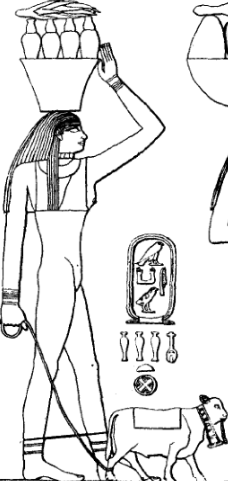
Menkauhor was interred in the “Headless Pyramid” at Saqqara, rediscovered in 2008. His funerary cult persisted into the New Kingdom, with a deified form celebrated until the Nineteenth Dynasty, over a millennium after his death. Image: Personified agricultural estate of Menkauhor, tomb of Ptahhotep, Saqqara
Conclusion
Menkauhor Kaiu, though less well-documented than other Fifth Dynasty rulers, left a significant mark on ancient Egyptian history. His contributions to architecture, trade, and religious practices underscore his role in maintaining the cultural and political stability of the Old Kingdom. Despite uncertainties surrounding his family and lineage, Menkauhor’s legacy endured for centuries, as evidenced by his funerary cult and later deification.
Frequently Asked Questions
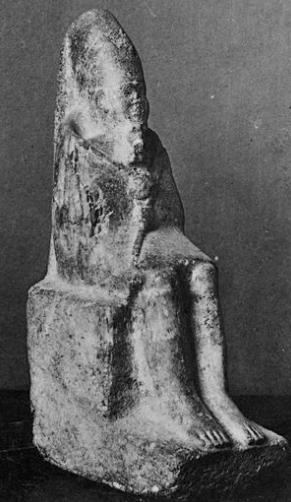
Menkauhor Kaiu was a pharaoh of Egypt’s Fifth Dynasty, ruling for about eight years. Image: Statue of Menkauhor wearing the dress of the Sed festival from Memphis
What sources confirm Menkauhor’s existence and reign?
He is attested in the Abydos King List, the Saqqara Tablet, and the Turin Canon, all from the New Kingdom.
What do these sources indicate about his reign?
These sources credit Menkauhor with an eight-year reign, placing him between Nyuserre Ini and Djedkare Isesi as the seventh king of the dynasty.
What notable artifacts are associated with Menkauhor?
Artifacts include stone vessels, seal impressions, and an alabaster statuette found at the Temple of Ptah in Memphis.
What was the significance of the gold seal found in Anatolia?
The seal suggests possible trade connections during Menkauhor’s reign, though its provenance is disputed.
What monuments did Menkauhor construct?
He built a now-lost sun temple, “Akhet-Ra,” and the “Headless Pyramid” in Saqqara.
What is known about Menkauhor’s family?
His family relations are unclear; he may have been a son of Nyuserre Ini, and Khentkaus III is a potential mother, but no consorts or offspring have been definitively identified.
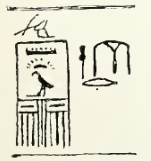
Serpentine cylinder seal of Pharaoh Menkauhor Kaiu
What activities during his reign are documented?
An expedition to Sinai’s turquoise and copper mines is evidenced by inscriptions at Wadi Maghareh.
What is the significance of Menkauhor’s pyramid?
Known as the “Headless Pyramid,” it was rediscovered in 2008 and reflects modest construction consistent with his short reign.
How was Menkauhor remembered after his death?
His funerary cult lasted into the Sixth Dynasty, and he was later deified in the New Kingdom as a local god of Saqqara, worshipped alongside other Old Kingdom kings.





