What is the Eastern Perspective on the Trinity?
The doctrine of the Trinity, a cornerstone of Christian theology, is viewed differently within Eastern Christianity compared to Western Christianity. Both traditions affirm the same foundational belief in one God in three persons—Father, Son, and Holy Spirit—but they approach this doctrine with distinct emphases and theological frameworks.
Western Historians’ Somewhat Biased Labeling of the Eastern Roman Empire
Historical Foundations and Context
The Eastern understanding of the Trinity is deeply rooted in the early ecumenical councils, particularly the First Council of Nicaea (325 AD) and the First Council of Constantinople (381 AD). These councils addressed key Trinitarian controversies, including Arianism, which denied the full divinity of the Son, and Macedonianism, which denied the divinity of the Holy Spirit. The Nicene Creed, a product of these councils, remains a central expression of Trinitarian belief in both Eastern and Western Christianity.
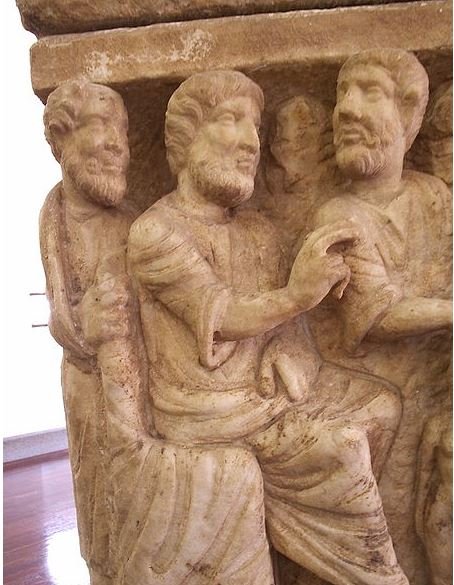
Trinity Sarcophagus, one of the earliest known artworks depicting the Trinity.
Rooted in the teachings of the Cappadocian Fathers and the early ecumenical councils, the Eastern perspective on the Trinity offers a dynamic vision of the triune God as a communion of love and life.
In the East, the Cappadocian Fathers—Basil the Great, Gregory of Nyssa, and Gregory of Nazianzus—played a pivotal role in articulating the doctrine of the Trinity. They emphasized the distinction between the divine ousia (essence) and the three hypostases (persons) of the Trinity. This distinction became a hallmark of Eastern Trinitarian theology, ensuring clarity in affirming both the unity and diversity within the Godhead.
Essence and Energies
One of the unique aspects of Eastern Trinitarian theology is the distinction between God’s essence (ousia) and energies (energeiai). According to this view, God’s essence is utterly transcendent and unknowable, but His energies are how He interacts with the world. This distinction safeguards the mystery of God while affirming the possibility of a real relationship between God and humanity.
The essence-energies distinction also informs Eastern Christianity’s understanding of the Trinity. The Father, as the source (arche) of the Trinity, eternally begets the Son and proceeds the Holy Spirit. This relational dynamic among the three persons is reflected in the divine energies, which manifest God’s presence and activity in the world.
Monarchy of the Father
Eastern Christianity emphasizes the monarchy of the Father as the unifying principle of the Trinity. The Father is the sole source of the Son and the Holy Spirit, a concept rooted in the Greek theological tradition. This contrasts with the Western view, particularly after the addition of the Filioque clause to the Nicene Creed, which states that the Holy Spirit proceeds from the Father “and the Son.”
The Eastern perspective on the Trinity is a profound theological framework that emphasizes the equality and unique roles of the Divine Persons—Father, Son, and Holy Spirit.
For the East, the Filioque is problematic because it appears to compromise the unique role of the Father as the source of divinity. Instead, the Eastern tradition insists on the procession of the Spirit from the Father alone, in line with the original Nicene Creed and the teachings of the Cappadocian Fathers.
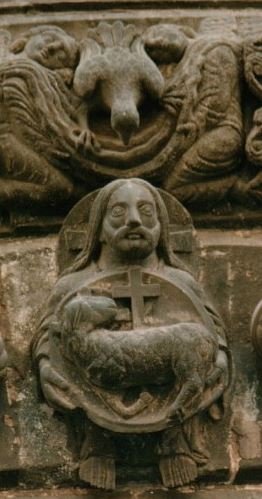
A relief depicting the Trinity at the Basilica of St.-Denis in France.
Perichoresis
The concept of perichoresis (mutual indwelling) is central to the Eastern understanding of the Trinity. This term describes the interpenetration and co-inherence of the three persons of the Trinity, emphasizing their unity and communion without confusion. In Eastern thought, the Trinity is not a static hierarchy but a dynamic and eternal relationship of love.
This emphasis on relationality and communion shapes Eastern theology’s broader worldview, particularly its vision of salvation as theosis (deification). Humanity is invited to participate in the divine life through union with the triune God, a process made possible by the Incarnation, the Holy Spirit, and the sacramental life of the Church.
Liturgical and Mystical Dimensions
Eastern Christianity’s approach to the Trinity is not merely intellectual or theological but deeply liturgical and mystical. The worship and prayer life of the Eastern Church reflects its Trinitarian faith in profound ways.
The Divine Liturgy, central to Eastern Christian worship, is steeped in Trinitarian theology. Prayers and hymns frequently address each person of the Trinity, emphasizing both their distinct roles and their unity. For example, the Trisagion Hymn (“Holy God, Holy Mighty, Holy Immortal, have mercy on us”) is understood as a reflection of the triune God’s holiness.
The Eastern liturgy also highlights the role of the Holy Spirit in making Christ present in the Eucharist. The epiclesis, a prayer invoking the Holy Spirit, underscores the Spirit’s essential role in the Church’s sacramental life, in line with Eastern Trinitarian theology.
Gregory of Nazianzus and John of Damascus advanced Trinitarian theology by addressing difficult questions and defending the divinity of the Holy Spirit.
Eastern Christianity places a strong emphasis on the mystical experience of God, often described as participation in the divine life. This mystical theology is inherently Trinitarian, as believers are drawn into communion with the Father through the Son in the Holy Spirit.
The writings of Eastern mystics, such as Symeon the New Theologian and Gregory Palamas, explore the experiential dimension of Trinitarian theology. Gregory Palamas, in particular, articulated the essence-energies distinction in the context of the Hesychast tradition, emphasizing that through the energies of God, believers can experience the light and life of the Trinity.
Contrasts with the Western Perspective
While the Eastern and Western traditions share the same core Trinitarian faith, their theological emphases and frameworks differ significantly.
Filioque Controversy
The most well-known difference between Eastern and Western Trinitarian theology is the Filioque. The Western Church’s addition of “and the Son” to the Nicene Creed became a major point of contention, contributing to the Great Schism of 1054. For the East, this addition disrupts the balance of Trinitarian theology by altering the role of the Father as the sole source of the Son and the Spirit.
Philosophical Influences
Western Trinitarian theology has been shaped by Latin scholasticism, with its emphasis on precision and systematic analysis. Thinkers like Augustine of Hippo developed a psychological analogy for the Trinity, comparing it to the human mind, its knowledge, and its love.
In contrast, Eastern theology, influenced by Greek philosophy, emphasizes mystery, relationality, and the experiential knowledge of God. The Cappadocian Fathers focused on the dynamic relationships within the Trinity rather than analogical models.

A diagram illustration of the Trinity.
Salvation and Deification
While both traditions affirm the centrality of Christ’s work for salvation, the Eastern emphasis on theosis frames salvation as participation in the divine life. This Trinitarian vision sees the Incarnation, the sending of the Spirit, and the life of the Church as means by which humanity is drawn into the eternal communion of the Trinity.
In the West, salvation has often been framed in juridical terms, emphasizing justification and atonement. While not incompatible with the Eastern perspective, this approach reflects a different theological emphasis.
Contemporary Relevance and Dialogue
In the modern era, the Eastern perspective on the Trinity offers valuable insights for ecumenical dialogue and contemporary theology. Its emphasis on relationality, communion, and mystery resonates with broader cultural and theological trends, providing a counterbalance to overly rationalistic approaches.
The Eastern perspective on the Trinity emphasizes mystery, relationality, and the experiential knowledge of God.
Eastern Trinitarian theology also has much to contribute to discussions of ecological theology, interfaith dialogue, and the relationship between science and religion. Its holistic vision of God’s relationship with the world invites fresh reflections on how the triune God is present and active in creation.
Questions and Answers
What concept did Gregory of Nazianzus and John of Damascus use to describe the interrelation of the Divine Persons?
They used the concept of perichoresis, a term from Greek philosophy describing mutual indwelling and interrelation. It symbolizes the dynamic unity and diversity within the Trinity.
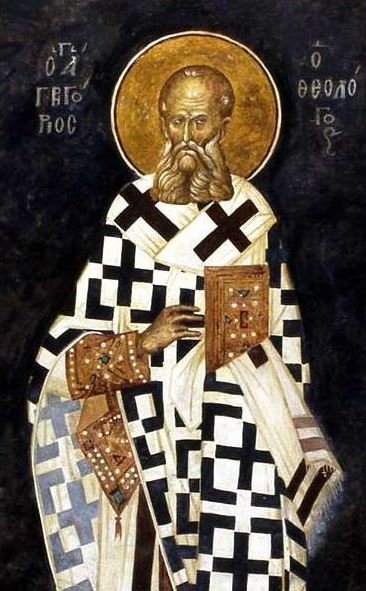
Icon of Gregory of Nazianzus at the Kariye Camii in Istanbul, Turkey.
What was Gregory of Nazianzus’s key argument regarding the Holy Spirit?
In his Fifth Theological Oration, Gregory argued passionately for the divinity and equality of the Holy Spirit. He emphasized that the Spirit’s role in spiritual regeneration, creation, and resurrection underscores its equal status with the Father and Son. He rejected the idea of subordination as “unbiblical” and “absurd.”
How did John of Damascus approach the Trinity in his theological work?
In Exposition of the Orthodox Faith, John of Damascus systematically described the Trinity as “indivisibly divided,” with each person distinguished by their unique characteristics but united in essence. He affirmed the Spirit’s distinct procession from the Father, maintaining its co-equality and inseparability from the Father and Son.
What unique roles of the Holy Spirit were highlighted by Gregory and John?
Gregory described the Spirit as the “Author of spiritual regeneration” and “Another Comforter,” revealing the Father and glorifying the Son. John affirmed the Spirit’s role in enlightening believers, sealing salvation, and working harmoniously with the Father and Son while maintaining its unique focus.
How did John of Damascus illustrate the relationship between the Spirit, the Father, and the Son?
John likened the relationship to light emanating from fire, emphasizing that the Father is the source of divinity. He clarified that while the Son is begotten, the Spirit proceeds distinctly from the Father, rejecting the idea that the Spirit proceeds from the Son.
What challenges did Gregory and John acknowledge in understanding the Trinity?
They recognized the limitations of human language and reasoning in describing the transcendent nature of the Trinity. John noted that human understanding is confined to scriptural revelation and personal experience, both influenced by cultural and intellectual contexts.





