Twelver Shī‘ism also known as Imāmiyya (Arabic: إمامية), is the largest branch of Shī‘a Islam. It accounts for approximately 85% of all Shī‘a Muslims and is distinguished by its belief in the twelve divinely appointed leaders, known as the Twelve Imams (Arabic: الأئمة الاثنا عشر). Twelvers hold that the last of these Imams, Muhammad al-Mahdi, is in occultation and will return as the promised Mahdi to establish justice on Earth.
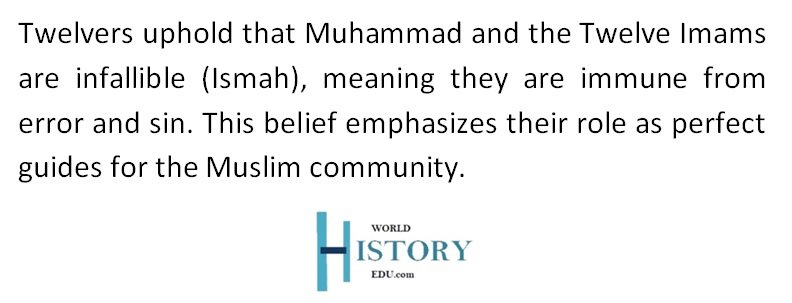
Twelvers believe that the Twelve Imams are both spiritual and political successors to the Islamic Prophet Muhammad. The Imams possess divine wisdom and are free from error and sin (Ismah).
Core Beliefs
Twelvers believe that the Twelve Imams are the rightful spiritual and political successors of the Prophet Muhammad. These Imams, according to Twelver theology, are infallible and divinely guided, ensuring that they correctly interpret the Quran and Islamic law. The concept of Ismah (infallibility) ensures that the Imams are free from sin and error. Another central belief is nass, the idea that each Imam is divinely designated by his predecessor.
Succession Following the Death of the Islamic Prophet Muhammad
Demographics and Distribution
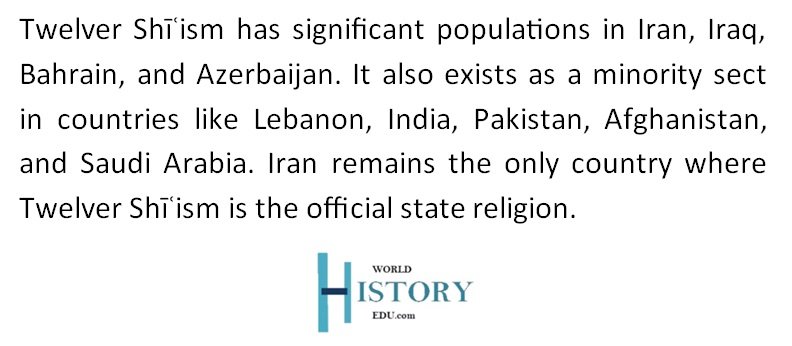
Globally, there are over 155 million Twelvers. They form the majority of the population in Iran, Iraq, Bahrain, and Azerbaijan. Additionally, they constitute significant minorities in Lebanon, India, Pakistan, Afghanistan, Saudi Arabia, and other parts of the Middle East and South Asia. Iran is the only country where Twelver Shī‘ism is the official state religion.

Terminology and Identity
The term Twelver derives from the belief in twelve Imams, each a male descendant from the Prophet Muhammad’s family, beginning with ʿAlī ibn Abī Ṭālib and ending with Muhammad al-Mahdi. Other terms used to refer to Twelvers include:
- Ja‘farī: A reference to Ja‘far al-Sadiq, the sixth Imam, who contributed significantly to the school of Islamic jurisprudence followed by Twelvers.
- Imami: Emphasizing the belief in the Imamate, which distinguishes Twelvers from other branches of Islam.

Historical Development
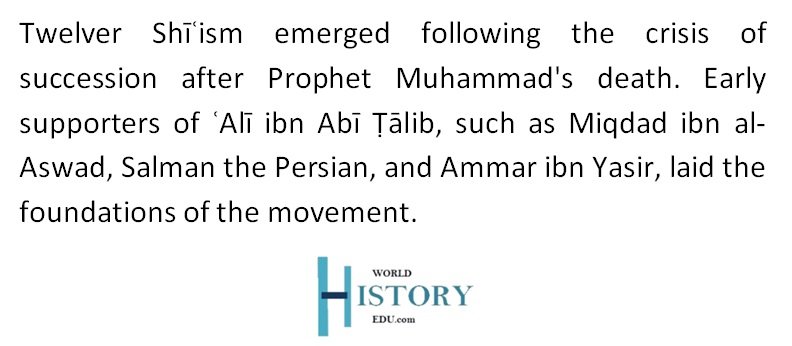
The roots of Twelver Shī‘ism trace back to the early disputes over Muhammad’s succession. Supporters of ʿAlī, known as the Shī‘a of ʿAlī, became distinct from the Sunni majority, particularly after the martyrdom of ʿAlī’s son, Husayn, at Karbala. Over time, Shī‘ism spread across Iraq, Iran, and parts of the Arabian Peninsula.
Ja‘far al-Sadiq played a crucial role in developing Twelver theology and jurisprudence. His teachings laid the foundation for the Ja‘farī school of law, which remains central to Twelver jurisprudence. Following his death, the Imamate continued through his descendants, culminating in the occultation of the twelfth Imam, Muhammad al-Mahdi.
The belief is that the Twelve Imams are chosen through divine decree (nass) and serve as the ultimate interpreters of Islamic law (sharīʿa) and the esoteric meaning of the Qur’an.
The twelfth Imam entered the Minor Occultation (874-941 CE), during which he communicated with his followers through appointed deputies. This was followed by the Major Occultation, which continues to the present day. Twelvers believe that al-Mahdi will reappear as a messianic figure to establish justice and righteousness.
Jurisprudence and Theological Schools
Ja‘farī Jurisprudence
Twelver Shī‘a Islam follows the Ja‘farī school of law, which is based on the teachings of the Imams. It relies on four sources:
- The Quran
- The Sunnah of Muhammad and the Imams
- Ijma‘ (consensus)
- ‘Aql (reason)
The Usuli-Akhbari Controversy
- Akhbari scholars rely exclusively on hadith (narrations) from the Imams, rejecting rationalist approaches.
- Usuli scholars emphasize independent reasoning (ijtihad) and clerical authority. The Usuli school, dominant since the 18th century, forms the basis of modern Twelver jurisprudence.
Governance and the Role of Clergy
The concept of Wilayat al-Faqih, developed by Ayatollah Ruhollah Khomeini, asserts that in the absence of the Imam, religious scholars have the authority to govern. This doctrine underpins Iran’s political system, where the Supreme Leader is a senior cleric.
Religious Practices and Festivals
Twelver Shī‘ism includes unique religious practices and observances:
- Ashura: Commemorates the martyrdom of Imam Husayn at Karbala.
- Arba‘een: Marks the 40th day after Ashura and is one of the largest annual pilgrimages.
- Eid al-Ghadeer: Celebrates Muhammad’s designation of ʿAlī as his successor.
- Mid-Sha‘aban: Celebrates the birth of the twelfth Imam.
The Five Pillars and Additional Beliefs

Twelvers practice the Five Pillars of Islam, with unique interpretations:
- Salat (Prayer): They perform five daily prayers, with the possibility of combining certain prayers.
- Sawm (Fasting): Observed during Ramadan with additional voluntary fasts.
- Zakat (Almsgiving): A religious tax to support the less fortunate.
- Khums (One-fifth Tax): Unique to Shīʿa Islam, it supports religious leaders and charities.
- Hajj (Pilgrimage): Obligatory for those who can afford it.
Twelver Shīʿism has a structured clerical hierarchy, with Mujtahids (jurisprudents) guiding the community. Laypeople follow a Marja’ (religious authority) for religious rulings.
Did you know…?
- During the 10th century, the Buyid dynasty in Baghdad patronized Twelver theologians, leading to the consolidation of the doctrine. Scholars such as Al-Shaykh Al-Mufid, Sharif al-Murtaza, and Shaykh al-Tusi further developed Twelver theology and jurisprudence.
The last Imam, Muhammad al-Mahdi, is believed to be in Occultation. Twelvers maintain that he will reappear to restore justice and establish divine rule.
Distinctions from Other Shī‘a Sects
Twelvers differ from other Shī‘a sects such as Ismā‘īlīs and Zaydis in their belief in twelve Imams and the occultation of the last Imam. Additionally, Twelvers uphold the concept of Tawassul (seeking intercession through the Imams) and Ziyarat (visitation of holy shrines).
Frequently asked questions about Twelver Shi’ism
Who are the Twelve Imams?
The Twelve Imams are spiritual and political leaders, starting with Ali ibn Abi Talib and ending with Muhammad al-Mahdi, who is believed to be in occultation and will return as the Mahdi.
What is the doctrine of Ismah?
Ismah refers to the infallibility of the Imams and the Prophet Muhammad, meaning they are free from sin and error in their guidance of the Muslim community.
Twelver Shīʿism differs from Ismāʿīlī and Zaydī Shīʿism in terms of the number and succession of Imams. Twelvers believe in twelve Imams, while Ismāʿīlīs follow seven and Zaydīs recognize an alternative line of successors.
What is the role of Imam al-Mahdi?
Imam al-Mahdi is the twelfth and final Imam, believed to be in occultation and will reappear to establish justice and lead the Muslim community.
How does Twelver Shiʿism differ from other Shīʿa sects?
Twelvers believe in twelve Imams, whereas Ismāʿīlīs and Zaydīs recognize a different number of Imams and have differing beliefs about the succession of leadership.
What is the significance of the concept of Nass?
Nass is the divine appointment of the Imams by God through Muhammad, ensuring their legitimacy and authority in interpreting Islamic law and theology.
Imams Muhammad al-Baqir and Jaʿfar al-Sadiq played crucial roles in defining Shīʿa jurisprudence. They emphasized the principle of Taqiyya (dissimulation) for self-preservation and further established the Jaʿfarī school of law.
What role do scholars play in Twelver Shiʿism?
During the occultation of the twelfth Imam, scholars (mujtahids) guide the community through ijtihad (independent reasoning), and many followers practice taqlid (emulation) of a Marjaʿ (religious authority).
What is the importance of Karbala in Twelver Shiʿism?
The martyrdom of Imam Husayn at Karbala is central to Twelver identity, symbolizing the struggle against injustice and is commemorated annually during Ashura.





