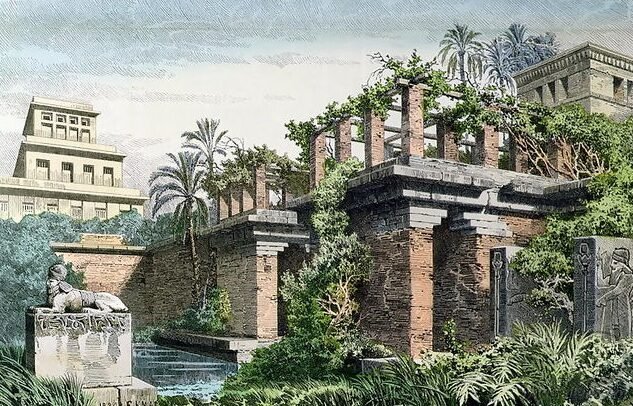
Amytis of Media was an important figure in ancient history, particularly due to her role in the alliance between the Median and Babylonian empires. She was the daughter of Cyaxares, the king of the Median Empire, and the sister of Astyages, the last king of Media. Amytis became the queen of Babylon after marrying King Nebuchadnezzar II, one of the most powerful rulers of Babylon.
This marriage was more than a personal union; it had significant political implications, serving to strengthen the alliance between two major powers of the ancient Near East—Media and Babylon.
READ MORE: Ancient Near East Civilizations and their Accomplishments
Background and Family
Amytis was born into the royal family of Media, a kingdom that played a crucial role in shaping the political landscape of the ancient world. Her father, Cyaxares, was a prominent figure who consolidated the Median Empire and helped establish its dominance over the region. Cyaxares was known for his military successes, including his alliance with the Babylonians and Scythians to overthrow the Assyrian Empire, which had long been a dominant force in the Near East.
Amytis’ brother, Astyages, succeeded their father as the king of Media and became the last ruler of the Median Empire before its fall to the rising power of Persia under Cyrus the Great. Despite the eventual fall of Media, the kingdom was a major player in regional politics during Amytis’ lifetime, and her family was highly influential.
Amytis also had a niece named Amytis, who was the daughter of her brother Astyages. This shows that the name Amytis was significant within the family and was possibly a traditional name passed down through generations.

King Astyages of Media
Marriage to Nebuchadnezzar II
Amytis married Nebuchadnezzar II, the king of Babylon, to solidify a political alliance between the Median and Babylonian empires. Nebuchadnezzar ruled Babylon from 605 to 562 BCE and is often regarded as one of the greatest kings of the Neo-Babylonian Empire. His reign marked the peak of Babylon’s power, and his name is still associated with grandeur and achievement, particularly in military campaigns and monumental building projects.

A section of the “Tower of Babel stele” showing Nebuchadnezzar II on the right and Babylon’s ziggurat, the Etemenanki, on the left.
The marriage between Amytis and Nebuchadnezzar was strategic, designed to unite the two empires in a strong alliance against mutual enemies, including the powerful Assyrian Empire, which they would eventually help to defeat. Marriages of this type were common in ancient times, used to forge alliances and consolidate power among ruling families. In this case, the marriage of Amytis to Nebuchadnezzar helped ensure the cooperation of Media and Babylon, two of the most powerful entities in the region at the time.
The Legend of the Hanging Gardens
One of the most enduring legends associated with Amytis is the story of the Hanging Gardens of Babylon. According to tradition, Nebuchadnezzar constructed the gardens for Amytis, who missed the mountainous, lush landscapes of her homeland in Media. The gardens were said to have been built to replicate the forests and hills of Media, providing Amytis with a reminder of her home while living in the flat, arid region of Mesopotamia.
The Hanging Gardens are often considered one of the Seven Wonders of the Ancient World. They are described as a remarkable feat of engineering, consisting of tiered terraces filled with trees, shrubs, and other plants, creating the illusion of a green mountain rising from the desert. If they existed, they would have required advanced irrigation techniques to keep the gardens lush in the hot and dry climate of Babylon.
However, there is no conclusive historical or archaeological evidence to confirm that the Hanging Gardens of Babylon actually existed, and their story remains steeped in myth and speculation. Ancient texts that describe the gardens come from later Greek and Roman sources, long after the time of Amytis and Nebuchadnezzar. Despite the lack of direct evidence, the legend of the Hanging Gardens has persisted throughout history and continues to be one of the most famous stories connected to ancient Babylon.
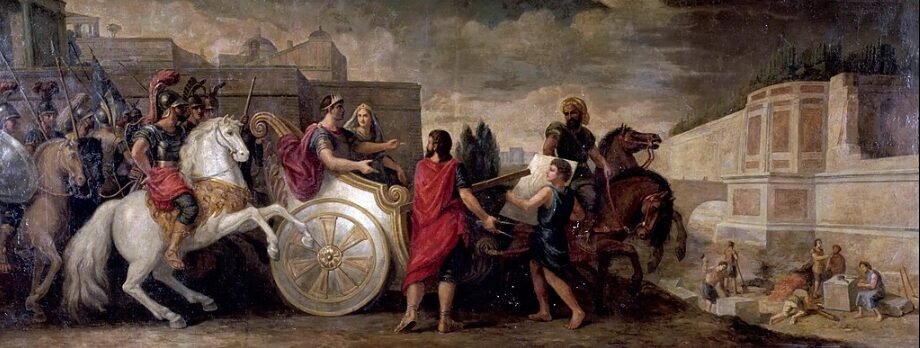
Image: Nebuchadnezzar and his wife, Amytis of Media, observing the construction of the Hanging Gardens.
Historical Significance
While much of the popular lore surrounding Amytis is tied to the legend of the Hanging Gardens, her marriage to Nebuchadnezzar had far-reaching political significance. The alliance between Media and Babylon helped to stabilize the region and enabled both empires to achieve military success against their common enemies, particularly Assyria.
Nebuchadnezzar’s reign was marked by impressive military campaigns that extended Babylonian control over much of the Near East. The alliance with Media, cemented by Amytis’ marriage to Nebuchadnezzar, provided Babylon with crucial support during this period of expansion. Nebuchadnezzar’s victories helped secure Babylon’s dominance in the region, allowing him to focus on monumental construction projects, including the famous Ishtar Gate and the restoration of temples and palaces throughout Babylon.
In this context, Amytis was more than just a queen; she was a symbol of the alliance between two of the most powerful empires of the time. Her presence at Nebuchadnezzar’s court would have been a constant reminder of the political and military partnership between Media and Babylon.
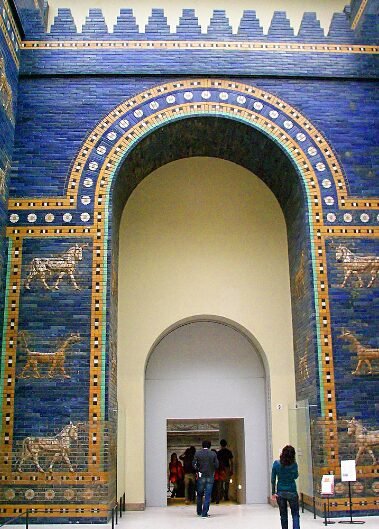
Ishtar Gate at the Pergamon Museum, Berlin, Germany
Legacy
Amytis’ legacy is largely tied to the legends surrounding her and the Hanging Gardens. While there is no direct evidence that the gardens were built for her, the association between Amytis and the gardens has endured throughout history. She is remembered as a queen who brought a sense of beauty and nature to the grand city of Babylon, even if the story is more myth than fact.
Her marriage to Nebuchadnezzar remains historically significant, as it played a crucial role in uniting two powerful dynasties. Through this union, Amytis helped shape the political landscape of the ancient Near East, contributing to the rise of Babylon as a dominant empire during her husband’s reign.