Ancient Egyptian Wolf God Wepwawet: Origin Story, Depiction, Powers, & Symbols
Wepwawet, whose name translates to “Opener of the Ways,” is a significant figure in ancient Egyptian mythology. Revered for his association with guidance, protection, and transitions, Wepwawet played critical roles in both the mortal and divine realms. Below, World History Edu delves into his origin story, powers, symbols, and meanings, showcasing his importance in Egyptian culture.

Figure depicting Wepwawet, 664–332 BC, Brooklyn Museum, New York City
Origin Story of Wepwawet
Wepwawet’s origins trace back to the early dynastic period of Egypt, making him one of the earliest documented deities in the pantheon.
He was initially worshipped in Asyut, a region known in Greek times as Lycopolis, meaning “City of Wolves.” This geographical connection emphasizes Wepwawet’s lupine identity, as his primary depiction was as a wolf or wolf-like creature.
Wepwawet was believed to have originated as a wolf deity, a rarity in Egyptian mythology, which more commonly associated canines with jackals (e.g., Anubis). His role began as a protector and guide for the pharaohs, leading their way in both earthly and spiritual journeys.
Wepwawet embodies the duality of life and death, war and peace, and divine guidance.
Mythological accounts tie Wepwawet to the Pharaoh’s ascension to power, battles, and spiritual rituals. His name reflects his primary function: opening the ways—whether for military expeditions, royal ascension, or the deceased’s journey into the afterlife.
Powers

An ivory label from Pharaoh Den’s tomb at Abydos (c. 3000 BC) depicts Wepwawet atop a standard.
Wepwawet’s powers are multifaceted, encompassing domains of warfare, guidance, and spiritual transitions.
Guide of the Dead
Wepwawet’s most prominent role was as a psychopomp, a deity who guided souls into and through the Duat, the Egyptian underworld. This ability was essential in Egyptian funerary rites, as it ensured the safe passage of the deceased’s spirit. His presence during the Opening of the Mouth ceremony further solidified his role in preparing the dead for their journey to the afterlife.
Protector of the Pharaoh
In the earthly realm, Wepwawet was seen as a protector and supporter of the pharaoh. Texts like the Pyramid Texts describe him as accompanying the king in hunts and battles, ensuring victory and safety. His association with the pharaoh extended to being a symbol of divine authority, with his image sometimes used on royal standards.
God of War
Wepwawet’s military powers made him a significant deity in times of conflict. He was depicted as a scout who cleared paths for armies, symbolically leading them to victory. His epithet “one with sharp arrows” highlights his martial prowess, suggesting that he acted as a divine warrior in service of the pharaoh and Egypt.
Opener of the Sky
In addition to earthly and underworld realms, Wepwawet had celestial connotations. He was called “Ra who has gone up from the horizon” in later texts, indicating his role in opening the sky and ensuring the sun god’s safe journey. This connection linked him to the cycle of life, death, and rebirth.
Symbolism and Meaning

As a royal and funerary deity, Wepwawet symbolizes transitions—whether through battle, death, or unity. Image: Depiction of Wepwawet, the “Opener of Ways,” as a gray or white wolf wielding a staff and the ankh (i.e. symbol of life).
Name and Titles of Wepwawet
Wepwawet’s name, “Opener of the Ways,” encapsulates his primary functions. He was seen as a deity who cleared paths, whether for the living, the dead, or the divine. This role made him integral to Egyptian concepts of order (maat), as opening ways allowed transitions to proceed smoothly.
He was also referred to by titles emphasizing his roles in warfare and protection. For instance, his association with “sharp arrows” highlighted his ability to strike down enemies.
Depictions
Wepwawet was depicted in several forms, each carrying symbolic meaning:
- Wolf or Jackal: His most common portrayal was as a wolf or wolf-like jackal, sometimes with grey or white fur. The wolf symbolized strength, swiftness, and the ability to navigate the wilderness—traits Wepwawet embodied as a guide and protector.
- Man with Wolf Head: In anthropomorphic depictions, Wepwawet appeared as a man with a wolf’s head, symbolizing his role as a bridge between the human and divine realms.
- Military Attire: In some depictions, he wore soldier’s gear, carrying a mace and bow. This emphasized his role in warfare and his connection to the pharaoh’s military campaigns.
- Solar Boat: Wepwawet was occasionally shown standing at the prow of the solar boat, guiding it through the celestial or underworld waters. This imagery reinforced his role as a divine guide.

Jackal amulets in the form of the ancient Egyptian wolf god Wepwawet
Colors
The color of Wepwawet’s fur carried symbolic meanings:
- Grey or White Fur: Representing his wolf origins and purity, these colors reflected his role as a divine guide and protector.
- Black Fur: Associated with rebirth and the afterlife, black fur connected Wepwawet to Anubis and the funerary domain. Some scholars suggest that pigment degradation might have led to confusion over his fur color in art.
Connection to Other Deities

A statue of Wepwawet with the goddess Isis-Hathor belonged to Siese, an official under Ramesses II (also known as Ramses the Great).
Wepwawet’s symbolism often overlapped with that of other deities:
- Anubis: Wepwawet and Anubis were both canine deities associated with the afterlife. While distinct, their roles sometimes intertwined, leading to Wepwawet being considered Anubis’s brother or a son of Set.
- Ra: His later association with Ra as an “opener” of the sky emphasized his cosmic significance and link to the solar cycle.
- Set and Wadjet: A myth claims that Wepwawet was born at Wadjet’s sanctuary in Lower Egypt, symbolizing the unification of Egypt’s two lands.
Powers in Context: Mortality and the Divine

Painted Relief of Pharaoh Seti I with Wepwawet
Wepwawet’s powers reflect the dual nature of Egyptian deities, who often operated in both mortal and divine realms. As a protector and guide, Wepwawet ensured stability in life and safe passage in death. His presence in war and funerary rites underscores his critical role in maintaining maat, the Egyptian concept of cosmic order.
READ MORE: Most Famous Ancient Egyptian Goddesses
Cultural Legacy
Wepwawet’s significance extended into rituals that symbolized transitions, such as the Opening of the Mouth ceremony. His association with guiding spirits made him a central figure in funerary traditions, ensuring that the deceased could move on to the afterlife.
Wepwawet’s mythological expansion to Lower Egypt symbolized the unification of Upper and Lower Egypt. By linking him to Wadjet’s sanctuary, his role extended beyond Upper Egypt, solidifying his place in royal and national identity.
Wepwawet has found a place in modern culture and literature. For instance, he is a prominent figure in the video game Crusader Kings III and is featured as a personal deity in Canadian novelist Pauline Gedge’s Lady of the Reeds series.
Conclusion
Wepwawet embodies the Egyptian belief in guidance, protection, and transitions, making him a crucial figure in their pantheon. From his origins as a wolf deity in Upper Egypt to his later roles in royal symbolism and funerary rites, Wepwawet’s influence spans life, death, and the cosmos.
Underworld Deities in Ancient Egyptian Religion and Mythology
Frequently Asked Questions

Wepwawet’s legacy as the “Opener of the Ways” endures, reflecting the enduring power of Egyptian mythology in understanding both the mortal and divine. Image: Standard with an image of the god Wepwawet, between 722 and 332 BC, Late Period of ancient Egypt. Museo Egizio, Turin.
What does Wepwawet’s name mean?
Wepwawet’s name means “Opener of the Ways,” symbolizing his role as a guide clearing paths for armies or the dead.
Where was Wepwawet’s primary cult center?
His cult was centered in Asyut, Upper Egypt, later known as Lycopolis, or “City of Wolves.”
What was Wepwawet originally depicted as?
He was initially depicted as a wolf, reflecting his lupine origins, and later as a wolf-headed man, jackal, or fully human.
What role did Wepwawet play for Egyptian royalty?
The Egyptian god was closely associated with Pharaohs, symbolizing their rise to power, accompanying them on hunts, and guiding them to the afterlife.

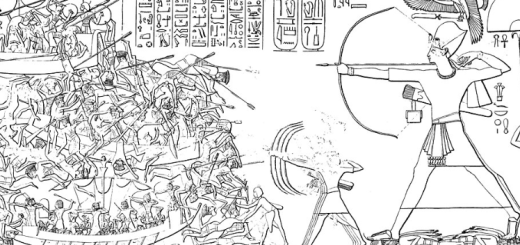
Pharaoh Ramesses III before Egyptian god Wepwawet in a relief from Medinet Habu, c.
How is Wepwawet connected to the afterlife?
He was a guide for spirits in the Duat (the Egyptian underworld) and assisted in the “Opening of the Mouth” ceremony, facilitating the deceased’s journey to the afterlife.
What is Wepwawet’s relationship with Anubis?
Wepwawet was often associated with Anubis due to their overlapping roles in funerary practices, and he was sometimes considered Anubis’s brother or a son of Set.
What does Wepwawet’s depiction in art suggest?
His grey or white fur reflects his wolf origins, though black fur linked to Anubis may indicate artistic interpretation or pigment degradation.

Wepwawet giving scepters to Seti I, bas-relief from the Temple of New Kingdom Pharaoh Seti I
What military roles are attributed to Wepwawet?
He was depicted as a soldier carrying weapons like a mace and bow, symbolizing his role in warfare and protection.
How did Wepwawet symbolize the unification of Egypt?
A later tradition claimed his birth at the sanctuary of Wadjet in Lower Egypt, representing the merging of Upper and Lower Egypt.
How is Wepwawet represented in modern culture?
Wepwawet appears in Crusader Kings III as a deity of the Kordofan faith and is featured as a totemic god in Pauline Gedge’s Lady of the Reeds novels.