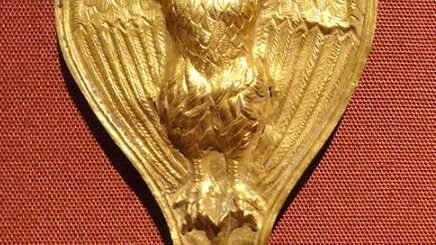
Ancient Roman City of Cuicul: History and Major Facts
Known today as Djemila, Cuicul was an ancient Roman city located in the mountains of northeastern Algeria. A UNESCO World Heritage site, it stands as one of the most remarkable and well-preserved Roman archaeological sites in North Africa.
Below, World History Edu dives into the heritage of Cuicul, including the city’s architecture, cultural significance, and its legacy in showcasing Roman urban planning and adaptation to mountainous terrains.
The Roman Conquest and the Founding of Cuicul
Cuicul was founded during the reign of Emperor Nerva (96–98 CE), in a period when the Roman Empire was expanding its influence across North Africa. This region was rich in natural resources, particularly grain and olive oil, which made it a key asset to the Roman Empire. The decision to establish Cuicul on a rugged and mountainous site was unusual, as Roman cities were typically built on flat plains. However, the strategic position of Cuicul allowed for easy defense and control over surrounding areas.
Cuicul’s location in the mountains of Algeria, far from the traditional centers of Roman power, demonstrates the reach and influence of the Roman Empire.
The city flourished under the Roman Empire and grew significantly in size and wealth, particularly during the 2nd and 3rd centuries CE, under the reigns of emperors Trajan and Septimius Severus. Cuicul became a municipium (a city with its own government and Roman citizenship) and later, a colonia (a higher status city), reflecting its importance within the Roman province of Numidia.

Map of Algeria showing the location of Cuicul.
Decline and Abandonment
By the 4th century CE, the city began to decline, like many other Roman cities, due to the economic and political instability of the later Roman Empire. The rise of Christianity also brought changes to the urban fabric, as temples were replaced by Christian basilicas. After the fall of the Western Roman Empire, Cuicul was gradually abandoned, and the site lay forgotten until its rediscovery during the French colonial period in the 19th century.
Urban Planning and Architecture
Cuicul was a small Roman city but featured all the essential elements of a larger Roman metropolis. Its urban design reflects the adaptability of Roman engineering and urban planning to the difficult mountainous terrain. The city is divided into two main areas: the original city, or Castrum, and a later expansion known as the Caesarean quarter.
The original settlement was compact and organized around a central forum, as was typical of Roman cities. This forum acted as the social, political, and religious heart of the city, with key public buildings like the curia (city council), basilica (judicial and business center), and temples surrounding it. The expansion of the city, which took place during the reign of Commodus (180–192 CE), added new structures like baths, a theater, and a larger forum to accommodate the city’s growing population.
The Forum
The forum of Cuicul is an excellent example of Roman civic architecture. It was the central public space where political, social, and religious activities took place. The forum was surrounded by colonnades and important buildings, including the Capitolium, dedicated to Jupiter, Juno, and Minerva—the triad of gods worshipped in many Roman cities. The presence of the Capitolium in Cuicul signifies the city’s integration into the Roman imperial cult and its allegiance to the Empire.
Religious Buildings
Cuicul boasts several religious buildings, both pagan and Christian. Among the pagan temples, the most prominent is the Temple of Gens Septimia, built in honor of Emperor Septimius Severus and his family. This reflects the loyalty of Cuicul’s inhabitants to the Roman imperial family and the widespread practice of emperor worship in Roman Africa.
With the rise of Christianity in the later centuries of Roman rule, several Christian basilicas were constructed, most notably the Great Basilica and the Bishop’s Basilica. These buildings illustrate the transition of Cuicul from a pagan Roman city to a center of early Christianity. The presence of Christian architecture also indicates the spread of the new faith across North Africa, which would later become a major stronghold of Christianity before the Islamic conquest.
The Theater
The Roman theater at Cuicul is one of the best-preserved structures in the city and a testament to the cultural life of its inhabitants. The theater, which could hold up to 3,000 spectators, was used for a variety of performances, including plays, orations, and other public events. Its location on the edge of a slope allowed for the creation of a semicircular seating arrangement typical of Roman theaters. The structure reflects the Roman practice of integrating public entertainment into urban life and underscores the cultural importance of the arts in Roman society.
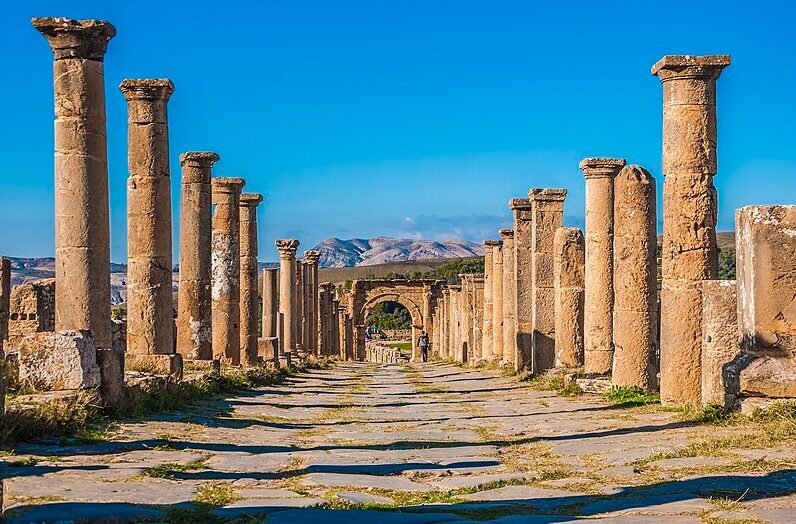
Remains of the Roman Theatre of Djémila.
Public Baths
Roman public baths, or thermae, were a crucial part of daily life, serving as places for bathing, socializing, and relaxation. Cuicul features two major bath complexes: the Northern Baths and the Great Southern Baths. These baths followed the standard Roman design, with separate rooms for cold (frigidarium), warm (tepidarium), and hot baths (caldarium), as well as exercise areas and courtyards.
The baths were not only a place for personal hygiene but also a social hub where citizens could meet, discuss politics, and conduct business. The inclusion of such elaborate baths in Cuicul, despite its small size, highlights the city’s wealth and the Roman emphasis on public amenities.
Architectural Adaptation to the Environment
One of the most striking features of Cuicul is how its architects adapted Roman urban design to the steep and uneven terrain of the Djurdjura Mountains. Unlike cities built on flat land, Cuicul’s layout follows the natural contours of the hillside, with terraced buildings and streets that wind along the slopes. This required innovative engineering solutions, such as the construction of retaining walls and stepped streets, to create stable foundations for the city’s structures.
The city’s ability to adapt its urban planning to such a challenging environment is a testament to Roman engineering and architectural expertise. It also demonstrates the flexibility of Roman city planners, who could apply their standardized urban designs to a wide range of geographic settings.
Agriculture and Trade in Cuicul
Cuicul’s economy was primarily based on agriculture, particularly the production of grain, olives, and olive oil. The fertile plains surrounding the city were ideal for these crops, which were in high demand across the Roman Empire. Olive oil, in particular, was a major export and was used not only for cooking but also for lighting, medicine, and religious rituals.
The city was also a center for trade, with goods flowing in and out through its roads, which connected it to other Roman cities in North Africa. Cuicul’s location at the crossroads of major trade routes allowed it to become a thriving market town, where local products were exchanged for imported goods like wine, pottery, and luxury items from other parts of the empire.
Social Hierarchy and Daily Life
As in most Roman cities, Cuicul had a distinct social hierarchy, with a wealthy elite class dominating political and economic life. These elites lived in large, elaborately decorated houses, some of which have been excavated and reveal beautiful mosaics and frescoes depicting mythological scenes, daily life, and nature.
The city’s lower classes, including farmers, artisans, and laborers, lived in more modest dwellings and were often employed in agriculture, trade, or public works. Slavery was also a part of Cuicul’s social fabric, with slaves working in both households and the agricultural estates surrounding the city.
Despite these social divisions, public spaces like the forum, baths, and theater were accessible to all citizens, reflecting the Roman idea of communal life. Festivals, religious ceremonies, and public entertainments were occasions when people from all classes could come together and participate in the city’s social and cultural activities.
Preservation and Rediscovery
After Cuicul was abandoned in the early Middle Ages, the city fell into ruin and was largely forgotten. It wasn’t until the 19th century, during the French colonization of Algeria, that the site was rediscovered. French archaeologists began excavating Cuicul in the early 20th century, uncovering many of its most important structures and artifacts.
Today, Djemila (as Cuicul is now known) is recognized as one of the most important archaeological sites in North Africa. It was designated a UNESCO World Heritage Site in 1982, in recognition of its outstanding preservation and its significance as an example of Roman urbanism adapted to a mountainous environment.
Cultural Influence
Cuicul’s heritage is not only important for understanding Roman North Africa but also for its role in shaping the cultural identity of the region. The site’s mix of Roman, Berber, and later Christian influences reflects the complex and multi-layered history of Algeria. The Romanization of North Africa, as seen in Cuicul, left a lasting impact on the region’s language, architecture, and urban planning, which continued to influence later civilizations.
Today, Djemila serves as a symbol of Algeria’s ancient heritage and is a popular destination for tourists and scholars alike. Its well-preserved ruins offer a glimpse into the daily life, culture, and religion of a Roman city on the fringes of the empire.
Frequently asked questions
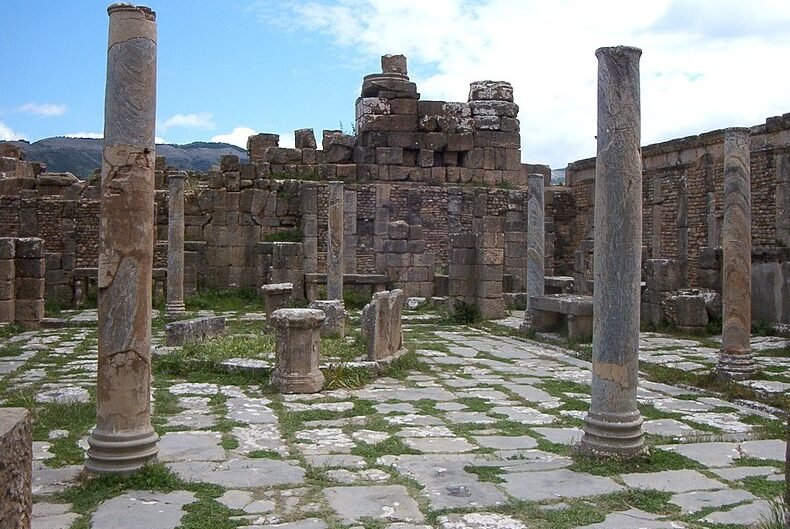
Ruins of the Cuicul market.
What is Djemila, and where is it located?
Djemila, formerly known as Cuicul, is an ancient Roman city located in the mountains of northern Algeria, in the province of Sétif. It serves as a significant example of Roman urban planning in a mountainous region.
What makes Djemila unique among Roman ruins?
Djemila is unique because it was built in challenging terrain, showcasing Roman architectural adaptation. Despite being abandoned after the Byzantine conquest in 553 CE, it remains exceptionally well-preserved, offering a glimpse into the layout and daily life of an ancient Roman city.
When was Djemila recognized as a UNESCO World Heritage site, and why?
Djemila was first registered as a UNESCO World Heritage site in 1982 due to its importance as a Roman town built in a mountainous area. Its significance was further reevaluated and elevated in 2009, highlighting the site’s unique adaptation to its environment and its cultural value.
What is the historical background of Cuicul (Djemila)?
Cuicul was founded during the reign of Emperor Nerva in the late 1st century CE and thrived for 450 years. It was abandoned after the Byzantine conquest in 553 CE and remained untouched for over 1,500 years until it was rediscovered in 1909.
How has modern scholarship approached the study of Djemila?
Since UNESCO’s involvement in the 1980s, research on Djemila has been slow. The well-documented nature of the site, including dates, inscriptions, and building functions, has led to a lack of academic debate, as much of the city’s layout and history is already well understood.
What was the urban layout of Cuicul?
Cuicul followed the classic Roman city plan, with the Cardo Maximus serving as the main street and the forum at the center, surrounded by key civic buildings like the Capitol, Curia, and Basilica Julia. The city also expanded to include aristocratic homes, markets, and temples.
What notable structures were part of Cuicul’s expansion in the 2nd century?
During the 2nd century, Cuicul expanded to include homes with intricate mosaics, the Temple of Venus, the Arch of Caracalla, a theater seating 3,000 people, and public baths. The city also had a Basilica of the Cloth Market and a fountain modeled after Rome’s Meta Sudans.
How did Christianity influence Cuicul?
Cuicul became home to several early Christian buildings, including a large cathedral and a baptistery, marking the transition from a Roman city to a center of early Christianity.
What criteria did UNESCO use to recognize Djemila’s importance?
UNESCO used Criterion (iii) to recognize Djemila as an exceptional testimony to a vanished civilization with some of the world’s most beautiful Roman ruins. Criterion (iv) highlighted Djemila’s adaptation of Roman urban planning to its difficult geographical conditions, showcasing the city’s cultural and economic prosperity.