Graffiti, Posters, and Signs in Pompeii
Pompeii, the ancient Roman city preserved by the catastrophic eruption of Mount Vesuvius in 79 AD, provides invaluable insight into Roman daily life through its architecture, art, and especially its written artifacts. Among the most unique and informative are the graffiti, signs, and electoral notices left on its walls. These writings not only reveal the daily concerns, humor, and political dynamics of Pompeii’s inhabitants but also serve as direct records of their voices and public interactions.
Graffiti in Pompeii
Graffiti in Pompeii transcends its modern connotation of vandalism. For Pompeiians, it was a commonplace form of public expression, encompassing a range of topics, from love declarations to philosophical musings. Found on city walls, inside homes, and in public spaces, Pompeian graffiti offers glimpses into the personalities, values, and emotions of a vibrant society.
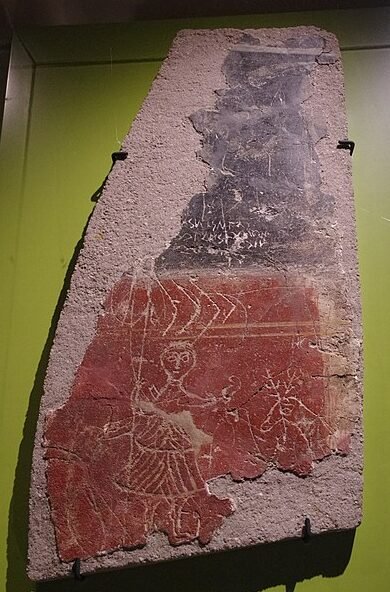
Graffitied plaster fragment depicting goddess Diana and stag, 2nd-3rd century, displayed at Augusta Raurica, a Roman archeological site in Switzerland.
Types of Graffiti
Many graffiti messages were personal and informal. Statements like “I love her who loves me” reveal private feelings, while others poked fun at romantic rivals or commented on the beauty of lovers. These inscriptions illustrate the emotional lives of Pompeiians in a tangible way.
Pompeii’s residents enjoyed humor, often leaving playful or sarcastic remarks on walls. A humorous example reads, “The one who wrote this is a barbarian,” ironically acknowledging the humor in creating a meta-graffiti that criticizes graffiti itself.
Some graffiti showed dissatisfaction with political figures, expressed in terse, witty lines that echoed modern forms of dissent.
Graffiti also served to assert identity or social status. Gladiators, for instance, often received tributes in graffiti, with phrases like “Celadus the Thracian gladiator is the delight of the girls” highlighting both admiration and social standing within the community.
Some graffiti functioned as announcements of events or gatherings, showing how word-of-mouth and public writing facilitated community interaction.
A significant number of inscriptions were bawdy or sexual, pointing to a less prudish approach to sexuality than that of later periods. These were often lighthearted, yet they underscore the everyday nature of these topics for Pompeiians.
Some inscriptions were more than mere words; they included drawings or symbols. Illustrations of ships, gladiators, animals, and mythological figures were common, blurring the line between written communication and visual art.
Signs in Pompeii
Pompeii’s signs, which included both commercial and informational markers, were integral to city life. Most signs had a functional role, helping people find their way, locate businesses, or learn about available goods.
Types of Signs
Businesses in Pompeii used painted signs to identify shops, inns, bakeries, and other establishments. Some signs advertised goods and services, like “Here are fresh fish” or “Fine wine for sale.” Many also included symbols, such as a fish for a seafood seller, so even those who couldn’t read could understand them.
Directional signs pointed toward various public buildings or spaces, assisting in the city’s layout and organization. Symbols were often used for direction, as literacy was not universal.
Beyond identifying shops, some signs also advertised tradespeople like blacksmiths, barbers, and bakers, giving insight into the occupational diversity of Pompeii. For example, an anvil symbol would signify a blacksmith, communicating both profession and location.
Guilds in Pompeii were powerful social organizations. Some guilds marked their meeting spaces or workshops with signs displaying symbols relevant to their trade, indicating the prominence of these groups in daily life.
The use of symbols in signs reflects a society where literacy varied. People could identify certain symbols quickly—a fish for a fishmonger, a bunch of grapes for a wine shop—ensuring communication through widely recognized imagery.
Electoral Notices
Pompeii was politically active, with electoral campaigns central to its civic life. Electoral notices, painted across the city, show the extent of citizen involvement and the strategies used to garner public support. These notices were generally painted in red or black paint, often in prominent locations to maximize visibility.
The Purpose of Electoral Notices
Candidates used notices to communicate their platforms and qualifications. These notices often read as endorsements, for example, “The bakers unanimously ask for the election of Marcus Holconius Priscus as aedile,” signaling organized community support.
Notices sometimes described candidates’ virtues or accomplishments, emphasizing traits like honesty, generosity, or valor. These attributes reveal the values Pompeiians sought in their leaders.
Electoral notices show that voting was a public activity, with endorsements by groups or guilds lending credibility to candidates. This form of campaigning suggests a highly engaged and participatory society, where even those without voting rights, such as slaves or women, could indirectly influence public opinion by supporting candidates.
The density of electoral notices reflects the competitive nature of Pompeian elections. Notices for rival candidates often appeared close to each other, suggesting a lively political environment where different factions vied for dominance.
Commonly Used Language and Structure
Electoral notices followed specific linguistic conventions. A typical notice might include the candidate’s name, the office sought, and a list of supporters. Common phrases included “worthy of public office” or “a good man for the people,” underscoring the attributes that Pompeiians valued in their leaders.
The Social and Cultural Significance of Pompeii’s Written Artifacts
Pompeii’s graffiti, signs, and electoral notices collectively provide an unparalleled view into the dynamics of ancient urban life. Unlike formal literature or government records, these writings offer raw, personal, and sometimes unfiltered reflections of the people who lived, worked, and socialized in Pompeii.
The extensive presence of graffiti and electoral notices reveals a sense of civic pride and engagement among Pompeiians. They had an active stake in their community, openly expressing opinions and advocating for candidates who represented their interests.
The use of public spaces for personal expression—whether declarations of love or political endorsements—shows that Pompeii’s residents viewed these areas as extensions of their social lives, blending private and public interactions fluidly.
Commercial signs, which indicate the types of goods and services available, speak to Pompeii’s economic life. The diversity of products advertised in signs highlights Pompeii as a bustling economic hub, where businesses thrived alongside residences, temples, and political buildings.
Pompeii’s graffiti, posters and signs reveal an intimate snapshot of ancient lives—joys, concerns, humor, and politics—preserved by volcanic tragedy, offering timeless insights into a society rich with human expression.
Graffiti as an artistic medium demonstrates that visual creativity permeated everyday life. The combination of words and illustrations in graffiti suggests a culture that valued both literacy and visual communication.
Electoral notices indicate that Pompeiians engaged in a form of public discourse through their walls, voicing support, loyalty, or dissent. This form of democratic expression, while limited to a portion of the population, paints a picture of political vibrancy and community participation.
Since Pompeii was a trading city with diverse residents, its graffiti and signs provide a cross-section of different cultural influences. Greek phrases, Oscan words, and other regional influences show the city’s multicultural makeup and its position as a melting pot in the ancient world.
Questions and Answers
What event preserved Pompeii and its artifacts?
The eruption of Mount Vesuvius in 79 CE buried Pompeii in volcanic material, preserving many artifacts, including graffiti, signs, and electoral posters.
Why is Pompeii unique compared to other historical records?
Pompeii is unique because its graffiti and posters allow us to hear directly from ordinary people, capturing their thoughts, feelings, and everyday concerns without the interpretation of historians.
What does Pompeian graffiti reveal about gladiators?
Pompeian graffiti shows that gladiators were highly celebrated, with phrases like “The girls’ idol, Celadus the Thracian gladiator” and event announcements showing their popularity and fan following.
How were political candidates promoted in Pompeii?
Political candidates were promoted through wall posters that either endorsed them directly or humorously encouraged citizens to vote for them, reflecting the active political spirit of Pompeii.
What is an example of humor in Pompeii’s political graffiti?
A humorous political endorsement reads, “The late drinkers ask you to elect Marcus Cerrinius Vatia aedile,” suggesting support from a lively group.
What role did community groups play in Pompeian elections?
Community groups, like the “worshippers of Isis” and local guilds, endorsed their preferred candidates, showing the influence of community ties in elections.
What themes are common in Pompeian graffiti about love and relationships?
Common themes include unrequited love, romantic frustration, and humorous or candid comments on relationships, showing an open attitude towards discussing personal matters.
What is an example of a humorous love graffiti from Pompeii?
A piece of graffiti humorously expresses frustration: “Successus the weaver loves a barmaid named Iris who does not care about him. And the more he begs, the less she cares.”
What kinds of miscellaneous topics appear in Pompeian graffiti?
Topics include good luck wishes, philosophical reflections, critiques of innkeepers, and general observations, reflecting various aspects of everyday life.





