Tláloc: The god of rain in Aztec religion

Tláloc, the Aztec god of rain, fertility, and water, is one of the most revered deities in Mesoamerican religion. His role extends beyond nourishing the earth with rain; he governs thunder, lightning, and hailstorms, showcasing his dual nature as a giver and destroyer. Tláloc’s association with earthly fertility, caves, springs, and mountains, especially the sacred Cerro Tláloc, reflects his omnipresence in Aztec cosmology. His worship was one of the oldest and most widespread in ancient Mexico, transcending regional and cultural boundaries.
Iconography and Symbols
The visual representation of Tláloc is both intricate and symbolic. He is often depicted with fangs, a bifurcated tongue, and ringed eyes. His imagery incorporates elements such as jaguars, serpents, and butterflies, each carrying cultural significance. The marigold, cempohualxochitl, was burnt in his honor during rituals, symbolizing life and renewal. Additionally, Tláloc is frequently shown carrying a vessel of water, underscoring his role as a rain-bringer.

Tláloc is depicted with ringed eyes, fangs, and a bifurcated tongue. Symbols like jaguars, butterflies, serpents, and marigolds are also associated with him, emphasizing fertility and natural elements. Image: Tlaloc as shown in the Codex Magliabechiano
Historical Worship and Ritual Practices
Tláloc’s worship dates back to pre-Aztec civilizations, with evidence found in Teotihuacan and possibly the Olmec civilization. Rituals dedicated to him involved offerings ranging from jade and precious stones to human sacrifices.
Tláloc was worshipped by pre-Aztec cultures like Teotihuacan and influenced Mesoamerican rain deities, such as the Maya Chaac and Zapotec Cocijo.
Cerro Tláloc, a sacred mountain, served as the primary site for ceremonies, particularly during the Atlcahualo festival, where children were sacrificed to ensure rainfall. This practice, though horrifying to modern sensibilities, was deeply rooted in the Aztecs’ agricultural dependence on Tláloc’s favor.
Deity Iconography Misinterpretation
Misidentification of Tláloc’s imagery has occurred throughout history. Artifacts with abstract or fearsome designs were often labeled as representations of Tláloc. However, his distinctive features—ringed eyes and fangs—remain the defining characteristics. Sculptures like the colossal figure found in Coatlinchan have been debated for their true identity, possibly representing his sister or another deity. Despite such debates, the significance of these artifacts in Aztec culture is undisputed.
Tláloc in Aztec Cosmology
Tláloc held a central place in Aztec cosmology, symbolizing the third sun, which was destroyed by fire. He governed the Tlálocan, an afterlife paradise for those who died from water-related causes or diseases. This paradise reflected unending springtime, with abundant greenery and eternal rain. The Tlálocan also symbolized agricultural bounty, reinforcing Tláloc’s importance in sustaining life.
The Role of Tláloc in Festivals
Aztec festivals frequently honored Tláloc, reflecting the agricultural calendar. During Atlcahualo, children adorned as Tláloc were sacrificed to usher in the rainy season. The Huey Tozotli festival celebrated maize harvests, incorporating Tláloc as the deity of rain necessary for crop growth. Rituals during these festivals included offerings of water-related symbols, further illustrating the connection between Tláloc and agricultural fertility.
Influence Beyond Aztec Culture
Tláloc’s worship extended beyond the Aztec Empire, with representations found in Maya and Mixtec cultures. While the Maya associated Chaac, their rain deity, with war and sacrifice, parallels with Tláloc suggest cultural exchanges. Teotihuacan imagery often depicted Tláloc with jaguar features, highlighting regional adaptations of his iconography.

Tláloc’s imagery remains prominent in Mexican art, identity, and syncretic religious practices, despite Spanish colonization efforts to suppress indigenous beliefs. Image: Tláloc in the Codex Borgia
Ritual Offerings and Sacrifices
Rituals for Tláloc were elaborate, involving offerings of jaguar skulls, human hearts, and symbolic items like jade and seashells. Sacrificial victims, often children or war captives, were adorned with Tláloc’s attributes, such as masks and headdresses. Their tears, interpreted as rain, were considered omens of successful harvests. These rituals, while brutal, reflected the Aztecs’ dependence on Tláloc’s benevolence for survival.
Tláloc and Religious Syncretism
The Spanish colonization of Mexico led to the blending of indigenous and Christian traditions. Tláloc’s imagery persisted in Catholic churches, such as Santiago Tlatelolco, where stones depicting him were incorporated into church interiors. Indigenous peoples drew parallels between Christian sacrifices and their own, allowing Tláloc’s legacy to endure despite colonization.
Tláloc’s Legacy in Modern Mexican Culture
Even centuries after the fall of the Aztec Empire, Tláloc’s influence remains visible in Mexican culture. In Coatlinchan, a colossal statue of Tláloc symbolizes local identity and pride. Replicas of the statue, along with depictions of Tláloc in art and literature, reflect his integration into the national narrative.
Archaeological Evidence and Research
Discoveries at sites like Teotihuacan and Templo Mayor reveal the extent of Tláloc’s worship. Artifacts such as chacmools and stone carvings depict him with characteristic features. The orientation of temples and ceremonial sites, including Cerro Tláloc, aligns with agricultural and astronomical events, showcasing the Aztecs’ sophisticated understanding of cosmology.
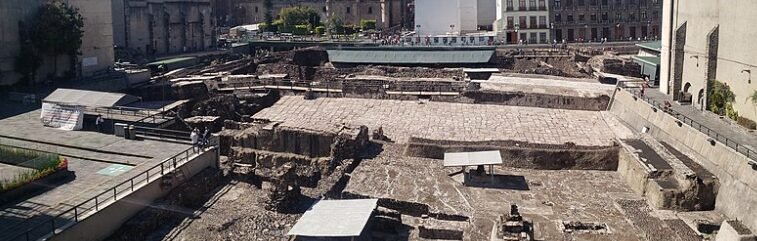
Ruins of the Templo Mayor, main temple of the Mexica people
Tláloc’s Associated Deities
Tláloc’s mythology intertwines with other Aztec deities. Chalchiuhtlicue, the goddess of rivers and lakes, is often considered his sister or consort. Xochiquetzal, the goddess of flowers, was another significant figure linked to Tláloc, emphasizing his role in fertility and regeneration. These connections highlight the interconnected nature of Aztec religious beliefs.
Cultural Representations Across Mesoamerica
Tláloc’s image appears in various forms across Mesoamerican cultures. Maya representations of Chaac and Mixtec rain deities share similarities, illustrating Tláloc’s widespread veneration. Teotihuacan’s association of Tláloc with jaguars and thunder reflects regional interpretations of his role as a provider and destroyer.

Aztec cosmology depicts Tláloc as one of the Tlaloque, four gods supporting the universe’s corners. Each Tlaloque controlled a specific type of rain, ranging from beneficial to destructive. Image: Tláloc in the Codex Laud
Tláloc’s Etymology and Interpretations
The name Tláloc derives from the Nahuatl word tlālli (“earth”), interpreted as “he who is made of earth” or “cloud resting on mountaintops.” Other names, such as Tlamacazqui (“Giver”), reflect his role as a provider. These linguistic interpretations enrich our understanding of Tláloc’s cultural and symbolic significance.
Child Sacrifices and Agricultural Ceremonies
Child sacrifice, though controversial, was central to Tláloc’s worship. Festivals like Tozoztontli and Atemoztli involved ritualistic offerings to ensure agricultural success. These ceremonies reveal the Aztecs’ reliance on Tláloc’s favor for their survival and prosperity, reflecting their deeply ingrained religious practices.
Tláloc’s Sanctuary at Cerro Tláloc
Cerro Tláloc remains a key archaeological and spiritual site. Its orientation and structure align with agricultural cycles, serving as a ceremonial hub. Pilgrimages to Cerro Tláloc during festivals highlight its significance in Aztec religion. The mountain’s association with rain and fertility cements its role as Tláloc’s sacred abode.
Frequently Asked Questions

Offerings included jaguar remains, precious stones, and water-related artifacts. Human sacrifices, especially children, were significant, with their tears symbolizing imminent rains. Image: Tláloc effigy vessel (1440–1469), painted earthenware, 35 cm, Museo del Templo Mayor: blue-stuccoed jar featuring Tláloc’s visage with ringed eyes, jaguar teeth, symbolizing thunder.





