Anthony van Dyck: Life, Major Works, & Accomplishments
Anthony van Dyck was a pivotal figure in the Baroque period and one of the most influential portrait artists of the 17th century. Born on March 22, 1599, in Antwerp, he developed his artistic skills early and rose to prominence as a master painter who would profoundly shape portrait painting, especially in England. His work bridged Flemish, Italian, and English traditions, bringing a blend of elegance, nobility, and intimacy to his portraits that was relatively new for his time.
Early Life and Education
Van Dyck was born into a prosperous family. His father, Frans van Dyck, was a successful silk merchant in Antwerp, while his mother, Maria Cupers, provided a nurturing background that encouraged his early artistic inclinations. Even though his father was a businessman, art and education were valued in his household. This environment allowed van Dyck to explore his creative side from a young age.
At only ten years old, he began formal training with Hendrick van Balen the Elder, an established painter in Antwerp known for his cabinet paintings. Van Dyck’s skill developed rapidly, and by the time he was 15, he was painting portraits that displayed a unique sophistication and sensitivity. His talent was so advanced that at 18, he was granted the status of a master painter by the Antwerp Guild of Saint Luke.
Apprenticeship with Peter Paul Rubens
One of the most transformative relationships in van Dyck’s early career was with Peter Paul Rubens, the leading Flemish artist of the time. Rubens was not only a highly accomplished painter but also an astute businessman and diplomat with an expansive studio. Van Dyck joined Rubens’s studio around the age of 19, serving as his principal assistant. Rubens’s influence was profound; under his guidance, van Dyck honed his skills in both technique and thematic composition. Rubens even referred to van Dyck as “the best of my pupils,” which was a high compliment from such a master.
Rubens’s influence on van Dyck was evident in the rich color palettes, dynamic compositions, and dramatic chiaroscuro that would later characterize his work. However, while Rubens’s style was grandiose and energetic, van Dyck’s portraits took on a softer, more introspective quality. His time with Rubens not only provided technical skills but also instilled in him a keen sense of the business side of art, which would serve him well in his later career.
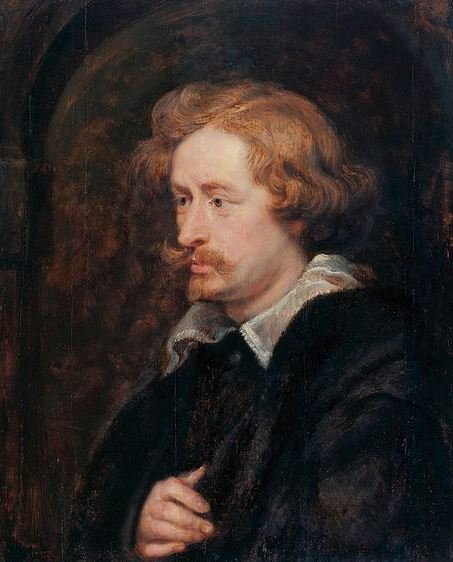
Born into a wealthy family in Antwerp, Anthony van Dyck demonstrated artistic talent early and joined the Antwerp Guild as a master by 1617. He trained under Peter Paul Rubens, whose influence shaped his early work. Image: A portrait of Dyck by Peter Paul Rubens.
Early Travels and Italian Influence
In 1620, van Dyck took his first major journey outside of Flanders, traveling to England at the invitation of King James I. This brief visit allowed him to complete several commissions for the English court and introduced him to a new circle of patrons. While in England, he saw the collection of the Earl of Arundel, which included works by Titian. This encounter was transformative; Titian’s use of color, form, and elegance deeply influenced van Dyck’s approach.
After a few months, he returned to Antwerp but soon left for Italy in 1621. His Italian period was crucial in shaping his mature style. In Italy, he studied the works of Italian masters, including Titian, Veronese, and Tintoretto, whose techniques in color and dramatic composition left a lasting impact on him. He spent much of his time in Genoa, where he established himself as a portraitist for the city’s aristocracy. His portraits from this period are marked by a sense of grandeur, with subjects often presented in full-length poses, draped in luxurious fabrics, and set against classical architectural backdrops.
This Italian influence is also seen in van Dyck’s religious paintings from the period, such as his depictions of Saint Rosalia, which he created in Sicily during a devastating plague in 1624. His Saint Rosalia series became iconic, presenting the saint as a figure of grace and piety, draped in a Franciscan robe, with an expressive sense of compassion and sacrifice.
Return to Flanders and Rise to Prominence
Upon returning to Flanders in 1627, van Dyck continued to build his reputation. He received commissions from the nobility and religious institutions, painting both portraits and large altarpieces. By 1630, he was appointed court painter to Archduchess Isabella, the Habsburg Governor of Flanders. His work during this period included not only portraits but also grand altarpieces and religious works that were highly sought after.
While Rubens remained the dominant artist in Flanders, van Dyck’s unique style set him apart. His portraits from this period reflect a mature confidence, with an emphasis on grace and psychological depth. His brushwork became softer, and his palette more subdued, lending a refined elegance to his subjects. Van Dyck was increasingly respected and was recognized as a master in his own right, distinct from Rubens.
Move to England and Appointment as Court Painter
In 1632, van Dyck returned to England, this time at the behest of King Charles I, who had developed a keen interest in art and aimed to build a royal collection that would rival those of European monarchs. Charles’s patronage was instrumental in establishing van Dyck’s career in England. The king knighted him, granted him an annual pension, and appointed him the “principal painter in ordinary” to the court. This position provided van Dyck with stability and a steady stream of commissions from the English nobility.
Van Dyck’s portraits of Charles I and his family are some of his most iconic works, portraying the king with a sense of noble yet human elegance. His Charles I at the Hunt and Equestrian Portrait of Charles I present the king as both a natural ruler and a refined gentleman. Van Dyck’s style in these portraits—a balance of majesty and approachability—had a profound impact on English portraiture, setting a standard that would influence artists for generations.
Van Dyck’s Portraiture Style and Legacy
What set van Dyck apart as a portrait artist was his ability to capture both the outward elegance and inner character of his subjects. His portraits combined a refined, aristocratic grace with subtle hints of personality, capturing both grandeur and humanity. He had a particular talent for capturing the sitter’s expressions in a way that conveyed dignity and introspection, a quality that made his work especially appealing to the nobility, who were keen to display their social standing alongside a more personal connection.
Van Dyck’s influence on English portraiture was immense. His portrayal of aristocracy in relaxed, natural poses, often set against a rich, atmospheric background, became the hallmark of British portraiture. His approach was continued by artists such as Sir Peter Lely and Sir Godfrey Kneller, who adapted van Dyck’s methods to create a distinct English style of portraiture that would endure well into the 18th century.
Iconographie Series and Contribution to Printmaking
Van Dyck’s Iconographie series is another significant aspect of his career. This series of etched portraits featured prominent figures of his time, including fellow artists, scholars, and nobility. Though he left the majority of the etching work to professional engravers, van Dyck personally etched some of the plates, demonstrating his versatility and interest in different mediums. The Iconographie was groundbreaking in that it helped popularize the genre of portrait collections, and it set a standard for portrait etching that would be emulated for centuries.
The Iconographie also reflected van Dyck’s network within the artistic and intellectual elite of his time. By depicting artists, philosophers, and other notable figures, van Dyck’s etchings created a visual record of the leading minds of the era. This series was not only an artistic achievement but also a historical document, highlighting the prominent figures who shaped European culture.
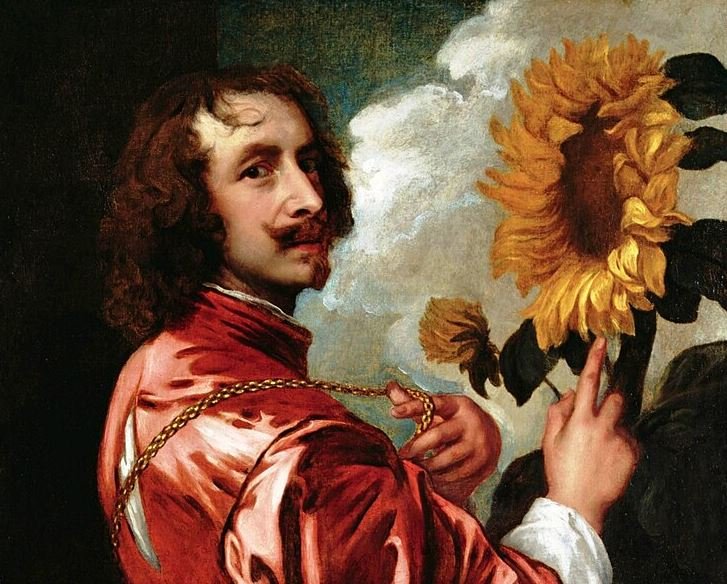
Image: A self-portrait of Dyck.
Personal Life and Final Years
In 1640, van Dyck married Mary Ruthven, a lady-in-waiting to Queen Henrietta Maria and the daughter of a Scottish nobleman. This marriage brought him closer to the English court, but his health began to decline. Van Dyck continued to work, producing portraits and seeking commissions outside England as political tensions began to rise in the country. He traveled to Flanders and France, but his health worsened over time.
By late 1641, he was gravely ill. Despite his illness, he continued to work as much as he could. He passed away on December 9, 1641, in his home in Blackfriars, London. In recognition of his status, van Dyck was buried in St. Paul’s Cathedral, though his tomb was later destroyed in the Great Fire of London in 1666.
Legacy and Influence
Van Dyck’s influence on portraiture cannot be overstated. He brought a new level of sophistication and naturalism to his depictions of the aristocracy, blending grandeur with personal intimacy. His work set a standard for court portraiture, especially in England, where his style became the template for portraying nobility. Artists such as Lely, Kneller, and even Gainsborough were deeply influenced by van Dyck’s approach to portraiture.
Additionally, van Dyck’s Iconographie series left a lasting legacy in the world of printmaking and set a new standard for portrait etching. His influence extended into other genres as well, as seen in his religious paintings, particularly his Saint Rosalia series, which established a model for depictions of the saint in Baroque art.
Van Dyck’s legacy persisted not only in England but across Europe. His approach to portraiture influenced generations of artists and became synonymous with elegance, nobility, and sophistication. Even though his life was relatively short, his impact on the art world was profound and enduring.
Major Works by Anthony van Dyck
Some of van Dyck’s most famous works include:
- Charles I at the Hunt (1635): This painting captures King Charles I in a relaxed, noble pose, showcasing van Dyck’s ability to blend grandeur with intimacy.
- Equestrian Portrait of Charles I (1637–1638): An iconic portrayal of the king, this work displays van Dyck’s skill in capturing regal authority with a sense of grace.
- Self-Portrait with a Sunflower (1632): This unique self-portrait reflects van Dyck’s status and personality, symbolized by the sunflower, which follows the light as he followed royal favor.
- Saint Rosalia Interceding for the Plague-Stricken of Palermo (1624): Created during the plague in Sicily, this painting established the standard iconography for Saint Rosalia and highlights van Dyck’s sensitivity to religious themes.
- Portrait of James Stuart, Duke of Lennox and Richmond (1633–1635): This portrait exemplifies van Dyck’s skill in portraying aristocratic elegance.
Conclusion
Anthony van Dyck’s career was marked by significant achievements across multiple countries and courts. His portraits redefined aristocratic portraiture, creating a blend of elegance, psychological insight, and naturalism that appealed to his noble patrons. He succeeded in establishing a distinct style that influenced the trajectory of portrait painting, especially in England, where his approach shaped English art for centuries.
Through his major works and contributions to portraiture, printmaking, and religious art, van Dyck left an indelible mark on Baroque art. His influence transcended his lifetime, creating a legacy of style, sophistication, and sensitivity that continues to be celebrated and studied today. His ability to capture both the public grandeur and private character of his subjects makes him one of the most revered portraitists in Western art history.
Frequently Asked Questions
When and where was Anthony van Dyck born?
Anthony van Dyck was a Flemish Baroque painter born on March 22, 1599, in Antwerp.
What was van Dyck’s early family background?
He was the son of Frans van Dyck, a wealthy silk merchant, and Maria Cupers. He grew up in a well-off family with some artistic heritage.
At the age of ten, van Dyck started his formal training under Hendrick van Balen the Elder, a successful painter in Antwerp.
When did van Dyck become a master painter?
Van Dyck became a master painter in the Antwerp Guild of Saint Luke at the age of 18.
How did Peter Paul Rubens influence van Dyck’s career?
Rubens, one of Northern Europe’s leading artists, took van Dyck as his chief assistant, calling him his “best pupil.” This mentorship significantly influenced van Dyck’s style and motivated him to expand his career beyond Antwerp.
Why did van Dyck leave Antwerp?
Rubens’s dominance in Antwerp may have prompted van Dyck to seek recognition elsewhere. This led him to work in Italy, Flanders, and England.
In 1620, while working for King James I, van Dyck encountered Titian’s work in the Earl of Arundel’s collection, influencing his approach to color and composition.
How did van Dyck’s time in Italy shape his portrait style?
In Italy, he refined his style with full-length figures, elaborate attire, and graceful poses. His works in Italy, especially in Genoa, established him as a talented portraitist for the aristocracy.
What notable religious works did van Dyck produce in Italy?
During the 1624 plague outbreak in Sicily, he created influential depictions of Saint Rosalia, which became an iconic portrayal of the saint in Baroque art.
What happened when van Dyck returned to Flanders in 1627?
He continued building his reputation with portraits of nobility and received commissions from Archduchess Isabella, the Habsburg Governor of Flanders. By 1630, he was the court painter for the Archduchess.
Why did King Charles I of England invite van Dyck back to England in 1632?
Charles I, a passionate art collector, wanted van Dyck as his court painter to create regal portraits of the monarchy. Van Dyck accepted and moved to England.
He was knighted by King Charles, given a pension, and made the “principal painter in ordinary” to the court. He was also provided a residence in Blackfriars, allowing easy access for royal commissions.

Image: Charles I
How did van Dyck’s portraits of Charles I influence English art?
His portraits of Charles I conveyed majesty with an approachable elegance, creating a style that became influential in English portraiture for over a century.
What series did van Dyck create that involved printmaking?
He created the Iconographie, a series of etched portraits of prominent contemporaries, setting a precedent for collections of notable figures.
Who did van Dyck marry, and did he have children?
Van Dyck married Mary Ruthven, a lady-in-waiting to Queen Henrietta Maria, and they had one daughter.
What happened to van Dyck toward the end of his life?
His health declined, and after briefly returning to the Continent for commissions, he passed away on December 9, 1641, in Blackfriars, London.
Where was van Dyck buried, and what happened to his tomb?
He was buried in St. Paul’s Cathedral, though his tomb was destroyed in the Great Fire of London in 1666.
What was van Dyck’s legacy in English art?
Despite his relatively short life, his portrait style influenced British portraiture well into the 18th century, establishing a standard of elegance and majesty in aristocratic portraiture.





