António Vieira: Life and Major Works
António Vieira, one of the most influential figures in Portuguese history, was a Jesuit priest, diplomat, orator, preacher, philosopher, writer, and advisor to the King of Portugal.
His life spanned nearly a century, during which he left an indelible mark on religion, politics, and literature in Portugal and its colonies.
Revered for his eloquence and intellectual acumen, Vieira became a symbol of reform and justice, as well as a representative of the Portuguese Renaissance’s enduring intellectual legacy.
Early Life and Education
António Vieira was born in Lisbon on 6 February 1608 to Cristóvão Vieira Ravasco and Maria de Azevedo. His family background was modest, and through his paternal grandmother, Vieira had mulatto heritage, which would later influence his views on racial equality and justice. In 1614, Vieira’s family moved to Brazil, where his father assumed the role of a registrar in the colonial administration.
Vieira’s early education was at the Jesuit college in Bahia, where he demonstrated an extraordinary aptitude for learning. He entered the Jesuit novitiate in 1625 under Father Fernão Cardim, pronouncing his first vows two years later. Even at a young age, Vieira showed remarkable talent; by 18, he was teaching rhetoric and dogmatic theology at the College of Olinda. In addition to his teaching duties, he wrote the Jesuit province’s annual letters, showcasing his literary abilities.

Image: Portrait of António Vieira.
Rise as an Orator and Preacher
Vieira was ordained in 1635, and his career as an orator and preacher took off rapidly. He gained widespread acclaim for his sermons in Bahia between 1638 and 1640, where he employed a blend of eloquence, imaginative language, and persuasive reasoning.
Among his most famous works was the “Sermon for the Good Success of the Arms of Portugal Against Those of Holland,” which Abbé Raynal later described as one of the most extraordinary discourses ever delivered from a Christian pulpit. This sermon exemplified Vieira’s ability to address political and spiritual concerns with equal fervor.
Role in the Portuguese Restoration
The Portuguese Restoration of 1640, which ended 60 years of Spanish rule, was a turning point in Vieira’s career. He emerged as a staunch supporter of King John IV, who ascended the throne during this period. Vieira’s loyalty and rhetorical skills earned him key positions, including royal preacher, tutor to Prince Dom Pedro, and a seat on the Royal Council. These roles allowed him to influence Portuguese policies significantly.
Vieira advocated economic and social reforms, particularly through his writings and speeches. He championed the creation of commercial companies, the establishment of a national bank, and the promotion of trade with Brazil. He was a strong proponent of including Jewish merchants in the Portuguese economy, arguing that their expertise and resources could strengthen the nation. In doing so, Vieira denounced the discriminatory practices of the Inquisition, which targeted New Christians (converted Jews and Muslims).
One of Vieira’s most influential works during this time was the Sexagesimal sermon. In this powerful critique, Vieira condemned superficial preaching that relied on rhetorical flourishes rather than substantive moral guidance. He urged preachers to focus on sermons that led listeners to introspection and self-improvement rather than mere admiration of the orator’s skill.
Diplomatic Missions and Challenges
Vieira’s talents were not confined to the pulpit; he also excelled as a diplomat. From 1647, he undertook several missions across Europe, visiting England, France, the Netherlands, and Italy to negotiate alliances and peace treaties. One of his most controversial proposals was the cession of Pernambuco, a Brazilian territory, to the Dutch as part of a peace agreement. While pragmatic, this suggestion earned him criticism from many quarters.
His diplomatic efforts extended to Rome, where in 1650, he sought to arrange a marriage between the Portuguese heir and the daughter of King Philip IV of Spain. Despite his successes, Vieira’s boldness, reformist zeal, and outspoken nature made him many enemies, even within the Jesuit order. Only King John IV’s intervention prevented Vieira from being expelled from the Society of Jesus.
Missionary Work in Brazil
In 1653, Vieira returned to Brazil, where he focused on missionary work among African slaves and indigenous peoples. He believed deeply in the Christianization and protection of Brazil’s native populations. Vieira traveled extensively, even venturing into remote and dangerous territories, such as the banks of the Tocantins River, to preach and convert indigenous tribes.
Vieira’s efforts to protect indigenous peoples brought him into direct conflict with colonial authorities, who exploited natives for labor. Recognizing the need for systemic change, Vieira secured royal decrees in 1655 that placed indigenous missions under Jesuit supervision and prohibited the enslavement of natives, except under specific conditions. However, these reforms angered Brazilian colonists, clergy, and rival religious orders, culminating in his expulsion from Brazil in 1661.
Return to Portugal and Imprisonment
Back in Portugal, Vieira faced considerable opposition from both political and ecclesiastical authorities. His sermons and writings continued to advocate for social justice, indigenous rights, and economic reform, which made him a target of the Inquisition. Vieira was accused of heresy, largely due to his belief in Sebastianism. This ideology centered on a prophetic vision of Portugal’s divine destiny, inspired by the belief that King Sebastian, who disappeared in 1578, would return to lead the nation into a golden era known as the “Fifth Empire.”
Vieira’s Clavis Prophetarum (“The Key of Prophecies”) was a theological defense of Sebastianism, blending biblical exegesis with prophetic visions. The Inquisition imprisoned him in Coimbra from 1665 to 1667, silencing his preaching and teaching.
Later Years and Triumphs
After his release, Vieira’s fortunes improved with the ascension of King Pedro II. Vieira traveled to Rome, where his intellectual prowess gained him papal favor. He became confessor to Queen Christina of Sweden and delivered sermons before the College of Cardinals. At the pope’s request, Vieira prepared a report on the Portuguese Inquisition, leading to its temporary suspension for seven years (1674–1681).
Vieira returned to Brazil in 1681, spending his final years revising his sermons and overseeing Jesuit missions. Despite facing false accusations and internal opposition from some members of his order, Vieira remained steadfast in his commitment to justice and reform. He passed away in Bahia on 18 July 1697.
Major Works
Vieira’s literary contributions are considered monumental in Portuguese literature. His sermons are celebrated for their eloquence, intellectual depth, and moral clarity. Some of his most notable works include:
- Sermões (Sermons): A collection of sermons addressing spiritual, political, and social themes. Spanning 15 volumes, these works are masterpieces of Portuguese prose.
- Clavis Prophetarum (The Key of Prophecies): A defense of Sebastianism, interpreting biblical prophecies to envision Portugal’s divine destiny.
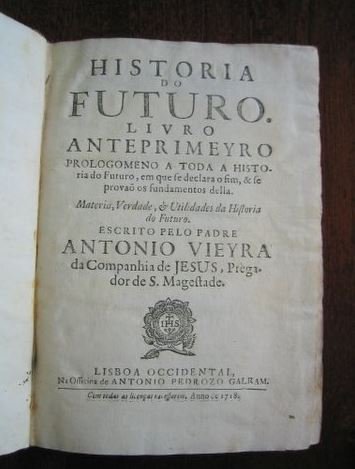
- História do Futuro (History of the Future): A visionary work linking Portuguese history with its prophesied future glory.
- Cartas (Letters): A three-volume collection of letters that provide invaluable insights into Vieira’s thoughts on theology, politics, and society.
Legacy and Recognition
António Vieira is celebrated as one of the greatest literary and intellectual figures of the Portuguese-speaking world. His advocacy for justice, equality, and reform has inspired generations. Commemorative coins, stamps, and statues honor his legacy, and academic institutions in Brazil and Portugal continue to study his works.
One of the most ambitious projects celebrating Vieira’s legacy is the Complete Works of António Vieira. This 30-volume collection includes sermons, letters, prophetic writings, and previously unpublished texts, showcasing the breadth of his contributions. The project reflects international collaboration among Portuguese and Brazilian scholars, highlighting Vieira’s enduring influence.
Conclusion
António Vieira’s life was a testament to his unwavering commitment to justice, intellectual rigor, and faith. As a Jesuit priest, diplomat, and writer, he bridged the realms of religion, politics, and literature. Despite facing significant opposition and challenges, Vieira’s vision for a more just and equitable society continues to resonate. His works remain a cornerstone of Portuguese literary and cultural heritage, ensuring his place among history’s great reformers and thinkers.
Frequently Asked Questions
When and where was António Vieira born?
He was born in 1608 in Lisbon, Portugal.
What was António Vieira’s family background?
António Viera’s father, Cristóvão Vieira Ravasco, had mulatto heritage through his grandmother, Maria de Azevedo.
Where did Vieira move in 1614, and why?
He moved to Brazil because his father was assigned as a registrar in the colony.
What significant step did Vieira take in 1625?
Viera entered the Jesuit novitiate and pronounced his first vows two years later.
What was Vieira’s role at the age of 18?
He taught rhetoric and theology at the College of Olinda and wrote the annual letters of the Jesuit province.
Why did Vieira gain fame in Bahia between 1638 and 1640?
He delivered patriotic sermons, including one considered among the most extraordinary Christian discourses, advocating for Portugal’s success against Dutch forces.
What roles did Vieira take on after the 1640 Portuguese Restoration?
Viera became royal preacher, tutor to Prince Dom Pedro, and a member of the Royal Council, while advocating for commerce reforms and supporting Jewish merchants.
What was Vieira’s contribution to diplomatic efforts in Europe?
Viera traveled across Europe promoting peace and alliances but stirred controversy with his suggestion to cede Pernambuco to the Dutch.
What was Vieira’s focus upon returning to Brazil in 1653?
He dedicated himself to missionary work among African slaves and indigenous peoples, securing royal decrees to protect the latter.
Why was Vieira expelled from Brazil in 1661?
Colonial resistance, jealous clergy, and disputes over Jesuit jurisdiction led to his expulsion.
What is Sebastianism, and how did it influence Vieira?
Sebastianism is a prophetic belief in Portugal’s divine destiny, which inspired Vieira’s works like Clavis Prophetarum.