10 Most Famous Latin Phrases and their Meanings
Latin, the language of the ancient Romans, has left an indelible mark on modern languages, law, philosophy, science, and literature. Many of its phrases have become timeless expressions, offering profound wisdom, practical advice, and eloquent insights.
Below, World History Edu presents ten of the most famous Latin phrases, their meanings, and their significance.
Veni, Vidi, Vici
- Translation: “I came, I saw, I conquered.”
- Origin: Attributed to Julius Caesar, this phrase was used in a letter to the Roman Senate after his swift victory at the Battle of Zela in 47 BCE.
- Meaning and Significance:
This succinct declaration encapsulates the efficiency and decisiveness of Caesar’s campaign. The phrase symbolizes swift and complete success. Today, it is often used to convey confidence and achievement, whether in personal, professional, or competitive contexts.
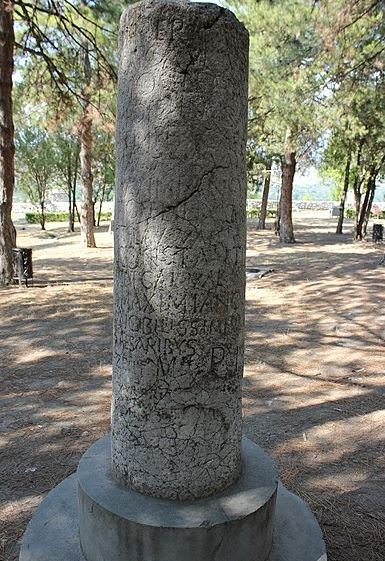
Image: A view from a 2,000-year-old column fragment at the historic castle in Zile, Turkey, where Julius Caesar famously declared, “Veni, vidi, vici.”
Carpe Diem
- Translation: “Seize the day.”
- Origin: From Horace’s Odes (23 BCE), specifically the line, carpe diem, quam minimum credula postero (“seize the day, putting as little trust as possible in the future”).
- Meaning and Significance:
Horace’s advice encourages living in the moment and making the most of the present, rather than worrying about the uncertainties of tomorrow. It has become a universal call to action, inspiring people to embrace opportunities and cherish life’s fleeting moments.
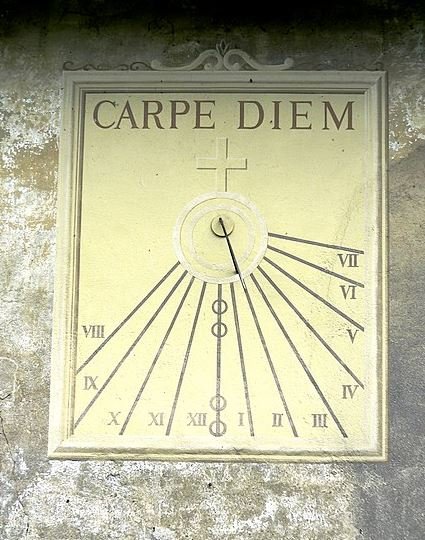
Image: A sundial engraved with the phrase carpe diem.
Cogito, Ergo Sum
- Translation: “I think, therefore I am.”
- Origin: Coined by René Descartes in his 1637 work Discourse on the Method. Though it is not classical Latin, it has become a cornerstone of Western philosophy.
- Meaning and Significance:
This phrase establishes thinking as the foundation of existence. Descartes used it to demonstrate the certainty of self-awareness and the basis for knowledge. It continues to influence discussions in philosophy, epistemology, and the nature of consciousness.
Et Tu, Brute?
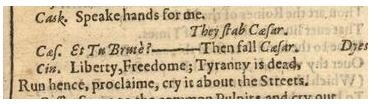
Image: The macaronic Shakespearean line “Et Tu Brutè?” as it appears in the 1623 “First Folio”.
- Translation: “And you, Brutus?”
- Origin: Popularized by English playwright William Shakespeare in Julius Caesar (1599), it dramatizes the betrayal of Caesar by his trusted ally Brutus. The historical accuracy of Caesar uttering these words is debated.
- Meaning and Significance:
This phrase has come to symbolize the ultimate betrayal by someone close. It is often quoted in literature, politics, and culture when themes of trust and betrayal arise.
In Vino Veritas
- Translation: “In wine, there is truth.”
- Origin: The phrase dates back to ancient times and is attributed to Pliny the Elder in his Natural History.
- Meaning and Significance:
The saying reflects the idea that people often reveal their true thoughts and feelings under the influence of alcohol. It has become a humorous yet insightful observation about human behavior and social interactions.

Image: “In vino veritas” on sundial at the Château de Pommard in France.
Alea Iacta Est
- Translation: “The die is cast.”
- Origin: According to Suetonius, Julius Caesar exclaimed this phrase in 49 BCE as he crossed the Rubicon River, an act that initiated a civil war in Rome.
- Meaning and Significance:
The phrase signifies a point of no return—a decisive action with irreversible consequences. It is often used when someone commits to a bold decision or takes a significant risk.
Ad Astra Per Aspera
- Translation: “To the stars through difficulties.”
- Origin: This phrase has ancient roots and has been adopted as a motto by various organizations, including the state of Kansas in the United States.
- Meaning and Significance:
It reflects the idea that great achievements require perseverance and overcoming adversity. The phrase inspires resilience and determination in the face of challenges.
Tempus Fugit

Image: An instance of the phrase, “Tempus fugit”, used as a sundial motto in Redu, Belgium.
- Translation: “Time flies.”
- Origin: Derived from the line fugit inreparabile tempus (“irretrievable time flies”) in Virgil’s Georgics (29 BCE).
- Meaning and Significance:
This phrase serves as a reminder of the fleeting nature of time and the importance of using it wisely. It is often invoked to encourage urgency or to reflect on life’s brevity.
Si Vis Pacem, Para Bellum
- Translation: “If you want peace, prepare for war.”
- Origin: Attributed to the Roman author Vegetius in his treatise De Re Militari (4th or 5th century CE).
- Meaning and Significance:
This phrase suggests that strength and preparedness are essential for maintaining peace, as potential aggressors are deterred by the prospect of resistance. It remains relevant in discussions of military strategy and international relations.
Amor Vincit Omnia
- Translation: “Love conquers all.”
- Origin: From Virgil’s Eclogues (37 BCE), the full line is amor vincit omnia et nos cedamus amori (“love conquers all, so let us yield to love”).
- Meaning and Significance:
This phrase celebrates the transformative and unifying power of love. It is often used in literature, art, and personal expressions to highlight love’s ability to overcome obstacles.

Expanding on Their Cultural and Historical Relevance
These Latin phrases have transcended their original contexts and remain influential across various fields, including law, literature, science, and everyday life. Their endurance can be attributed to their universal themes and the elegance of the Latin language, which lends itself to concise yet profound expression.
Philosophy and Reflection
- Cogito, ergo sum continues to underpin modern philosophical discussions about consciousness and existence. Its simplicity resonates with anyone seeking to understand their place in the world.
- Tempus fugit is a timeless reminder of life’s brevity, prompting individuals to reflect on how they use their time and prioritize what matters most.
Action and Decision-Making
- Veni, vidi, vici and alea iacta est encapsulate themes of boldness and decisive action. They inspire individuals to approach challenges with confidence and determination.
- Carpe diem encourages a proactive approach to life, reminding people to seize opportunities and live fully in the present.
Love and Unity
- Amor vincit omnia reflects the enduring belief in love’s ability to transcend barriers. It resonates universally, whether in romantic, familial, or altruistic contexts.
Resilience and Aspiration
- Ad astra per aspera speaks to the human spirit’s ability to overcome adversity in pursuit of greatness, making it a source of inspiration for individuals and organizations striving for ambitious goals.
Wisdom in Relationships
- In vino veritas humorously acknowledges the complexity of human nature and the social dynamics that emerge when inhibitions are lowered.
Politics and Strategy
- Si vis pacem, para bellum and et tu, Brute? remain relevant in discussions of leadership, betrayal, and the delicate balance between peace and preparedness.
Conclusion
These ten Latin phrases exemplify the depth and richness of the Latin language, capturing profound truths and timeless wisdom. Their continued use reflects their universal relevance, offering insights into human nature, the passage of time, the pursuit of aspirations, and the complexities of love and power. Whether in philosophical debates, historical reflections, or everyday conversations, these phrases connect us to a shared heritage and remind us of the enduring lessons of the past.
Frequently Asked Questions
What is the significance of Latin phrases in modern languages?
Latin phrases are important because they serve as the foundation of many modern languages, especially Romance languages like Italian, French, and Spanish. Additionally, Latin has influenced English vocabulary, particularly in fields like law, medicine, and science.
Why are Latin phrases still used today?
Latin phrases are valued for their precision, brevity, and timelessness. They convey complex ideas in concise ways and are often used in legal, academic, and philosophical contexts to maintain tradition and clarity.
What are some Latin phrases commonly used in law?
Common legal Latin phrases include:
-
- Habeas corpus (you shall have the body)
- Amicus curiae (friend of the court)
- Pro bono (for the public good)
- Ipso facto (by the fact itself)
What does “Carpe diem” mean, and why is it so popular?
Carpe diem translates to “seize the day.” It is popular because it encapsulates a universal and motivating message to live in the present and make the most of each moment.
What does “Et tu, Brute?” signify?
Et tu, Brute? means “And you, Brutus?” It signifies ultimate betrayal, originating from Shakespeare’s dramatization of Julius Caesar’s assassination.
What is the meaning of “Veni, vidi, vici”?
Veni, vidi, vici translates to “I came, I saw, I conquered.” It is a statement attributed to Julius Caesar, symbolizing swift and decisive success.
Why do academic institutions and mottos often use Latin?
Academic institutions use Latin to emphasize tradition, universality, and scholarly excellence. Latin phrases in mottos, such as Veritas (truth) for Harvard, reflect timeless ideals and values.
What does “Amor vincit omnia” mean?
Amor vincit omnia means “Love conquers all.” It reflects the belief in love’s transformative and unifying power.