Astarte: The goddess of fertility and love
Astarte is the Hellenized form of the ancient Semitic goddess ʿAṭṭart. She holds a prominent place in the pantheon of Ancient Near Eastern deities, associated with various attributes such as war, sexuality, royal power, and healing. In this exploration, World History Edu provides a comprehensive overview of Astarte, her historical worship, cultural significance, and evolving interpretations.

Statue depicting Astarte.
Name and Linguistic Roots
The Proto-Semitic form of her name, ʿAṭṭart, is believed to derive from the same linguistic roots as ʿAṭtar, a deity associated with the morning and evening stars. Early scholarship suggested that ʿAṭṭart’s name incorporated a feminine suffix, but modern research contends the exact relationship between ʿAṭṭart and ʿAṭtar remains ambiguous.
Astarte, rendered in Greek as Ἀστάρτη (‘Astartē), was the Hellenized form of the Northwest Semitic goddess ʿAṯtart, equivalent to the Mesopotamian Ishtar.
In Hebrew, the name ‘Aštōret appears in the Masoretic Text, where scholars debate its vocalization. Many believe the name’s vowels were altered to mimic the Hebrew word for “shame” (bōšet), reflecting religious polemics.
Worship and Spread
Astarte’s worship was widespread, beginning in the Bronze Age and continuing through classical antiquity. Major centers of her cult included:
- Levant: Worshipped among the Canaanites and Phoenicians, Astarte was a central figure in city-states such as Tyre, Sidon, and Byblos.
- Egypt: Introduced during the New Kingdom, she gained popularity under the Ramessides.
- Cyprus and the Mediterranean: Phoenician sailors brought her worship to Cyprus, Malta, and the Iberian Peninsula.
Astarte was associated with a variety of domains, including war, beauty, and healing. Unlike earlier assumptions, there is little evidence to support her role as a fertility goddess. Her primary symbols included the lion, representing strength and war, and the dove, indicating peace and beauty. Additionally, she was linked to the horse and chariot, emphasizing her martial attributes.
Astarte in Mythology and Culture
Astarte’s identity often overlapped with other goddesses. In Ugaritic and other Syrian traditions, she was considered analogous to Ishtar (also known as Inanna), the Mesopotamian goddess of love and war. Hurrian goddesses such as Ishara and Shaushka also bore similarities to Astarte. In some cases, these deities were interchangeable in religious texts and practices.

Ishtar on an Akkadian Empire seal, 2350–2150 BC.
READ MORE: Who were the 12 Most Famous Gods in Ancient Mesopotamia?
In Hellenistic times, Astarte was frequently identified with Aphrodite, the Greek goddess of love. This association likely stemmed from Cypriot influences where local deities merged with Astarte. Roman culture later equated her with Venus.
Representations in Art
Astarte was depicted in various forms:
- Combatant Imagery: In many depictions, she appears as a warrior goddess on horseback or in a chariot.
- Animals: Lions and horses frequently accompany her, underscoring her martial character. The dove also appears in artistic contexts.
- Egyptian Influence: In Egyptian iconography, Astarte is shown wielding a crescent axe or riding a war chariot.
- Phoenician Coins: Coins from Sidon portray Astarte standing on the prow of a ship, reflecting her maritime connections.
Religious Practices
Major temples dedicated to Astarte existed in locations such as Sidon, Tyre, and Carthage. Rituals included offerings of wine and food, sacrifices, and possibly sacred prostitution, particularly in Phoenician and Cypriot contexts. In Egypt, she was worshipped alongside Resheph, a god of war and plague.
Astarte was associated with war, beauty, royal power, and occasionally hunting, but not primarily fertility.
Phoenician colonists adapted Astarte’s worship to new contexts. For instance, in Carthage, she was venerated alongside Tanit, another prominent goddess. In Sicily, she became known as Venus Erycina, blending with local traditions.
Historical Contexts
Astarte’s earliest recorded worship occurred in Ebla (modern Syria) during the 3rd millennium BCE. Texts from Mari and Ugarit further highlight her prominence in Amorite and Canaanite cities.
At Ugarit, Astarte was a secondary figure in the Baal Cycle, where she supported Baal in his battles. She was often paired with Anat, another warrior goddess, in poetic and religious texts.
Under Egyptian influence, Astarte’s role expanded to include associations with Ra and Horus. Her warrior attributes were emphasized, aligning her with the martial traditions of Egyptian deities.
Transition to Iron Age Worship
By the Iron Age, Astarte had become the preeminent goddess of the Phoenician pantheon. Her worship emphasized sensuality and fertility, reflecting cultural shifts from her earlier martial focus. Personal names like “Eshmunazar” and “Bodashtart” reveal her continued influence in Phoenician society.
Phoenician settlers introduced Astarte’s cult to Carthage, where she merged with Tanit. Her worship also spread to Malta and the Iberian Peninsula, often adapting to local traditions.
Decline in Worship and Legacy
With the rise of monotheistic religions such as Judaism, Christianity, and Islam, Astarte’s worship diminished. Biblical texts often portray her negatively, associating her with idolatry. The Hebrew Bible references her as “Ashtoreth” and criticizes her cult practices.
Elements of her character influenced later depictions of goddesses such as Aphrodite and Venus. In medieval and Renaissance esotericism, Astarte’s name was repurposed as a demon, reflecting shifting cultural narratives.
Frequently Asked Questions
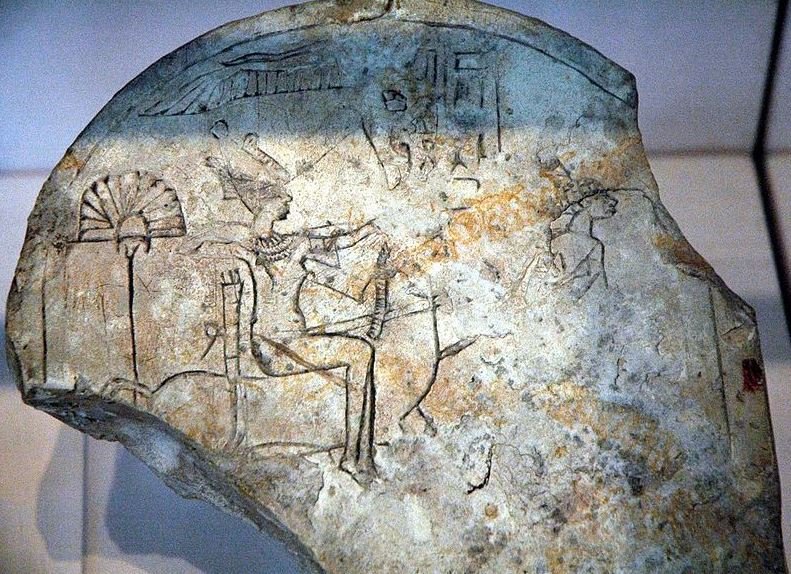
Egyptian stele depicting Astarte on a horse.
Where was Astarte worshipped?
Astarte was worshipped in the ancient Levant, Canaan, Phoenicia, Cyprus, Egypt, and Phoenician colonies like Carthage. Major centers included Sidon, Tyre, and Byblos.
What symbols were associated with Astarte?
Her symbols included lions (war and power), doves (love and beauty), horses, chariots, and crescent moons. She was also depicted as a warrior on horseback or a chariot.
Was Astarte connected to Greek mythology?
Astarte was equated with Aphrodite in Greek mythology, especially in Cyprus. Her character evolved to include more erotic aspects over time, paralleling the transformation of Ishtar.
How was Astarte represented in iconography?
She was often portrayed naked, emphasizing her role as a goddess of love and fertility, or armed, reflecting her warlike aspects. Egyptian representations included her as a mounted warrior.
What was her role in Ugaritic and Canaanite mythology?
In Ugarit, Astarte was linked to Anat and Baal, sometimes serving as a warrior goddess and a divine ally. She played a political and ritual role in supporting royalty.
How did Astarte influence later religions?
Her cult influenced the Greek and Roman pantheons, becoming associated with Venus and Juno. In the Phoenician colonies, she was often paired with Baal and incorporated into local religious practices.
Did Astarte have connections to fertility or hunting?
While early scholarship misidentified her as a fertility goddess, evidence from Ugarit and Emar highlights her role as a huntress and warrior, although these aspects diminished by the Iron Age.
What was the nature of her worship?
Worship practices included offerings, sacred prostitution in some temples, and festivals. In Phoenicia and Carthage, Astarte shared temples with gods like Eshmun and Baal Hammon.
What is the relationship between Astarte and Ishtar?
Astarte and Ishtar shared similar domains, including war and love, and were often treated as counterparts or interchangeable in texts. Their mythologies and worship practices influenced each other.





