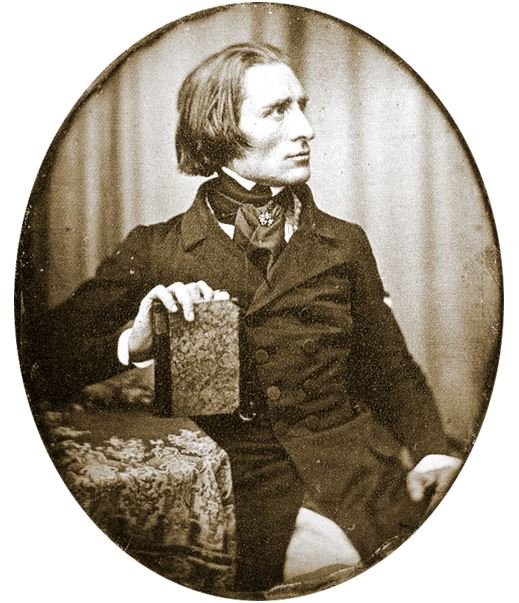
Franz Liszt: Life and Major Compositions
Franz Liszt was a renowned Hungarian composer, virtuoso pianist, and teacher of the Romantic period. His career spanned over six decades, and he is celebrated as one of the most influential musicians of his era.
Early Life and Musical Education
Franz Liszt, born on October 22, 1811, in the village of Doborján (modern-day Raiding, Austria), displayed prodigious musical talent from an early age. His father, Adam Liszt, a musician in the service of Prince Esterházy, was his first teacher, introducing him to the piano and nurturing his early gift for improvisation. By the age of nine, Liszt had performed publicly, captivating audiences with his skill. Financial support from wealthy sponsors allowed him to study in Vienna under the tutelage of Carl Czerny and Antonio Salieri, both distinguished figures in the classical tradition.
Liszt’s debut in Vienna at age 11 was met with resounding success, and he soon became a sensation in aristocratic circles. After relocating to Paris in 1823, his father’s ambitions for him led to further acclaim. Although the Conservatoire de Paris refused him entry as a foreigner, Liszt studied composition with Anton Reicha and launched a successful career as a young virtuoso.
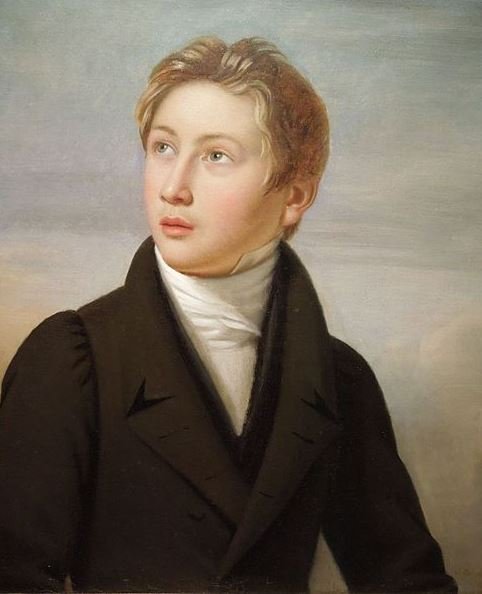
A portrait of a youthful Franz Liszt.
Early Career and Personal Struggles
Tragedy struck in 1827 with the death of Adam Liszt, leaving Franz, only 15, to support himself and his mother in Paris. Teaching piano became his primary livelihood. During this period, Liszt experienced a profound spiritual and existential crisis, influenced by conversations with religious and philosophical figures. This introspective phase saw him withdraw temporarily from public performance, focusing on education and personal growth.
A turning point came in 1832 when Liszt attended a concert by violin virtuoso Niccolò Paganini. Inspired by Paganini’s unparalleled technical prowess, Liszt embarked on rigorous practice to achieve similar mastery on the piano, laying the groundwork for his legendary reputation as a performer.
Rise to Stardom and “Lisztomania”
The 1830s and 1840s marked Liszt’s meteoric rise as a touring virtuoso. His concerts, characterized by unprecedented technical brilliance and emotional depth, made him the first “superstar” of classical music. The phenomenon of “Lisztomania” swept across Europe, as audiences were enraptured not only by his musical prowess but also by his charismatic stage presence and good looks.
During this period, Liszt expanded the repertoire of the piano recital, transcribing works by other composers and performing them alongside his original compositions. He popularized the solo piano recital as a distinct art form, with programs that included pieces from a wide array of composers.
Relationship with Marie d’Agoult and Artistic Growth
In 1835, Liszt began a romantic relationship with Countess Marie d’Agoult, which greatly influenced his life and work. The couple traveled through Switzerland and Italy, inspiring Liszt’s renowned piano cycles Années de pèlerinage (Years of Pilgrimage). Their union produced three children, including Cosima, who later became the wife of Richard Wagner. Despite their separation in 1844, the relationship had a lasting impact on Liszt’s artistic output.
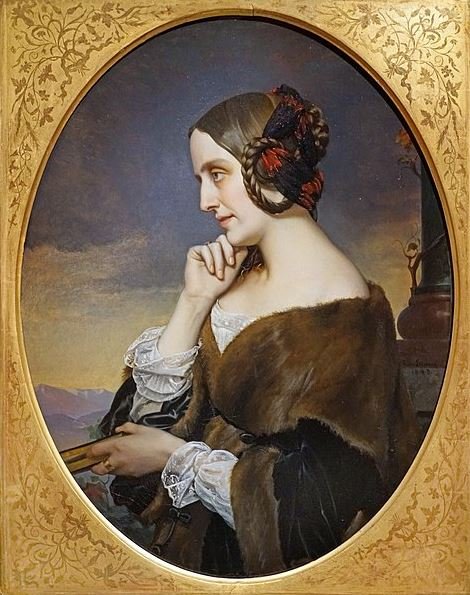
Marie d’Agoult’s portrait by German painter Henri Lehmann.
Contributions to Music and the New German School
Settling in Weimar in 1848, Liszt became the court conductor and a central figure in the New German School, advocating for programmatic music. He composed and premiered groundbreaking works, including his Faust Symphony and Dante Symphony, as well as his thirteen symphonic poems—a genre he pioneered. These one-movement orchestral works, such as Les Préludes and Mazeppa, explored the union of music and narrative.
Liszt’s association with the New German School placed him at the forefront of the “War of the Romantics,” a philosophical and stylistic divide in 19th-century classical music. His advocacy for composers like Berlioz and Wagner further solidified his role as a progressive force.
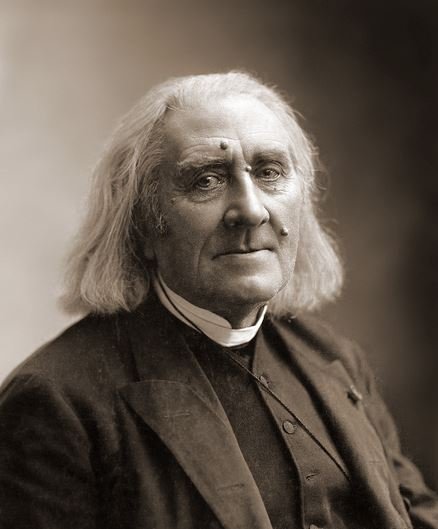
An 1886 photo of Liszt.
Teaching and Masterclasses
Liszt revolutionized piano pedagogy through his innovative teaching methods. He conducted masterclasses in Weimar, Rome, and Budapest, emphasizing interpretative freedom and individuality over technical uniformity. Many of his students, including Hans von Bülow and Moriz Rosenthal, became influential pianists in their own right.
Liszt’s teaching extended beyond technique, encompassing broader artistic and philosophical ideas. His generosity was legendary; he never charged for lessons and often supported struggling musicians financially.
Late Years and Musical Innovation
The final decades of Liszt’s life were marked by a retreat from public performance and an increased focus on composition and religious devotion. He explored new harmonic and structural ideas, creating works that anticipated 20th-century modernism. Pieces like Nuages gris and La lugubre gondola showcased his experimental approach to tonality and form, influencing later composers such as Debussy and Bartók.
In 1865, Liszt took minor holy orders, earning him the nickname “Abbé Liszt.” This spiritual transformation was reflected in sacred works like Via crucis, which blended his progressive musical language with liturgical themes.
Relationships with Contemporaries
Liszt was a tireless advocate for his peers, including Hector Berlioz, Frédéric Chopin, and Richard Wagner. His friendship with Wagner, despite personal tensions, was particularly significant. Liszt not only promoted Wagner’s operas but also provided financial and logistical support during Wagner’s years in exile.
His relationships with Chopin and Robert Schumann were more complex, characterized by mutual admiration but also periods of estrangement. Liszt’s generous spirit extended to younger composers, and his influence can be seen in the works of many who followed.
Legacy and Influence
Liszt’s contributions to music extend far beyond his virtuosic piano performances. He transformed the possibilities of the instrument, expanded the repertoire, and pushed the boundaries of musical expression. His pioneering use of thematic transformation and chromatic harmony influenced composers from Wagner to Schoenberg.
As a teacher, Liszt established a pedagogical tradition that endures to this day. His innovations in programmatic music and the symphonic poem laid the groundwork for later developments in orchestral composition. His philanthropic efforts, including donations to charities and artistic causes, further underscore his lasting impact.
Frequently Asked Questions
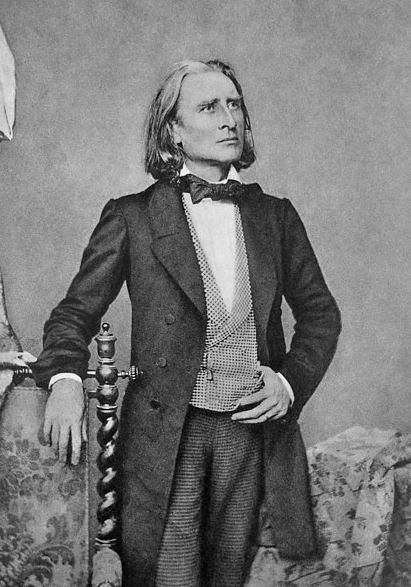
An 1858 photo of Franz Liszt.