Avaris: The Hyksos Capital of Egypt
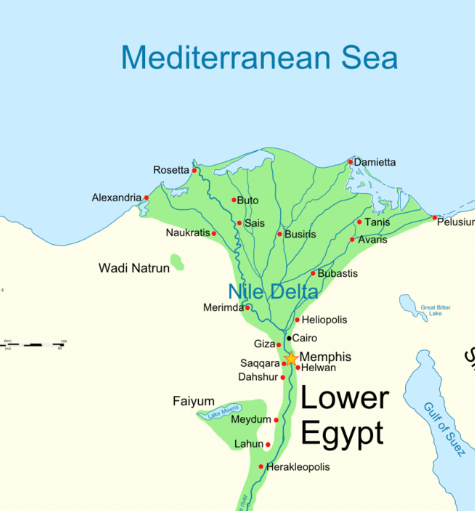
Avaris, known in ancient Egyptian as ḥw.t wꜥr.t (Hut-Waret), served as the capital of the Hyksos rulers during Egypt’s Second Intermediate Period (c. 1800–1550 BCE). Located at Tell el-Dab’a in the northeastern Nile Delta, it became a major trade hub due to its proximity to the Nile and key trade routes connecting Egypt with Asia and the Mediterranean.

The history of Avaris highlights the interplay between Egyptian and Asiatic cultures, making it an important site in ancient Egyptian history.Image: Retjenu is linked to the Hyksos in several ancient Egyptian inscriptions.
Founding and Early Development
Avaris was founded around 1930 BCE during the reign of Amenemhat I of the 12th Dynasty. Initially a small Egyptian settlement, it began to grow through the arrival of Asiatic immigrants, primarily Canaanites. These settlers blended their own cultural traditions with Egyptian practices, as seen in artifacts like pottery and burial customs. By 1800 BCE, Avaris had become a flourishing trade colony, facilitating exchanges of goods and ideas between Egypt and neighboring regions.
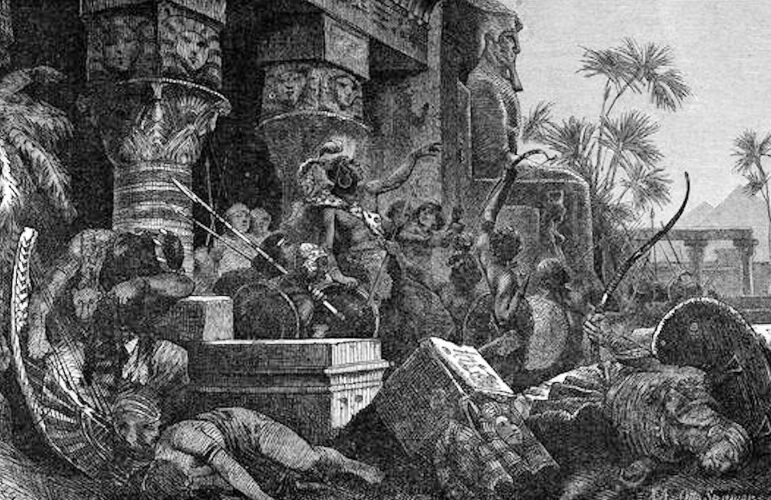
Hyksos invasion as imagined in the 19th century by Hermann Vogel (19th century)
Hyksos Rule and Expansion
In the 18th century BCE, the Hyksos, a group of Asiatic rulers, seized control of Lower Egypt, establishing Avaris as their capital. Under the Hyksos, the city expanded to cover 250 hectares, making it one of the largest cities in the world at the time. The Hyksos introduced new technologies, such as horse-drawn chariots, bronze weapons, and advanced fortifications, which strengthened their control over Egypt. Avaris became a cultural and economic hub, thriving on trade with the Levant and the Aegean.

The Hyksos are credited with introducing significant innovations to Egypt. For example, it’s been noted by some scholars that the Hyksos introduced horse-drawn chariots, composite bow, and the khopesh (a sickle-shaped sword).
Cultural Syncretism
Avaris was a melting pot of Egyptian, Asiatic, and Mediterranean cultures. Temples dedicated to both Egyptian gods like Set and Canaanite deities like Asherah and Baal were built within the city, reflecting religious syncretism. Artifacts from the site include Minoan-style frescoes, copper swords, and imported pottery, indicating strong ties with the Minoan civilization and other regions in the Mediterranean. This cultural fusion demonstrates Avaris’s pivotal role in facilitating cross-cultural interactions in the ancient world.

An official with a “mushroom-headed” hairstyle, resembling Western Asiatic foreigners in Khnumhotep II’s tomb paintings at Beni Hasan, excavated in Avaris, Hyksos capital (1802–1640 BCE). Displayed at Staatliche Sammlung für Ägyptische Kunst.
Archaeological Discoveries
Modern excavations at Tell el-Dab’a, beginning in the late 19th century, have revealed significant insights into Avaris’s layout and history. Archaeologists have uncovered a harbor capable of accommodating over 300 ships, residential areas, streets, temples, and a Nile tributary that once flowed through the city. Artifacts such as scarabs, pottery, and weapons highlight its importance as a trade and administrative center. Additionally, a large mudbrick tomb containing grave goods like copper swords underscores the wealth and influence of its inhabitants.
Military Significance and Egyptian Reconquest
Avaris became a key strategic site during the conflict between the Hyksos and native Egyptian rulers. Kamose, the last pharaoh of the 17th Dynasty, launched a military campaign against Avaris but failed to capture the city. Around 1550 BCE, Ahmose I, the founder of the 18th Dynasty, successfully besieged and conquered Avaris, expelling the Hyksos from Egypt. This victory marked the beginning of the New Kingdom, a period of centralized power and imperial expansion.
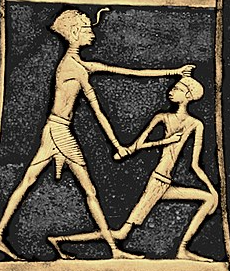
The word “Hyksos” originates from the Greek Hyksôs, derived from the Egyptian ḥqꜣw-ḫꜣswt. While ancient Egyptian texts used the term broadly to refer to foreign rulers, modern Egyptology identifies the Hyksos with the Fifteenth Dynasty. Image of Pharaoh Ahmose I slaying a probable Hyksos on a ceremonial axe.
Post-Hyksos Period
After the Hyksos were expelled, Avaris declined in prominence. While Thebes became the political and cultural capital of the 18th Dynasty, parts of Avaris remained occupied, particularly its temples and port. Canaanite-style artifacts from this period suggest that a portion of the city’s Semitic population continued to live there under Egyptian rule.
Transition to Pi-Ramesses
During the 13th century BCE, Ramesses II constructed the city of Pi-Ramesses approximately two kilometers north of Avaris. This new city served as a major administrative and military center, overshadowing Avaris. By the Ramesside period, Avaris was largely abandoned, though its harbor continued to function and parts of the site were repurposed as a cemetery.
Urban Chronology and Development
The history of Avaris is marked by distinct phases of growth and development:
- Founding (12th Dynasty, c. 1930 BCE): Initial establishment as a small settlement under Amenemhat I.
- Canaanite Immigration (c. 1800 BCE): Expansion into a major trade colony, with a growing Asiatic population.
- Hyksos Period (c. 1650–1550 BCE): Peak development under Hyksos rule, becoming one of the largest cities of its time.
- Egyptian Reconquest (c. 1550 BCE): Capture by Ahmose I, leading to a decline in prominence.
- Ramesside Period (c. 13th century BCE): Abandonment following the construction of Pi-Ramesses.
Significance of Avaris
Avaris was a vital trade hub, connecting Egypt with the Levant, the Aegean, and the wider Mediterranean world. Its strategic location allowed it to control key trade routes, making it a center for the exchange of goods, ideas, and technologies.
As a crossroads of cultures, Avaris showcased the blending of Egyptian, Asiatic, and Mediterranean traditions. This fusion is evident in its religious practices, art, and architecture, reflecting a dynamic and cosmopolitan urban environment.
Under the Hyksos, Avaris served as a fortified stronghold, enabling their control over Lower Egypt. Its eventual capture by Ahmose I marked a turning point in Egyptian history, leading to the unification of the country and the establishment of the New Kingdom.
The site of Avaris has provided invaluable insights into the interactions between Egypt and its neighbors during the Bronze Age. Discoveries such as Minoan frescoes and Asiatic artifacts highlight the city’s importance in ancient international relations.
Legacy of Avaris
Although Avaris was eventually abandoned, its influence persisted in Egyptian memory and historical records. References to the city appear in ancient texts, including Papyrus Sallier I and works by later historians like Manetho. Today, Avaris stands as a symbol of cultural exchange and resilience, offering a window into the complex dynamics of ancient Egypt and its interactions with the wider world.
Conclusion
Avaris, the Hyksos capital of Egypt, played a crucial role in the country’s history. From its origins as a small settlement to its zenith as a trade and cultural hub, Avaris reflected the dynamic interplay between Egyptian and Asiatic influences. Its eventual fall and incorporation into the New Kingdom marked a pivotal moment in the reunification of Egypt.
Frequently Asked Questions
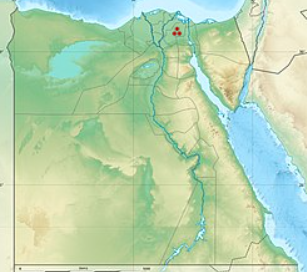
Avaris was the capital of the Hyksos during the Second Intermediate Period of Egypt. It was situated at Tell el-Dab’a in the northeastern Nile Delta.
Why was Avaris significant in ancient Egypt?
Avaris thrived as a trade hub due to its strategic position on the eastern branch of the Nile, connecting Egypt to the Levant and the Mediterranean.
What does the name Avaris mean in ancient Egyptian?
The ancient Egyptian name Ḥaʔət-Waʕrəʔ translates to “House of the Region,” reflecting its role as an administrative center.
Who identified Tell el-Dab’a as Avaris, and when?
Egyptian Egyptologist Labib Habachi first identified Tell el-Dab’a as Avaris in the 1940s.
What notable archaeological discoveries were made at Avaris?
Discoveries include a harbor for over 300 ships, Minoan-style frescoes, Asiatic burials, and grave goods such as copper swords, emphasizing the city’s trade and cultural connections.
When and why did Avaris become a Hyksos capital?
Avaris became the Hyksos capital in the 18th century BCE due to their conquest of Lower Egypt, leveraging the city’s strategic location for trade and military control.
How did Ahmose I reclaim Avaris?
Around 1550 BCE, Ahmose I defeated the Hyksos and captured Avaris, marking the start of the New Kingdom.

The Expulsion of the Hyksos (1906)
What happened to Avaris after the Hyksos period?
Avaris declined in prominence after Thebes became the capital, but parts of it remained occupied. It was later overshadowed by Pi-Ramesses, constructed nearby under Ramesses II.
What evidence links Avaris to the Minoan civilization?
Frescoes similar to those at Knossos on Crete suggest cultural and possibly political ties between Avaris and the Minoans.
What historical records mention Avaris?
Avaris is mentioned in Papyrus Sallier I (13th century BCE) and by Manetho, as quoted by Josephus, highlighting its historical significance.





