The Aztec New Fire Ceremony: History and Major Facts
The New Fire Ceremony, or Xiuhmolpilli, was a pivotal religious and cultural event in Aztec civilization, marking the end of a 52-year calendar cycle in the Mesoamerican calendar. The ceremony, steeped in symbolism, ritual, and cosmic significance, was intended to renew the cosmos and ensure the continued existence of the world.
READ MORE: 10 Major Aztec Gods and Goddesses
In the article below, World History Edu delves into the origin story and symbolism of this ancient Aztec religious ceremony.
The Context of the New Fire Ceremony
The Aztecs operated within a highly complex calendar system combining the 260-day ritual calendar (Tonalpohualli) and the 365-day solar calendar (Xiuhpohualli). Every 52 years, these calendars aligned, creating a period of profound cosmological significance. The Aztecs believed that each cycle’s conclusion posed a danger: the gods might decide to end the world. The New Fire Ceremony was their way of mitigating this risk and ensuring the universe’s renewal.
The Aztecs inherited the practice from earlier Mesoamerican cultures, including the Toltecs, but they imbued it with their unique cosmological and theocratic worldview. Central to the ceremony was the belief that humanity’s existence was contingent on continuous divine favor, achieved through meticulous ritual observance and the nourishment of the gods through offerings and sacrifices.

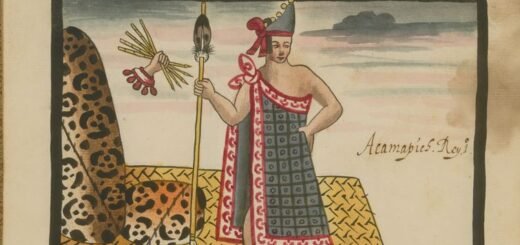
A depiction of the new fire ceremony.
Preparations and Symbolism
The New Fire Ceremony was not a single event but a multi-day process that involved the entire empire. As the 52-year cycle neared its end, society entered a state of heightened ritual activity. Key elements included:
Extinguishing Fires
On the eve of the ceremony, all fires in homes, temples, and public spaces were extinguished. Darkness symbolized the cessation of the old cycle and the vulnerability of the world. This act represented a cosmic pause, a moment when the old order ended and humanity awaited divine judgment.
Fasting and Abstinence
Leading up to the ceremony, individuals practiced fasting, abstinence, and purification rituals. Priests and participants sought to cleanse themselves spiritually, ensuring they were worthy of witnessing the renewal of time.
Destruction of Household Items
People broke household goods and tools, symbolic of casting off the old world. This act reflected the idea of starting anew with the hope of divine approval.
The Ritual Process
The ceremony itself unfolded in a carefully choreographed sequence:
The Procession to Huixachtlan
Priests and nobles led a sacred procession to Huixachtlan, a hill near the capital of Tenochtitlan (modern-day Mexico City). This site was chosen because of its celestial alignment and elevation, symbolizing proximity to the heavens. Participants included elite warriors, priesthood members, and representatives of neighboring city-states.
Sacrifice and the Lighting of the New Fire
At midnight, priests conducted a human sacrifice, a central act to the ceremony. The chosen individual, often a captive of high status, was offered to the gods. The priests performed the sacrifice atop the hill, cutting open the chest to extract the heart, a gesture symbolizing the offering of life to the gods.
After the sacrifice, the New Fire was kindled by drilling into the chest cavity of the sacrificial victim or through a sacred fire drill. The lighting of the fire was a moment of immense relief and celebration, signifying the gods’ acceptance of the offering and the renewal of the cosmic cycle.
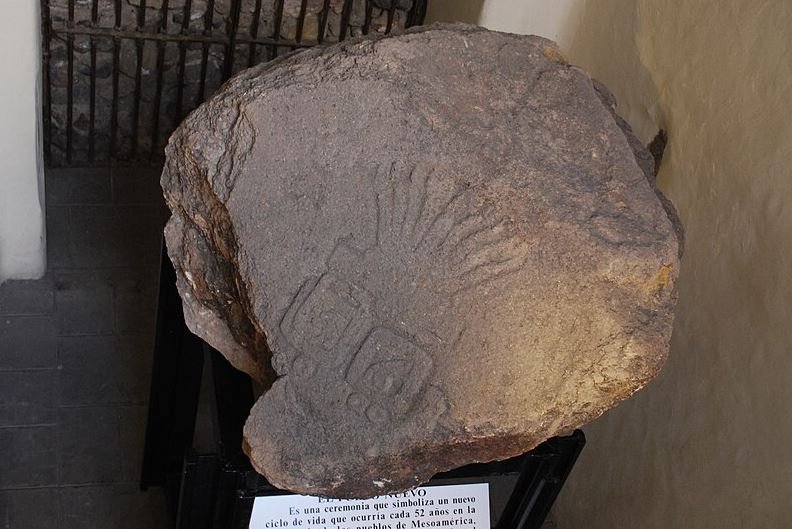
A stone engraved with the symbol of the “new fire,” marking the start of the 52-year cycle on the Aztec calendar.
Dissemination of the Fire
The new flame was transported to Tenochtitlan’s main temple and other major temples across the empire. From there, runners carried the flame to outlying communities, reigniting hearths and temples. This act symbolized the spread of cosmic renewal and divine favor to all corners of the Aztec realm.
Broader Symbolism
The New Fire Ceremony encapsulated the Aztecs’ cyclical view of time and their understanding of the universe. Key themes include:
The ritual underscored the Aztecs’ belief that time was cyclical, not linear. The renewal of the calendar signified the rebirth of the universe, emphasizing the gods’ role in sustaining existence.
The ceremony highlighted the deeply ingrained idea of reciprocity between humans and gods. The Aztecs believed the gods required nourishment through sacrifices to maintain the balance of the cosmos.
By involving the entire society in the extinguishing and rekindling of fires, the ritual reinforced communal bonds and the shared understanding of their place in the cosmic order.
The Political Dimension
The New Fire Ceremony also served as a display of imperial power. The centralization of the ceremony in Tenochtitlan reinforced the city’s status as the empire’s spiritual and political heart. The participation of conquered city-states and the dissemination of the new flame throughout the empire symbolized the Aztec ruler’s authority and the integration of diverse peoples into a single religious framework.
Major Calendars in Human History: Origins, Structures, & Impacts on Societies
Legacy and Interpretation
With the fall of the Aztec Empire in 1521, the New Fire Ceremony ceased to be practiced, but its memory persisted through colonial chronicles and Indigenous oral traditions. Scholars and archaeologists have analyzed the ceremony to understand Aztec cosmology, statecraft, and religious practices. The event exemplifies the intricate interplay between religion, politics, and society in pre-Columbian Mesoamerica.

Frequently asked questions about the Aztec New Fire Ceremony

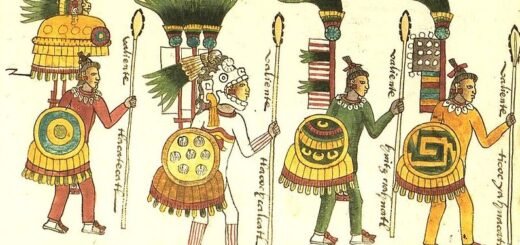
A depiction of several Aztec warriors.
What was the New Fire Ceremony, and why was it significant?
The New Fire Ceremony, or Binding of the Years Ceremony, was the most important ritual in Aztec religious life. Conducted every 52 years, it marked the completion of a full cycle of the Aztec solar calendar, xiuhmolpilli. Its purpose was to renew the sun and ensure the continuation of the world for another 52-year cycle, as failure would mean the end of Aztec civilization and the cosmos.
How did the Aztec calendar system relate to the New Fire Ceremony?
The ceremony coincided with the rare alignment of the 260-day sacred calendar (tonalpohualli) and the 365-day solar calendar (xiuhpohualli), marking the end of a 52-year cycle. Every second cycle, or 104 years, held even greater significance, reflecting a deeper cosmic resonance and the fragility of the universe.
Why was the end of the 52-year cycle a source of anxiety for the Aztecs?
The Aztecs believed their world was fragile and at risk of destruction. Historian Jacques Soustelle noted their fear of natural disasters, wizards, and monstrous deities, but nothing was as ominous as the uncertainty of whether the sun would rise again after the final sunset of the cycle.
Who was Xiuhtecuhtli, and what was his role in the New Fire Ceremony?
Xiuhtecuhtli, the god of fire and time, presided over the ceremony. Known as the “Turquoise Lord,” his name symbolized his connection to turquoise and the calendar. Fire, a fundamental cosmic element, was associated with Xiuhtecuhtli, and the ritual aimed to ensure cosmic balance and the continuation of time.
What preparations were made for the New Fire Ceremony?
Preparations included extinguishing all fires in homes and temples, symbolizing the end of the old cycle. People cleaned their homes, discarded old items, and tied bundles of 52 reeds. Superstitions guided rituals, such as painting pregnant women blue and confining them to granaries to prevent transformations into monsters, while children were kept awake to avoid turning into mice.
Where did the ceremony take place, and what rituals were performed?
The ceremony occurred at Mt. Huixachtecatl, a sacred volcanic mountain. High priests dressed as gods led the ritual, and at midnight, when the Pleiades constellation reached its zenith, a human sacrifice was made. The High Priest removed the victim’s heart and kindled a new fire in the chest cavity using a sacred fire drill. If the fire burned brightly, it signified divine approval for another cycle.
How was the new fire spread across the Aztec empire?
The newly kindled fire was carried to Tenochtitlan, where it reignited the flames in temples and homes. From the city, runners distributed the flame across the empire, symbolizing cosmic renewal and the restoration of divine favor.
What celebrations followed the New Fire Ceremony?
After the ceremony, the Aztecs offered incense and quail sacrifices. The morning began with fasting and prayer, followed by grand celebrations featuring new clothes, feasting on amaranth-seed cakes, and drinking pulque beer. These festivities marked the renewal of the cosmic cycle.
What is the legacy of the New Fire Ceremony?
The ceremony was performed in 1351, 1403, 1455, and 1507 CE, with the final ritual coinciding with European conquest. Its significance endures through artifacts like the Codex Borbonicus, the Throne of Montezuma II, and the turquoise mosaic mask of Xiuhtecuhtli, reflecting its cultural and spiritual importance to the Aztec civilization.
READ MORE: Religious Practices and Major Deities of Pre-Columbian Civilizations