What are the Ellora Caves?
The Ellora Caves, a UNESCO World Heritage Site located in Maharashtra, India, represent one of the finest examples of ancient rock-cut architecture. They are a group of 34 monasteries and temples that span over two kilometers and were excavated from the basalt cliffs of the Charanandri hills.
Dating from the 6th to 10th centuries CE, the caves illustrate the religious harmony and cultural sophistication of ancient India. The site is notable for its intricate carvings, vast scale, and the coexistence of Buddhist, Hindu, and Jain monuments.
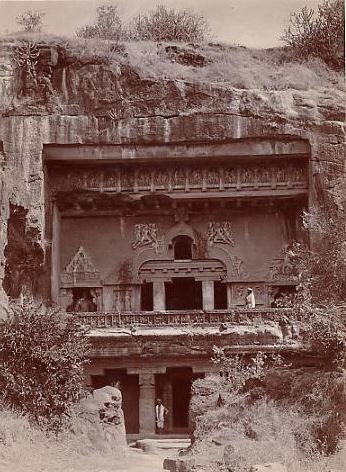
An 1890 photo of the Ellora Caves. Image by Indian photographer Deen Dayal.
Historical Background
Ellora was a prominent religious, cultural, and trade center during the reigns of various dynasties, including the Rashtrakutas, Kalachuris, and Yadavas. The site’s creation spanned nearly four centuries, reflecting the socio-religious dynamics of medieval India.
The caves were excavated between the 6th and 10th centuries CE:
- Buddhist Caves (Caves 1–12): Constructed between the 6th and 7th centuries.
- Hindu Caves (Caves 13–29): Dating from the 7th to 9th centuries.
- Jain Caves (Caves 30–34): Added between the 9th and 10th centuries.
The caves were carved directly into the volcanic rock of the Western Ghats, requiring meticulous planning and labor-intensive techniques. Each cave served as a temple, monastery, or congregation space, showcasing the skill of ancient artisans.
Layout and Structure
The Ellora Caves are grouped based on religious affiliation:
Buddhist Caves (1–12)
These caves are among the earliest excavations at Ellora. They primarily served as monasteries for Buddhist monks and reflect the Mahayana Buddhist tradition. Notable features include:
- Chaitya Halls: Large prayer halls, such as Cave 10 (Vishvakarma or Carpenter’s Cave), which features a central stupa and ribbed ceiling imitating wooden architecture.
- Viharas: Monasteries with cells for monks, adorned with Buddha sculptures.
- Artistic Highlights: Depictions of Buddha in various postures, Bodhisattvas, and Jataka tales.
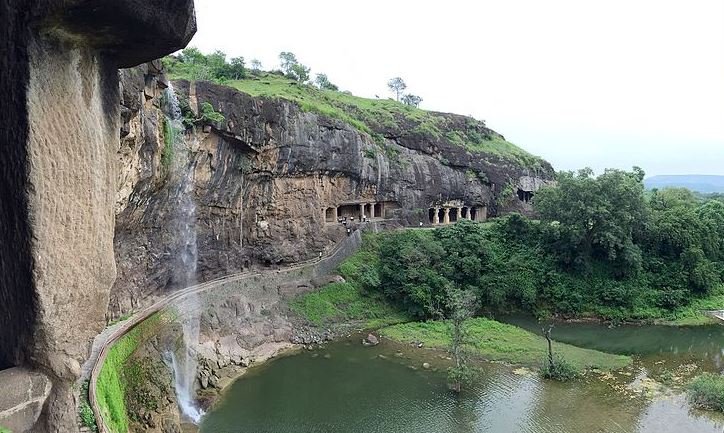
Image: A view of cave 29 of the Ellora caves.
Hindu Caves (13–29)
The Hindu caves are more elaborate, characterized by grandiose sculptures and intricate carvings. They represent Shaivism and Vaishnavism, two major Hindu sects.
- Cave 16 (Kailasa Temple): The masterpiece of Ellora, the Kailasa Temple is a monolithic structure dedicated to Lord Shiva. It is the largest rock-cut temple in the world, featuring a monumental Nandi (bull) sculpture, pillared halls, and reliefs depicting episodes from the Ramayana and Mahabharata.
- Other Highlights: Caves 14 (Ravan ki Khai), 15 (Dashavatara), and 21 (Rameshwar) include intricate sculptures of deities, celestial beings, and mythological narratives.
Jain Caves (30–34)
The Jain caves reflect the principles of Jainism, emphasizing simplicity and asceticism. Despite their austere philosophy, these caves are adorned with detailed carvings and iconography.
- Cave 32 (Indra Sabha): A two-story temple featuring a large shrine of Mahavira and exquisite carvings of yakshas and yakshis (guardian deities).
- Themes: Depictions of Tirthankaras, lotus motifs, and celestial figures.

Image: The exact location of the Ellora Caves in India.
Architectural Techniques
The construction of the Ellora Caves involved a subtractive method—removing rock to create spaces rather than building them. Artisans started from the top and worked downward, ensuring precision in every detail. Tools like chisels, hammers, and pickaxes were used to carve intricate patterns and figures.
The Kailasa Temple exemplifies advanced engineering. Carved from a single rock, it required the removal of approximately 200,000 tons of rock. The alignment of columns, sculptures, and reliefs showcases extraordinary skill and architectural ingenuity.
Religious and Cultural Significance
Ellora reflects the pluralistic ethos of ancient India. The coexistence of Buddhist, Hindu, and Jain monuments demonstrates religious tolerance and cultural exchange. The site served as a pilgrimage center, attracting devotees and scholars from across the region.
The Buddhist caves underscore the spread of Mahayana Buddhism, focusing on Buddha’s divinity and compassionate teachings. Monastic activities and meditation practices flourished here, supported by royal patronage.
The Hindu caves celebrate the rich mythological and devotional traditions of Shaivism and Vaishnavism. They emphasize divine power, cosmic order, and human creativity, as seen in the Kailasa Temple’s grandeur.
The Jain caves embody spiritual discipline and the quest for liberation (moksha). Their intricate artwork and serene ambiance reflect Jain ideals of non-violence and detachment.
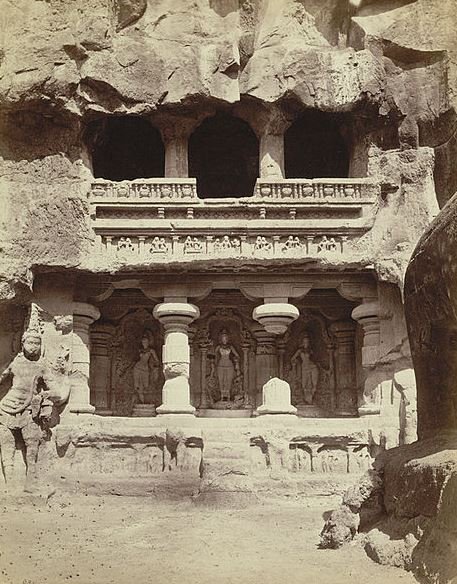
A shrine at Cave 16 of the Ellora Caves.
Artistic Mastery
The Ellora Caves are a testament to the artistic achievements of ancient India. The sculptures, reliefs, and paintings exhibit a blend of realism and symbolism:
- Human Figures: Graceful postures, detailed attire, and expressive faces.
- Mythological Scenes: Narratives from Hindu epics like the Ramayana and Mahabharata.
- Symbolic Elements: Lotus motifs, stupa representations, and geometric patterns.
The interplay of light and shadow enhances the three-dimensional quality of the carvings, creating a dynamic visual experience.
Kailasa Temple: A Closer Look
The Kailasa Temple (Cave 16) is the crowning jewel of Ellora. Commissioned by the Rashtrakuta king Krishna I in the 8th century, it is dedicated to Lord Shiva. Key features include:
- Monolithic Construction: Entirely carved from a single rock, it resembles Mount Kailash, Shiva’s abode.
- Ornamentation: Elaborate reliefs of gods, goddesses, and mythical creatures.
- Architectural Layout: Comprising a central shrine, Nandi pavilion, and assembly hall, it is surrounded by subsidiary shrines and galleries.
- Cultural Symbolism: Represents the cosmic dance of Shiva and the spiritual journey toward enlightenment.
Preservation and Challenges
The Ellora Caves face several preservation challenges, including:
- Natural Erosion: Weathering of basalt rock due to rain, wind, and temperature fluctuations.
- Human Impact: Graffiti, vandalism, and unregulated tourism have caused damage.
- Restoration Efforts: The Archaeological Survey of India (ASI) oversees conservation, employing methods like chemical cleaning and structural reinforcement.
Despite these efforts, maintaining the delicate balance between accessibility and preservation remains a challenge.
Tourism and Global Recognition
Ellora is a major tourist destination, attracting visitors for its historical, architectural, and spiritual significance. Annual festivals and cultural events celebrate its heritage, fostering appreciation and awareness.
In 1983, UNESCO recognized Ellora as a World Heritage Site, highlighting its universal value. Educational programs, guided tours, and publications promote the site’s legacy.
Comparative Analysis
Ellora is often compared with other rock-cut sites like the Ajanta Caves, Elephanta Caves, and Badami Caves. While Ajanta is renowned for its Buddhist frescoes, Ellora stands out for its multi-religious character and architectural diversity.

Questions and answers about the Ellora Caves
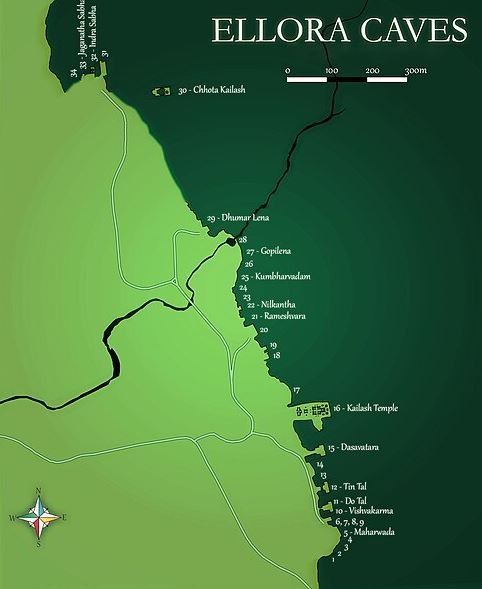
Overview map of the Ellora Caves.
What is Ellora, and why is it significant?
Ellora, also known as Elura or Elapura in ancient times, is a sacred site in Maharashtra, central India. It is recognized as a UNESCO World Heritage Site and is celebrated for its monumental Hindu, Buddhist, and Jain temples and shrines carved from local cliff rock between the 6th and 8th centuries CE.
What makes the Kailasa Temple unique?
The Kailasa Temple, dating to the 8th century CE, is the largest rock-cut monument in the world, standing 32 meters tall. It is a masterpiece of ancient engineering and craftsmanship, carved entirely from a single basalt rock, and reflects the grandeur of southern India’s Dravida architectural style.
Where are the Ellora Caves located, and how were they constructed?
The Ellora Caves are situated in the Sahyadri hills near Aurangabad. They were carved into volcanic basalt rock and include 35 caves and temples, largely created during the Kalachuri dynasty’s reign in the 6th and 7th centuries CE.
What is notable about the Ramesvara Cave (No. 21)?
The Ramesvara Cave is the earliest Hindu excavation at Ellora, dating to the 6th century CE. It features an inner sanctum (garbhagriha), circumambulatory corridors, double porticoes, and high-relief carvings depicting scenes from the Puranas. Highlights include river goddess sculptures, a Nandi statue, and depictions of Shiva and Durga.
What is the significance of the Dhumar Lena and Ravana-ka-Khai caves?
The Dhumar Lena Cave (No. 29) resembles the famous Elephanta caves, suggesting cultural ties between the two sites. The Ravana-ka-Khai Cave (No. 14) is likely dedicated to a Hindu goddess and features a wide passage, colonnaded hall, and decorated walls depicting Shiva and Vishnu.
READ MORE: What are the Principal Deities in Hinduism?
Who commissioned the Kailasa Temple, and what does it symbolize?
The Kailasa Temple was commissioned by Rashtrakuta king Krishna I (r. 756–773 CE) to commemorate his victory over the Pallavas. The temple symbolizes divine power, representing Shiva’s mythical Himalayan abode, Mount Kailasa.

Front view of the Kailash temple.
How was the Kailasa Temple constructed?
Artisans excavated two massive trenches, 90 meters long each, connected by a 53-meter trench, to carve the temple from the central portion of a basalt hill. The resulting 32-meter-high structure includes a three-story vimana, a Nandi shrine, and intricate carvings of scenes from Hindu epics.
What are the features of the Buddhist caves at Ellora?
Carved between the 7th and 8th centuries CE, the Buddhist caves are among the largest and most intricate at Ellora. They include deep halls, complex layouts, and colonnade capitals. Notable caves include Cave 5, which has stone benches, and Cave 10, featuring a colossal seated Buddha and richly carved panels.
What is the significance of the Jain temples at Ellora?
The Jain temples, including the Indra Sabha and Jagannatha Sabha, were built later than the Hindu and Buddhist structures. They emphasize spiritual simplicity while showcasing intricate carvings, highlighting Ellora’s multi-religious heritage.