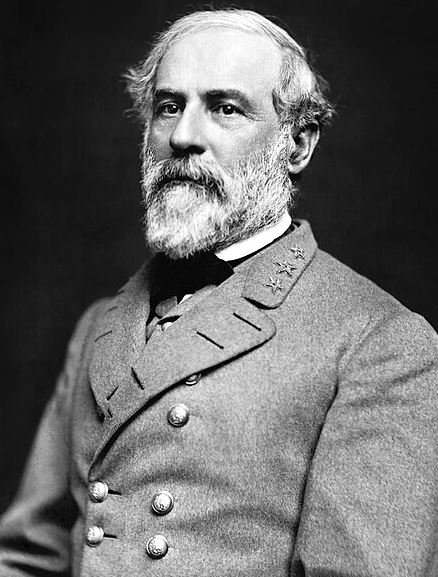
The Battle of Gettysburg, fought from July 1 to July 3, 1863, was the largest and bloodiest battle of the American Civil War. It took place in and around Gettysburg, Pennsylvania, and resulted in a decisive Union victory under Major General George Meade against the Confederate forces led by General Robert E. Lee. The battle marked a turning point in the war, halting Lee’s invasion of the North and setting the stage for the ultimate Union victory.

An illustration depicting the Battle of Gettysburg.
READ ALSO: 6 Deadliest Battles of the American Civil War
Background and Prelude to Battle
Following his victory at Chancellorsville in May 1863, Lee sought to shift the war’s focus away from war-ravaged Virginia. His goal was to invade the North, threaten cities like Harrisburg and Philadelphia, and possibly encourage European intervention or Northern political pressure to end the war. His more than 70,000-strong Army of Northern Virginia moved through the Shenandoah Valley and into Pennsylvania, living off the land to ease supply demands. In response, the Union’s Army of the Potomac, numbering over 95,000, pursued Lee’s army.

The First Day: July 1, 1863
The battle began when Confederate forces under Lieutenant General A.P. Hill and Lieutenant General Richard Ewell encountered Union cavalry commanded by Brigadier General John Buford. The Union forces initially held defensive positions on ridges west of Gettysburg.
As the fighting escalated, reinforcements from both sides arrived. By the afternoon, Confederate attacks forced Union forces to retreat to defensive positions on Cemetery Hill and Culp’s Hill. The Confederates had an opportunity to seize these key positions but failed to capitalize on their momentum.
The Second Day: July 2, 1863
Lee ordered attacks on both flanks of the Union line, hoping to roll up Meade’s forces. Lieutenant General James Longstreet led attacks on the Union left, targeting areas such as Little Round Top, the Wheatfield, Devil’s Den, and the Peach Orchard. The Union forces barely held their ground, with notable actions like the 20th Maine’s bayonet charge at Little Round Top under Colonel Joshua Chamberlain. On the Union right, Confederate forces under Ewell attacked Cemetery Hill and Culp’s Hill but were repelled after intense fighting.
The Third Day: July 3, 1863
Lee, believing the Union center to be weak, ordered an assault known as Pickett’s Charge. Around 12,500 Confederate troops advanced across an open field toward Cemetery Ridge. They were met with devastating Union artillery and rifle fire, resulting in heavy Confederate losses. Only a small number breached the Union lines before being repulsed. Meanwhile, cavalry engagements occurred on the flanks, but they failed to alter the battle’s outcome. The Confederate forces suffered a catastrophic defeat, and Lee was forced to retreat on July 4.

This map is a depiction of the last day’s events at the Battle of Gettysburg.
Aftermath and Consequences
Casualties at Gettysburg were staggering, with the Union suffering approximately 23,000 casualties and the Confederates losing between 24,500 and 28,000 men. Lee’s army retreated to Virginia, marking the last time the Confederacy seriously threatened Northern territory. The battle, combined with the Union victory at Vicksburg on July 4, significantly weakened the Confederacy. The battle’s outcome strengthened Northern morale and helped ensure Abraham Lincoln’s re-election in 1864.
Though the American Civil War continued for nearly two more years, the defeat at Gettysburg crippled Confederate military capabilities and ensured that the Union would ultimately prevail.
The Gettysburg Address
On November 19, 1863, President Abraham Lincoln delivered the Gettysburg Address at the dedication of the Gettysburg National Cemetery. His speech, though brief, redefined the war’s purpose, emphasizing liberty, equality, and national unity. It remains one of the most celebrated speeches in American history.