Battles of Bedriacum in AD 69
The Battle of Bedriacum refers to two significant battles fought in AD 69, during the tumultuous Year of the Four Emperors. These battles determined the fate of Rome’s leadership and played a crucial role in shaping the political landscape of the empire. Named after the village of Bedriacum, near Cremona in northern Italy, the battles were fought between rival claimants to the imperial throne. The first battle resulted in victory for Vitellius, while the second ultimately secured power for Vespasian.
Historical Context: The Year of the Four Emperors
Following the death of Emperor Nero in AD 68, Rome plunged into a period of civil war, as multiple factions vied for control of the empire. Galba initially seized power but was soon overthrown by Marcus Salvius Otho. However, Otho faced immediate opposition from Aulus Vitellius, the governor of Germania Inferior, who declared himself emperor and mobilized his forces. This led to the first confrontation at Bedriacum. Later in the year, after Vitellius had secured the throne, Vespasian, commander of Roman forces in Judea, launched his own bid for power, leading to the second battle at Bedriacum.
The First Battle of Bedriacum
Prelude to Conflict
After taking control of Rome in January AD 69, Otho moved swiftly to consolidate his rule. However, Vitellius had already declared himself emperor and begun his march on Rome with two armies, one led by Aulus Caecina Alienus and the other by Fabius Valens. Together, Vitellius’ forces amounted to approximately 70,000 men, composed of legions XXI Rapax, V Alaudae, and additional auxiliary forces, particularly Batavian troops. The army crossed the Alps into Italy, eventually gathering near Cremona.
In response, Otho left Rome on March 14, stationing himself at Brixellum. His forces included Legio I Adiutrix, Legio XIII Gemina, a detachment from Legio XIV Gemina, the Praetorian Guard, and even a contingent of gladiators. While Otho’s army was led by experienced generals such as Gaius Suetonius Paulinus, he later appointed his brother, Titianus, as commander-in-chief, despite Paulinus’ strategic experience.
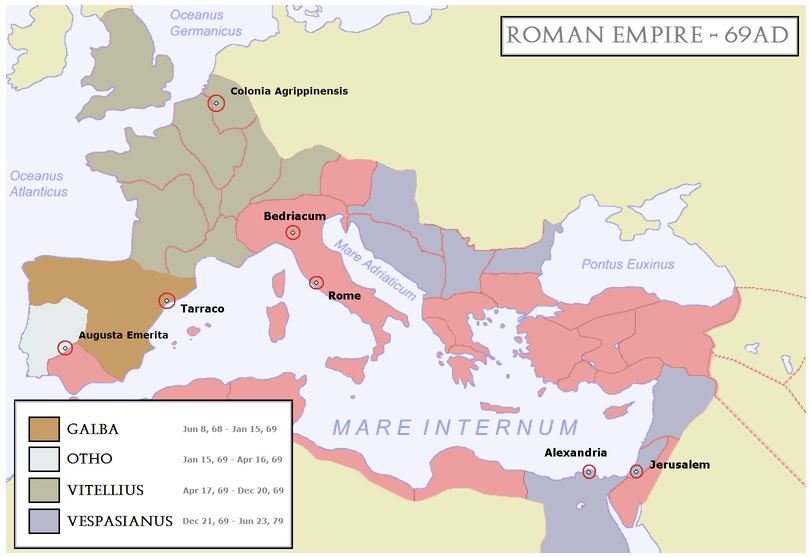
Map of Roman Empire circa 69AD, showing Bedriacum
The Battle Unfolds
The first skirmish occurred when Caecina attempted an ambush at Locus Castorum. However, Otho’s forces were forewarned and launched an attack under the command of Suetonius Paulinus, forcing Caecina’s troops to retreat to Cremona. Shortly after, Valens’ army reinforced Caecina’s forces, significantly strengthening Vitellius’ position.
With his armies consolidated, Vitellius prepared for a decisive battle. Despite opposition from his senior commanders, Otho ordered his forces to engage Vitellius near Cremona on April 14. The battle saw heavy combat along the Via Postumia, with some of the fiercest fighting occurring between Otho’s Legio I Adiutrix and Vitellius’ veteran Legio XXI Rapax. Although Otho’s troops fought bravely, the numerical superiority and discipline of Vitellius’ forces ultimately prevailed. The Othonian troops suffered heavy casualties, and their formations collapsed under the assault of Batavian auxiliaries striking from the flanks.
The Aftermath
With Otho’s forces in full retreat, his remaining troops at Bedriacum surrendered the next day, swearing allegiance to Vitellius. When news of the defeat reached Otho, many of his followers urged him to continue fighting, emphasizing that reinforcements were en route. However, Otho, unwilling to prolong the bloodshed, chose to commit suicide. With Otho’s death, Vitellius entered Rome triumphantly and was recognized as emperor by the Senate. However, his reign would be short-lived, as another challenger soon emerged.
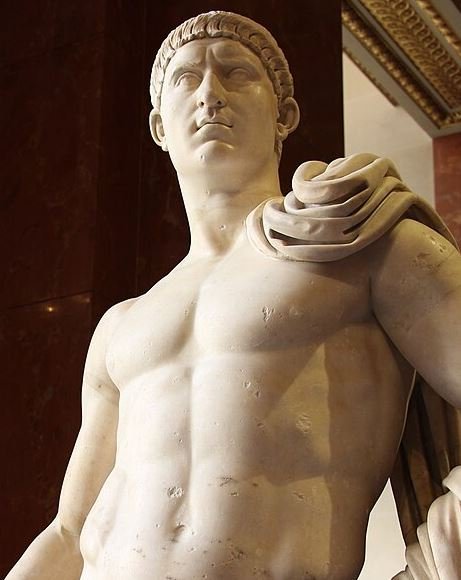
Otho’s statue at the Louvre.
The Second Battle of Bedriacum
The Rise of Vespasian
Although Vitellius had secured Rome, his position remained precarious. Meanwhile, in the eastern provinces, Vespasian, a seasoned general tasked with suppressing the Jewish Revolt, was proclaimed emperor by his legions in July AD 69. Gaius Licinius Mucianus, the governor of Syria, also threw his support behind Vespasian, sending an army toward Rome.
However, before Mucianus’ forces could arrive, Vespasian gained the backing of the Danubian legions in Raetia and Moesia, led by Marcus Antonius Primus. These legions had previously been forced to swear allegiance to Vitellius but eagerly switched their support to Vespasian, hoping to overthrow the unpopular emperor. With a numerically superior force composed of Legio III Gallica, VIII Augusta, VII Claudia, VII Galbiana, and XIII Gemina, Antonius marched toward Rome.
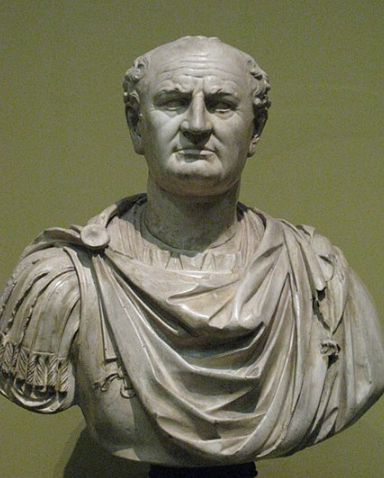
Vespasian, reigned from 1 July 69 – 23 June 79.
The Battle Begins
Upon learning of the advancing Vespasianist forces, Vitellius dispatched Aulus Caecina Alienus with a powerful army, including Legio XXI Rapax, V Alaudae, I Italica, and XXII Primigenia. However, Caecina secretly attempted to defect to Vespasian’s side. His troops, loyal to Vitellius, arrested him, leaving the army leaderless.
The armies clashed near Bedriacum on October 24. Antonius’ cavalry first engaged the Vitellian vanguard, prompting a larger engagement. As night fell, brutal combat ensued, with heavy casualties on both sides. The turning point came at dawn when Antonius’ Legio III Gallica, which had long served in the East, saluted the rising sun as per their custom. The Vitellian forces mistook this for the arrival of eastern reinforcements and lost morale. The Vespasianist troops capitalized on the confusion, driving the Vitellians back into their camp near Cremona.
The Sack of Cremona
With the Vitellian army in disarray, Antonius’ forces stormed their camp, capturing thousands of prisoners. The battle then shifted to Cremona itself, which surrendered after some resistance. Unfortunately, the victors proceeded to sack and burn the city over the course of four days. Many inhabitants were murdered, enslaved, or plundered, and Antonius was reportedly embarrassed by the massacre, later forbidding the keeping of Cremonans as slaves.
The First Battle of Bedriacum solidified Vitellius’ position but exposed his weaknesses, while the second battle demonstrated the power of the eastern legions and secured Vespasian’s path to the throne.
The Aftermath and Vespasian’s Ascension
With his forces decimated, Vitellius’ hold on power crumbled. Antonius continued his march toward Rome, where Vitellius was eventually captured and executed. By December AD 69, Vespasian was officially recognized as emperor, bringing an end to the chaotic Year of the Four Emperors. His rule marked the beginning of the Flavian dynasty, which brought much-needed stability to the empire.

Frequently asked questions
Who were the main opposing leaders in the first battle?
The first battle was fought between Emperor Otho and the forces of Aulus Vitellius, led by Aulus Caecina Alienus and Fabius Valens.

Aureus of Vitellius, minted between January and April of 69 AD.
Why did Otho choose to fight Vitellius’ forces near Bedriacum?
Despite advice from his experienced generals to wait for reinforcements, Otho decided to engage Vitellius’ forces in an attempt to secure a swift victory.
What was the outcome of the first battle?
Vitellius’ forces defeated Otho’s army, leading to Otho’s suicide and Vitellius’ recognition as emperor by the Senate.
How did Vespasian become involved in the conflict?
Vespasian, commander in Judea, was declared emperor by his legions and later gained support from the Danubian legions, leading to the second battle at Bedriacum.
What role did Marcus Antonius Primus play in the second battle?
Antonius led the Danubian legions in support of Vespasian, defeating Vitellius’ forces and securing Cremona before marching on Rome.
How did the second battle impact the city of Cremona?
Following the battle, Antonius’ victorious troops sacked and burned Cremona, causing widespread destruction and loss of life.
What was the ultimate consequence of the battles at Bedriacum?
Vitellius was defeated and executed, allowing Vespasian to become emperor, ending the Year of the Four Emperors and restoring stability to Rome.





