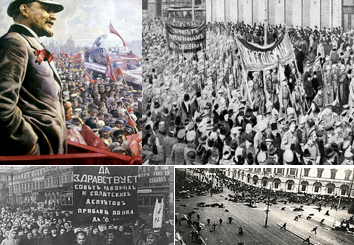
Bloody Sunday (1905)
by World History Edu · December 22, 2024
Bloody Sunday, which took place on January 22, 1905, in St. Petersburg, Russia, represents a pivotal moment in the history of the late Russian Empire. On that winter morning, thousands of workers, led by the charismatic priest Father Georgy Gapon, marched peacefully toward the Winter Palace to present a petition to Tsar Nicholas II. They carried icons, sang hymns, and hoped that their monarch, often seen as a paternal figure, would address their grievances and improve their lives. Instead, they were met by deadly gunfire from Imperial Guards.

A gathering of petitioners, under the leadership of Father Gapon, assembled near the Narva Gate in St. Petersburg.
This tragedy shook the very foundations of the autocracy, ignited widespread unrest, and marked the beginning of the revolutionary upheavals that would culminate in the Russian Revolutions of the early 20th century.
Below, World History Edu delves into the significance of Bloody Sunday by first examining its origin story, its historical development, the key figures involved, and its lasting consequences.
The Origin Story

Emancipation of the Serfs and Industrialization
The roots of Bloody Sunday stretch back to the mid-19th century, particularly the reforms of Tsar Alexander II. In 1861, the emancipation of the serfs officially ended Russia’s centuries-old system of bondage, granting peasants personal freedom and, at least in principle, the right to seek employment elsewhere.
Over time, as Russia pursued industrialization to catch up with more advanced European powers, cities like St. Petersburg became magnets for former peasants looking for factory work. The surge in the urban labor force, composed mostly of unskilled men and women from rural backgrounds, formed a new industrial working class.
Emerging Working Class and Labor Conditions
These workers faced harsh conditions: low wages, dangerous environments, and exhausting workdays often exceeding twelve hours. Unlike the peasants who had once worked the land under distant noble landlords, these factory workers encountered immediate, hands-on authority from supervisors and owners.
With no strong legal protections, they endured arbitrary dismissals, limited rights, and a general absence of safety measures. As industrialization expanded in the late 19th century, strikes became an increasingly common response to these abuses. Though strikes were technically illegal under Russian law and could be violently suppressed, workers often saw them as the only viable way to bring their plight to the government’s attention.
The Build-Up to Bloody Sunday
By the early 1900s, waves of strikes and protests indicated a rising tide of discontent. The gap between the promise of modernization and the reality of exploited labor created conditions ripe for unrest.
The final spark came when several workers at the Putilov Ironworks were fired in December 1904, allegedly due to their involvement in labor organizations. The dismissals triggered a broader strike movement in St. Petersburg, paralyzing key industries and raising political temperatures.
Against this backdrop, Father Georgy Gapon, who had formed a workers’ organization with some support from the police, proposed a peaceful march to present a petition directly to the Tsar, believing that the emperor, if informed, would remedy their hardships.
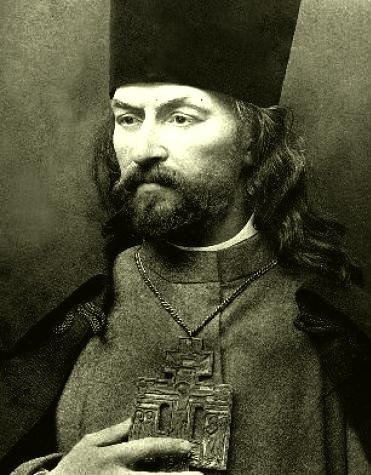
Georgy Gapon
History of the Events
The Atmosphere in St. Petersburg
In January 1905, St. Petersburg was tense. The city’s factories and plants had fallen silent as thousands of workers joined the strikes. Food shortages and economic uncertainty weighed heavily on the population. Moreover, Russia was still embroiled in the Russo-Japanese War, which had begun in 1904 and was going poorly for the empire. This military conflict drained resources and added to a sense of national humiliation. All of these factors contributed to a charged atmosphere, making the workers’ planned demonstration seem both hopeful and dangerous.
The Petitions and Preparations
Father Gapon and the workers drafted a petition respectful in tone but explicit in its demands. It called for fair wages, safer working conditions, an eight-hour workday, universal suffrage, an end to the ongoing war, and basic civil liberties. Well aware that approaching the Tsar’s residence without official sanction was risky, Gapon still believed the Tsar would hear their plea if it was delivered in a devout, orderly manner. The plan was to converge on the Winter Palace from multiple starting points, carrying religious icons, portraits of the Tsar, and singing hymns, thereby reinforcing their peaceful, loyal intentions.
The March and Its Violent Turn
On Sunday morning, January 22, thousands of workers and their families set out through the icy streets. Many wore their best clothes, seeing this as a solemn, almost religious procession.
However, Tsar Nicholas II was not in the palace—he had retreated to Tsarskoye Selo on advice of his ministers. Troops were deployed at strategic points, and the authorities, fearful of unrest, had decided to use force to prevent the crowd from reaching the palace.
Without any meaningful negotiation or attempt at peaceful dispersion, soldiers fired shots as the marchers approached. Simultaneously, cavalry charged into the crowds, and Cossacks slashed at fleeing demonstrators. What began as a peaceful appeal ended in massacre.
Estimates of the dead and wounded vary, but most historians agree that hundreds were killed or injured that day. This shocking violence against ordinary people—men, women, and children—marked a catastrophic failure of state authority and shattered the image of the Tsar as the caring “Little Father.”
Notable figures and bodies
Father Georgy Gapon
Central to the march was Father Georgy Gapon, a Russian Orthodox priest who had gained a reputation as a champion of workers’ rights. Gapon was no revolutionary socialist; instead, he cherished a paternalistic image of the Tsar and believed that if the emperor only knew of the workers’ plight, he would intervene on their behalf. Gapon’s leadership reflected the workers’ own blend of religiosity, respect for authority, and burgeoning sense of political identity. After surviving the massacre, Gapon fled the country, disillusioned and deeply shaken by the Tsar’s indifference.
The Role of Tsar Nicholas II
Though Tsar Nicholas II did not personally order the troops to fire on the crowd and was not present during the demonstration, he bore ultimate responsibility. His decision to withdraw to Tsarskoye Selo and leave the city at a critical moment revealed a profound disconnect between the ruler and his subjects. Nicholas’s failure to acknowledge the seriousness of the crisis or to offer immediate concessions ensured that Bloody Sunday would be remembered as a direct indictment of his regime.

Tsar Nicholas II
Police, Military, and Political Figures
Alongside Gapon and Nicholas II stood numerous lesser-known actors. The secret police, or Okhrana, had initially supported Gapon’s worker organization to steer workers away from revolutionary groups. Instead, this strategy backfired spectacularly. Military officers, faced with crowds of workers, chose escalation over negotiation.
Government ministers, uncertain and fearful, saw the use of force as the only solution to mass unrest, failing to consider the long-term political consequences. Some political figures and intellectuals condemned the violence immediately, recognizing the irreparable harm it would cause the autocracy.
Outcome and Consequences
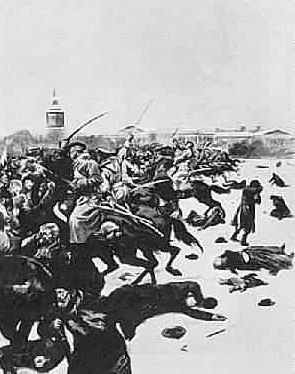
Image: Bloody Sunday massacre in St. Petersburg.
Immediate Repercussions
The day after the massacre, shock and anger reverberated throughout the empire. Strikes multiplied rapidly as workers, incensed by the wanton killing, walked off their jobs in solidarity. Universities shut down as students staged protests, and the professional classes, previously hesitant to challenge the regime, grew increasingly critical. Bloody Sunday exposed the government’s lack of responsiveness and confirmed that peaceful appeals were futile. It demolished the notion that the Tsar, as God’s anointed ruler, would hear the people’s cry if properly approached.
The 1905 Revolution
Bloody Sunday is widely regarded as the catalyst for the 1905 Revolution. Though this revolution did not topple the monarchy, it unleashed a tide of political activism and forced some concessions. Under mounting pressure, Nicholas II issued the October Manifesto, granting limited civil liberties and creating the State Duma, a representative assembly.
However, these reforms were half-hearted, and the autocracy soon retrenched, using the police and military to crush strikes, peasant uprisings, and mutinies such as the one aboard the battleship Potemkin. Still, the events set in motion by Bloody Sunday could not be fully contained. They demonstrated that the old order was brittle and that the people, when organized, had power.
Long-Term Effects Leading to 1917
While the Tsarist regime survived 1905, the faith that many Russians had placed in Nicholas II never recovered. The perception of the Tsar as a distant, unfeeling ruler grew stronger over time. The partial reforms granted after 1905 were insufficient to address the deep social, economic, and political grievances that plagued the empire.
A decade later, amid the strains of World War I and acute material shortages, the monarchy’s fragile legitimacy finally crumbled, culminating in the February Revolution of 1917 and, eventually, the rise of the Bolsheviks. Bloody Sunday thus stands as the opening act in a broader drama that would transform Russia and the world.
Frequently Asked Questions
Why did the workers march to the Winter Palace?
The workers sought better wages, an eight-hour workday, safer working conditions, an end to the Russo-Japanese War, and political reforms like universal suffrage, believing the Tsar would listen to their grievances.
What triggered the strikes leading up to Bloody Sunday?
The firing of six workers from the Putilov Ironworks in December 1904 led to widespread strikes in St. Petersburg, involving over 150,000 workers across various factories.
How did the government respond to the march?
The government deployed troops who blocked the workers’ path and eventually opened fire on the crowd, killing and injuring hundreds, and dispersing the demonstration with violence.
What were the immediate consequences of Bloody Sunday?
The massacre led to widespread outrage, triggering strikes and protests across Russia and severely damaging the Tsar’s image as a benevolent ruler.

Why is Bloody Sunday significant in Russian history?
It marked the start of the 1905 Revolution and eroded faith in the autocracy, laying the groundwork for the eventual Russian Revolution of 1917.
How did Bloody Sunday impact Tsar Nicholas II’s rule?
The event tarnished Nicholas II’s reputation, portraying him as indifferent to his people’s suffering, and contributed to the decline of the Romanov dynasty.
What cultural works commemorate Bloody Sunday?
Bloody Sunday inspired literary works by Maxim Gorky, Shostakovich’s 11th Symphony, and Soviet films like Devyatoe Yanvarya, reflecting its impact on Russian society.