Early Life and Background
Carl Gustaf Emil Mannerheim was born on June 4, 1867, at Louhisaari Manor in Askainen, Finland, during the era when Finland was a Grand Duchy under Russian rule. He came from a Swedish-speaking aristocratic family with roots in Sweden and Germany. His early years were marked by familial instability; his father left the family, and his mother passed away shortly afterward, leaving Mannerheim and his siblings in the care of relatives. Despite these challenges, Mannerheim’s upbringing in a noble family secured him an education that later shaped his remarkable career.
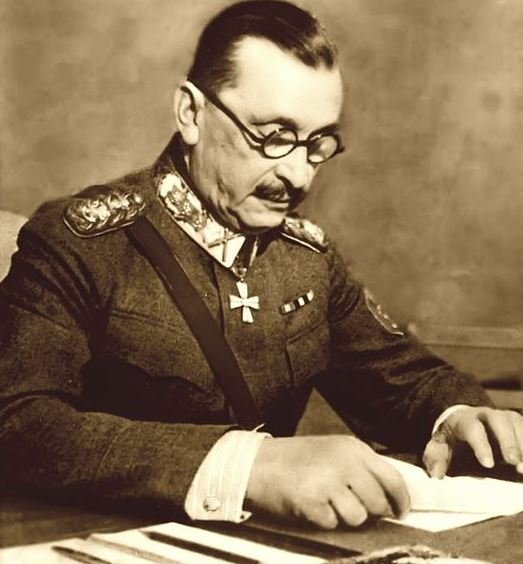
Image: A 1940 picture of Carl Mannerheim.
Education and Early Military Training
Mannerheim attended the Hamina Cadet School in Finland, an institution aimed at preparing young men for military service in the Russian Imperial Army. However, due to disciplinary issues, he was expelled. Undeterred, he continued his education at the Nicholas Cavalry School in Saint Petersburg, graduating in 1889. His tall stature and aristocratic demeanor made him stand out among his peers, and he joined the prestigious Chevalier Guard Regiment, marking the beginning of his military career.
Service in the Russian Imperial Army
Mannerheim served with distinction in the Russian Imperial Army for over two decades. His assignments included participating in the Russo-Japanese War (1904–1905), where he displayed courage and leadership. During World War I, he commanded cavalry units on the Austro-Hungarian and Romanian fronts, earning promotion to lieutenant general by 1917. His role in the Imperial Army allowed him to develop strategic insights and cultivate relationships with key figures, including Tsar Nicholas II.
Role in Finnish Independence
Finland declared independence from Russia in December 1917, following the Bolshevik Revolution. However, internal divisions soon erupted into a civil war between the conservative “Whites” and the socialist “Reds.” In January 1918, Mannerheim was appointed Commander-in-Chief of the White forces. Despite limited resources, his strategic leadership secured a decisive victory for the Whites, culminating in a victory parade in Helsinki in May 1918. This success established Mannerheim as a national hero.
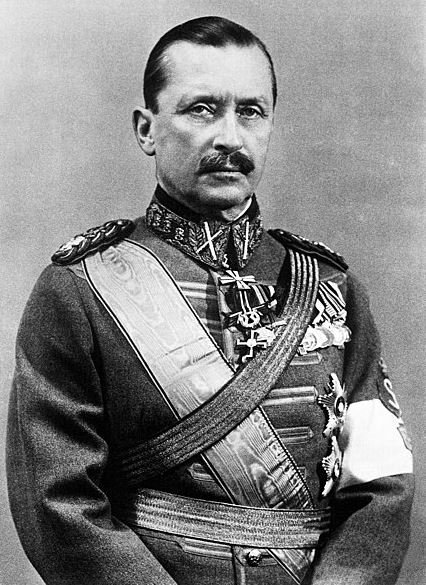
Image: Gustaf Mannerheim
Regent of Finland
After the Civil War, Mannerheim briefly served as Regent of Finland (1918–1919), a role akin to acting head of state. Despite his personal preference for a monarchy, he ratified Finland’s republican constitution, showcasing his pragmatic leadership. His bid for the presidency in 1919 was unsuccessful, prompting him to withdraw from active politics temporarily.
Humanitarian and Civic Contributions
During his political hiatus, Mannerheim devoted himself to humanitarian work. He founded the Mannerheim League for Child Welfare in 1920, which remains a significant organization in Finland. Additionally, he chaired the Finnish Red Cross from 1922 until his death, underscoring his commitment to public welfare.
Preparing for War
As tensions with the Soviet Union escalated in the 1930s, Mannerheim returned to a central role in Finland’s defense strategy. Appointed Chairman of the Finnish Defence Council in 1931, he advocated for strengthening Finland’s military preparedness. His foresight proved critical as Finland faced the Soviet invasion during the Winter War (1939–1940).
The Winter War
When the Soviet Union attacked Finland in November 1939, Mannerheim was appointed Commander-in-Chief of the Finnish Defence Forces. Despite being outnumbered and outgunned, Finnish forces mounted a heroic defense along the “Mannerheim Line,” a series of fortifications he had helped plan. The war ended in March 1940 with significant territorial losses for Finland, but the country’s spirited resistance won international admiration and preserved its independence.
The Continuation War
In 1941, Finland aligned with Nazi Germany to reclaim territories lost in the Winter War. Mannerheim once again led the Finnish forces, maintaining a pragmatic approach to the alliance. He avoided ideological alignment with the Nazis and focused solely on securing Finland’s sovereignty. His leadership during this period, though controversial, was marked by his careful balancing of national interests.
Presidency and Peace Negotiations
As Germany’s defeat in World War II became inevitable, Mannerheim was elected President of Finland in 1944 to lead peace negotiations with the Soviet Union and the United Kingdom. Under his leadership, Finland exited the war, accepting harsh terms but preserving its independence. His tenure as president, though brief, was pivotal in stabilizing the nation during a period of immense turmoil.
Post-War Life and Legacy
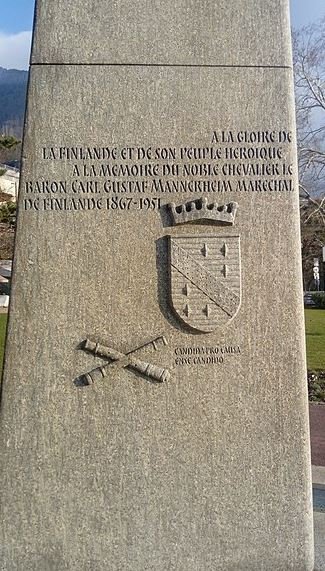
Mannerheim resigned from the presidency in 1946 due to declining health. He spent his final years in Switzerland, where he wrote his memoirs. He passed away on January 27, 1951, leaving a legacy as Finland’s “father of independence.” His leadership during the Civil War, World War II, and post-war recovery solidified his place as a unifying national figure.
Enduring Influence
Mannerheim remains one of Finland’s most celebrated historical figures. His ability to navigate complex political and military challenges ensured Finland’s survival as an independent state. He is remembered not only as a military leader but also as a statesman and humanitarian who dedicated his life to his country.