Valley of the Queens
The Valley of the Queens, known in ancient Egypt as Ta-Set-Neferu (“The Place of Beauty” or “The Place of the Royal Children”), is a vital archaeological site that illuminates the grandeur and complexity of ancient Egyptian burial traditions. Located near Luxor, this necropolis was primarily used to inter queens, royal offspring, and prominent nobles during the New Kingdom era (16th–11th centuries BCE).
In the article below, World History Edu explores the site’s history, cultural importance, and challenges – many of which have made it a subject of great interest to scholars and conservationists.
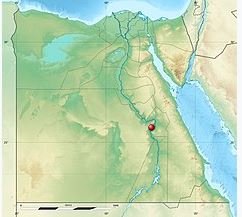
Image: A map of Egypt showing the location of the Valley of the Queens.
Origins and Early Use
The Valley of the Queens was first utilized during the 18th Dynasty of the New Kingdom. Its earliest tombs, such as that of Princess Ahmose, daughter of Seqenenre Tao and Queen Sitdjehuti, date back to the reign of Thutmose I. The tombs from this period typically served both royal family members and notable officials. Some tombs from subsidiary valleys like the Valley of the Three Pits reflect the Thutmosid period, where simpler structures accommodated multiple burials.
The choice of this valley for royal burials likely stemmed from its proximity to the workers’ village of Deir el-Medina and the nearby Valley of the Kings, where pharaohs were buried. Additionally, a sacred grotto dedicated to the goddess Hathor, associated with rejuvenation and fertility, added symbolic significance to the location.
The 19th Dynasty and Its Zenith
During the 19th Dynasty, the Valley became more selective, catering almost exclusively to royal women. The tomb of Queen Nefertari, wife of Ramesses II, stands as the most iconic monument from this period. Her tomb (QV66), adorned with vibrant polychrome reliefs, represents the pinnacle of ancient Egyptian artistry and offers invaluable insights into religious symbolism and afterlife beliefs.
Other royal women buried in this period include the wives of Ramesses I, Seti I, and Ramesses II, such as Queen Satre (QV38). Some tombs were constructed without specific occupants in mind, with inscriptions added only upon a queen’s death. This era marked the height of the Valley’s cultural and artistic significance, highlighting the emphasis on honoring royal women in death.
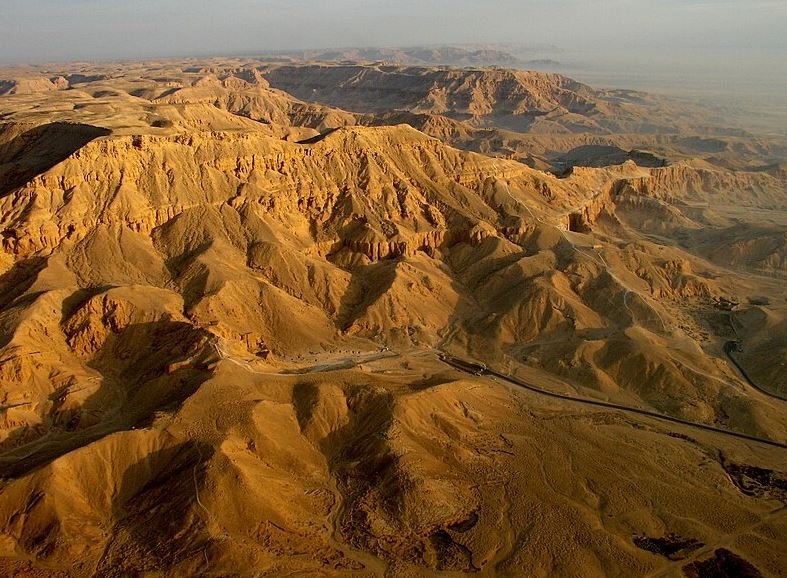
Image: Aerial view of the Valley of the Queens.
Later Use and Decline
The 20th Dynasty brought changes to the Valley’s use. While the wives of Ramesses III were buried here, tombs were also prepared for royal sons, departing from earlier conventions. Records, including the Turin Papyrus, indicate that tomb construction continued under Ramesses VI, though the specific tombs mentioned remain uncertain.
After the New Kingdom’s decline, the Valley ceased to function as a royal burial site. During the Third Intermediate Period, many tombs were reused, often modified to hold multiple burials. In the Roman Period, the necropolis saw renewed usage, while the Coptic Period introduced Christian hermits who adapted the tombs as shelters, plastering over ancient wall scenes and adding Christian symbols.
Geology and Challenges to Preservation
The Valley’s geological composition—comprising limestone, clay, and minerals like halite—poses significant challenges to the preservation of tombs. Recurrent flash floods caused the expansion and contraction of clay, destabilizing structures and resulting in rockslides. Seeping groundwater dissolved salts in the tomb walls, which later recrystallized, further damaging the intricate wall paintings.
Additionally, human activity has exacerbated the damage. Mass tourism has introduced humidity and carbon dioxide, accelerating the deterioration of paintings. Graffiti, physical contact, and lint accumulation have also harmed the delicate interiors. The installation of modern lighting systems, while enhancing visibility for visitors, has created fire risks by attracting lint to heated surfaces.
Conservation Efforts
To combat these threats, conservationists have implemented several protective measures. Controlled access, air circulation systems, and plexiglass barriers help mitigate the impact of tourism. The tomb of Queen Nefertari, for instance, limits visits to short durations and requires a separate ticket purchase, reflecting the priority placed on its preservation.
Efforts have also been made to address the issue of bat colonies inhabiting open tombs. While bats play an ecological role, their excrement damages tomb structures and poses health risks to visitors. Solutions include installing doors to deter bat entry while preserving certain tombs as bat habitats to maintain ecological balance.
UNESCO World Heritage Status
In 1979, the Valley of the Queens, along with the Valley of the Kings and nearby Thebes, was inscribed on the UNESCO World Heritage List. This recognition underscores the site’s importance as a repository of ancient Egyptian history, culture, and art. The tombs, particularly those from the 19th Dynasty, offer unparalleled insights into royal life, religious practices, and artistic achievements.

Image: Valley of the Kings
Artistic and Cultural Significance
The artistry within the Valley of the Queens reflects the Egyptians’ belief in the afterlife. Tombs were adorned with elaborate frescoes depicting gods, goddesses, and scenes from funerary texts like the Book of the Dead. These visual narratives sought to guide the deceased through the challenges of the afterlife, ensuring eternal peace.
Queen Nefertari’s tomb, often called the “Sistine Chapel of Ancient Egypt,” epitomizes this artistic tradition. The vivid colors, meticulous details, and spiritual themes provide an enduring legacy of the grandeur of ancient Egyptian culture.
Evolving Legacy
Over the millennia, the Valley of the Queens has witnessed transformations in its purpose and meaning. From a royal necropolis to a reused burial site during turbulent periods and later a Christian sanctuary, it reflects the shifting dynamics of Egyptian history. Today, it stands as both a symbol of ancient grandeur and a reminder of the need for careful preservation in the face of natural and human threats.