Nat King Cole: Life, Major Works, & Accomplishments
Nat King Cole (1919–1965) was a legendary American jazz pianist, vocalist, and actor whose smooth voice and timeless hits captivated audiences worldwide. Rising to fame with the King Cole Trio,...
This is a compilation of commonly asked questions concerning Black history.
Martin Luther King Jr. was a civil rights leader who advocated for the end of racial segregation using nonviolent civil disobedience. He is best known for his role in advancing civil rights and his famous “I Have a Dream” speech.
The Harlem Renaissance was a cultural, social, and artistic explosion that took place in the 1920s, centered in Harlem, New York. It saw a flourishing in African American music, theater, art, and politics.
Juneteenth, celebrated on June 19th, marks the day in 1865 when the last enslaved African Americans in Texas were informed of their freedom, two years after the Emancipation Proclamation was signed.
Rosa Parks was a civil rights activist who refused to give up her seat to a white passenger on a segregated bus in Montgomery, Alabama, leading to the Montgomery Bus Boycott.
Jim Crow laws were state and local laws that enforced racial segregation in the Southern United States, enacted after the Reconstruction period and were enforced until 1965.
The Underground Railroad was a network of secret routes and safe houses used by African American slaves to escape to freedom in the 19th century.
Malcolm X was a Muslim minister and human rights activist. He was a prominent figure in the Nation of Islam and advocated for the rights of African Americans.
The Civil Rights Act of 1964 is landmark U.S. legislation that outlawed discrimination based on race, color, religion, sex, or national origin.
The “Little Rock Nine” were nine African American students who were the first to integrate Central High School in Little Rock, Arkansas, in 1957.
What was Black Wall Street?
Black Wall Street refers to the Greenwood District in Tulsa, Oklahoma, in the early 20th century. It was a prosperous African American neighborhood until the Tulsa race massacre in 1921 when white mobs attacked residents and businesses.
W.E.B. Du Bois was an influential African American sociologist, historian, and civil rights activist. He co-founded the NAACP (National Association for the Advancement of Colored People).
The Black Panther Party, founded in 1966, was a revolutionary socialist organization active in the U.S. from 1966 until 1982. They aimed to address systemic issues of racial injustice and police brutality.
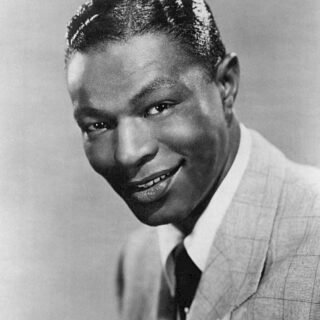
Nat King Cole (1919–1965) was a legendary American jazz pianist, vocalist, and actor whose smooth voice and timeless hits captivated audiences worldwide. Rising to fame with the King Cole Trio,...
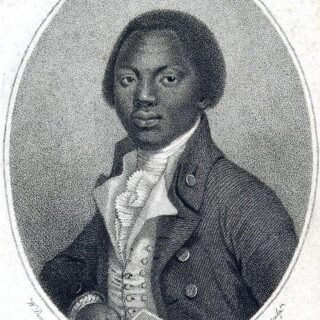
Olaudah Equiano was an 18th-century writer, abolitionist, and former enslaved person whose autobiography, The Interesting Narrative of the Life of Olaudah Equiano, helped advance the abolitionist movement in Britain. Early...

Phillis Wheatley, a pioneering figure in African American literature, remains one of the most significant literary voices of the 18th century. Born around 1753 in West Africa, possibly in modern-day...

The Charleston Hospital Strike of 1969 stands as a pivotal chapter in the annals of U.S. labor and civil rights history, epitomizing the convergence of race, labor, and healthcare issues...

The Black Freedom Struggle in the United States saw numerous significant developments between 1905 and 1970. This period encompasses a wide range of events, from early organizational efforts to challenge...

Alessandro Sinigaglia, a figure of mixed heritage, navigated racial and political challenges in fascist Italy, contributing significantly to anti-fascist efforts through his involvement in the resistance movement during World War...

In the annals of history, the narrative of conquest and exploration during the Age of Discovery is often dominated by the exploits of European adventurers. However, amidst the tales of...

Brown v. Board of Education of Topeka, 347 U.S. 483 (1954), was a landmark United States Supreme Court case in which the Court declared state laws establishing separate public schools...
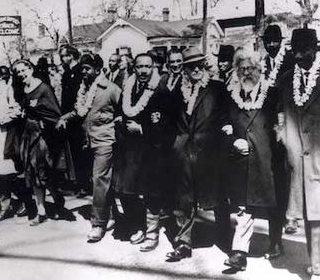
The Civil Rights Movement, primarily occurring between the mid-1950s and late 1960s, was a transformative period in the history of the United States. Aimed at abolishing racial discrimination against African...
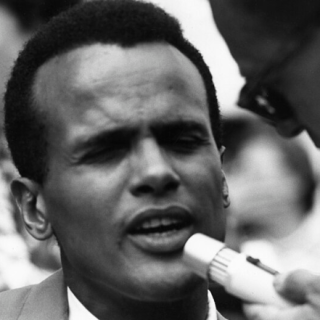
Harry Belafonte was a prominent Jamaican-American singer and actor who popularized Caribbean calypsos in the 1950s. Besides his musical contributions, he was a dedicated activist, particularly in the civil rights...

Widely referred to as the “Father of Black History”, Carter Godwin Woodson was a notable African American historian who played a pivotal role in identifying and preserving the history and accomplishments of African Americans....

In 1863, one man’s daring escape from a nightmarish situation on a Louisiana plantation brought him together with the Union Army that was in a fierce and bloody war against...

March on Washington for Jobs and Freedom The March on Washington for Jobs and Freedom took place on August 28, 1963 in our nation’s capital, Washington, D.C. The protest was...

A lot of firsts occurred during the lifetime of Alexander Lucius Twilight. He was the first African-American man to earn a bachelor’s degree, the first African-American to be elected into...

The Civil Rights Movement in America produced a variety of leaders with different character traits and leadership styles. But the common denominator among those people was their unwavering dedication to...





