Pope Victor I
Pope Victor I, a prominent leader of the early Christian Church, served as the Bishop of Rome in the late second century. His papacy is significant for its role in...
The history of the Roman Catholic Popes is a rich and complex one, spanning over two millennia.
Here are some major facts and key points in their history:
The Pope is the Bishop of Rome and the spiritual leader of the worldwide Catholic Church. The papal succession is believed to trace back to Saint Peter, one of the Twelve Apostles of Jesus, who is considered the first Pope.
Tradition holds that St. Peter was the first Bishop of Rome and served as Pope from around 30 to 67 AD. His martyrdom is associated with his crucifixion upside down in Rome.
The early centuries of the Church saw a line of Popes who played significant roles in defining Christian doctrine and guiding the Church through persecution and theological challenges. Notable early Popes include St. Leo the Great and St. Gregory the Great.
The Church faced theological disputes and schisms, resulting in events like the Great Schism of 1054, which split the Western (Roman Catholic) and Eastern (Eastern Orthodox) Churches. Ecumenical councils, such as the Council of Nicaea and the Council of Trent, played crucial roles in addressing doctrinal issues.
From the 8th century until the late 19th century, the Popes ruled a significant portion of central Italy known as the Papal States. This temporal power added a political dimension to their role as spiritual leaders.
The doctrine of papal infallibility, which states that the Pope is preserved from error when speaking ex cathedra on matters of faith and morals, was defined by the First Vatican Council in 1870.
In 1929, the Lateran Treaty established Vatican City as an independent city-state, making it the spiritual and administrative center of the Roman Catholic Church.
Recent Popes have played pivotal roles in addressing contemporary issues. Pope John XXIII called the Second Vatican Council (Vatican II) in the 1960s, leading to significant reforms and changes in the Church. Pope Francis, the first Pope from the Americas (Argentina), has emphasized social justice and environmental concerns.
The papacy has not been without controversy. Historical events like the Western Schism (1378-1417) led to multiple Popes reigning simultaneously, and some Popes faced criticism for their actions during the Inquisition and the Crusades.
Popes have the authority to canonize saints. Throughout history, many saints have been officially recognized by the Church, including famous figures like St. Francis of Assisi, St. Teresa of Ávila, and St. John Paul II.
Recent Popes have engaged in efforts to improve relations with other Christian denominations and religions. Pope John Paul II, for instance, made historic visits to synagogues and mosques.
Pope Benedict XVI’s resignation in 2013 was a rare event in papal history. He cited health reasons and became the first Pope to step down in almost 600 years.

Pope Victor I, a prominent leader of the early Christian Church, served as the Bishop of Rome in the late second century. His papacy is significant for its role in...
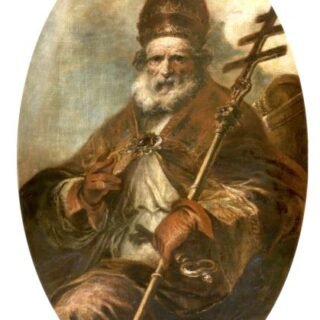
Pope Leo I, also known as Leo the Great, was the Bishop of Rome from 440 to 461. He is recognized as one of the most influential popes, known for...
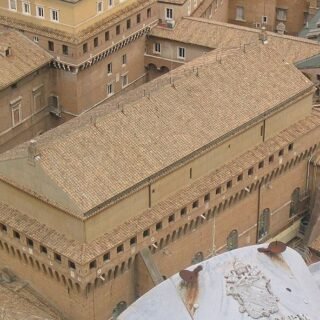
The papal conclave is a highly secretive and ritualistic process that ensures the election of a new pope remains free from external influence. From strict security measures to ancient traditions...
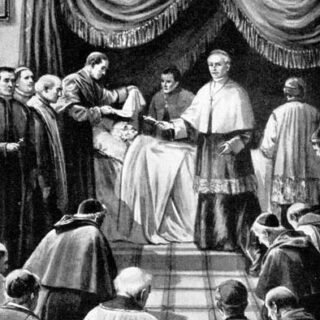
When a reigning pope passes away, the Catholic Church follows a well-established process to ensure a smooth transition of power. This process, known as the sede vacante (“vacant seat”), is...
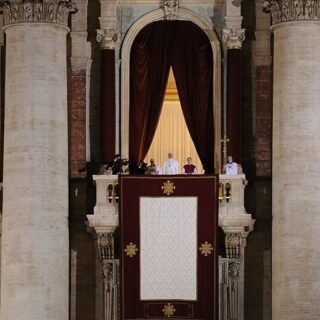
The procedure used by the Catholic Church in electing a new pope (i.e. Bishop of Rome) has developed for almost two millennia. However, it’s defining moment came in the mid-10th...

Pope Marcellus II’s papacy was brief yet impactful. A scholar, diplomat, and reformer, he embodied many of the values that the Church sought to uphold during the 16th century. His...
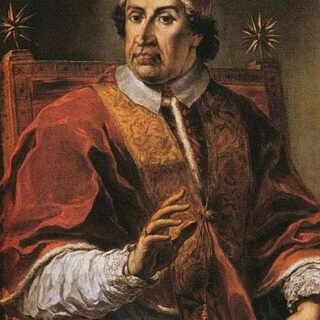
Pope Clement XI was the head of the Catholic Church and ruler of the Papal States from 1700 to 1721. He was a patron of the arts and sciences and...
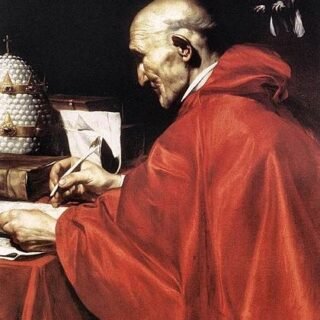
Pope Gregory I, commonly known as Saint Gregory the Great, was one of the most influential figures in early medieval Christianity. Born around 540 in Rome into a patrician family,...

Since his election as the head of the Catholic Church in 2013, Pope Francis has been an inspiring figure for global peace and solidarity. Pope Francis, who is also the...





