What Happens When a Reigning Pope Dies?
by World History Edu · February 24, 2025
When a reigning pope passes away, the Catholic Church follows a well-established process to ensure a smooth transition of power. This process, known as the sede vacante (“vacant seat”), is meticulously planned and carried out with deep respect for tradition, ecclesiastical law, and the need for continuity.
The death of a pope marks the end of his papacy and initiates a series of events, including verifying the pope’s passing, arranging his funeral, managing the governance of the Church in the interim, and preparing for the election of a new pope. Each step is governed by strict regulations, ensuring that the transition is orderly and that the Church remains stable during the period of mourning and preparation for the next leader.
Verification of Death and the Rituals of Passing
Official Confirmation of Death
The first and most immediate step following the death of a pope is verifying his passing. Traditionally, the Camerlengo of the Holy Roman Church, the official responsible for managing the Church during a papal vacancy, performs the verification. Historically, this was done by gently tapping the deceased pope’s forehead three times with a small silver hammer while calling out his baptismal name. If there is no response, the death is officially confirmed.
While the hammer-tapping ritual is no longer practiced, the Camerlengo still declares the pope’s death in the presence of the Master of Papal Liturgical Celebrations and other officials. After verification, the Camerlengo takes possession of the Ring of the Fisherman, one of the most significant papal symbols, and ceremoniously breaks it. This act prevents the unauthorized use of the pope’s seal and symbolizes the end of his authority.

An illustration showing the camerlengo announcing the passing of a pope.
Notification of the College of Cardinals and the World
Once the pope’s death is confirmed, the Dean of the College of Cardinals is informed, and the news is officially relayed to Vatican officials. The Apostolic Camera, the governing body responsible for overseeing the Church during the vacancy, assumes temporary authority under the Camerlengo.
The Vatican then formally announces the death to the public. The traditional phrase, “The pope is dead,” is no longer used, but instead, an official Vatican spokesman issues a formal statement. News agencies across the world quickly spread the information, and St. Peter’s Basilica lowers its flags to half-mast. Church bells toll throughout Vatican City and in Catholic churches around the world as a sign of mourning.
Mourning and Funeral Arrangements
Lying in State
Following confirmation of death, the pope’s body is prepared for public viewing. Embalming may be performed, and he is dressed in full papal vestments, including the white cassock, red cape, and possibly the pallium. The body is then placed in St. Peter’s Basilica, where the faithful can pay their respects.
The lying-in-state period typically lasts three to four days, allowing clergy, heads of state, and members of the public to visit and offer their prayers. During this time, thousands of mourners enter St. Peter’s Basilica to view the body and pay their final respects.

St. Peter’s Basilica, located in Vatican City, stands as the world’s largest Catholic church.
The Funeral of a Pope
The funeral of a pope is a solemn and grand event, reflecting both religious and state traditions. It is traditionally held four to six days after the pope’s death, giving time for dignitaries and world leaders to arrive. The Mass of Requiem is celebrated in St. Peter’s Square, attended by the College of Cardinals, bishops, priests, world leaders, and thousands of faithful.
During the funeral rites:
- The Cardinal Dean presides over the Mass.
- A homily is delivered, reflecting on the pope’s life, service, and legacy.
- The Litany of Saints is chanted, calling upon saints to welcome the deceased pope into heaven.
After the funeral, the pope’s body is enclosed in three coffins. The first coffin, made of cypress wood, symbolizes simplicity and humility. The second, made of lead, ensures preservation and is engraved with his name and papal seal. The third, made of oak, serves as the outermost layer. The coffins are sealed and placed in the Vatican Grottoes beneath St. Peter’s Basilica, alongside the tombs of previous popes.
From the breaking of the Ring of the Fisherman to the white smoke announcing a new pope, the rituals surrounding the papal transition reflect centuries of tradition, faith, and continuity.
The Sede Vacante: Governance of the Church Without a Pope
With the pope’s death, the Church enters a period called sede vacante, meaning “the seat is vacant.” This period lasts until a new pope is elected. During this time, most offices of the Roman Curia (the Vatican’s administrative body) are suspended, except for essential functions.
Role of the Camerlengo
The Camerlengo assumes temporary leadership and oversees the Church’s day-to-day operations. His responsibilities include:
- Organizing the pope’s funeral and burial.
- Ensuring the proper administration of Vatican City.
- Calling and preparing for the next papal conclave.
The Camerlengo works alongside the College of Cardinals, but no major policy decisions or doctrinal declarations can be made until a new pope is elected.
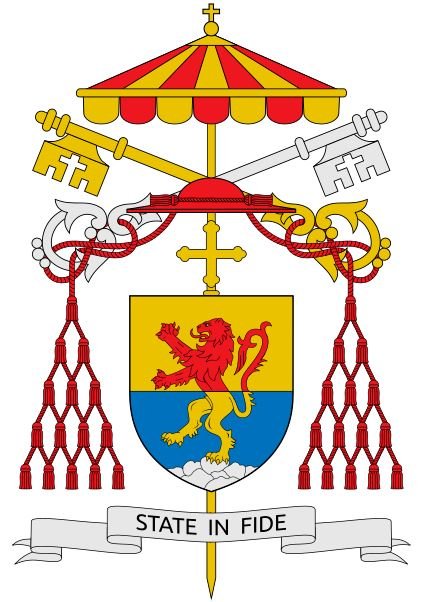
Coat of arms of Cardinal Camerlengo, Kevin Cardinal Farrell, who began serving in that role in 2019.
General Congregations of the Cardinals
During the sede vacante, daily meetings called General Congregations are held, where cardinals discuss matters related to the conclave and Church governance. These meetings serve as preparatory discussions before the election, allowing cardinals to assess the needs of the Church and possible candidates for the papacy.
One of the key decisions made during these meetings is setting the date of the conclave, which is typically held between 15 and 20 days after the pope’s passing.
The Conclave: Electing a New Pope
The election of a new pope occurs in a papal conclave, a highly secretive and structured event held in the Sistine Chapel. The term “conclave” comes from the Latin cum clave, meaning “with a key,” referring to the seclusion of the cardinals during the voting process.
Participants and Voting Process
Only cardinals under the age of 80 are eligible to vote. The maximum number of electors is 120, although this limit has occasionally been exceeded.
The voting process is as follows:
- Oath of Secrecy: The cardinals swear an oath to maintain confidentiality regarding the conclave.
- Balloting: Each cardinal writes the name of their chosen candidate on a ballot and places it in a chalice.
- Counting: The ballots are counted, and if a candidate receives at least two-thirds of the votes, he is elected pope.
- Burning of Ballots: After each round of voting, the ballots are burned. If no pope is elected, chemicals are added to produce black smoke, signaling an inconclusive vote. Once a pope is elected, the smoke turns white.
Acceptance and Proclamation
Once a cardinal reaches the required votes, the Dean of the College of Cardinals asks if he accepts the papacy. If he agrees, he selects a papal name and is immediately vested in the white cassock.
The new pope is then led to the Balcony of St. Peter’s Basilica, where the Protodeacon Cardinal announces: “Habemus Papam!” (“We have a pope!”). The pope then gives his first blessing, known as the Urbi et Orbi (“To the city and to the world”), to the gathered crowd.
Modern Considerations and Potential Challenges
While historically rare, papal resignations, such as Pope Benedict XVI’s resignation in 2013, have added complexity to the transition process. In such cases, the sede vacante still follows the same procedures, but with a pre-announced timeline, allowing for more structured preparation.
The modern era has introduced new security measures to ensure the integrity of the conclave. Wi-Fi signals are blocked, electronic surveillance is prohibited, and cardinals are cut off from the outside world until a new pope is elected.
There have been discussions about broadening the electorate beyond the College of Cardinals, allowing for greater representation of bishops worldwide. However, no formal changes have been made to the current conclave process.
Whether through the solemn funeral rites or the secrecy of the conclave, the Church demonstrates its resilience, ensuring that the spiritual leadership of over a billion Catholics remains steadfast.
History of the Catholic Church: How and When Did Catholicism Begin?