Prohibition Era in the United States
The Prohibition Era in the United States, spanning from 1920 to 1933, was a nationwide constitutional ban on the production, importation, transportation, and sale of alcoholic beverages. This period, marked by significant social, political, and economic changes, is often associated with the rise of organized crime, the growth of speakeasies, and substantial shifts in American culture and law.
Origins of Prohibition
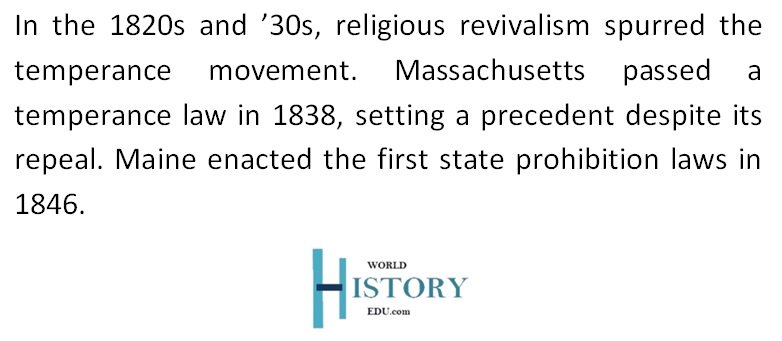
The roots of Prohibition trace back to the early 19th century, driven by a growing temperance movement. The temperance movement was primarily a response to the widespread consumption of alcohol, which many believed was responsible for numerous social problems, including crime, family violence, and poverty. This movement was largely spearheaded by religious groups and progressive reformers who saw alcohol as a moral and social evil.

The Anti-Saloon League, established in 1893, led renewed attacks on liquor sales by 1906, driven by urban growth and evangelical Protestantism’s view of saloons as corrupt. Image: A 1902 artwork depicting temperance groups’ campaigning against Hawaii’s beer industry.
Key Figures and Organizations
- The American Temperance Society (ATS) – Founded in 1826, the ATS was one of the earliest and most influential temperance organizations. It advocated for abstinence from alcohol and garnered widespread support.
- The Women’s Christian Temperance Union (WCTU) – Established in 1874, the WCTU became one of the most powerful proponents of Prohibition. It focused on educating the public about the dangers of alcohol and promoting temperance legislation.
- The Anti-Saloon League (ASL) – Formed in 1893, the ASL was a significant force in pushing for Prohibition. Unlike previous temperance groups, the ASL was a single-issue organization that lobbied aggressively for the prohibition of alcohol at the local, state, and national levels.

Arguments in favor of banning the “Demon Drink”
Advocates for banning alcohol described the substance as the “Demon Drink”. They presented several arguments in favor of temperance and Prohibition.
One primary argument was the effort to curb the excesses of abusive husbands. Many believed that alcohol consumption led to increased domestic violence and that banning it would protect women and children from harm.
Industrialists also supported Prohibition, arguing that alcohol was limiting the potential output of their workers. During the Industrial Revolution, factory owners observed that alcohol consumption negatively affected worker efficiency, leading to accidents and reduced productivity. They believed that a sober workforce would be more reliable and capable of meeting the demands of increased industrial production and extended working hours.
Additionally, temperance became a tool for some racist organizations to propagate their ideas and target European immigrants. Groups with nativist and xenophobic sentiments used the temperance movement as an outlet to spew hate, particularly against German and Irish immigrants who were often associated with alcohol consumption. These groups argued that these immigrant communities were corrupting American society with their drinking habits, fueling anti-immigrant rhetoric and discrimination.
Thus, while the temperance movement had supporters with genuine concerns about the social impacts of alcohol, it also provided a platform for industrialists seeking economic gains and racist organizations promoting their hateful agendas. The multifaceted arguments for banning alcohol reflected a complex interplay of social, economic, and political motives behind the Prohibition movement.
Legislative Milestones
The movement for Prohibition saw various legislative efforts culminating in two significant legal actions:
- The 18th Amendment – Ratified on January 16, 1919, and taking effect on January 17, 1920, the 18th Amendment to the U.S. Constitution prohibited the manufacture, sale, and transportation of intoxicating liquors. This amendment marked the official start of the Prohibition Era.
- The Volstead Act – Officially known as the National Prohibition Act, it was enacted on October 28, 1919, to provide for the enforcement of the 18th Amendment. The act defined intoxicating liquors as beverages containing more than 0.5% alcohol by volume and set out the legal framework for enforcement.
Prohibition in Practice
Prohibition posed significant challenges for law enforcement. The federal government, through the Prohibition Bureau, was tasked with enforcing the Volstead Act, but the bureau was underfunded and understaffed. As a result, enforcement was inconsistent and often ineffective. Local and state authorities varied in their commitment to enforcing Prohibition, leading to widespread non-compliance.
Furthermore, the illegal production and distribution of alcohol, known as bootlegging, became rampant during Prohibition. Organized crime syndicates quickly moved to fill the demand for illicit alcohol, leading to the rise of notorious figures such as Al Capone. These criminal organizations operated extensive networks of illegal distilleries and smuggling routes.
Finally, speakeasies, illicit establishments that sold alcoholic beverages, proliferated in cities across the country. These venues often required patrons to provide passwords for entry and became centers of social activity, jazz music, and cultural change. Despite their illegal nature, speakeasies were frequented by a wide cross-section of society, including politicians, law enforcement officers, and celebrities.

The Prohibition era saw a surge in criminal activity tied to bootlegging, with Chicago gangster Al Capone as a prominent figure. Capone made around $60 million annually from illegal alcohol operations and speakeasies, leading to increased gang violence. Image: A 1930 picture of crime boss Capone.
Social and Cultural Impacts
Prohibition had profound social and cultural impacts:
- Women’s Liberation – The Prohibition Era coincided with significant advances in women’s rights, including the passage of the 19th Amendment, which granted women the right to vote in 1920. Women played a crucial role in both the temperance movement and the social life of speakeasies, marking a shift in traditional gender roles.
- Jazz Age – The 1920s, often referred to as the Jazz Age, saw the rise of jazz music as a dominant cultural force. Speakeasies became key venues for jazz performances, contributing to the music’s popularity and the cultural dynamism of the era.
- Changes in Drinking Patterns – Prohibition led to changes in American drinking patterns. While overall alcohol consumption declined initially, many people turned to more potent and dangerous forms of alcohol, such as moonshine and industrial alcohol.
Economic Implications
Prohibition had significant economic implications:
- Loss of Tax Revenue – The ban on alcohol sales resulted in a substantial loss of tax revenue for federal, state, and local governments. Prior to Prohibition, taxes on alcohol had been a major source of government income.
- Economic Costs of Enforcement – The costs of enforcing Prohibition were high. The federal government and local authorities had to allocate significant resources to combating bootlegging and other illegal activities related to the illicit alcohol trade.
- Impact on Industries – Several industries, particularly breweries, distilleries, and saloons, were directly affected by Prohibition. Many businesses were forced to close, leading to job losses and economic hardship for workers in these sectors.

Legal and Political Developments
The Prohibition Era saw significant legal and political developments:
- Widespread Corruption – The enforcement of Prohibition led to widespread corruption among law enforcement officials and politicians. Bribery and payoffs were common as bootleggers sought to avoid prosecution and continue their operations.
- Judicial Challenges – Prohibition faced numerous legal challenges. Courts were inundated with cases related to violations of the Volstead Act, leading to a backlog and often lenient penalties for offenders.
The End of Prohibition
The growing unpopularity of Prohibition, along with its unintended consequences, led to increasing calls for its repeal. The Great Depression, which began in 1929, further intensified the push for repeal as many saw the legalization of alcohol as a means to generate jobs and tax revenue.

With the Great Depression, legalizing liquor to create jobs and revenue became appealing. Franklin D. Roosevelt campaigned for Prohibition’s repeal and won the 1932 presidential election. Image: A picture of Franklin D. Roosevelt in 1941.
Key Figures and Organizations
- The Association Against the Prohibition Amendment (AAPA) – Founded in 1918, the AAPA was a leading organization advocating for the repeal of Prohibition. It argued that Prohibition was ineffective and counterproductive.
- Women’s Organization for National Prohibition Reform (WONPR) – Established in 1929, the WONPR was instrumental in the repeal movement. It highlighted the negative social impacts of Prohibition, particularly on women and families.
Repeal of Prohibition
The push for repeal culminated in two significant legal actions:
- The 21st Amendment – Ratified on December 5, 1933, the 21st Amendment repealed the 18th Amendment, effectively ending Prohibition. It marked the first and only time in U.S. history that a constitutional amendment has been entirely repealed.
- State and Local Repeals – Following the passage of the 21st Amendment, individual states and localities took steps to repeal their own prohibition laws and regulate the sale of alcohol.

Origin of the term “bootleg”
The term “bootleg” originated in the mid-19th century in the United States. It initially referred to the practice of concealing flasks of liquor in the leg of a high boot to smuggle alcohol, particularly into areas where it was prohibited.
The term evolved during Prohibition (1920-1933) to describe the illegal production, distribution, and sale of alcoholic beverages. “Bootleg” came to encompass a wide range of illicit activities associated with the underground alcohol trade, including the creation of clandestine distilleries and the transportation of alcohol across state lines. Over time, the term has broadened to include the illegal copying and distribution of other goods, such as music, movies, and software.
Did you know…?
- In 1881, Kansas became the first state to outlaw alcohol in its Constitution.
- Getting Americans to give up alcohol proved harder than expected. Temperance leaders like Caroline Amelia Nation and evangelist Billy Sunday believed banning alcohol would eradicate social ills. Billy Sunday claimed that crime would end with the 18th Amendment, even leading to the sale of jails, such as in Iowa.
- Forty-six states ratified the 18th Amendment, with Connecticut and Rhode Island dissenting. Prohibition began on January 17, 1920, enforced by the Volstead Act. However, the drop in alcohol consumption proved to be only temporary.
- In the 1932 Presidential Election, Franklin D. Roosevelt defeated President Herbert Hoover, who termed Prohibition “the great social and economic experiment.” Some say FDR celebrated its repeal with his favorite drink, a dirty martini.
- Prohibition was more popular in rural areas than in cities, where speakeasies proliferated. Factory owners during the Industrial Revolution supported Prohibition to prevent accidents and boost worker efficiency amid increased industrial production and extended working hours.
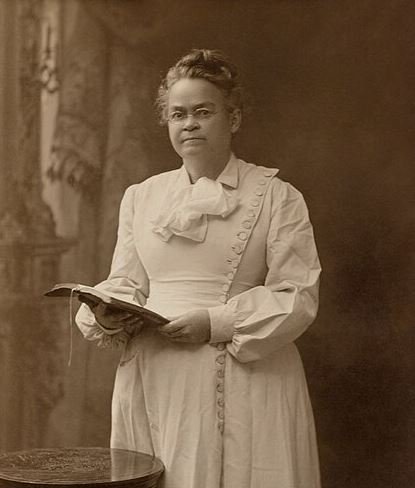
Prohibition activist Carrie Nation, often arrested, enforced the ban by destroying liquor bottles in saloons with a hatchet and recruiting others to her cause. Image: A 1903 picture of Carrie.
Legacy of Prohibition
Prohibition significantly expanded the role of the federal government in law enforcement, setting a precedent for future federal involvement in regulating and enforcing laws related to drugs and other substances.
The passage and repeal of Prohibition demonstrated the power of constitutional amendments to bring about significant social and legal change. It also highlighted the challenges of enforcing unpopular laws.
Social and Cultural Legacy
The rise of organized crime during Prohibition had long-term implications for American society. Criminal organizations that emerged during this period continued to operate and diversify their activities long after Prohibition ended.
The Prohibition Era contributed to cultural shifts, including changes in social norms related to drinking and the rise of new forms of entertainment, such as jazz music and nightclub culture.
Economic Legacy
The end of Prohibition led to the revival and regulation of the alcohol industry. It also spurred the development of new industries related to the production and distribution of alcoholic beverages.
The legalization of alcohol provided a significant source of tax revenue for governments at all levels, which became particularly important during the economic recovery following the Great Depression.
The First Amendment to the U.S. Constitution: Meaning, Facts & Myths
Questions and Answers about the Prohibition Era

What was the Prohibition Era in the United States?
The Prohibition Era in the United States, spanning from 1920 to 1933, was a significant period marked by the nationwide ban on the production, importation, transportation, and sale of alcoholic beverages. It was formally introduced under the Eighteenth Amendment to the United States Constitution and enforced through the Volstead Act. The period ended with the ratification of the Twenty-first Amendment, which repealed the Eighteenth Amendment.
What were the origins of Prohibition?
The roots of Prohibition lie in the 19th century, driven by Pietistic Protestants who aimed to address societal problems attributed to alcohol consumption, such as alcoholism, family violence, and political corruption linked to saloons. The temperance movement gained momentum in various communities, resulting in local alcohol bans in the late 19th and early 20th centuries.
Who were the key organizations and supporters of Prohibition?
The key organizations and supporters included the Woman’s Christian Temperance Union (WCTU), established in 1874, and the Anti-Saloon League (ASL), which became the leading organization after 1900. The movement’s supporters, known as “drys,” framed their campaign as a fight for public morals and health. Progressives across the Prohibition, Democratic, and Republican parties supported the cause, which gained a strong grassroots base.
What were the legislative milestones of Prohibition?
The legislative milestones included the passage of the Eighteenth Amendment in 1919 with overwhelming support in Congress and ratification by 46 out of 48 states. The Volstead Act, enacted to enforce the amendment, defined the types of alcoholic beverages that were banned and outlined enforcement measures. Federal law did not prohibit private ownership and consumption of alcohol, although many local laws were stricter, with some states banning possession outright.
What challenges were faced in enforcing Prohibition?
Enforcing Prohibition proved to be a significant challenge due to underfunding and understaffing of the federal government’s Prohibition Bureau, leading to inconsistent enforcement. Local and state authorities also varied in their commitment to enforcing the law.
How did the emergence of black markets affect Prohibition?
Widespread non-compliance with Prohibition laws led to the rise of illegal alcohol production and distribution. Criminal organizations and gangs, such as those led by Al Capone, capitalized on the demand for alcohol, creating extensive networks for bootlegging and speakeasies—secret bars where alcohol was sold illegally. These black markets contributed to a surge in organized crime.

What were the social and cultural impacts of Prohibition?
Prohibition had profound social and cultural consequences. Speakeasies became popular social hubs, contributing to the rise of jazz music and the Jazz Age. The era also coincided with significant advances in women’s rights, including the passage of the Nineteenth Amendment, granting women the right to vote in 1920. Women’s increased participation in public life, including in speakeasies, marked a shift in traditional gender roles.
What were the economic implications of Prohibition?
The economic implications of Prohibition included:
- Loss of Tax Revenue: The federal government and local authorities lost significant tax revenue from alcohol sales.
- Economic Costs of Enforcement: Significant resources were allocated to enforcing Prohibition, further straining government budgets.
- Impact on Industries: Breweries, distilleries, and saloons were forced to close, leading to job losses and economic hardship for workers in these industries.
What led to the opposition and repeal of Prohibition?
Contrary to strong beliefs of anti-alcohol activists, crime skyrocketed, and jails struggled to accommodate the influx of lawbreakers.
By the late 1920s, opposition to Prohibition grew as critics argued that the policy imposed rural Protestant values on urban America and led to decreased local revenues. The negative economic impact of Prohibition became particularly pronounced during the Great Depression, intensifying calls for its repeal.

Who were the key organizations and figures in the repeal of Prohibition?
Key organizations and figures included the Association Against the Prohibition Amendment (AAPA), founded in 1918, which argued that Prohibition was ineffective and harmful. The Women’s Organization for National Prohibition Reform (WONPR), established in 1929, highlighted the adverse social impacts of Prohibition, particularly on women and families.
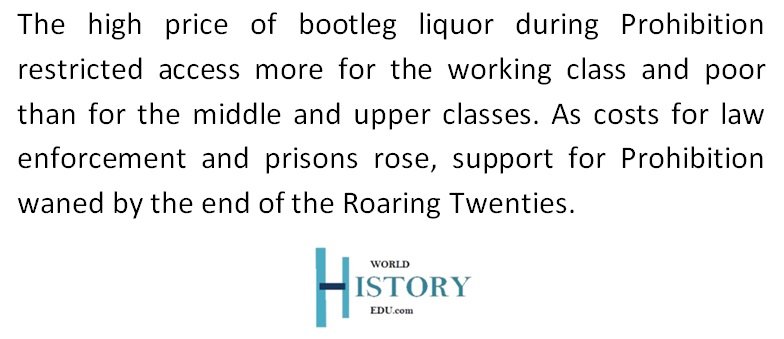
What was the significance of the Twenty-first Amendment?
The ratification of the Twenty-first Amendment on December 5, 1933, repealed the Eighteenth Amendment, marking the end of Prohibition. It was the first and only time in U.S. history that a constitutional amendment was entirely repealed. Some states continued Prohibition laws for a time after the national repeal.
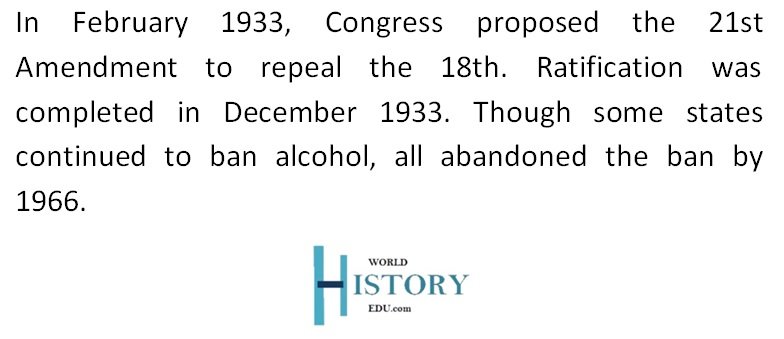
History and Significance of the U.S. Bill of Rights (the First 10 Amendments)
What was the legacy and impact of Prohibition?
The legacy and impact of Prohibition included:
- Social and Cultural Legacy: The rise of organized crime and cultural shifts, such as changes in social norms related to drinking and the emergence of jazz music and nightclub culture.
- Economic and Legal Legacy: The revival and regulation of the alcohol industry, which became a significant source of tax revenue, and the expanded role of the federal government in law enforcement.
- Disputed Effects: Mixed research on whether Prohibition led to a long-term reduction in alcohol consumption, declines in liver cirrhosis, alcoholic psychosis, and infant mortality, and the negative economic impact of eliminating jobs in the alcohol industry and reducing government tax revenues, particularly during the Great Depression.
Where did the term “speakeasies” come from?
The term “speakeasies” originated in the 19th century and referred to illegal establishments that sold alcoholic beverages. The name comes from the practice of patrons being told to “speak easy” (quietly) when discussing such places to avoid detection by law enforcement. This term became widely used during Prohibition in the United States, when speakeasies proliferated as secret bars where people could drink alcohol illegally.





