Charlotte Fitch Roberts: Life & Accomplishments
Charlotte Fitch Roberts was a trailblazing American chemist who made significant contributions to the field of stereochemistry, particularly during a time when few women had access to advanced scientific education or professional positions in academia. Born on February 13, 1859, in New York City, Roberts was the daughter of Horace Roberts and Mary Roberts (née Hart). Her early life set the stage for her intellectual journey, and she would go on to become a respected figure in the scientific community.
Early Life and Education
Roberts grew up in a period when the role of women in higher education and professional fields was beginning to shift. However, it was still a time of limited opportunities for women, particularly in science. Despite these societal constraints, Roberts displayed an early interest in learning and science, which led her to pursue a college education—an uncommon path for women during the late 19th century.
In 1880, Roberts enrolled at Wellesley College, a women’s liberal arts college known for its strong academic programs. Her time at Wellesley was a turning point in her life. Not only did she excel academically, but she also became deeply involved in the scientific community there. Her professors recognized her potential, and within just one year of graduating, Roberts was offered a position as a graduate assistant in the chemistry department. This opportunity allowed her to develop her research skills and gain experience teaching, a role that would shape her future career.
Academic Career at Wellesley College
Roberts’ tenure at Wellesley was long and fruitful. In 1882, just two years after joining as a graduate assistant, she was promoted to the role of instructor. Her rapid rise through the ranks reflected both her dedication and the high regard in which her colleagues and students held her. By 1886, she had become an associate professor, solidifying her position as one of the leading figures in Wellesley’s chemistry department.
During this period, Roberts was known not only for her teaching but also for her research. She took a particular interest in stereochemistry, an emerging field at the time. Stereochemistry is the study of how the spatial arrangement of atoms in molecules affects their chemical behavior. This area of chemistry was gaining attention in the late 19th century due to the groundbreaking work of scientists such as Louis Pasteur, who discovered that the orientation of molecules could significantly influence their chemical properties.
In 1885, Roberts was granted a leave of absence from Wellesley to study at Cambridge University, where she had the opportunity to work with Sir James Dewar, a renowned chemist and physicist. This experience at Cambridge was pivotal, as it exposed her to cutting-edge research and allowed her to collaborate with some of the leading scientific minds of the time. Dewar’s influence on Roberts’ thinking and approach to chemistry was significant, and her work at Cambridge further honed her research skills.
Doctorate from Yale University
Roberts’ academic journey did not stop with her accomplishments at Wellesley and Cambridge. In 1894, she became one of the few women at the time to earn a PhD when she completed her doctorate at Yale University. Yale had only recently begun admitting women to its graduate programs, and Roberts’ achievement was both groundbreaking and inspirational for future generations of women in science.
Her doctoral work continued to focus on stereochemistry, and she quickly established herself as a leading expert in the field. Following her PhD, Roberts returned to Wellesley College, where she was appointed head of the chemistry department in 1896. This promotion was another notable achievement in a career filled with firsts for women in science. As department head, Roberts played a central role in shaping the future of chemical education at Wellesley and mentored countless young women who would go on to have careers in the sciences.
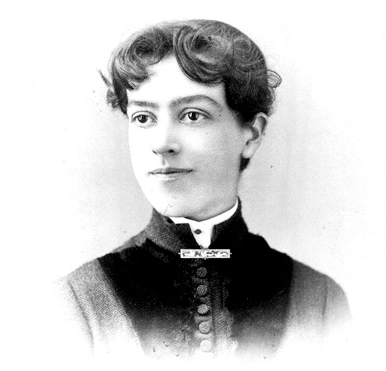
Image: Roberts (1859 – 1917)
Contributions to Stereochemistry
Roberts’ most significant scientific contributions were in stereochemistry, a field that had profound implications for understanding the molecular structures and reactions of organic compounds. In 1896, she published The Development and Present Aspects of Stereochemistry, a work that highlighted the growing importance of this area of study. This publication not only reflected Roberts’ deep understanding of the subject but also helped to bring wider attention to stereochemistry in the United States. Her work was notable for making complex chemical concepts more accessible and for advancing the academic discussion surrounding molecular structures.
Stereochemistry had far-reaching implications, especially in fields like pharmaceuticals, where the spatial arrangement of molecules can mean the difference between a drug being therapeutic or harmful. By promoting the study and understanding of stereochemistry, Roberts contributed to a field that would become crucial in the development of modern chemistry and medicine.
International Research at the University of Berlin
In 1899, Roberts took another bold step in her career by securing a research position at the University of Berlin. This was an extraordinary achievement, as very few women—especially American women—were able to study and conduct research in Europe’s leading academic institutions at the time. Roberts worked in Berlin from 1899 to 1900, collaborating with leading European chemists and furthering her research in stereochemistry.
Her time in Berlin not only enriched her understanding of chemistry but also cemented her reputation as an international scholar. Upon returning to the United States, Roberts brought back valuable insights from her European colleagues, which she incorporated into her teaching and research at Wellesley.
Leadership and Legacy at Wellesley College
Roberts served as the head of Wellesley’s chemistry department from 1896 until her death in 1917. During her tenure, she was instrumental in expanding the department and increasing its academic rigor. Under her leadership, Wellesley became known for its strong chemistry program, and she played a key role in encouraging young women to pursue careers in science—a rarity at the time.
Roberts’ impact on her students and colleagues was profound. She was known for her dedication to education and her passion for chemistry. Her ability to explain complex chemical theories in a way that was accessible to students made her a beloved professor. Many of her students went on to make significant contributions to the field, inspired by Roberts’ guidance and encouragement.
In addition to her work at Wellesley, Roberts was a fellow of the American Association for the Advancement of Science, reflecting her standing in the broader scientific community. Her membership in this prestigious organization was a testament to the respect she garnered from her peers, both in the United States and abroad.
Death and Posthumous Recognition
Charlotte Fitch Roberts passed away on December 5, 1917, leaving behind a legacy of scientific achievement and educational leadership. Although she did not live to see the full impact of her work, her contributions to the field of stereochemistry and her role as a pioneer for women in science continue to be recognized.
In honor of her contributions, Wellesley College named a chemistry professorship after Roberts, ensuring that her legacy would inspire future generations of scientists. Her work in stereochemistry laid the groundwork for future discoveries in the field, and her commitment to education opened doors for countless women to pursue careers in the sciences.
Conclusion
Charlotte Fitch Roberts was a trailblazer in the field of chemistry and a pioneer for women in science. Her work in stereochemistry, leadership at Wellesley College, and international research collaborations demonstrated her intellectual rigor and dedication to advancing scientific knowledge. At a time when few women had access to advanced education or academic positions, Roberts broke barriers and paved the way for future generations of women scientists. Today, her legacy lives on through her contributions to chemistry and her lasting impact on scientific education.
Questions and Answers
Where and when was Charlotte Fitch Roberts born?
Charlotte Fitch Roberts was born on February 13, 1859, in New York City.
Where did Roberts pursue her higher education?
Roberts attended Wellesley College, enrolling in 1880. She earned her PhD from Yale University in 1894 and also studied at Cambridge University in 1885.
What were some of Charlotte Fitch Roberts’ career milestones at Wellesley College?
Roberts quickly advanced at Wellesley College, becoming a graduate assistant in 1881, an instructor in 1882, and an associate professor in 1886. She was appointed head of Wellesley’s chemistry department in 1896 and held the position until her death in 1917.
What significant research did Roberts conduct outside of Wellesley?
Roberts spent a year (1885) at Cambridge University working with renowned chemist Sir James Dewar. She also conducted research at the University of Berlin from 1899 to 1900.
What is the title of one of Charlotte Fitch Roberts’ notable publications?
One of her notable works is The Development and Present Aspects of Stereochemistry, published in 1896.
What field of chemistry was Charlotte Fitch Roberts particularly known for?
Charlotte Fitch Roberts was particularly known for her work in stereochemistry, which deals with the spatial arrangement of atoms in molecules and its impact on chemical reactions.
What academic honor was Charlotte Fitch Roberts awarded during her lifetime?
Roberts was named a fellow of the American Association for the Advancement of Science, a prestigious recognition of her contributions to the scientific community.
What legacy did Charlotte Fitch Roberts leave behind at Wellesley College?
In recognition of her contributions, Wellesley College named a chemistry professorship in her honor. She is remembered for her pioneering role in promoting women’s education in the sciences.
When did Charlotte Fitch Roberts pass away, and how long did she serve as head of Wellesley’s chemistry department?
Charlotte Fitch Roberts passed away on December 5, 1917, after serving as the head of Wellesley College’s chemistry department for 21 years, from 1896 until her death.