Continental Army General Richard Montgomery
Richard Montgomery was born on December 2, 1738, at Feltrim near Swords in County Dublin, Ireland, and became one of the most celebrated figures in the early history of the American Revolution. Despite his initial service in the British Army, Montgomery ultimately sided with the American colonists in their fight for independence, leading him to significant roles and posthumous recognition as a martyr of the Revolution.
Early Life and British Military Career
Montgomery’s family was part of the Ulster Scots gentry, with strong ties to the British military and political spheres. His father, Thomas Montgomery, was a British Army officer and a Member of Parliament for Lifford in County Donegal.
Raised in a privileged environment, Montgomery was trained in hunting, riding, and fencing and attended the school of Reverend Saumarez Dubourdieu in Leixlip, where he learned French and Latin. In 1754, he entered Trinity College, Dublin, though he left without completing his degree, instead pursuing a military career encouraged by his family.
Montgomery began his British military service in 1756, joining the 17th Regiment of Foot as an ensign. His service soon brought him to North America, where he fought in the French and Indian War. His first major engagement came at the Siege of Louisbourg in 1758, where he displayed remarkable courage, earning a promotion to lieutenant.
Over the next several years, he fought in key battles including the capture of Fort Carillon and Fort Chambly, and took part in the 1761 campaigns against the French in the Caribbean, where he participated in the successful invasions of Martinique and Havana. By 1762, Montgomery had risen to the rank of captain.
Pontiac’s War and Return to England
Montgomery remained in North America following the end of the French and Indian War in 1763. He served in Pontiac’s War, a conflict sparked by Native American resistance to British policies in the Great Lakes region.
His assignments took him to various British forts, where he gained further military experience but was increasingly dissatisfied with British colonial policies and treatment of Indigenous populations. During this period, he briefly met Janet Livingston, a member of a prominent New York family who would later become his wife.
In 1764, due to health issues worsened by his time in the Caribbean, Montgomery returned to England. His political sympathies began to shift as he spent time among Whig circles, where he connected with figures who were sympathetic to the American colonies’ grievances.
Montgomery became increasingly critical of British policies toward the colonies, which he saw as oppressive. By 1772, frustrated by stalled promotions and disillusioned with the British Army, he sold his commission and emigrated to America, settling on a farm near New York City.
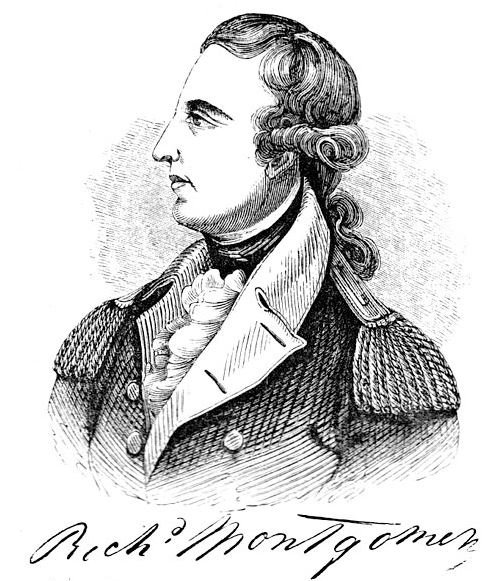
Image: A 1775 document featuring Richard Montgomery’s autograph
Life in America and Marriage to Janet Livingston
After settling in America, Montgomery’s life took on a quieter pace. In 1773, he married Janet Livingston, a member of the influential Livingston family in New York. Through this marriage, Montgomery acquired a new social and political network that deepened his ties to the Patriot cause.
The couple purchased property in Rhinebeck, New York, where they began a life focused on farming. Montgomery enjoyed a brief period of contentment, focusing on building his estate, which he named “Grasmere.” His marriage and new American identity, however, eventually led him to support the burgeoning Patriot movement.
Role in the American Revolution and the New York Provincial Congress
In May 1775, Montgomery’s growing political interests and connections led him to join the New York Provincial Congress.
Although he initially held moderate views, hoping for a reconciliation with Britain, he found himself increasingly aligned with the Patriots.
That same year, after the outbreak of hostilities at Lexington and Concord, he accepted a commission as a brigadier general in the newly formed Continental Army, serving under Major General Philip Schuyler.
Leadership in the Canadian Campaign
Montgomery’s first major assignment came with the Continental Army’s ambitious plan to invade British-held Canada. The goal was to rally Canadian support for the American cause and to secure Canada as a potential ally. Montgomery led an expedition from Fort Ticonderoga northward.
After Schuyler fell ill, Montgomery took command of the entire campaign. His leadership proved effective as he captured Fort St. Johns in November 1775 and then marched on to take Montreal without significant resistance. This success established Montgomery as a competent and respected leader among both his troops and the Continental Congress.
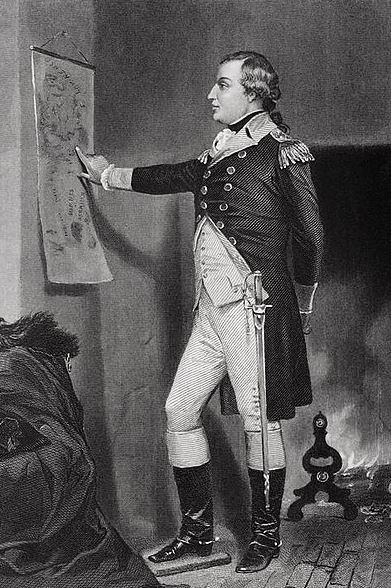
Image: An engraving depicting Montgomery by American painter Alonzo Chappel.
The Attack on Quebec and Montgomery’s Death
Montgomery’s Canadian campaign culminated in the bold and ultimately tragic assault on Quebec City on December 31, 1775. Hoping to capture the city and secure a northern stronghold for the Continental Army, Montgomery coordinated his forces with those of Colonel Benedict Arnold, who had marched through Maine. Despite facing formidable winter conditions and inadequate supplies, Montgomery and Arnold planned a two-pronged attack on the fortified city.
Montgomery personally led the southern assault on the city but was killed by British artillery fire shortly after the attack began. His death led to the disarray of his forces, and the attack on Quebec ended in failure.
Arnold, who sustained an injury in the battle, led the surviving American forces in a retreat back to Fort Ticonderoga. Montgomery’s body was recovered by the British and given an honorable burial in Quebec City. General Guy Carleton, the British commander, acknowledged his bravery and character, and Montgomery’s death was widely mourned on both sides.
Montgomery’s Legacy in the Revolutionary War
The news of Montgomery’s death had a profound effect on both the Continental Army and the American public. To many Americans, he became a symbol of sacrifice and dedication to the cause of liberty. The Continental Cogress moved to commemorate his legacy by authorizing a monument in his honor.
Thomas Paine and other prominent figures invoked Montgomery’s name in their writings, presenting him as a martyr for American independence.
George Washington himself expressed deep sorrow at the loss, acknowledging Montgomery’s dedication to the revolutionary cause.
In 1818, Montgomery’s remains were exhumed from Quebec and reinterred at St. Paul’s Chapel in New York City, where a monument had been erected in his honor. The reburial was attended by a large procession, reflecting the enduring respect for Montgomery’s contributions to the revolution.
Honors and Memorials
Montgomery’s legacy has been enshrined through numerous geographical and institutional names. Counties and towns across the United States, such as Montgomery, Alabama, and Montgomery County, Maryland, bear his name, reflecting his lasting significance in American history.
Educational institutions, including Richard Montgomery High School in Maryland, also commemorate him. Janet Montgomery, his widow, preserved his legacy throughout her long life, overseeing various memorials and properties associated with her late husband. She declined remarriage and remained a committed advocate for his contributions, helping to maintain his memory as an enduring symbol of patriotic sacrifice.
Montgomery’s Legacy and Historical Significance
Montgomery’s transition from a British officer to an American Revolutionary hero symbolizes the shifting identities of many in the colonies who chose to align with the Patriot cause. His background as a British officer provided him with a unique perspective and training that he later applied in his service to the American Revolution. Unlike many of his contemporaries, Montgomery initially harbored reservations about independence, hoping instead for a peaceful resolution. However, his sense of duty to his adopted country and his dedication to his new identity as an American led him to take up arms for the Patriot cause.
Montgomery’s willingness to abandon his previous loyalties and fight against his former comrades highlights the ideological complexity and personal sacrifices that characterized the American Revolution. His life exemplifies the story of the American struggle for independence—one in which individuals from diverse backgrounds joined forces to build a new nation.
Although his military accomplishments were cut short by his untimely death, Montgomery’s actions in Canada and his leadership in the Continental Army had a lasting impact on the course of the revolution. His bravery, integrity, and dedication to American ideals made him a celebrated figure in the Revolutionary War era and a revered icon in subsequent American history. Montgomery’s legacy as a Patriot, leader, and martyr for the cause of American independence remains a powerful reminder of the sacrifices made by those who fought for freedom and self-governance.
Montgomery’s Place in Revolutionary History
Montgomery occupies a unique position among the Founding Figures of the United States. His status as a martyr elevated him to an almost legendary status, symbolizing the ultimate sacrifice for the birth of a nation. Unlike some of his contemporaries, Montgomery’s legacy was preserved without the later political controversies that surrounded other figures. His death in service to the cause of independence allowed Americans to honor him unreservedly as a hero, untainted by the complexities of post-war politics.
Throughout American history, Montgomery’s name has been associated with resilience and dedication, inspiring future generations. His military actions, though ultimately unsuccessful in Quebec, demonstrated the resourcefulness and determination of the Continental Army, foreshadowing the eventual success of the American Revolution. His life and contributions are not only a testament to his own character but also reflect the shared ideals and sacrifices of the revolutionary generation.
In sum, Richard Montgomery’s life journey from an Irish-born British officer to a central figure in the American Revolution encapsulates the transformative spirit of the era. His legacy, built on loyalty, bravery, and a profound commitment to the Patriot cause, has endured as a source of inspiration. Remembered as a symbol of American fortitude, Montgomery’s story stands as a reminder of the individuals who contributed to the founding of the United States and the ideals for which they fought.
Frequently Asked Questions
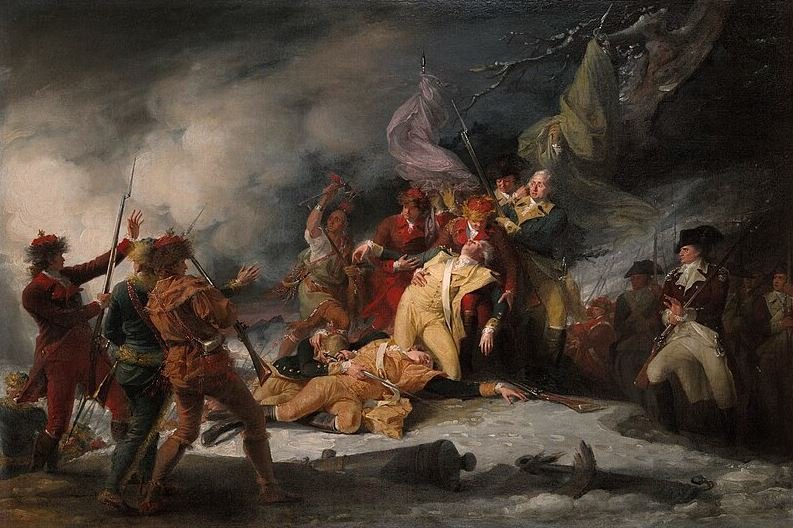
Known for leading the unsuccessful 1775 invasion of Quebec, General Montgomery captured Fort St. Johns and Montreal but was killed during an attack on Quebec City. Image: A painting depicting the death Montgomery by John Trumbull, an American painter.
Where was Richard Montgomery born, and what was his family background?
Richard Montgomery was born on December 2, 1738, at Feltrim near Swords in County Dublin, Ireland. His family was part of the Ulster Scots gentry from Donegal, with strong connections to British military and political systems.
What was Montgomery’s early education like, and what led him to join the British Army?
Montgomery’s early education included training in hunting, riding, and fencing. He attended Trinity College, Dublin, but left without earning a degree, joining the 17th Regiment of Foot in 1756 with encouragement from his family.
In which war did Montgomery begin his military career, and what were some of his early accomplishments?
Montgomery’s military career began with the French and Indian War. He showed bravery in battle, including during the Siege of Louisbourg, where he was promoted to lieutenant. He later fought at Fort Carillon and Fort Chambly, eventually rising to the rank of captain during the campaigns in Martinique and Havana.
How did Montgomery’s experience in Pontiac’s War impact him personally?
During Pontiac’s War, Montgomery encountered resistance from Indigenous tribes against British forces. He met his future wife, Janet Livingston, while traveling to Albany, and shortly after, he returned to England due to poor health.
Why did Montgomery decide to resign from the British Army and move to America?
Disillusioned with British colonial policies and frustrated by a lack of promotion, Montgomery resigned his commission in 1772. He returned to America, where he intended to start a new life as a farmer near New York City.
How did Montgomery’s life in America deepen his ties to the colonies and the Patriot cause?
After marrying Janet Livingston in 1773, Montgomery connected with the prominent Livingston family, who supported the Patriot cause. He bought a farm called “Grasmere” in Rhinebeck, New York, and gradually became committed to American independence.
What role did Montgomery play in the New York Provincial Congress?
In 1775, Montgomery was elected to the New York Provincial Congress, where he advocated for American rights. His involvement in this political body marked his increasing support for the colonial fight against British rule.
How did Montgomery rise to a leadership role in the Continental Army?
Montgomery joined the Continental Army in 1775 and was appointed brigadier general under Major General Philip Schuyler. When Schuyler fell ill, Montgomery took command of the campaign to invade Canada.
What were some of Montgomery’s accomplishments in the Canadian campaign?
The general captured Fort St. Johns and Montreal, demonstrating strong leadership and strategic planning. His success in these battles elevated his reputation as a competent and respected military leader.
How did Montgomery’s campaign in Canada ultimately end?
His campaign ended tragically when he led an attack on Quebec City on December 31, 1775. He was killed by grapeshot during the assault, which marked the end of his military service.
What impact did Montgomery’s death have on both American and British sides?
Montgomery’s death had a profound effect on both sides. General Carleton, his British opponent, ordered him buried with honors. In America, his death became a rallying cry for the Patriot cause, inspiring leaders like George Washington, and Congress approved a monument in his honor.
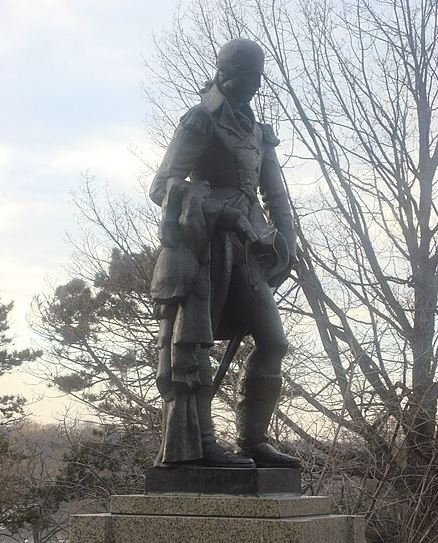
Image: Montgomery’s statue located close to the Philadelphia Museum of Art.
How was Montgomery memorialized after his death?
Montgomery was celebrated as a national hero, and his legacy was commemorated through literature, monuments, and even place names. In 1818, his remains were moved to St. Paul’s Chapel in New York City, where they were reinterred with honors.
Who preserved Montgomery’s legacy, and how?
Montgomery’s widow, Janet, who outlived him by over fifty years, actively preserved his legacy. She supported various memorials in his honor, and his name was later used for cities, counties, streets, and institutions across America.
What does Montgomery’s life symbolize in American history?
Montgomery’s life symbolizes resilience, dedication, and the pursuit of independence. His transformation from British officer to American Revolutionary hero became a powerful narrative in the foundation of the United States and is celebrated to this day.





