Western Desert Campaign in WWII
The Western Desert Campaign, also known as the Desert War, was a pivotal theater of World War II, fought across the arid expanses of Egypt and Libya. Spanning from June 1940 to May 1943, this campaign formed the backbone of the broader North African Campaign and showcased the strategic importance of North Africa. Its outcome had significant implications for the war in Europe and the Mediterranean.
In the article below, senior WWII historians at World History Edu explores the history, key military commanders, leaders, and major facts surrounding the Western Desert Campaign.
History of the Western Desert Campaign

132nd Armored Division “Ariete” attacks
Beginnings of the Campaign
The Western Desert Campaign began in June 1940, when Italy declared war on Britain and France. Italy, under Benito Mussolini, sought to exploit Britain’s preoccupation with Europe and expand its territories by advancing from its colony in Libya into Egypt. Italy’s ultimate goal was to capture the Suez Canal, a vital Allied shipping route connecting the Mediterranean to the Red Sea and Indian Ocean.
In September 1940, Italian forces under Marshal Rodolfo Graziani launched an offensive into Egypt. However, Graziani’s advance stalled approximately 95 kilometers inside Egyptian territory due to logistical concerns and fear of overextending supply lines. This hesitation allowed the British to regroup and plan a counteroffensive.

Italian Semovente 75/18 self-propelled assault gun
Operation Compass: A British Triumph
In December 1940, British Commonwealth forces, under Lieutenant-General Richard O’Connor, launched Operation Compass. Initially conceived as a limited raid, the operation evolved into a major offensive, leading to the near-total destruction of the Italian 10th Army (10ª Armata).
Over two months, British forces advanced 800 kilometers, capturing key positions such as Bardia, Tobruk, and Benghazi. The success of Operation Compass revealed the inadequacies of the Italian military and forced Mussolini to seek German assistance.
The Arrival of the Afrika Korps
Responding to Mussolini’s plea, Adolf Hitler dispatched the Afrika Korps to North Africa in February 1941 under Directive 22. The corps, commanded by Generalleutnant Erwin Rommel, brought a new level of mechanized warfare to the theater. Though formally under Italian command, Rommel’s dynamic leadership quickly made him the dominant figure in Axis operations.
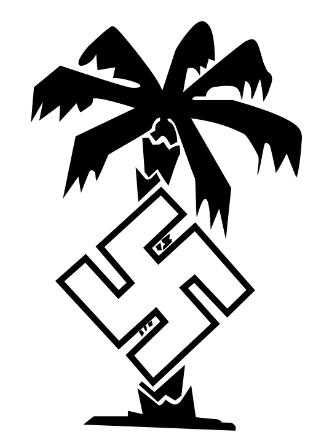
Seal of the Afrika Korps
In Operation Sonnenblume, launched in the spring of 1941, Rommel’s forces pushed the British-led Western Desert Force back into Egypt. Despite their retreat, the Allies managed to hold the vital port of Tobruk, which resisted Axis attempts to capture it. Rommel’s bold and unorthodox tactics earned him the nickname “Desert Fox”, and his rapid advances surprised both the Allies and his superiors in Germany.

Erwin Rommel
Operation Crusader: A British Counteroffensive
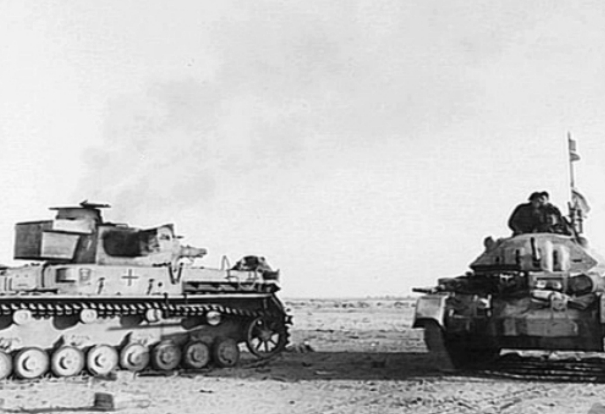
A British Crusader tank passes an abandoned German Panzer IV Ausf.A, 24 November 1941
In November 1941, the Allies launched Operation Crusader to relieve Tobruk and regain lost ground. After weeks of intense fighting, the British Eighth Army succeeded in forcing Axis forces to retreat to El Agheila, deep within Libya. While Operation Crusader highlighted Allied resilience, it also underscored the resourcefulness of Rommel, who conducted a skillful fighting retreat.

British troops on a lookout during the Siege of Tobruk, August 1941.
Back-and-Forth Struggles in 1942
The spring of 1942 marked another shift in momentum. Reinforced with troops and equipment, Rommel launched a renewed offensive, culminating in the Battle of Gazala in June 1942. This battle saw the Axis forces achieve a significant victory, capturing the vital port of Tobruk. The fall of Tobruk was a major blow to Allied morale and logistics, but Rommel’s failure to destroy the British Eighth Army allowed the Allies to regroup.
Rommel continued his advance into Egypt, reaching El Alamein, approximately 100 kilometers west of Alexandria. Here, in July 1942, the British, under General Claude Auchinleck, managed to halt the Axis advance in the first Battle of El Alamein, creating a strategic stalemate. This battle provided the Allies critical time to reinforce and reorganize.
The Turning Point: Second Battle of El Alamein

24 October 1942: British soldiers in a posed attack
The Second Battle of El Alamein (October–November 1942) marked the turning point of the Western Desert Campaign. Now under the command of General Bernard Montgomery, the British Eighth Army launched a meticulously planned offensive, supported by significant reinforcements and American equipment, including Sherman tanks.

British General Montgomery
Montgomery’s strategy of methodical attrition broke through Axis defenses, forcing Rommel’s forces into a full retreat. Winston Churchill famously remarked, “Before Alamein, we never had a victory. After Alamein, we never had a defeat.”
The defeat at El Alamein marked the beginning of the Axis collapse in North Africa.
The Final Phase: Tunisia and Operation Torch
Following the Second Battle of El Alamein, the British Eighth Army pursued Rommel’s forces westward across Libya. Meanwhile, in November 1942, the Allies launched Operation Torch, an amphibious invasion of French North Africa. This operation involved American and British forces landing in Morocco and Algeria, effectively opening a second front in the region.
The convergence of the British Eighth Army from the east and the Allied First Army from the west trapped Axis forces in Tunisia. In the ensuing Tunisian campaign, the Allies decisively defeated the remaining Axis troops, leading to the surrender of over 250,000 Axis soldiers in May 1943. This marked the end of the Western Desert Campaign and the Axis presence in North Africa.
Key Military Commanders and Leaders
Allied Leaders
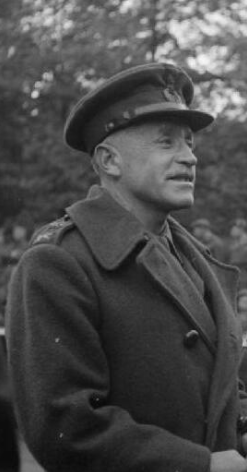
General Richard O’Connor
- Lieutenant-General Richard O’Connor:
- Architect of the successful Operation Compass, which decimated the Italian 10th Army.
- General Claude Auchinleck:
- Commander during the first Battle of El Alamein, where he halted the Axis advance.
- General Bernard Montgomery:
- Led the British Eighth Army to victory in the Second Battle of El Alamein, turning the tide of the campaign.
- General Dwight D. Eisenhower:
- Supreme Allied Commander of Operation Torch, overseeing the invasion of French North Africa.

US Gen. Dwight D. Eisenhower, supreme commander of the Allied forces
Axis Leaders
- Marshal Rodolfo Graziani:
- Italian commander during the initial invasion of Egypt, whose hesitation allowed the British counteroffensive.
- Generalleutnant Erwin Rommel:
- Commanded the Afrika Korps and became the face of the Axis effort in North Africa, earning a reputation for tactical brilliance.
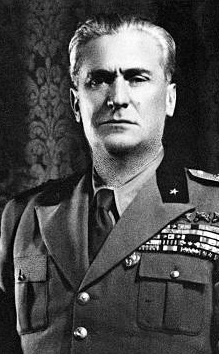
Italian Marshal Rodolfo Graziani
Major Facts and Strategic Insights
- The campaign’s primary objective was control of the Suez Canal, a vital shipping route connecting Europe and Asia.
- North Africa also held strategic oil fields and served as a base for potential operations into Southern Europe.
- The vast distances and harsh desert conditions made supply lines critical. Both sides struggled to transport fuel, food, and water across inhospitable terrain.
- The campaign showcased the increasing importance of tanks and mobile artillery in modern warfare. Airpower was also pivotal for reconnaissance and ground support.
- The Axis faced severe supply shortages due to Allied naval and air interdictions. North Africa was a secondary theater for Germany, which prioritized the Eastern Front.
- The British Eighth Army benefited from reinforcements, including troops from Greece, Crete, and Syria. American equipment and supplies further bolstered their capabilities.
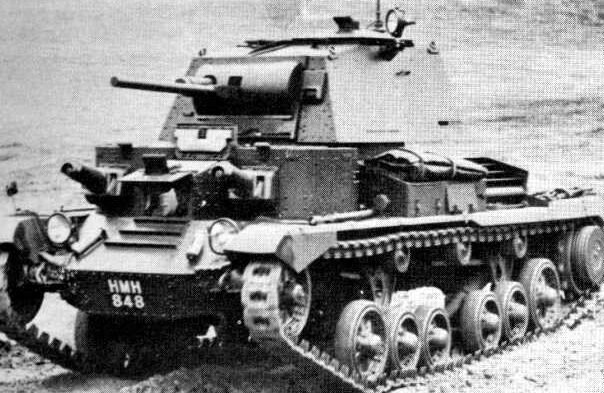
Cruiser Tank Mk I (A9)
Legacy of the Western Desert Campaign
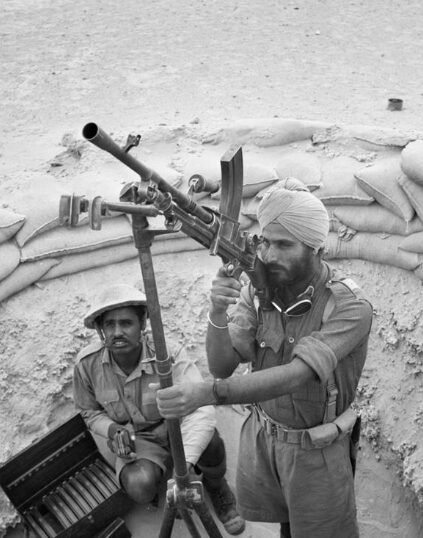
Indian troops operate a Bren gun on an anti-aircraft mount, Western Desert, 1941.
- Military Innovation:
- The campaign highlighted the value of mobile warfare and air-ground coordination, lessons that shaped subsequent operations in Europe.
- Allied Cooperation:
- The campaign fostered collaboration between British and American forces, paving the way for joint operations like D-Day.
- Leadership and Reputation:
- The campaign solidified the reputations of commanders like Rommel and Montgomery while exposing the limitations of the Axis war effort.
- Strategic Outcome:
- The Allied victory in North Africa eliminated the Axis presence in the Mediterranean, secured the Suez Canal, and set the stage for the invasion of Italy.
Conclusion
The Western Desert Campaign was a grueling and strategically vital chapter of World War II. It demonstrated the significance of logistics, innovation, and leadership in desert warfare.
The eventual Allied victory reshaped the balance of power in the Mediterranean and contributed to the broader effort to defeat the Axis powers. From the tactical brilliance of Rommel to the decisive leadership of Montgomery, the campaign remains a defining example of World War II’s complexity and scope.
Frequently Asked Questions
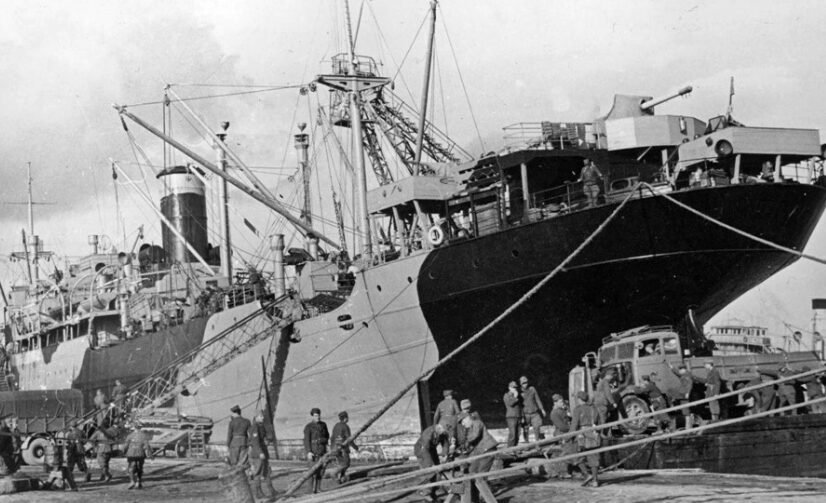
The Western Desert campaign, also known as the Desert War, was a key theater of operations during World War II, fought across the deserts of Egypt and Libya from June 1940 to May 1943. Image: Vehicles are unloaded from an Italian cargo ship in Tunisia
Why was the campaign significant?
It was crucial for strategic dominance in North Africa, securing control over the Mediterranean, and protecting vital shipping routes like the Suez Canal.
When did the Western Desert campaign begin?
The campaign began in June 1940, when Italy declared war on Britain and France.

British light tanks cross the desert in 1940
What was the Italian goal in the initial phase?
Italian forces, led by Marshal Rodolfo Graziani, aimed to capture the Suez Canal by advancing from Libya into Egypt.
What was Operation Compass?
Operation Compass was a British counter-offensive in December 1940, initially planned as a five-day raid, which led to the destruction of the Italian 10th Army and the capture of key positions like Tobruk and Benghazi.

Italian convoy sailing towards North Africa
Why did Germany send the Afrika Korps to North Africa?
Mussolini requested German assistance after Italian defeats, prompting Hitler to dispatch the Afrika Korps, led by Erwin Rommel, in February 1941.
What was Operation Sonnenblume?
In Operation Sonnenblume (spring 1941), Rommel’s forces pushed the British back into Egypt, except for the port of Tobruk, which remained under siege.

North Africa in 1940
What was the result of Operation Crusader?
In late 1941, the British launched Operation Crusader, forcing Axis forces to retreat to El Agheila in Libya.
What happened during the Battle of Gazala?
In June 1942, the Axis captured Tobruk after a significant victory at the Battle of Gazala, but they failed to destroy the British Eighth Army.
What was the outcome of the first Battle of El Alamein?
In July 1942, the British, under General Claude Auchinleck, halted Rommel’s advance at El Alamein, resulting in a strategic stalemate.

British General Claude Auchinleck
Why is the Second Battle of El Alamein considered a turning point?
The British Eighth Army, under General Bernard Montgomery, decisively defeated the Axis forces in October–November 1942, marking the start of the Axis retreat from North Africa.
What did Winston Churchill say about El Alamein?
Churchill remarked, “Before Alamein, we never had a victory. After Alamein, we never had a defeat.”
What was Operation Torch?
Operation Torch was an Allied amphibious invasion of French North Africa in November 1942, opening a second front in the region.

2/48th Australian Battalion soldiers hold a defensive position near Tobruk, 1941.
How did the campaign end?
The convergence of Allied forces from east and west led to the surrender of 250,000 Axis troops in Tunisia by May 1943, ending the campaign.
What logistical challenges did both sides face in the desert?
Both sides struggled with transporting fuel, food, water, and ammunition across vast desert terrain. Axis supply lines from Italy were particularly vulnerable to Allied naval and air attacks.
Why was the desert war considered innovative?
The campaign highlighted the growing importance of mechanized warfare, with significant use of tanks, mobile artillery, and air power for reconnaissance and support.
How did Allied reinforcements change the campaign?
British Commonwealth troops were bolstered by reinforcements from Greece, Crete, and Syria. By late 1941, American supplies, tanks, and planes significantly improved Allied capabilities.
What limitations hampered Axis forces?
The Axis faced constant supply shortages, logistical issues, and prioritization of the Eastern Front (Operation Barbarossa), which limited their resources in North Africa.
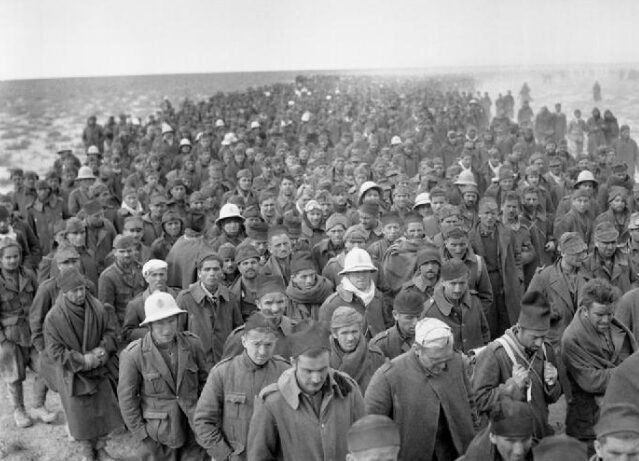
The Western Desert Campaign was a grueling struggle that highlighted the challenges of desert warfare, ultimately contributing to the Allied effort to defeat the Axis powers in World War II. Image: Italian soldiers captured during the Battle of Bardia
Why was North Africa strategically important?
Control of North Africa secured the Mediterranean, protected shipping routes like the Suez Canal, and safeguarded Middle Eastern oil supplies.
What was the campaign’s impact on Allied cooperation?
It demonstrated the growing partnership between British and American forces, paving the way for future operations in Europe.
How did the campaign affect Rommel’s reputation?
Rommel became renowned as a brilliant tactician, earning the nickname “Desert Fox”, but his logistical challenges exposed the limitations of the Axis war effort.
What was Montgomery’s role in the campaign?
Montgomery’s leadership during the Second Battle of El Alamein solidified his reputation as one of Britain’s most celebrated generals.





