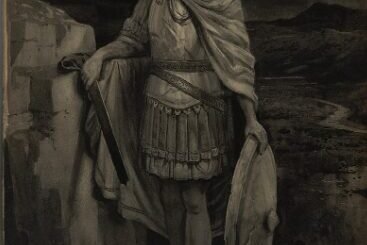
Dafydd ap Gruffydd and his struggle against England
Dafydd ap Gruffydd, born in 1238, was a central figure in the dramatic and often tragic history of Wales during the 13th century.
As a member of the royal family of Gwynedd, Dafydd’s life was deeply intertwined with the political upheavals of his time. His struggle against the expansion of English control over Wales culminated in his becoming the last native Prince of Wales, and his resistance to King Edward I of England was a final stand for Welsh independence.
His life, marked by complex family relationships, shifting political allegiances, and ultimately a brutal end, represents the last significant attempt by the Welsh to retain their autonomy before falling under English domination.
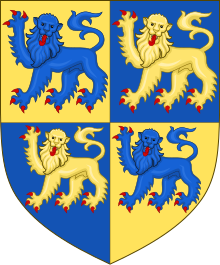
Dafydd ap Gruffydd was the last native Prince of Wales before Edward’s conquest, and English rule followed until Owain Glyndŵr revived the title during the Welsh Revolt (1400–1415). Coat of Arms of Dafydd ap Gruffydd
Early Life and Family Background
Dafydd was the son of Gruffudd ap Llywelyn and Senana, making him the grandson of Llywelyn Fawr (Llywelyn the Great), one of the most important Welsh rulers of the early 13th century. Llywelyn Fawr’s reign saw the consolidation of Gwynedd’s power, making it the leading principality in Wales.
However, following Llywelyn Fawr’s death, internal family disputes and external pressures from England began to destabilize the region. Dafydd grew up in a period where the struggle for dominance between Welsh princes and the English crown was escalating.
Dafydd was the younger brother of Llywelyn ap Gruffudd, who would later become the Prince of Wales recognized by the English crown in 1267. The relationship between Dafydd and Llywelyn was fraught with tension, alternating between cooperation and conflict. These familial disputes would be a significant factor in Dafydd’s later political and military actions.

Llywelyn ap Gruffudd
Early Political Activity and Betrayals
Dafydd’s early political activity was shaped by the broader context of Anglo-Welsh relations and his own ambitions within the royal family of Gwynedd. In 1241, when Dafydd was still a young boy, he and his younger brother Rhodri were handed over to King Henry III of England as hostages as part of a political agreement. This early exposure to English court life, combined with the experience of being used as a pawn in Welsh-English diplomacy, likely had a profound effect on his later interactions with the English crown.
By 1252, Dafydd had come of age under Welsh law and began to take a more active role in the governance of his family’s lands. He issued a charter as lord of Cymydmaen, which established him as a significant player in the local politics of Gwynedd.
However, by 1255, tensions between Dafydd and his brother Llywelyn boiled over. Dafydd, alongside another brother, Owain, challenged Llywelyn’s authority, but they were defeated at the Battle of Bryn Derwin. Dafydd was imprisoned, but Llywelyn, in a sign of familial reconciliation, released him the following year and restored him to a position of influence. This pattern of conflict and reconciliation between Dafydd and Llywelyn would continue throughout their lives.
In 1263, Dafydd again turned against Llywelyn, this time allying himself with King Henry III of England. This marked the first of several occasions where Dafydd would align himself with English forces against his own brother.
His motives for these actions were likely a combination of personal ambition and frustration with Llywelyn’s leadership. However, by 1267, after the Treaty of Montgomery recognized Llywelyn as the Prince of Wales, Dafydd reconciled once again with his brother.

Henry III inherited the English throne at the age of nine. Image: A 13th-century depiction of Henry III’s coronation
Marriage and Political Alliances
Dafydd’s marriage to Lady Elizabeth Ferrers, sometime after 1265, was a significant political move. Elizabeth was the daughter of William de Ferrers, 5th Earl of Derby, and the widow of William Marshal, 2nd Baron Marshal. Through this marriage, Dafydd acquired the manor of Folesham in Norfolk, which he later exchanged for the manor of Norton in Northamptonshire. His acquisition of these English lands demonstrated his willingness to engage in alliances and transactions with English nobility, further complicating his relationship with his Welsh heritage and his brother.
In 1278, Dafydd received a grant of the manor of Frodsham in Cheshire from King Edward I, signaling another period of cooperation with the English crown. This grant came at a time when Llywelyn’s power was beginning to wane, and it likely provided Dafydd with an opportunity to strengthen his own position.
Repeated Shifts in Allegiance
Dafydd’s shifting allegiances between his brother Llywelyn and the English crown were emblematic of the broader instability in Welsh politics during this period. In 1274, Dafydd again allied himself with the English, this time under King Edward I, in an effort to challenge Llywelyn’s rule. Edward I had a much more aggressive approach to Welsh matters than his predecessors, and his expansionist policies would ultimately lead to the conquest of Wales.
By 1277, however, after the Treaty of Aberconwy was signed between Edward and Llywelyn, Dafydd was once again reconciled with his brother. The treaty, which placed significant restrictions on Llywelyn’s power, seemed to offer a temporary peace, but tensions remained high between the Welsh and the English.
The Final Rebellion and the Loss of Welsh Independence
In 1282, Dafydd launched a daring attack on Hawarden Castle, a move that ignited the final war between Wales and England. This attack, which came during Easter, was a bold and provocative gesture that signaled Dafydd’s break from his earlier cooperation with Edward I. It also marked the beginning of a widespread Welsh rebellion against English rule.
The timing of Dafydd’s rebellion was significant. Llywelyn, who had been struggling to maintain his power in the face of growing English pressure, was killed in December 1282, possibly lured into a trap by the English. With Llywelyn’s death, Dafydd became the last Prince of Wales, though his reign would last only a few months. By January 1283, Edward I’s forces had surrounded Snowdonia, Dafydd’s last stronghold.
Dafydd’s military position became increasingly precarious as the English forces pressed forward. He moved between various fortifications, including Dolwyddelan Castle, Castell y Bere, and Dolbadarn Castle, in a desperate attempt to evade capture. However, with limited manpower and resources, Dafydd’s resistance crumbled. On 22 June 1283, he was captured, along with his son Owain, at Nanhysglain, a hiding place in a bog near Abergwyngregyn. He was seriously wounded during the capture and taken to Edward I’s camp at Rhuddlan.
Capture and Execution
Dafydd’s capture marked the end of native Welsh rule. He was taken to Chester and later Shrewsbury, where he faced trial for high treason. His trial was historically significant, as he became the first person in recorded history to be tried and executed for high treason against the English crown. On 3 October 1283, Dafydd was hanged, drawn, and quartered in a brutal and symbolic execution. His death was designed to send a message to any future would-be rebels and established a precedent for the punishment of traitors.
Dafydd’s execution was particularly gruesome. He was dragged through the streets attached to a horse’s tail, hanged until nearly dead, then revived, disemboweled, and his entrails were burned before him. Finally, his body was quartered, with his limbs sent to various parts of England as a warning. This method of execution was intended to demonstrate Edward I’s dominance and to crush any remaining resistance in Wales.
Aftermath and Legacy
The capture and execution of Dafydd ap Gruffydd effectively ended Welsh independence. His family suffered greatly in the aftermath. His daughter Gwladys was sent to a convent in Lincolnshire, where she lived until her death in 1336. His sons, Llywelyn and Owain, were imprisoned in Bristol Castle. Llywelyn died in mysterious circumstances in 1287 or 1288, while Owain lived until at least 1325.
The loss of Dafydd and his brother Llywelyn marked the end of the native Welsh princely line. However, Welsh resistance to English rule did not entirely disappear. In 1294–1295, Madog ap Llywelyn, a distant relative, led a rebellion against English rule. Although this revolt was ultimately unsuccessful, it demonstrated the enduring spirit of Welsh resistance.
Dafydd’s legacy is one of both tragedy and heroism. He is remembered as the last Prince of Wales to resist English conquest, and his execution marked a turning point in Welsh history. Wales would remain under English control for centuries, with only fleeting moments of rebellion and resistance.
Conclusion
Dafydd ap Gruffydd’s life and struggle against England encapsulate the complex and often violent relationship between Wales and its more powerful neighbor. His early years were marked by shifting alliances and familial conflict, but his later actions demonstrated a fierce commitment to Welsh independence, even in the face of overwhelming odds.
His capture and execution were a devastating blow to Welsh hopes for self-determination, but his legacy as a symbol of Welsh resistance has endured. Dafydd’s life represents the last stand of native Welsh princes before the full imposition of English rule, and his story remains a powerful chapter in the history of Wales.
Questions and Answers about Dafydd ap Gruffudd
Who was Dafydd ap Gruffudd?
Dafydd ap Gruffudd was a Welsh prince of Gwynedd and the younger son of Gruffudd ap Llywelyn and Senana. He was the grandson of Llywelyn Fawr (Llywelyn the Great), a notable ruler in Welsh history. His life was marked by political alliances, family conflicts, and clashes with the English crown.
Who did Dafydd ap Gruffudd marry, and what did he gain from the marriage?
Dafydd married Lady Elizabeth Ferrers, daughter of William de Ferrers, 5th Earl of Derby, and widow of William Marshal, 2nd Baron Marshal. Through this marriage, he acquired the manor of Folesham in Norfolk, which he later exchanged for the manor of Norton in Northamptonshire.
What significant event happened to Dafydd and his brother Rhodri in 1241?
In 1241, Dafydd and his younger brother Rhodri were handed over as hostages to King Henry III of England as part of a political arrangement.
How did Dafydd’s relationship with his brother Llywelyn ap Gruffudd evolve?
Dafydd’s relationship with his brother Llywelyn was tumultuous. In 1255, Dafydd joined their brother Owain in a challenge to Llywelyn’s leadership but was defeated. Despite being imprisoned, Dafydd was later restored to favor. His loyalties shifted over the years, sometimes allying with England against Llywelyn, but they reconciled multiple times before their final break in 1282.
What event in 1282 ignited the final war between Wales and England?
In 1282, Dafydd attacked Hawarden Castle, triggering the final war between Wales and England, which eventually led to the loss of Welsh independence.
What happened after Llywelyn ap Gruffudd’s death in 1282?
After Llywelyn’s death in December 1282, Dafydd assumed the title of Prince of Wales, but his leadership was short-lived as Edward I’s forces quickly surrounded his stronghold in Snowdonia.
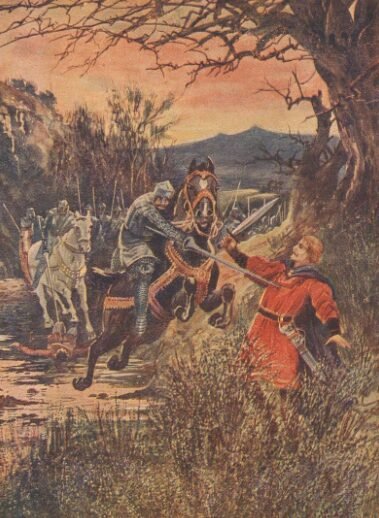
Death of Llywelyn ap Gruffudd
How and when was Dafydd ap Gruffudd captured?
Dafydd was captured on 22 June 1283 along with his son Owain at Nanhysglain, a secret hiding place in a bog near Abergwyngregyn. He was seriously wounded during the capture.
What was the fate of Dafydd after his capture?
Dafydd was transported to Shrewsbury, where he was sentenced to death for high treason in September 1283. On 3 October 1283, he was executed in a brutal manner, being hanged, drawn, and quartered, becoming the first recorded person in history to be executed for high treason.
What happened to Dafydd’s family after his execution?
Dafydd’s family faced severe consequences. His daughter Gwladys was sent to a convent in Lincolnshire, where she lived until her death in 1336. His sons, Llywelyn and Owain, were imprisoned in Bristol Castle. Llywelyn died under mysterious circumstances, while Owain lived until at least 1325.
How did Dafydd ap Gruffudd’s death affect Welsh independence?
Dafydd’s death marked the end of Welsh independence. Although Madog ap Llywelyn would lead a rebellion in 1294–1295, Welsh resistance was effectively broken, and Wales remained under English control for centuries thereafter.