Thomas Dartmouth Rice: History & Major Facts
Thomas Dartmouth Rice, often referred to as “Daddy” Rice, was an influential American performer in the 19th century, credited with helping to popularize blackface minstrel shows and the “Jim Crow” character.
His contributions left a lasting, albeit controversial, impact on American culture, particularly in shaping racial stereotypes that influenced the entertainment industry and American society.
How did Rice claim to have developed the Jim Crow character? And what other character stereotype did Rice perform besides Jim Crow?
Below is a detailed exploration of Rice’s history, career, and legacy.
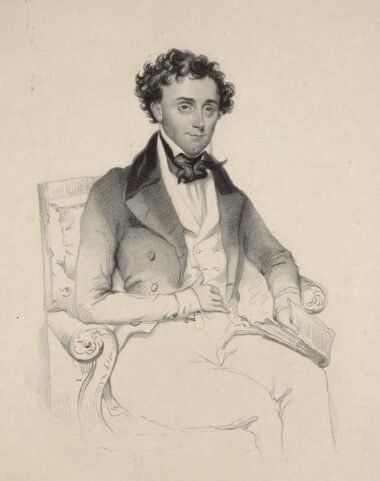
Thomas Dartmouth Rice incorporated African American vernacular speech, music, and dance into his act, which gained widespread popularity both in the U.S. and internationally.
Early Life and Background
Thomas Dartmouth Rice was born on May 20, 1808, in Manhattan’s Lower East Side, near the East River docks. His family resided in an area known for its commercial activity, influenced by the bustling life of New York City’s waterfront.
Though Rice received some formal education as a child, his schooling was cut short when he became an apprentice to a woodcarver named Dodge during his teenage years. However, Rice quickly realized that the artisan trade was not his calling. His natural inclination for performance led him to pursue a career as an entertainer.
Rise to Prominence as a Performer
By the late 1820s, Rice had become a traveling actor. He performed in various theater productions across New York and ventured into frontier stages in the South and Ohio River Valley. These performances allowed him to develop his stage presence and acting skills, and he quickly garnered attention for his physicality and ability to tell captivating stories.
Rice was described as a tall and wiry man, with some accounts placing him at over six feet in height. He often told tales of his father’s supposed friendship with George Washington, further building his reputation as an entertainer who connected with American patriotism and folklore.
The Creation of Jim Crow
Rice’s career took a pivotal turn in 1832 when he introduced the “Jim Crow” character, which would become his signature act. While blackface performances existed before Rice, he became uniquely associated with this particular persona. According to Rice, the character was inspired by a black stable groom he had encountered, who sang and danced while performing his duties. Rice claimed he bought the man’s clothes to add authenticity to his portrayal, although the veracity of this story has been questioned.
The “Jim Crow” character was built on exaggerated depictions of African Americans, combining elements of vernacular speech, song, and dance. In his act, Rice performed in blackface, using burnt cork to darken his face, and wore ragged clothing to depict a caricatured version of a black man.
His “Jim Crow” song and dance became immensely popular, with its repetitive lyrics and exaggerated movements captivating audiences across the nation. The song’s chorus, which featured the line “Weel about and turn about and do just so, / Every time I wheel about I jump Jim Crow,” became a nationwide hit.
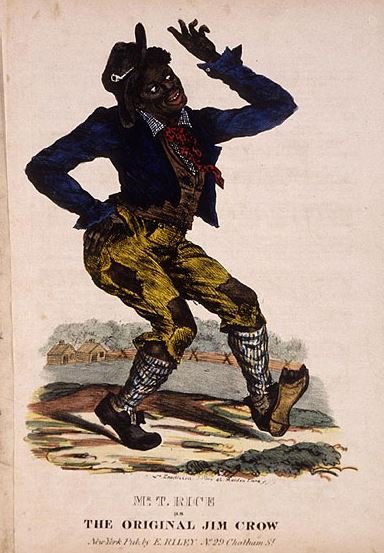
Rice’s “Jim Crow” character, based on a black folk trickster, became iconic. The character’s name later inspired “Jim Crow laws,” which enforced racial segregation in the Southern U.S. from the 1870s to 1965. Image: Thomas D. Rice as Jim Crow as drawn by American artist Edward Williams Clay
Expansion of Repertoire
As Rice’s fame grew, so did his repertoire. One of his most notable routines was the “shadow dance.” In this performance, Rice would sing “Me and My Shadow” while a child actor in blackface would crawl out of a sack and mimic Rice’s dance moves. This act delighted audiences and demonstrated Rice’s ability to incorporate humor, movement, and novelty into his performances.
He also took on other established stage characters, such as the “Yankee” stereotype, which represented rural Americans. Dressed in a long blue coat and striped pants, Rice’s Yankee character reflected an emerging sense of national identity during the early 19th century.
International Success
Rice’s career reached its peak in the 1830s, during a time when blackface performances were often included as part of variety shows or as an entr’acte within larger productions. His “Jim Crow” persona brought him significant acclaim, and he was in high demand in theaters across the United States.
Rice achieved international fame in 1836 when he took his act to London, where he introduced English audiences to blackface performance. His reputation had already spread to Europe, and by the time he arrived in London, his performances were highly anticipated. The reception was enthusiastic, solidifying Rice’s position as a global entertainer.
The Development of Blackface Minstrelsy
Although Rice was not the first blackface performer, his role in popularizing the genre cannot be understated. Blackface minstrelsy, which involved white performers darkening their skin and exaggerating African American speech and behavior, became a staple of American theater in the mid-19th century.
Rice’s performances, particularly his portrayal of “Jim Crow,” helped lay the foundation for what would become a full-blown minstrel show tradition. These minstrel shows, while immensely popular, reinforced harmful racial stereotypes and contributed to the spread of derogatory depictions of African Americans.
In the years following his success with the “Jim Crow” character, Rice created numerous variations of the persona. He appeared in plays such as Oh, Hush! (1833), Virginia Mummy (1835), and Bone Squash Diavolo (1835). Each of these productions featured characters resembling Jim Crow but with different names and settings, reflecting Rice’s ability to adapt his act to various scenarios.
In 1844, Rice wrote and starred in Otello, and in 1854, he performed as the title character in a pro-slavery adaptation of Uncle Tom’s Cabin.

Al Jolson in blackface
Personal Life
While on tour in England in 1837, Rice married Charlotte Bridgett Gladstone. They had four children, though only two survived infancy: Frances Gwynne Gladstone Rice, who lived until 1897, and Elizabeth Mary Rice, who died in 1910. Charlotte herself passed away in 1848.
Rice’s Later Years and Decline
Despite Rice’s initial wealth and success, his fortunes began to decline by the 1840s. After years of physically demanding performances, he developed a form of paralysis that limited his speech and movements. This affliction gradually took its toll on his ability to perform.
By the time of his death on September 19, 1860, at the age of 52, Rice’s condition had worsened considerably. His funeral took place at St. Thomas Church, and he was buried at Green-Wood Cemetery in Brooklyn, New York. While Rice had once amassed a considerable fortune, it was reported that he spent his later years in a liquor saloon, and his burial was funded by public donations.
Legacy of Jim Crow and Minstrelsy
The impact of Thomas Dartmouth Rice’s “Jim Crow” character went far beyond the stage. By popularizing the Jim Crow persona, Rice inadvertently lent the character’s name to the racial segregation laws enacted in the Southern United States after the Reconstruction era.
These “Jim Crow laws” institutionalized racial discrimination and segregation, affecting African Americans for decades to come. Although Rice’s intent may have been to entertain, his creation of a racially stereotyped character had far-reaching consequences that contributed to racial tensions in the United States.

Jim Crow laws were a bane of non-whites all across the United States of America
Cultural Impact and Controversy
Rice’s role in the rise of blackface minstrelsy is now seen as deeply problematic due to its perpetuation of harmful stereotypes. Blackface performances dehumanized African Americans by portraying them as comical, lazy, and inferior, reinforcing racist attitudes among white audiences.
While Rice’s performances were popular and brought him fame, they also helped normalize racist caricatures in American society.
At the time, blackface performances were considered mainstream entertainment, and Rice was celebrated as one of the most successful performers of his era.
However, with the benefit of hindsight, modern audiences view Rice’s work through the lens of historical context, acknowledging the damaging effects of minstrelsy on racial relations in the United States.
Today, blackface is widely condemned for its offensive portrayal of African Americans, and Rice’s legacy is scrutinized for the role he played in popularizing it.
The Wooden Statue of Jim Crow
An interesting relic of Rice’s career is the wooden statue of his “Jim Crow” character. In the latter half of the 19th century, this statue was displayed in various locations in New York, including outside the Chatham Garden Theatre.
The statue, made in four pieces, was painted and designed to represent Rice’s iconic character. Some sources claim that Rice carved the statue himself, while others attribute its creation to a figurehead carver named Weeden or Rice’s former employer, Charley Dodge. This statue accompanied Rice on his tour of London, serving as an advertising feature for his performances.
Conclusion
Thomas Dartmouth Rice’s contributions to American theater and the development of minstrel shows made him one of the most influential performers of the 19th century. His “Jim Crow” character, though immensely popular in its time, is now understood as a harmful racial stereotype that had long-lasting repercussions for African Americans.
Rice’s legacy is complex—while he achieved fame and success as an entertainer, his work also played a significant role in shaping the racist attitudes that persisted in American society through the Jim Crow era. His life, career, and impact are a reminder of the deep entanglement of entertainment and racial dynamics in American history.
Questions and Answers about Thomas Dartmouth Rice
Where was Thomas Dartmouth Rice born?
Thomas Dartmouth Rice was born in Manhattan’s Lower East Side, near the East River docks.
Rice apprenticed with a woodcarver named Dodge.
When did Rice begin his career as a traveling actor?
By 1827, Rice had become a traveling actor, performing in New York and in the South and Ohio River Valley.
What was the name of Rice’s most famous character?
Rice’s most famous character was “Jim Crow.”
How did Rice claim to have developed the Jim Crow character?
Rice claimed his inspiration came from a black stable groom he saw singing and dancing, and he even claimed to have bought the man’s clothes for authenticity, though these claims are disputed.
What was the “shadow dance” routine?
In the “shadow dance,” Rice sang “Me and My Shadow” while a child actor in blackface crawled out of a sack and mimicked his dance moves.
What other character stereotype did Rice perform besides Jim Crow?
Rice also portrayed the “Yankee” character, a stereotype representing rural America.
When did Rice perform in London, and how was he received?
Rice performed in London in 1836, where he was already known by reputation and enjoyed significant popularity.
What plays did Rice create that featured variants of the Jim Crow character?
Rice created plays like Oh, Hush! (1833), Virginia Mummy (1835), and Bone Squash Diavolo (1835), featuring variations of the Jim Crow persona.
What role did Rice play in the 1854 adaptation of Uncle Tom’s Cabin?
Rice played the title character in a pro-slavery adaptation of Uncle Tom’s Cabin starting in 1854.
What operatic olio did Rice create, and what was its central theme?
Rice created The Virginny Cupids, centered around the song “Coal Black Rose,” where his character, Cuff, competes for the love of a girl named Rose.
Whom did Rice marry, and how many children did they have?
Rice married Charlotte Bridgett Gladstone in 1837, and they had four children, though only two survived infancy: Frances Gwynne Gladstone Rice and Elizabeth Mary Rice.
When did Thomas Dartmouth Rice die, and where is he buried?
Rice began suffering from paralysis in the 1840s, which affected his speech and movements. He died on September 19, 1860, in New York, and he is buried at Green-Wood Cemetery in Brooklyn.
Despite earning considerable wealth, Rice’s later years were spent in a liquor saloon, and his burial was paid for by public donations.
What was the significance of the wooden statue of Rice’s Jim Crow character?
The wooden statue of Rice in his Jim Crow character stood in various locations in New York and was used as an advertising feature during his successful tour in London. Some sources claim Rice carved it himself, while others attribute it to Weeden or Charley Dodge.
The Birth of a Nation, 1915: History, Cast, Controversy, & Legacy