Deir el-Medina
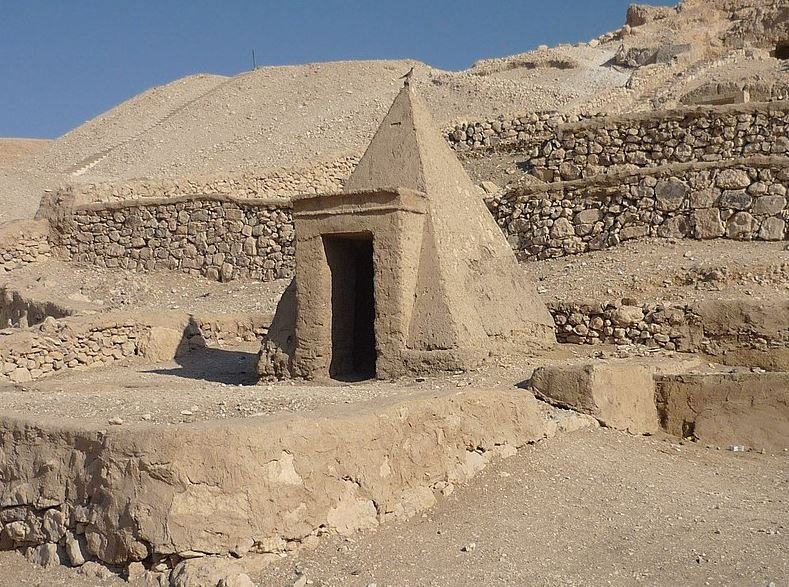
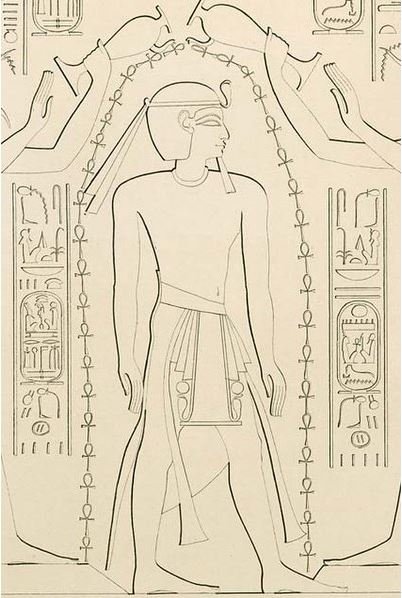
Deir el-Medina was known in ancient times as Set Maat, which translates to “Place of Truth.” The settlement housed the artisans responsible for constructing and decorating the royal tombs in the Valley of the Kings. The village thrived during the 18th to 20th Dynasties of the New Kingdom of Egypt (c. 1550–1080 BC). The inhabitants, referred to as “Servants in the Place of Truth,” were among the most skilled craftsmen of their time. The village later gained its modern name from the Coptic monastery of Saint Isidorus, which was built on the site during the Christian era.
Today, Deir el-Medina stands as a crucial archaeological site offering unparalleled insights into daily life in ancient Egypt.
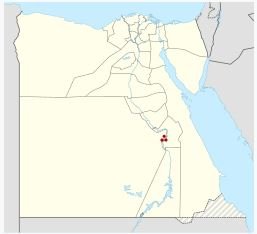
A map of Egypt with the location of Deir el-Medina, highlighted in red.
READ MORE: Ancient Egyptian Rulers of the New Kingdom and their Accomplishments
Excavation History
The site was first investigated in the 19th century when a significant cache of papyri was discovered. More systematic excavations began between 1905 and 1909 under the leadership of Ernesto Schiaparelli, followed by Bernard Bruyère, who worked extensively from 1922 to 1951. Bruyère’s excavations uncovered vast quantities of ostraca, providing invaluable details about the community’s social structure, work habits, and daily life.
Jaroslav Černý further studied the site for nearly fifty years, meticulously documenting the names and lives of many of its residents. His contributions led to the renaming of the overlooking peak as “Mont Cernabru” in honor of his and Bruyère’s work.
Layout and Architecture
Deir el-Medina was strategically located in a small natural amphitheater on the west bank of the Nile, near Luxor. The village was walled and housed around sixty-eight residences, each built using uniform construction techniques.
The houses, made of mudbrick on stone foundations, typically consisted of four or five rooms, including an entrance hall, a main living area, two smaller rooms, a kitchen, and a staircase leading to the roof.
Many homes contained niches for religious statues and small altars, reflecting the spiritual life of the inhabitants. Due to its remote location, the village likely served to ensure secrecy regarding the construction of royal tombs.
Community Life and Social Organization
The village population comprised skilled artisans, stonecutters, painters, and administrative officials. The workers were organized into two teams, left and right gangs, mirroring a ship’s crew. Each group was led by a foreman who managed daily operations.
Women played an integral role in village life, overseeing domestic tasks such as baking, brewing beer, and caring for children. Some women held religious titles, indicating their involvement in temple activities. Uniquely, women in Deir el-Medina possessed legal rights, including the ability to own property and inherit wealth.
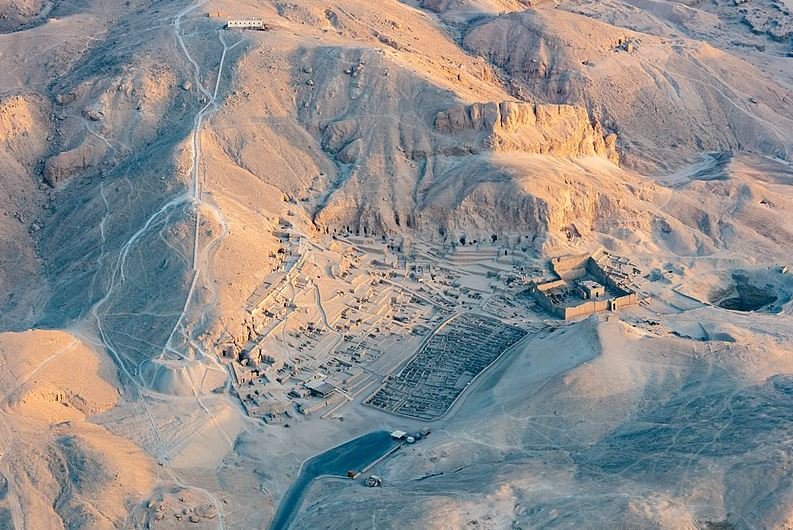
Aerial view of the remains of Deir el-Medina.
READ MORE: How were women treated in ancient Egypt?
Economic and Work Conditions
The artisans of Deir el-Medina were well-compensated government employees who received salaries in the form of grain rations, supplemented by extra provisions during festivals. Their working schedule followed an eight-day work cycle with two days off, although additional leave was granted for personal reasons.
Deir el-Medina provides a unique glimpse into the lives of skilled workers in ancient Egypt.
Surviving records show that workers often claimed absences due to illness, family issues, or even arguments with their spouses. Despite their privileges, economic hardships arose during the later years, leading to documented worker strikes.
Strikes and Labor Disputes
One of the most significant events recorded at Deir el-Medina was the labor strike during the reign of Ramesses III around 1170 BC. Due to delayed grain rations, the workers staged one of the earliest known sit-down strikes in history, refusing to continue their work until their grievances were addressed.
The strike led to negotiations, resulting in the eventual resumption of food supplies and the return to work. However, similar disputes occurred in later reigns, reflecting the broader economic instability of the period.
Religion and Popular Beliefs
Religious devotion played a central role in the lives of the villagers. The artisans worshipped various deities, including Ptah, Thoth, and Hathor. The goddess Meretseger, who was believed to protect the necropolis, was particularly revered.
The village’s well-preserved remains serve as an invaluable source for studying one of the world’s most fascinating civilizations.
The villagers also venerated Amenhotep I and his mother, Ahmose-Nefertari, who were considered divine patrons of the community. Numerous chapels and personal shrines were built, where prayers and votive offerings were made. The belief in divine justice was strong, and oracles were frequently consulted to resolve disputes and seek guidance.
Legal System and Law Enforcement
Deir el-Medina had its own court system composed of a foreman, deputies, craftsmen, and a scribe. This local judiciary dealt with civil disputes and minor criminal cases, often related to theft, contractual disagreements, and domestic conflicts.
The Medjay, a group of elite police officers, were responsible for maintaining order and preventing unauthorized access to the tombs. One of the most infamous cases involved Paneb, a corrupt official accused of tomb robbery, adultery, and causing disturbances within the community.
Medical Practices and Health
Medical care in Deir el-Medina was a combination of practical treatment and magical healing. A physician attended to the sick, while a scorpion charmer specialized in counteracting venomous bites.
Medical texts reveal various prescriptions and spells for treating ailments. The village also produced some of the earliest known examples of prosthetic devices, including a wooden and leather toe used by an amputee to facilitate walking.
Tomb Robberies and Decline
The later years of Deir el-Medina were marked by increasing tomb robberies. Economic decline, civil unrest, and corruption led to widespread looting of royal tombs. Some villagers, including high-ranking officials, were implicated in these crimes.
Despite efforts by the authorities to curb the thefts, the village was eventually abandoned around 1109–1080 BC, during the reign of Ramesses XI. The decline of centralized authority and the growing instability of the period led to the dispersal of the community.
Today, as a UNESCO World Heritage Site, Deir el-Medina continues to captivate scholars and visitors alike, offering a tangible connection to Egypt’s illustrious past.