Baldwin II, Latin Emperor
Baldwin II, or Baldwin of Courtenay, was the final Latin Emperor ruling from Constantinople. Born there in late 1217, he was the only Latin Emperor native to that city. A descendant of Yolanda of Flanders and Peter of Courtenay, he inherited an empire in steep decline.
Pressed by Byzantine successor states and saddled with crushing debts, Baldwin spent much of his life seeking aid across Europe. Although he briefly shared power with John of Brienne and tried to secure alliances through marriage, his realm shrank to little more than Constantinople’s walls. Ultimately, he fled in 1261 when Byzantine forces recaptured the city.

A depiction of Baldwin II
Baldwin II’s story offers insight into the challenges faced by the last remnants of Latin rule in the East.
Early Life and Family Background
Baldwin II was the younger son of Yolanda of Flanders, sister to the first two Latin Emperors, Baldwin I and Henry of Flanders. His father, Peter of Courtenay, was the empire’s third emperor, though his tenure ended in capture.
Born in Constantinople, Baldwin assumed the throne at age eleven when his brother, Emperor Robert, died in 1228. At that time, the empire stood on the brink of ruin, threatened by the Empire of Nicaea and other Byzantine factions.
Unlike many Crusader princes raised in Western courts, Baldwin’s childhood in Constantinople immersed him in both Latin and Greek influences. Yet the city’s dwindling population and fragile economy undermined his prospects. The ongoing power struggles and the ever-present Nicene threat foreshadowed the upheavals that would shape his tumultuous reign.
John of Brienne and Shared Rule
Because Baldwin was a minor, the Latin barons chose John of Brienne, an experienced Crusader and former King of Jerusalem, as co-emperor. This arrangement aimed to stabilize the Latin Empire: John would govern as senior ruler, while Baldwin’s eventual marriage to John’s daughter, Marie, would solidify their alliance.
In theory, John’s military background and diplomatic standing could reverse Latin losses. In practice, the empire’s decline continued. Nicaea and other Byzantine successor states steadily gained ground, and the Latin hold on Constantinople weakened. John’s status and connections failed to secure the steady influx of troops and funds needed to defend against surrounding powers.
Meanwhile, Baldwin’s youth limited his influence, leaving him overshadowed by John’s leadership. Even so, their co-rule underscored how fragile the empire had become, dependent on outside figures to sustain even a semblance of authority.
Marriage and Dynastic Ambitions
Baldwin’s union with Marie of Brienne was intended to reinforce the empire’s standing. As the daughter of John of Brienne, Marie brought a legacy tied to the Crusader Kingdom of Jerusalem. The wedding, celebrated in 1234, promised renewed legitimacy for Baldwin’s precarious throne.
However, symbols alone could not halt the empire’s slow collapse. Attacks from rival Byzantine entities intensified, and resources within Constantinople dwindled. Although marriage alliances traditionally strengthened dynasties, real power rested on military and economic might, both of which remained in short supply.
Western Europe, embroiled in its own conflicts, offered limited relief. Baldwin’s marriage, therefore, served more as a strategic gesture than a transformative development. While it linked him to venerable Crusader lineage, it did little to stop the Latin Empire’s decline, which continued with alarming speed despite these dynastic efforts.
Financial Struggles and Reliance on Western Support
The Latin Empire’s shrinking revenues forced Baldwin to continually seek funding in Europe. He traveled widely, appealing to Pope Gregory IX, French nobles, and others for money to sustain Constantinople’s defense. Relics, including the Crown of Thorns, became bargaining chips for securing loans. The most notable purchaser was King Louis IX of France, who acquired that sacred item for a substantial sum.
Nonetheless, these infusions of cash provided only temporary respite. Each new loan added to Baldwin’s burdens, while potential reinforcements rarely arrived in sufficient numbers. Political turbulence in Europe further curtailed large-scale support.
Although certain rulers offered sympathy, they faced their own domestic disputes or campaigns elsewhere. Consequently, Baldwin’s repeated visits abroad yielded limited results. Constantinople’s precarious position—surrounded by hostile forces—required more than sporadic aid, yet persistent appeals did not translate into a decisive surge of Western troops or resources.
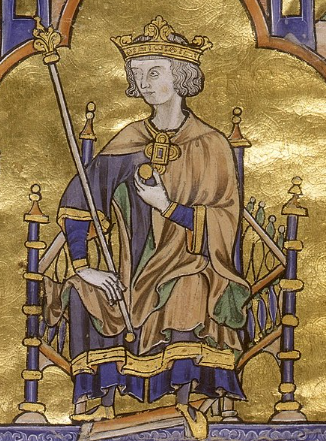
Louis IX of France
Desperate Measures: Relics and Hostages
Baldwin’s dire finances led him to even graver steps, such as pledging his son Philip of Courtenay to Venetian creditors. Unable to repay huge debts, he handed Philip over as a living guarantee. Eventually, Alfonso X of Castile intervened, liberating the prince in exchange for future favors or alliances.
Meanwhile, Baldwin sold or pawned additional sacred items, relying on Europe’s fascination with relics to attract interest. These acts revealed how far his empire had fallen, with the emperor himself sacrificing family dignity for short-term gains. Yet no matter how many relics he bartered, Baldwin could not halt the Byzantine reconquest.
Each desperate pledge heightened Constantinople’s dependence on far-flung patrons. Ultimately, these extreme measures underscored the emperor’s precarious position: a ruler of an empire in name only, fighting to sustain a capital on the edge of collapse.
Loss of Constantinople and Flight
In July 1261, Byzantine forces under Alexios Strategopoulos exploited a neglected entrance to Constantinople, surprising the Latin garrison.
Baldwin, sleeping in the Blachernae Palace, woke to chaos. Hastily abandoning his imperial regalia, he escaped on a Venetian galley and fled to Negropont, then to Athens and Italy. The fall of Constantinople restored the Byzantine Empire under Michael VIII Palaiologos. For Baldwin, it meant the end of any real authority over the city of his birth. Stripped of his capital, he became a wandering claimant, seeking yet again to rally Western aid.
However, European powers were no more eager than before to invest in a distant campaign. Baldwin’s humiliating flight symbolized the ephemeral nature of Latin control in the East. Despite bearing the title Emperor in exile, he now had little more than memories of a throne he could not reclaim.
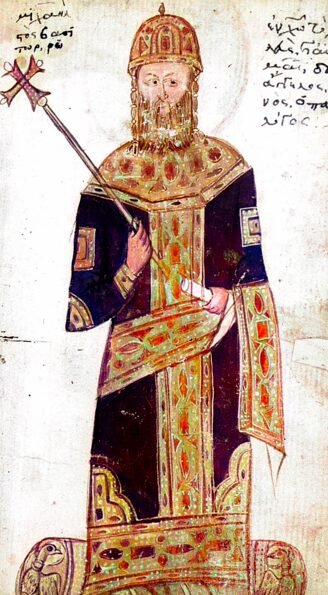
Artwork depicting Michael VIII Palaiologos.
Alliance with Charles of Anjou
Baldwin looked to Charles of Anjou, brother to King Louis IX, for renewed hopes of regaining Constantinople. In 1267, they signed the Treaty of Viterbo, granting Charles rights to conquer the Byzantine Empire in return for aiding Baldwin’s restoration. Charles, already ruling Sicily, saw an opportunity to extend his power into the East.
Baldwin believed this alliance would deliver the military strength he had long sought. While plans were laid for an offensive against Michael VIII, shifting political realities intervened. Uprisings in Sicily would soon undermine Charles’s ambitions, making an expedition unlikely.
Baldwin’s position grew more tenuous, as he depended on someone whose own realm was destabilized. Though the dream of reconquest persisted in rhetoric, resources never matched these lofty goals. The Treaty of Viterbo thus became another unrealized effort, leaving Baldwin stuck in a cycle of hope and disappointment.
Baldwin II’s reign epitomizes the twilight of Latin power in Constantinople.
Final Years and Death
In exile, Baldwin continued roving across Europe, pleading for help to reclaim his lost capital. With dwindling options, he placed his faith in Charles of Anjou’s ambitions, receiving stipends to sustain a modest household.
In 1273, Baldwin arranged for his son Philip to wed Charles’s daughter Beatrice, thereby forging closer ties. Nonetheless, neither this marriage nor any of Baldwin’s appeals yielded a serious campaign against Constantinople.
Worn by years of fruitless negotiations, Baldwin died that October in Naples. Having ruled mostly in name, he left behind an empire that had long ceased to exist in reality. His passing closed the final chapter of Latin imperial rule from Constantinople’s throne. Only historical memory would preserve his story, reminding later generations of the ephemeral Latin dominion in Byzantium’s ancient capital.
What are the Byzantine Empire’s Most Important Accomplishments?
Frequently Asked Questions
How did Baldwin II become Emperor at such a young age?
He inherited the position after his brother, Emperor Robert, died in 1228, leaving Baldwin, then just eleven, as the next in line.
Why was John of Brienne chosen to co-rule with Baldwin?
Because Baldwin was a minor and the empire was in crisis, the barons selected the experienced John of Brienne to stabilize the Latin Empire and mentor the young emperor.
What role did Baldwin’s marriage to Marie of Brienne play?
It was meant to solidify ties to John of Brienne’s family and strengthen the weakening Latin Empire, although it failed to reverse the empire’s decline.
How did Baldwin cope with the empire’s dire finances?
He made repeated trips to Western Europe, pawned relics (notably the Crown of Thorns), and even handed over his son Philip to Venetian merchants as a loan guarantee.
What led to Baldwin’s final loss of Constantinople?
In 1261, Byzantine forces under Alexios Strategopoulos took advantage of a poorly guarded entrance, surprising Baldwin’s garrison and forcing him to flee.
What was Baldwin’s life like after fleeing Constantinople?
He lived in exile, traveling through Europe in hopes of securing funds or alliances for a counteroffensive to reclaim his lost capital.
Why was Charles of Anjou significant in Baldwin’s later years?
Baldwin pinned his hopes on Charles, signing the Treaty of Viterbo in 1267 to regain Constantinople, but shifting politics prevented any large-scale campaign.
How did Baldwin II’s reign ultimately end?
He died in Naples in 1273, still titular emperor but without real power, marking the end of Latin rule in Constantinople.





