Diogenes Laertius: The Famed Biographer of Greek Philosophers
by World History Edu · December 9, 2024
Diogenes Laërtius stands as a pivotal figure in the preservation of ancient Greek philosophy. Renowned for his comprehensive biographical work, “Lives and Opinions of Eminent Philosophers,” he has provided invaluable insights into the lives and thoughts of many philosophers whose original works have been lost. Despite the limited information about his personal life, Diogenes Laërtius’s contributions have left an enduring legacy in the study of philosophy.

Diogenes Laërtius, a 3rd-century AD Greek biographer, authored “Lives and Opinions of Eminent Philosophers,” a key source on ancient Greek philosophy. Image: An engraving of Laertius.
READ MORE: Greatest Roman Historians and their Accomplishments
Historical Context and Timeline
Diogenes Laërtius flourished in the first half of the 3rd century AD, likely during the reign of Emperor Alexander Severus (222–235) and his successors.
His lifetime positions him after Sextus Empiricus (circa 200 AD), whom he references, and before later scholars such as Stephanus of Byzantium and Sopater of Apamea (circa 500 AD), who cite his work.
Although little is known about his personal life, Diogenes Laertius’ work preserves information from many lost primary sources.
The above placement situates Diogenes in a period transitioning from classical traditions to the early stages of Neoplatonism, although his writings notably lack references to Neoplatonic thought.
Nomenclature and Identity
The exact nomenclature of Diogenes Laërtius is a subject of scholarly debate. Ancient manuscripts predominantly name him “Laertius Diogenes,” a form reiterated by sources like Sopater and the Suda, a Byzantine encyclopedia.
The more familiar “Diogenes Laërtius” appears less frequently, used by Stephanus of Byzantium and in the Greek Anthology.
Additional variations include “Laertes” and simply “Diogenes,” complicating the precise identification of his works. The epithet “Laertius” is likely a nickname derived from the Homeric epithet “Diogenes Laertiade” used for Odysseus, intended to distinguish him from numerous other individuals named Diogenes in antiquity.
Origin and Background
The birthplace of Diogenes Laërtius remains uncertain. While some speculative interpretations of his writings suggest a possible origin from Nicaea in Bithynia, there is no definitive evidence to confirm his hometown.
The reference by Stephanus of Byzantium to “Διογένης ὁ Λαερτιεύς” (Diogenes ho Laertieus) hints at a geographical link, potentially to a town named Laerte in regions such as Caria or Cilicia.
Alternatively, the name might derive from a patronymic connection to the Roman family of the Laërtii. However, these theories remain unverified and are subject to academic debate.
Philosophical Affiliations
Diogenes Laërtius’s philosophical leanings are ambiguous. His fervent defense of Epicurus in Book 10 of his “Lives and Opinions of Eminent Philosophers,” which includes extensive letters attributed to Epicurus, showcases his engagement with Epicurean doctrines.
Additionally, his impartial treatment of various philosophical schools suggests a possible alignment with Pyrrhonism—a skeptical school emphasizing the suspension of judgment. He even refers to the Pyrrhonists as “our school,” though this may reflect his methodological approach rather than personal commitment. Consequently, it remains unclear whether Diogenes adhered to any specific philosophical tradition, as his primary focus was on compiling biographical and historical information rather than advocating particular doctrines.
Major Works
Lives and Opinions of Eminent Philosophers
Diogenes Laërtius’s most significant contribution is “Lives and Opinions of Eminent Philosophers” (Βίοι καὶ γνῶμαι τῶν ἐν φιλοσοφίᾳ εὐδοκιμησάντων), written in Greek and later translated into Latin. This extensive compilation documents the lives and teachings of Greek philosophers, serving as a crucial source for understanding the history of ancient Greek philosophy. Despite being criticized as an “uncritical and unphilosophical compilation,” the work preserves valuable biographical details about many philosophers whose original writings have not survived.
Epigrammata or Pammetros
In addition to his magnum opus, Diogenes Laërtius authored another work titled “Epigrammata” or “Pammetros,” consisting of verses about notable individuals written in various poetic meters. Unfortunately, this work has not survived, and our knowledge of it is limited to references in other ancient texts.
Structure and Content of Lives and Opinions
“Lives and Opinions of Eminent Philosophers” is meticulously divided into ten books, categorizing philosophers into two primary schools: the Ionian (Ionic) and the Italian (Italic). This classification, though somewhat dubious, is believed to derive from the lost doxography of Sotion, an ancient philosopher. The Ionian school includes figures from Anaximander to Chrysippus, encompassing prominent philosophers like Socrates, Plato, and Aristotle. Conversely, the Italian school covers Pythagoras to Epicurus, including the Epicureans.
Each book delves into specific philosophical schools or notable figures. For example:
- Book 1: The Seven Sages, including Thales and Solon.
- Book 2: Socratic philosophy, featuring Socrates, Xenophon, and Aristippus.
- Book 3: Dedicated solely to Plato.
- Books 4-7: Explore the Academy, Peripatetics, Cynics, and Stoics.
- Books 8-10: Focus on Italian philosophical traditions, addressing Pythagoreans, Eleatics, Atomists, Pyrrhonists, and culminating with Epicureanism.
This structured approach allows readers to trace the development and interconnections among various philosophical doctrines and their proponents.
Sources and Compilation Method
Diogenes Laërtius drew upon a diverse array of sources for his compilation. His chief authorities included Favorinus and Diocles of Magnesia. Additionally, he incorporated information from Antisthenes of Rhodes, Alexander Polyhistor, Demetrius of Magnesia, Hippobotus, Aristippus, Panaetius, Apollodorus of Athens, Sosicrates, Satyrus, Sotion, Neanthes, Hermippus, Antigonus, Heraclides, Hieronymus, and Pamphila, among others. This extensive sourcing underscores his role as a compiler of philosophical biographies.
However, his reliance on these varied sources without critical analysis has been a point of contention among scholars. Diogenes often uncritically copies information from his sources, leading to potential inaccuracies and inconsistencies. His focus on biographical details over philosophical analysis further complicates the reliability of his accounts.
Transmission and Manuscripts
The transmission of “Lives and Opinions of Eminent Philosophers” through manuscripts reveals a complex history. Numerous manuscripts exist, none of which are particularly ancient, and all descend from a common ancestor due to the uniform lack of the conclusion of Book VII. The three most significant manuscripts are:
- Manuscript B (Codex Borbonicus): Dated to the 12th century, housed in the National Library of Naples.
- Manuscript P (Paris): Dated to the 11th/12th century, located in the Bibliothèque nationale de France.
- Manuscript F (Florence): Dated to the 13th century, kept in the Laurentian Library.
These manuscripts are invaluable for preserving Diogenes’s work, although they lack titles for individual biographies in their earliest forms. These titles were later added by scribes in the margins and blank spaces of Manuscript P.
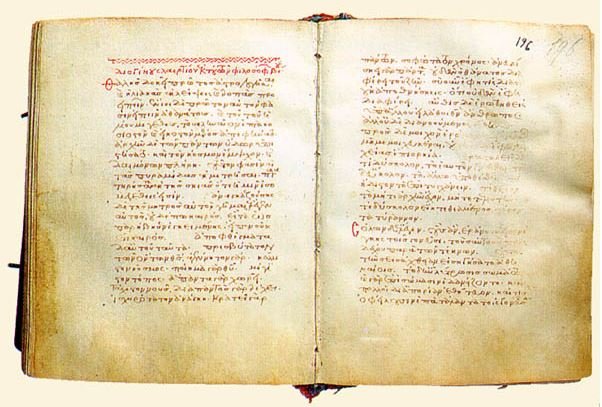
Image: A manuscript from the 13th century featuring the works of Laertius.
Translations and Editions
Early Latin translations of Diogenes Laërtius’s work existed but have not survived to the present day. Notable among these is the 10th-century “Tractatus de dictis philosophorum,” which shows familiarity with Diogenes’s writings. In the 12th century, Henry Aristippus translated portions of the work into Latin, a translation later utilized by Geremia da Montagnone in his “Compedium moralium notabilium” (circa 1310) and by an anonymous Italian author in “Liber de vita et moribus philosophorum” (circa 1317–1320), a text that gained widespread popularity during the Late Middle Ages.
Ambrogio Traversari produced another Latin translation in Florence between 1424 and 1433, with better records surviving for this version. The advent of the printing press saw the publication of Latin translations, with the first being “Laertii Diogenis Vitae et sententiae eorum qui in philosophia probati fuerunt,” printed in Rome by Giorgo Lauer in 1472. This edition featured the translation of Ambrogio Traversari, edited by Elio Francesco Marchese.
The first complete Greek edition was published by Hieronymus Froben in 1533. A significant 1692 Greek/Latin edition by Marcus Meibomius standardized the division of each of the ten books into uniformly numbered paragraphs, a system still in use today.
Critical editions emerged much later, with H.S. Long producing the first complete critical edition in the Oxford Classical Texts series in 1964. This edition was later superseded by Miroslav Marcovich’s Teubner edition (1999–2002) and further refined by Tiziano Dorandi’s edition published by Cambridge University Press in 2013.
English translations have evolved over time. Thomas Stanley’s 1656 “History of Philosophy” adapted Laërtius’s format into English but compiled his book from various classical biographies.
The first complete English translation was a late 17th-century effort by ten different persons. Charles Duke Yonge’s 1853 translation was more literal but contained inaccuracies. Robert Drew Hicks’s 1925 translation for the Loeb Classical Library, Pamela Mensch’s 2018 translation by Oxford University Press, and Stephen White’s 2020 translation by Cambridge University Press represent more accurate and comprehensive efforts, making Diogenes Laërtius’s work accessible to modern audiences.
Legacy and Influence
Diogenes Laërtius’s influence extends beyond his immediate contributions to philosophical biography. During the Italian Renaissance, scholars like Leon Battista Alberti drew inspiration from his work, modeling Alberti’s autobiography on Diogenes’s “Life of Thales.”
Latin translations facilitated the spread of his influence, with works like Geremia da Montagnone’s “Compedium moralium notabilium” and the anonymous “Liber de vita et moribus philosophorum” gaining significant traction in medieval intellectual circles.
These translations ensured that Diogenes Laërtius’s biographical accounts remained a cornerstone for the study of ancient philosophy throughout the Middle Ages and into the Renaissance.
Modern Scholarly Assessment
Modern assessments of Diogenes Laërtius present a nuanced picture. While the French Renaissance philosopher Michel de Montaigne praised him for the rich biographical insights he provided, subsequent scholars have offered more critical evaluations.
Georg Wilhelm Friedrich Hegel dismissed Diogenes as a mere compiler lacking philosophical depth, though he acknowledged the work’s importance due to the scarcity of other sources. Hermann Usener and Werner Jaeger harshly criticized him for superficial treatment of philosophical subjects and perceived intellectual inadequacies.
However, late 20th and early 21st-century scholarship has sought to rehabilitate his reputation by situating his work within the Hellenistic literary context. Scholars acknowledge his role as a crucial, albeit flawed, transmitter of philosophical history.
Herbert S. Long emphasized that Diogenes’s importance is disproportionately high relative to his actual merits, primarily because he stands as one of the few continuous sources available after the loss of many primary texts.
Robert M. Strozier offered a more balanced view, recognizing Diogenes’s reliability in straightforward reporting, especially regarding Epicurean doctrines, while acknowledging his tendency to conflate and simplify complex philosophical distinctions.
Reliability and Criticisms
The reliability of Diogenes Laërtius has been a central point of contention. Critics argue that his works are generally unreliable due to inconsistencies, factual errors, and a lack of critical evaluation of his sources. Some errors likely resulted from copyist mistakes during the transmission of manuscripts, while others may stem from Diogenes’s own inaccuracies. The use of sources from comic poets and other non-philosophical texts further undermines the credibility of certain biographical details.
Brian Gregor and Delfim Leão caution that readers benefit from modern scholarly assistance when engaging with Diogenes’s biographies, as they are “notoriously unreliable.” Some scholars argue that the unreliability is not entirely Diogenes’s fault but rather a reflection of the imperfect and fragmentary sources available to him. Nonetheless, despite these criticisms, Diogenes Laërtius’s work retains its significance due to the breadth of information it preserves about ancient Greek philosophers.
Frequently Asked Questions
Who was Diogenes Laërtius and what is he best known for?
Diogenes Laërtius was a 3rd-century AD Greek biographer renowned for his work “Lives and Opinions of Eminent Philosophers,” which is a principal source for the history of ancient Greek philosophy.
When did Diogenes Laërtius live, and which scholars did he precede and follow?
He flourished in the first half of the 3rd century AD, during Emperor Alexander Severus’s reign (222–235). He lived after Sextus Empiricus (circa 200 AD) and before Stephanus of Byzantium and Sopater of Apamea (circa 500 AD), who quoted his work.
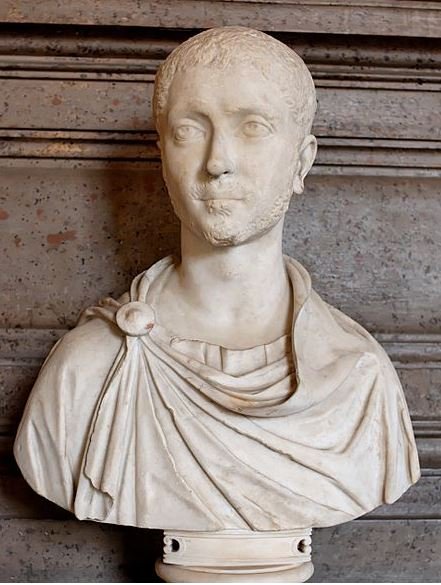
Image: Bust of Severus Alexander
Why is the absence of Neoplatonism in Diogenes Laërtius’s work significant?
Despite being addressed to a devoted Platonist woman, his lack of references to Neoplatonism suggests he operated within an earlier philosophical context, aligning more with fading classical traditions than the emerging Neoplatonic movement.
What variations exist in the nomenclature of Diogenes Laërtius, and what is the likely origin of “Laertius”?
He is referred to as “Laertius Diogenes,” “Diogenes Laërtius,” “Laertes,” and simply “Diogenes.” The name “Laertius” is likely a nickname inspired by the Homeric epithet for Odysseus, distinguishing him from other individuals named Diogenes.
Is the birthplace of Diogenes Laërtius known?
No, his exact hometown remains uncertain. Some speculative passages suggest he may have been from Nicaea in Bithynia, but this remains unverified.
What philosophical affiliations might Diogenes Laërtius have had?
While he fervently defends Epicurus in Book 10 and shows impartiality across various schools, suggesting possible alignment with Pyrrhonism, it remains unclear if he adhered to any specific philosophical school due to his focus on biographical content.
Did Diogenes Laërtius author any works besides “Lives and Opinions of Eminent Philosophers”?
Yes, he is known to have written “Epigrammata” or “Pammetros,” a collection of verses about notable individuals, though this work has not survived.
How is “Lives and Opinions of Eminent Philosophers” structured?
The work is divided into ten books, categorizing philosophers into the Ionian (Ionic) and Italian (Italic) schools. The Ionian school includes figures from Anaximander to Chrysippus, while the Italian school covers Pythagoras to Epicurus.
What are the primary sources Diogenes Laërtius used for his compilation?
His chief authorities included Favorinus and Diocles of Magnesia, along with Antisthenes of Rhodes, Alexander Polyhistor, Demetrius of Magnesia, and others, drawing from a wide array of philosophical and historical texts.
What is known about the manuscript transmission of Diogenes Laërtius’s work?
Numerous manuscripts exist, none particularly ancient, all descending from a common ancestor lacking the end of Book VII. The most significant manuscripts are B (12th century), P (11th/12th century), and F (13th century).
How has “Lives and Opinions of Eminent Philosophers” been translated and published over time?
Early Latin translations existed but did not survive. The first printed editions appeared in Latin in the late 15th century, with the first complete Greek edition published in 1533. Critical editions emerged in the 20th century, and modern English translations include those by Charles Duke Yonge (1853), Robert Drew Hicks (1925), Pamela Mensch (2018), and Stephen White (2020).
What is the modern scholarly assessment of Diogenes Laërtius’s reliability and legacy?
While his work is invaluable for preserving information on many lost philosophers, scholars caution against uncritical use due to inconsistencies and lack of source citations. Critics label him unreliable, but some acknowledge his role in maintaining philosophical history. Modern scholarship continues to debate his accuracy, balancing his contributions with recognized limitations.





