Dionysius of Halicarnassus: Life and Major Works
Dionysius of Halicarnassus (c. 60 BC – after 7 BC) was a prominent Greek historian, teacher of rhetoric, and literary critic, best known for his monumental historical work Roman Antiquities (Rhōmaikē Archaiologia).
His writings reflect a deep admiration for Roman history and civilization, and they offer valuable insights into both the history of Rome and the rhetorical practices of his time.
Dionysius was active during the reign of Emperor Augustus, a period in which the Roman Empire was consolidating its power and cultural influence across the Mediterranean. His work, which spanned history, rhetoric, and literary criticism, not only preserved key aspects of Roman history but also sought to connect it with Greek traditions.
Early Life and Education
Dionysius was born around 60 BC in Halicarnassus, a Greek city located in modern-day Turkiye. At the time of his birth, Halicarnassus was part of the Roman Empire, and it was a city with a rich cultural heritage, most famous for being the home of Herodotus, the “Father of History.” The city had long-standing connections to the intellectual traditions of both Greece and Rome, and Dionysius was likely exposed to a broad range of cultural and historical influences from a young age.
Little is known about Dionysius’ early life and education, but it is clear that he was deeply influenced by the intellectual traditions of Classical Greece. He was particularly drawn to the rhetorical and literary practices of Attic Greece, especially the works of great orators and historians like Thucydides, Demosthenes, and Isocrates. Dionysius’ later works, especially his rhetorical essays, reflect this profound engagement with the Attic tradition.
At some point after the end of the Roman civil wars (likely in the 30s BC), Dionysius moved to Rome. His relocation coincided with the beginning of the Augustan era, a period marked by relative peace after years of civil conflict, as well as significant political and cultural shifts under the leadership of Augustus. Rome was becoming the uncontested power of the Mediterranean, and for intellectuals like Dionysius, the city was a thriving center of learning and scholarship.
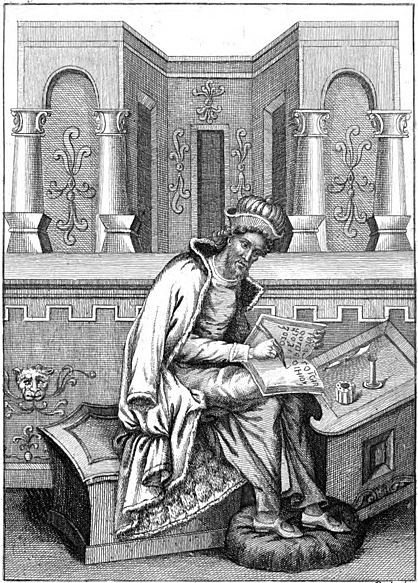
Image: An illustration of Dionysius of Halicarnassus
Move to Rome and Intellectual Contributions
After arriving in Rome, Dionysius spent the next 22 years studying Latin, Roman literature, and history, and preparing materials for his historical and rhetorical works. It is clear that he immersed himself in Roman society, gaining proficiency in Latin and familiarizing himself with the city’s political and cultural life. While he never entirely abandoned his Greek heritage, Dionysius developed a deep admiration for Roman institutions and culture, which is reflected in his major works.
During his time in Rome, Dionysius earned a reputation as a teacher of rhetoric. He gave lessons to Roman elites and intellectuals, and his essays on rhetoric were widely circulated. His intellectual work was diverse, ranging from historical research to rhetorical theory and literary criticism. Dionysius believed strongly in the importance of paideia—the classical Greek concept of education rooted in the study of literature, rhetoric, and philosophy. For Dionysius, true knowledge and effective rhetorical practice could only come from a deep understanding of classical Greek and Roman sources.
Roman Antiquities
Dionysius’ most significant work, Roman Antiquities (Rhōmaikē Archaiologia), is a monumental history of Rome that aimed to trace the development of Roman civilization from its earliest mythical origins to the eve of the First Punic War in 264 BC. The work originally comprised 20 books, of which only the first nine have survived in their entirety. Portions of the remaining books are preserved in fragments and citations by later authors.
Dionysius wrote Roman Antiquities with several objectives in mind. First, he wanted to provide a comprehensive history of Rome that would highlight its noble origins and the virtues of its early leaders. Like many of his contemporaries, Dionysius admired Roman political institutions, particularly the Roman Republic, which he believed exemplified many of the ideals of good governance. His history was intended to show that Rome’s greatness was not the result of chance but the product of careful planning, virtuous leadership, and adherence to moral principles.
Second, Dionysius sought to demonstrate the close cultural and historical ties between Rome and Greece. Although Greece had been conquered by Rome, many Greek intellectuals, including Dionysius, believed that Rome had inherited the mantle of Greek civilization. By emphasizing the Greek roots of Roman culture and tracing parallels between the two societies, Dionysius aimed to create a sense of shared heritage between the Greeks and Romans.
READ MORE: Frequently Asked Questions about the Punic Wars
Structure and Themes of Roman Antiquities
Roman Antiquities is structured chronologically, starting with the mythical founding of Rome by Aeneas, the Trojan hero, and continuing through the reign of the Roman kings, the establishment of the Republic, and the early Republican period. The work stops short of discussing contemporary Roman history, focusing instead on the distant past, which allowed Dionysius to present a largely idealized version of Roman society.
The early books of Roman Antiquities draw heavily on Roman mythology and legend, recounting the tales of Rome’s foundation by Romulus and Remus, the exploits of the early kings, and the conflicts that shaped the city in its formative years. While Dionysius was writing for a Roman audience, he was also careful to frame these stories in ways that would appeal to Greek readers. He consistently highlighted the connections between Roman myths and Greek traditions, stressing the influence of Greek culture on Rome’s development.
One of the central themes of Roman Antiquities is the idea of moral virtue. Dionysius believed that Rome’s success was built on the virtues of its leaders, particularly their commitment to justice, self-discipline, and the welfare of the state. He idealized early Roman leaders as paragons of virtue, contrasting their behavior with what he saw as the corruption and moral decay of later periods. This emphasis on moral leadership is a reflection of Dionysius’ Stoic philosophical leanings, as well as his broader belief in the importance of virtue for the stability and prosperity of any political community.
Influence and Legacy of Roman Antiquities
While Roman Antiquities was not widely read in the centuries immediately following Dionysius’ death, it became an important source of information about early Roman history for later historians and scholars. In the Byzantine era, particularly in the works of authors like John Zonaras and Constantine Porphyrogenitus, parts of Roman Antiquities were preserved and cited, ensuring that Dionysius’ contributions to Roman historiography were not forgotten.
Dionysius’ depiction of early Rome, with its emphasis on moral virtue and its connections to Greek civilization, influenced how later generations understood the early history of the city. His work also shaped the historiographical tradition of interpreting Roman history as a continuous progression of moral and political development, rather than a series of disconnected events.
Despite the historical inaccuracies and mythological elements present in Roman Antiquities, the work remains a valuable resource for scholars studying Roman history, particularly for its detailed accounts of Roman customs, religious practices, and political institutions. Dionysius’ commitment to blending Greek and Roman traditions also provides insight into the cultural dynamics of the early Roman Empire, when intellectuals from the Greek-speaking eastern provinces sought to find their place within the Roman world.
Rhetorical and Literary Criticism
In addition to his historical works, Dionysius was an influential literary critic and rhetorician. His essays on rhetoric were widely circulated in antiquity, and they represent some of the most comprehensive treatments of Greek rhetorical theory from the late Hellenistic period. Dionysius’ rhetorical works reflect his deep admiration for the Attic orators and his belief in the importance of classical Greek education as the foundation for effective communication.
One of Dionysius’ most important rhetorical treatises is On the Ancient Orators, in which he discusses the styles and techniques of the great orators of Classical Athens, including Demosthenes, Lysias, and Isocrates. In this work, Dionysius emphasizes the importance of clarity, simplicity, and elegance in oratory, praising the Attic style for its balance and restraint. He contrasts this with the more ornate and bombastic rhetorical styles that had become popular in the Hellenistic period, which he viewed as overly theatrical and lacking in substance.
Dionysius was also deeply concerned with the moral dimension of rhetoric. For him, the purpose of rhetoric was not simply to persuade but to educate and improve the moral character of the audience. He believed that good rhetoric was grounded in truth and should promote virtuous behavior. This ethical approach to rhetoric is consistent with the broader Stoic philosophy that underpinned much of Dionysius’ thought.
In On the Arrangement of Words (Περὶ συνθέσεως ὀνομάτων), Dionysius examines the technical aspects of rhetorical composition, particularly the arrangement of words and sentences to create a pleasing and effective style. He discusses the rhythm and cadence of prose, drawing parallels between oratory and music, and offers practical advice for aspiring orators on how to achieve harmony and elegance in their speeches.
Dionysius’ Contribution to Roman-Greek Relations
One of Dionysius’ major intellectual projects was to emphasize the close relationship between Greek and Roman culture. While many Greeks viewed the Roman conquest of Greece as a cultural and political disaster, Dionysius took a more conciliatory approach. He argued that the Romans were the rightful heirs to Greek civilization and that the Roman Empire was a continuation of the Greek tradition rather than its destruction.
By tracing Rome’s origins back to Greek heroes like Aeneas and emphasizing the influence of Greek customs on Roman institutions, Dionysius sought to create a sense of cultural unity between the two civilizations. His work reflects the broader trend of philhellenism in Roman intellectual life, especially under Augustus, who promoted the idea that Rome was the successor to the great empires of the past, including Greece.
This effort to bridge the gap between Greek and Roman culture is a recurring theme in Dionysius’ historical and rhetorical works. He believed that by highlighting the shared values and traditions of the two societies, he could foster greater understanding and cooperation between Greeks and Romans. His writings played a role in shaping the cultural identity of the Roman Empire, particularly in the eastern provinces, where Greek remained the dominant language and cultural influence.

Image: Augustus
Conclusion
Dionysius of Halicarnassus was a historian, rhetorician, and literary critic whose works have had a lasting impact on both Roman and Greek historiography. His Roman Antiquities provides a detailed and, at times, idealized account of Rome’s early history, while his rhetorical essays offer valuable insights into the theory and practice of rhetoric in the late Hellenistic period.
Dionysius’ efforts to connect Greek and Roman culture, his emphasis on moral virtue, and his belief in the importance of classical education all reflect the intellectual currents of his time. As a Greek intellectual living in Rome during the reign of Augustus, Dionysius was uniquely positioned to contribute to the cultural synthesis that defined the early Roman Empire.
Frequently Asked Questions
What is Dionysius of Halicarnassus best known for?
He is best known for his work Roman Antiquities (Rhōmaikē Archaiologia), which chronicles Rome’s history from its origins to the First Punic War in 264 BCE.
How many books did Roman Antiquities originally have, and how many survive today?
Roman Antiquities originally consisted of twenty books, but only the first nine have survived.
What was notable about Dionysius’ literary style?
Dionysius used an atticistic style, imitating the Classical Attic Greek of earlier periods.
Where did Dionysius of Halicarnassus move to, and how long did he spend studying there?
He moved to Rome after the civil wars and spent 22 years studying Latin, Roman literature, and preparing his historical writings.
What influence did Dionysius have on Greek culture?
His views on education, promoting knowledge from classical sources, influenced the identity of the Greek elite for centuries.
Is the exact date of Dionysius’ death known?
No, the exact date of Dionysius’ death remains unknown.