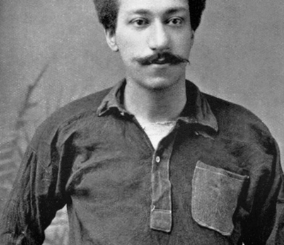
William Petty, 2nd Earl of Shelburne
William Petty, 2nd Earl of Shelburne, also known as the 1st Marquess of Lansdowne, was an influential British statesman and political figure in the 18th century. Born on May 2, 1737, in Dublin, Ireland, Shelburne played a pivotal role in shaping the political and diplomatic course of Britain during a period of significant upheaval, especially in relation to the American War of Independence. His career, marked by both high achievement and political controversy, left a lasting impact on British politics and foreign policy.
In this detailed exploration of his life and career, World History Edu will shed light on his background, early years, political rise, time as Prime Minister, and legacy.
Early Life and Background
William Petty was born into a prominent Anglo-Irish family, with his father, John Petty, holding the title of 1st Earl of Shelburne. His family was well-connected and wealthy, owning estates in both Ireland and England. Petty’s mother, Mary Fitzmaurice, was also of noble descent, and the Petty family had a tradition of public service and intellectual engagement. As a young man, Shelburne was given a strong classical education, attending Christ Church, Oxford. Despite later criticisms of his education, he was widely regarded as an intelligent and capable individual.
Shelburne’s formative years were shaped by his military service. He joined the British Army and served during the Seven Years’ War (1756–1763), a conflict that saw Britain and France vie for global dominance. Shelburne distinguished himself in battle, particularly at the Battle of Kloster Kampen in 1760, and was subsequently promoted to the rank of colonel. His military service earned him the favor of King George III, and he was appointed as an aide-de-camp to the king—a prestigious position that granted him closer access to royal circles.
Political Beginnings
Shelburne’s political career began in earnest in 1760, when he was elected as a Member of Parliament for Wycombe. His father’s death in 1761 meant that he inherited the title of 2nd Earl of Shelburne, which granted him a seat in the House of Lords. From this position, Shelburne quickly became involved in the political affairs of the nation. He aligned himself with the Whig Party, which at the time was divided into factions. Shelburne sided with the more reform-minded Whigs, who were critical of the growing centralization of power and the influence of the aristocracy in governance.
In 1766, Shelburne was appointed to his first significant governmental role as Southern Secretary in the cabinet of Prime Minister Charles Watson-Wentworth, the 2nd Marquess of Rockingham. The role of Southern Secretary made Shelburne responsible for overseeing Britain’s relations with its American colonies, as well as other territories in the southern part of the empire. During this time, Shelburne developed a reputation for his keen understanding of colonial issues and his advocacy for conciliatory policies toward the American colonies. He believed in maintaining Britain’s imperial interests but preferred diplomacy and negotiation over coercive measures.
However, Shelburne’s tenure as Southern Secretary was short-lived. In 1768, he resigned from the position due to disagreements over the government’s handling of the Corsican Crisis, a conflict that arose after France annexed Corsica. Shelburne joined the opposition, where he became a vocal critic of the government’s foreign and colonial policies.
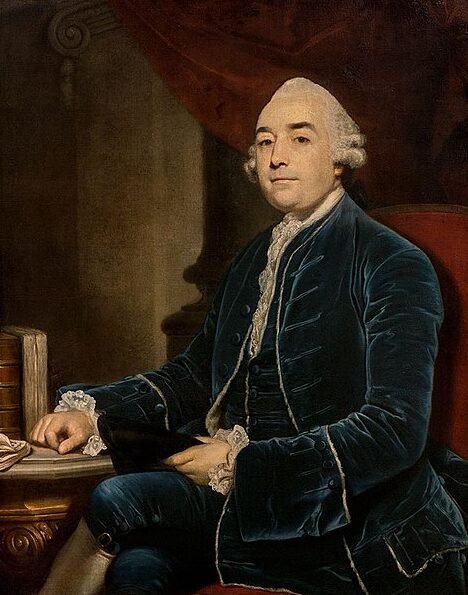
Image: William Petty, 2nd Earl of Shelburne
The American War of Independence
Shelburne’s most significant contribution to British politics came during the American War of Independence (1775–1783). At the outset of the war, Shelburne was an advocate for a more conciliatory approach to the American colonies. He argued that heavy-handed policies, such as the Stamp Act and the Intolerable Acts, had inflamed tensions and alienated the colonists. Shelburne believed that Britain could preserve its empire through compromise and reform rather than through military force.
When the war escalated, and Britain found itself struggling to suppress the rebellion, Shelburne’s views gained more attention. After the fall of Lord North’s government in 1782, a coalition government led by the Marquess of Rockingham came to power. Shelburne was brought back into the government, once again serving as Southern Secretary. However, when Rockingham died later that year, Shelburne succeeded him as Prime Minister. His ascension to the role of Prime Minister came at a critical juncture, as Britain was negotiating an end to the war with the United States.
Prime Ministership and the Treaty of Paris
Shelburne’s tenure as Prime Minister, from July 1782 to April 1783, was brief but highly consequential. His most important achievement was overseeing the negotiations that led to the Treaty of Paris, which formally ended the American War of Independence. Shelburne recognized the inevitability of American independence and sought to secure the best possible terms for Britain in the peace settlement. He appointed Richard Oswald, a Scottish merchant with experience in America, as the lead British negotiator.
The Treaty of Paris, signed in 1783, recognized the independence of the United States and established the boundaries of the new nation. Although Britain lost its thirteen colonies in North America, Shelburne’s government succeeded in preserving Britain’s territorial holdings in Canada and the Caribbean. Furthermore, the treaty allowed Britain to retain access to important trade routes and fishing rights, mitigating some of the economic losses from the war. Shelburne’s pragmatic approach to the negotiations helped Britain recover quickly from the war’s financial strain and maintain its position as a global power.
Despite the significance of the Treaty of Paris, Shelburne’s political position was unstable. His government faced intense opposition from both the conservative factions within Parliament and members of his own Whig Party. Shelburne’s critics accused him of being too lenient in the peace negotiations and of not securing enough concessions from the Americans. In early 1783, Shelburne was ousted from office when a coalition led by Charles James Fox and Lord North brought down his government.
Later Years and Political Decline
After being driven from office, Shelburne’s political influence waned. He continued to serve in the House of Lords, where he offered occasional commentary on political matters, but he never again held high office. Shelburne’s ousting from power at the relatively young age of 45 left him disillusioned with politics. He often reflected on his career with regret, lamenting that his political alliances and connections had been with clever but unpopular figures, which ultimately hampered his ability to retain influence.
Though Shelburne’s political career effectively ended in 1783, he remained active in intellectual and cultural circles. He was an avid patron of the arts and supported various scientific and philosophical endeavors. His estate at Bowood House became a gathering place for Enlightenment thinkers, including economists like Adam Smith and philosophers like Jeremy Bentham. Shelburne’s interest in political philosophy extended to his own writings on government and economics, where he continued to advocate for liberal reforms and a more open, meritocratic society.
In 1784, Shelburne was elevated to the title of Marquess of Lansdowne, a recognition of his contributions to the state. However, this title did little to restore his political fortunes. Over the years, he became increasingly withdrawn from public life, preferring the quiet of his estate to the rough-and-tumble world of Westminster politics.
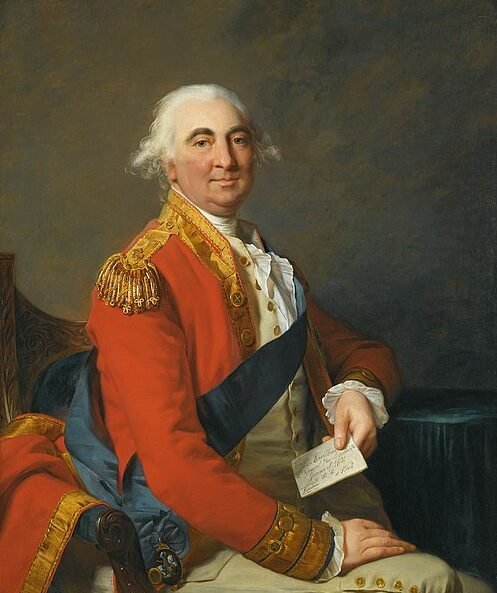
Image: Portrait of Shelburne by French artist Jean-Laurent Mosnier.
Legacy
William Petty, 2nd Earl of Shelburne, left behind a complex and multifaceted legacy. On the one hand, he is remembered for his role in ending the American War of Independence and for negotiating a peace settlement that allowed Britain to recover from a devastating conflict. His pragmatic approach to diplomacy helped Britain maintain its global influence despite the loss of the American colonies.
On the other hand, Shelburne’s political career is often viewed as one of unfulfilled potential. Though he held high office and was known for his intelligence and eloquence, he struggled to build a broad base of support within Parliament. His frequent clashes with political rivals and his inability to manage the factions within his own party ultimately limited his ability to enact lasting reforms.
Historians have often portrayed Shelburne as a misunderstood figure—someone who was ahead of his time in many respects but who lacked the political acumen to turn his ideas into lasting policies. His advocacy for free trade, colonial reform, and more equitable governance were forward-thinking, but these ideas did not gain wide acceptance until later in the 19th century.
One area in which Shelburne’s legacy is particularly strong is his patronage of Enlightenment thinkers. His association with figures like Adam Smith and Jeremy Bentham positioned him as an intellectual leader of the liberal movement in Britain. His support for free markets and limited government presaged many of the ideas that would come to dominate British politics in the decades following his death.
Shelburne’s personal reflections on his political career reveal a man who was often frustrated by the constraints of the political system in which he operated. He recognized that his education, though comparable to that of his peers, had not fully prepared him for the intricacies of political life. Moreover, his choice of political allies—whom he described as clever but unpopular—may have contributed to his downfall. Nonetheless, his contributions to British diplomacy and his role in shaping the post-war settlement with America remain his most enduring accomplishments.
Conclusion
William Petty, 2nd Earl of Shelburne, lived during a time of great change in British politics and international relations. His rise from a young military officer to Prime Minister during one of Britain’s most critical moments in history illustrates both his ambition and his abilities. As Prime Minister, he successfully negotiated peace with the United States, ensuring Britain’s recovery from the American War of Independence. However, his short-lived tenure and political missteps meant that his career did not reach the heights he might have hoped for.
Despite this, Shelburne’s intellectual contributions and his patronage of Enlightenment thinkers left a lasting mark on British political thought. His career offers valuable insights into the challenges of leadership during times of national crisis, as well as the difficulties of navigating the often treacherous waters of political factions and alliances. Though his political career was cut short, Shelburne’s legacy as a statesman and a thinker endures, particularly in his efforts to promote diplomacy, liberal reform, and free trade.
Frequently Asked Questions
What is Lord Shelburne most remembered for in his political career?
Lord Shelburne is most remembered for his time as Prime Minister from 1782 to 1783, during which he successfully negotiated peace with the United States, bringing an end to the American War of Independence. This peace negotiation remains his most notable legacy.
Where was Shelburne born, and where did he receive his education?
Shelburne was born in Dublin, Ireland, and received his education at Oxford University.
What military service did Shelburne participate in, and how was he rewarded?
Shelburne served in the British Army during the Seven Years’ War, distinguishing himself at the Battle of Kloster Kampen. As a reward for his service, he was appointed an aide-de-camp to King George III.
When did Shelburne begin his political career, and what title did he inherit from his father?
Shelburne began his political career in 1760 as a member of Parliament. After his father’s death in 1761, he inherited the title of Earl of Shelburne and joined the House of Lords.
What position was Shelburne appointed to in 1766, and what responsibilities did it entail?
In 1766, Shelburne was appointed Southern Secretary in the cabinet of Prime Minister Charles Watson-Wentworth, the 2nd Marquess of Rockingham. This position involved managing Britain’s relationships with its colonies and overseeing trade and foreign affairs.
What challenges did Shelburne face during his tenure as Southern Secretary?
During his tenure as Southern Secretary, Shelburne faced growing challenges, including the Corsican Crisis, which eventually led to his departure from office and his shift into the political opposition.
Why did Shelburne become Prime Minister in 1782, and what major conflict was ongoing during his tenure?
Shelburne became Prime Minister in 1782 following the death of Lord Rockingham. At the time, the American War of Independence was still ongoing, and Shelburne’s primary challenge as Prime Minister was to bring the war to an end.
What was Shelburne’s most significant achievement as Prime Minister?
Shelburne’s most significant achievement as Prime Minister was negotiating the preliminary peace agreement with the American colonies, effectively recognizing American independence. This led to the signing of the Treaty of Paris in 1783, which formally ended the war.
Why did Shelburne face opposition during his time as Prime Minister, and what happened to his political career in 1783?
Shelburne faced significant political opposition due to his lack of broad support within Parliament and being outmaneuvered by rival factions. As a result, he was driven out of office in 1783 at the age of 45, ending his political career prematurely.
How did Shelburne reflect on his political career, and what did he believe contributed to his downfall?
Shelburne reflected on his political career with regret, considering it a failure despite his many accomplishments. He blamed his educational background, though comparable to his peers, and believed that his political alliances with clever but unpopular figures hindered his rise to greater influence.
What long-term impact did Shelburne’s diplomatic efforts have?
Shelburne’s diplomatic efforts in securing peace with the United States brought a formal end to the American Revolutionary War, shaping the future relationship between Britain and its former colonies. This achievement remains a defining moment of his legacy.