Djed: Origin Story, Meaning and Significance of the Ancient Egyptian Symbol
by World History Edu · December 11, 2024
The djed is one of the most ancient and enduring symbols in ancient Egyptian culture, often associated with stability, strength, and endurance. Depicted as a pillar with horizontal crossbars, the djed holds both religious and symbolic importance, appearing in Egyptian art, rituals, and funerary practices. Over time, its associations evolved, linking it to prominent deities like Osiris and Ptah, making it a cornerstone of Egyptian religious and cultural identity.

The enduring significance of the djed pillar reflects ancient Egypt’s deep connection to themes of stability, regeneration, and the triumph of life over death. Image: Djed-shaped amulet
Origin Story of the Djed
The origin of the djed is intertwined with the myth of Osiris, the god of the afterlife and rebirth. According to the myth, Osiris was deceived and murdered by his brother Set (Seth), who tricked him into a coffin made to fit his body exactly. Set sealed the coffin and threw it into the Nile. The current carried it to Byblos, where it lodged in the roots of a rapidly growing sacred tree. This tree, enclosing the coffin within its trunk, became a marvel to the local king, who ordered it cut down and fashioned into a pillar for his palace.
READ MORE: How Osiris was killed by his brother Seth
Osiris’s wife, Isis, embarked on a tireless search for her husband’s body, aided by Anubis. Her journey led her to Byblos, where she won the favor of the king and queen. Upon being granted a wish, she requested the palace pillar, which held Osiris’s coffin.
Isis carefully extracted the coffin and consecrated the pillar with myrrh and linen wrappings. This sanctified pillar became known as the djed, embodying stability and resilience.
Meaning and Symbolism of the Djed
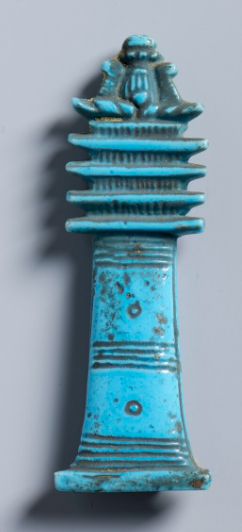
The djed, also called djt (Ancient Egyptian: ḏd 𓊽, Coptic ϫⲱⲧ jōt, “pillar”), is a pillar-like symbol in ancient Egyptian religion symbolizing stability. Image: Amulet depicting the djed pillar, Egyptian faience, between 722 and 332 BC. Late Period. Museo Egizio, Turin.
The djed is a multifaceted symbol with layers of meaning:
Stability and Strength
At its core, the djed represents stability and permanence, making it a powerful emblem in a civilization that valued cosmic order (ma’at). Its robust, pillar-like shape reinforces this interpretation, symbolizing an unshakable foundation.
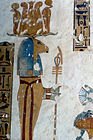
The ancient Egyptian ram god Banebdjedet with a scepter combining the was and djed with the ankh
Connection to the Spine
In Egyptian mythology, the djed was often considered a representation of Osiris’s spine. This connection highlights its role in resurrection and renewal, as the spine was seen as a conduit of life and vitality.
Association with Deities
While primarily linked to Osiris, the djed’s early associations were with Ptah, the Memphite god of creation and craftsmanship. Ptah was sometimes called “the noble djed” and depicted holding a scepter combining the djed with the ankh (symbol of life) and was scepter (symbol of dominion). Over time, the djed became inseparable from Osiris, symbolizing his resurrection and enduring power.
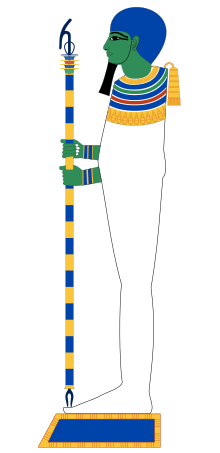
Ptah was often referred to as “the noble djed”, and carried a scepter that was a combination of the djed symbol and the ankh, the symbol of life
Duality with the Tyet
The djed is often paired with the tyet symbol, also known as the Knot of Isis. Together, they reflect the duality of life: stability and welfare, endurance and vitality, male and female principles.
READ MORE: Most Famous Ancient Egyptian Symbols and their Meaning
Ritual and Ceremonial Importance

Cartouche name of Pharaoh Djedefre
The djed played a prominent role in Egyptian rituals and festivals, particularly those celebrating renewal and cosmic order.
The Raising of the Djed
One of the most significant ceremonies involving the djed was the “raising of the djed,” conducted during the Sed festival. This ritual symbolized the triumph of Osiris over Set, representing the restoration of order and the promise of renewal.
During the ceremony, the pharaoh and priests would raise a wooden djed pillar using ropes, reenacting Osiris’s resurrection. The timing of the ritual often coincided with the agricultural season, linking the djed’s stability to the fertility and growth of crops.
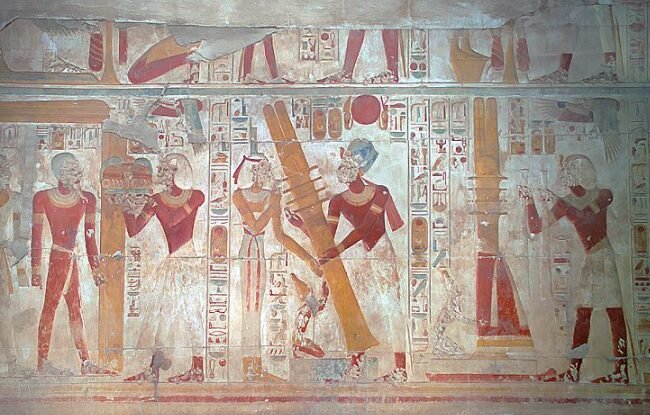
A scene on the Osiris Hall’s west wall at Abydos depicts the ritual raising of the Djed pillar, symbolizing Osiris’s resurrection and stability.
Celebrations at Abydos
Abydos, a major cult center of Osiris, hosted elaborate festivals where the raising of the djed featured prominently. These celebrations included reenactments of Osiris’s myth, performed by priests and priestesses, along with processions, offerings, and musical performances. The rituals served as an appeal to Osiris to ensure agricultural prosperity and cosmic stability.
The Djed in Funerary Practices
The djed held special significance in Egyptian funerary customs, underscoring its association with resurrection and eternal life.
Amulets and Coffins
Djed amulets were often placed near the spines of mummies, symbolizing the restoration of life and the spine’s role in connecting the body and soul. These amulets, sometimes made of gold or faience, were believed to guarantee the deceased’s safe journey into the afterlife.
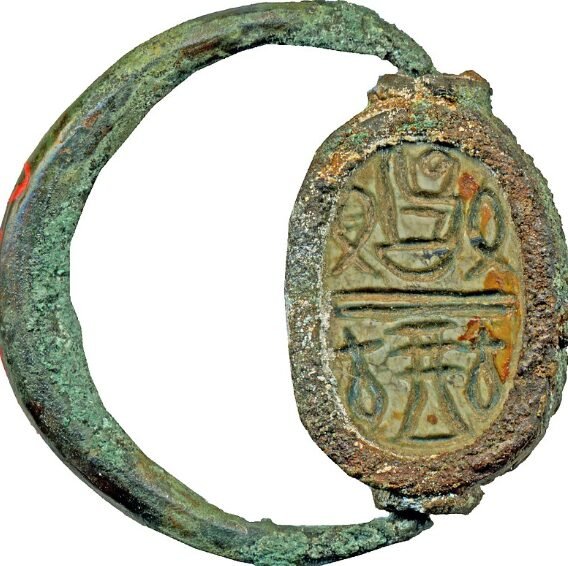
Scarab Ring featuring the Djed symbol in the seal
Book of the Dead
The djed is referenced in the Book of the Dead, a guide for navigating the afterlife. Specific spells in the text highlight the djed’s protective qualities and its power to ensure the deceased could rise and regain their strength.
Symbolic Decorations
The djed was frequently painted on coffins, reinforcing its role as a protective and stabilizing force for the soul in its journey beyond death.
The Forty-Two Judges: Divine beings who decided whether a soul perished or not
Possible Origins and Interpretations
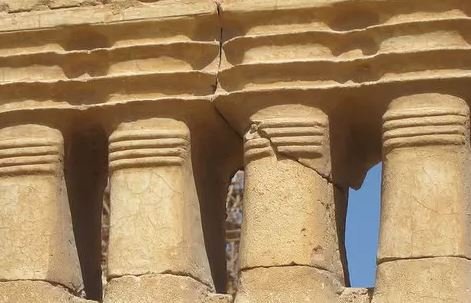
Djed pillars at the complex of Djoser‘s Pyramid
The djed’s origins may be rooted in agricultural and environmental contexts:
Some scholars suggest the djed began as a fertility symbol, possibly a reed pillar or grain storage structure, symbolizing abundance and stability in an agrarian society.
The djed may represent a tree fetish, reflecting Egypt’s reliance on imported wood from regions like Byblos. This interpretation ties the djed to the sacred tree in the Osiris myth and highlights its significance in Egyptian economic and spiritual life.
A controversial theory posits that the djed’s design mimics the human spine, particularly that of a bull, linking it to ancient beliefs about the spine as the source of life and strength.

The djed stands as a testament to the richness and complexity of ancient Egyptian symbolism. Image: Bir el-Shaghala Tomb 1 features a djed pillar with a human head, honoring Osiris.
Parallels in Other Cultures
The djed’s symbolic elements find parallels in other ancient cultures, suggesting a shared heritage of symbolic representation:
The Assyrian sacred tree, often depicted with horizontal bands resembling the djed, may share thematic similarities in representing life, stability, and cosmic order.
Similarities with Sumerian fertility symbols, particularly those associated with the god Enki, indicate cross-cultural exchanges of ideas about renewal and stability.
Evolution of the Djed
Over centuries, the djed evolved from a possible fertility symbol to a powerful religious emblem tied to Osiris. Its early connection to Ptah and Memphite rituals highlights its versatility, while its incorporation into Osiris’s mythology solidified its role in resurrection and the afterlife. The djed’s enduring presence in art, ritual, and daily life reflects its importance in embodying the values and beliefs of ancient Egypt.
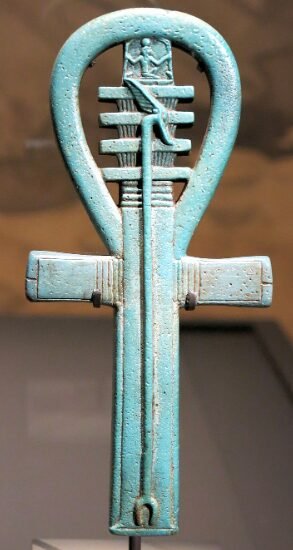
The influence of the Djed extends beyond Egypt, resonating with universal themes that connect humanity across time and culture. Image: Djed amulet, Gebel Barkal, 25th Dynasty. Ânkh-Djed-Ouas; British Museum
Conclusion
Rooted in mythology and steeped in ritual significance, it represents stability, renewal, and the eternal cycle of life and death. From its origins in fertility cults to its prominent role in Osiris’s myth and its use in funerary practices, the djed remains a powerful reminder of Egypt’s enduring legacy of spirituality and cosmic order.
Frequently Asked Questions

A djed amulet with the name of Ramesses IX of the Twentieth Dynasty inscribed upon it.
How does Osiris’s death and resurrection relate to the djed?
Osiris was killed by Set (Seth), who tricked him into a coffin and cast it into the Nile.
Osiris’ coffin drifted to Byblos in Lebanon and became encased in a sacred tree’s trunk. There, the king cut it down and turned it into a palace pillar, unaware of the coffin inside. Osiris’s sister and wife Isis gained the favor of the king and queen of Byblos, requested the palace pillar, and extracted the coffin.
What is the djed pillar, and what does it symbolize?
The djed pillar, consecrated by Isis, symbolizes stability and endurance.

The djed, an ancient Egyptian symbol of stability, represents the backbone of Osiris.
What are the possible origins of the djed pillar?
It may have originated as a fertility symbol, a reed pillar, or a grain-storage structure, reflecting agricultural abundance.
Which gods were associated with the djed?
Initially linked to Seker and Ptah, it was later associated with Osiris, the god of the afterlife.

Winged djed pillar behind Egyptian god of the afterlif Osiris (Temple of Ramses II at Abydos)
What was the ceremonial importance of the djed?
The “raising the djed” ritual during the Sed festival symbolized Osiris’s victory over Set and the renewal of stability.

Seal ring inscribed with “Ptah, the one with enduring favors,” showing hieroglyphs for Ptah, djed (stability), and offerings.
How was the djed used as an amulet?
Djed amulets, placed near mummies’ spines, ensured resurrection and eternal life for the deceased.
Are there parallels to the djed in other cultures?
Similar symbols, like sacred trees and fertility motifs, appear in Assyrian and Sumerian traditions, suggesting shared symbolism.
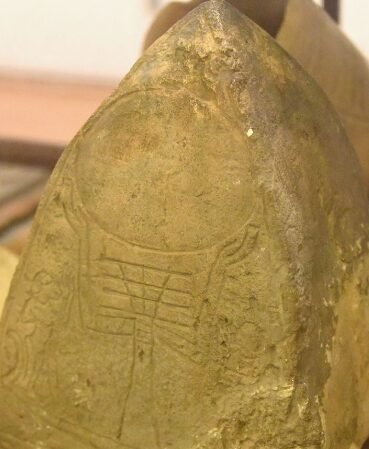
Limestone pyramidion with curved sides, featuring djed arms holding a sun disc and two adoring baboons.





