Egyptian Museum of Berlin: History, Major Collection and Facts
The Egyptian Museum of Berlin, part of the Neues Museum on Museum Island, is one of the world’s premier institutions for the study and display of ancient Egyptian artifacts. Its rich history, extensive collection, and cultural significance provide a unique lens into one of humanity’s most enduring civilizations. Below, we explore its origins, the treasures it houses, and its historical and contemporary impact.

The Egyptian Museum and Papyrus Collection in Berlin (German: Ägyptisches Museum und Papyrussammlung) is renowned for its vast collection of ancient Egyptian artifacts, most notably the iconic Nefertiti Bust.
Historical Origins
The museum traces its origins to the 18th century as part of the royal art collection of the Hohenzollern dynasty, rulers of Prussia. This era saw a surge in European interest in ancient cultures, influenced by Enlightenment ideals and the era’s fascination with exploration and discovery.
In 1828, Alexander von Humboldt, a renowned polymath and explorer, suggested that an Egyptian section be added to the Prussian royal collection. Under King Friedrich Wilhelm III, this vision materialized with the acquisition of the first objects, marking the beginning of a systematic effort to preserve and study Egyptian antiquities.
Established in 1855, the Egyptian Museum of Berlin has been housed in the Neues Museum on Berlin’s Museum Island.
Giuseppe Passalacqua, a merchant from Trieste, played a pivotal role in the museum’s early development. His private collection of Egyptian artifacts, amassed through extensive travels, formed the nucleus of the museum’s holdings. Passalacqua became the department’s first director, establishing foundational practices for curating and studying the collection.
Expeditions and Expansion
The collection expanded significantly between 1842 and 1845, thanks to a Prussian expedition to Egypt and Nubia led by Karl Richard Lepsius. This scientific mission systematically documented ancient sites and brought numerous artifacts back to Berlin, enriching the museum’s holdings and establishing its reputation in Egyptology.
In 1850, the collection was moved to the Neues Museum, a purpose-built structure designed by Friedrich August Stüler. This relocation provided a fitting home for the growing collection and marked a new phase in its public accessibility.
Key Artifacts and Displays
The Nefertiti Bust
Discovered in 1912 at Amarna by Ludwig Borchardt and donated to the museum by Henri James Simon in 1920, the Nefertiti Bust is the museum’s most celebrated artifact. This vividly painted limestone sculpture captures the timeless beauty of Queen Nefertiti, becoming an enduring symbol of ancient Egyptian art and a centerpiece of the museum.
Artifacts from the Amarna Period
The collection boasts numerous items from the reign of Pharaoh Akhenaten (circa 1350 BCE), including reliefs, statues, and personal items that reflect the artistic and religious innovations of the Amarna Period.
The Kalabsha Gate
A monumental architectural fragment from the Temple of Kalabsha, the gate was relocated to the museum as part of an international effort to preserve Nubian monuments during the construction of the Aswan High Dam in the mid-20th century.

Image: Kalabsha Gate
Mummified Remains
The museum houses at least 23 mummified individuals, offering insights into ancient Egyptian burial practices. Recent CT scans have revealed details about the mummification process, including the preservation of internal organs like the heart, as well as demographic information such as age and sex.
Statuary and Reliefs
Highlights include the Berlin Green Head, a stunning example of Late Period sculpture, as well as statues of Amenemhat III and depictions of Akhenaten and his family. These pieces illustrate the evolution of Egyptian art across millennia.
Impact of War and Division
During World War II, the Neues Museum suffered extensive damage due to strategic bombing. Many artifacts were lost or displaced, and the museum was left in ruins.
Following the war, the collection was divided between East and West Berlin. The main body of artifacts remained in East Berlin and was displayed in the Bode Museum, while items evacuated to West Germany, including the Nefertiti Bust, were housed near Charlottenburg Palace.
The reunification of Germany in 1990 allowed for the consolidation of the collection. The Neues Museum was meticulously restored and reopened in 2009, reuniting the artifacts under one roof on Museum Island, a UNESCO World Heritage Site.
Modern Developments
In recent years, advanced technologies such as CT scanning have been employed to study the museum’s mummies. These investigations have provided groundbreaking insights into ancient Egyptian medical practices, lifestyles, and societal structures.
The museum continues to serve as a vital educational resource, hosting exhibitions, lectures, and interactive programs that deepen public understanding of ancient Egypt. Its collection provides a tangible connection to the past, engaging audiences of all ages.
Cultural and Scholarly Significance
As a center for Egyptological research, the museum collaborates with international institutions to study and preserve its artifacts. The Lepsius archives, for example, remain a cornerstone of scholarly inquiry into 19th-century archaeology.
Artifacts like the Nefertiti Bust have transcended their historical context to become cultural icons, sparking discussions about art, beauty, and heritage. The museum’s collection highlights the universal relevance of ancient Egyptian culture in understanding human history.
The museum has played a crucial role in the conservation of endangered artifacts, such as the Kalabsha Gate. These efforts underscore its commitment to safeguarding cultural heritage for future generations.
Significant Exhibits
Berlin Green Head: This masterpiece of Late Period art demonstrates the finesse of ancient Egyptian sculptors in capturing lifelike detail.
Head of Ptolemaios X: A rare example of Hellenistic influence in Egyptian art, this statue reflects the blending of cultures during the Ptolemaic period.
Queen Tiye: A striking representation of Akhenaten’s mother, this statue embodies the naturalistic style of the Amarna Period.
Relief Portrait of Akhenaten: This unique piece depicts the pharaoh in his characteristic elongated style, exemplifying the artistic revolution of his reign.

Image: Head of Tiye on display at the museum.
Visitor Experience
The Neues Museum’s architecture and design create an immersive environment that enhances the visitor’s engagement with the artifacts. The integration of original 19th-century elements with modern restoration techniques offers a visual journey through time.
Through digital installations, guided tours, and workshops, the museum fosters a deeper appreciation for ancient Egyptian culture. Visitors can explore the historical context and artistic significance of the displayed artifacts.
The museum caters to diverse audiences, including families and children, with engaging exhibits that make the ancient world accessible and exciting for younger visitors.
Legacy and Future Prospects
The Egyptian Museum of Berlin stands as a testament to the enduring fascination with ancient Egypt. Its artifacts continue to inspire awe and curiosity, bridging the gap between the ancient and modern worlds.
The museum aims to expand its reach through traveling exhibitions and partnerships with other institutions. These efforts seek to share its treasures with a global audience while fostering international collaboration.
By embracing technology and interdisciplinary research, the museum ensures that its collection remains relevant in an ever-evolving cultural landscape. Its work in artifact conservation and public education exemplifies a forward-thinking approach to preserving history.
Conclusion
The Egyptian Museum of Berlin is more than just a repository of ancient artifacts—it is a cultural beacon that illuminates the achievements of ancient Egypt while addressing contemporary questions about heritage, identity, and preservation. Through its storied history, unparalleled collection, and commitment to innovation, the museum continues to enrich our understanding of one of humanity’s most remarkable civilizations.
Frequently Asked Questions
What is the origin of the Egyptian Museum and Papyrus Collection in Berlin?
The museum originated in the 18th century as part of the royal art collection of the Hohenzollern kings of Prussia.
Who suggested creating an Egyptian section in the collection, and when was it established?
Alexander von Humboldt recommended the creation of an Egyptian section, and the first objects were acquired in 1828 under King Friedrich Wilhelm III.
Who was Giuseppe Passalacqua, and what was his role in the museum’s history?
Giuseppe Passalacqua was a Trieste merchant who led the department and whose extensive collections formed the foundation of the Egyptian section.
What significant contribution did Karl Richard Lepsius make to the museum’s collection?
Karl Richard Lepsius led a Prussian expedition to Egypt and Nubia (1842–1845), which brought many artifacts to Berlin.
When and why was the collection moved to the Neues Museum?
The collection was relocated to the Neues Museum in 1850 to house the growing collection in a purpose-built space designed by Friedrich August Stüler.
What is the significance of the Nefertiti Bust in the museum’s collection?
The Nefertiti Bust, discovered by Ludwig Borchardt at Amarna and donated by Henri James Simon in 1920, is the museum’s most iconic piece and symbolizes its prominence.
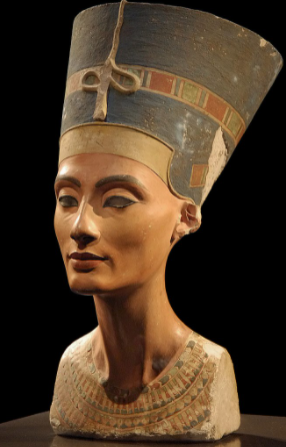
The Bust of Nefertiti as displayed at the museum.
How did World War II impact the museum’s collection?
The Neues Museum was heavily damaged during the war, leading to the division of the collection between East and West Berlin.
When was the collection reunited, and where is it housed now?
The collection was reunited after German reunification and has been housed in the reconstructed Neues Museum on Museum Island since 2009.
What technological advancements have been used to study the museum’s artifacts?
CT scans were used in the 2020s to study mummified remains, providing insights into mummification practices, age, and sex of the individuals.
What notable artifacts are featured in the museum’s gallery?
The gallery includes the Kalabsha Gate, Berlin Green Head, statues of Nefertiti and Amenemhat III, reliefs from the Amarna Period, and the head of Ptolemaios X.





